Thursday, 19 January 2012

2012 MWA Edgar Nominations

The Staff at Shots Ezine would like to congratulate all the 2012 Edgar nominated authors and writers!

We present the press releases from the MWA -

Mystery Writers of America is proud to announce on the 203rd anniversary ofthe birth of Edgar Allan Poe, its Nominees for the 2012 Edgar Allan Poe Awards, honoring the best in mystery fiction, nonfiction and television published or produced in 2011.

The Edgar Awards will be presented to the winners at our 66th Gala Banquet, April 26, 2012 at the Grand Hyatt Hotel, New York City.


BEST NOVEL

The Ranger by Ace Atkins (Penguin Group USA - G.P. Putnam's Sons)

Gone by Mo Hayder (Grove/Atlantic - Atlantic Monthly Press)

The Devotion of Suspect X by Keigo Higashino (Minotaur Books)

1222 by Anne Holt (Simon & Schuster - Scribner)

Field Gray by Philip Kerr (Penguin Group USA - G.P. Putnam's Sons - Marion Wood Books)


BEST FIRST NOVEL BY AN AMERICAN AUTHOR

Red on Red by Edward Conlon (Random House Publishing Group - Spiegel & Grau)

Last to Fold by David Duffy (Thomas Dunne Books)

All Cry Chaos by Leonard Rosen (The Permanent Press)

Bent Road by Lori Roy (Penguin Group USA - Dutton)

Purgatory Chasm by Steve Ulfelder (Minotaur Books - Thomas Dunne Books)


BEST PAPERBACK ORIGINAL

The Company Man by Robert Jackson Bennett (Hachette Book Group - Orbit Books)

The Faces of Angels by Lucretia Grindle (Felony & Mayhem Press)

The Dog Sox by Russell Hill (Pleasure Boat Studio - Caravel Mystery Books)

Death of the Mantis by Michael Stanley (HarperCollins Publishers - HarperPaperbacks)

Vienna Twilight by Frank Tallis (Random House Trade Paperbacks)


BEST FACT CRIME

The Murder of the Century: The Gilded Age Crime That Scandalized a City and Sparked the Tabloid Wars by Paul Collins (Crown Publishing)

The Savage City: Race, Murder, and a Generation on the Edge by T.J. English( HarperCollins - William Morrow)

Destiny of the Republic: A Tale of Madness, Medicine and the Murder of a President by Candice Millard (Random House - Doubleday)

Girl, Wanted: The Chase for Sarah Pender by Steve Miller (Penguin Group USA- Berkley)

The Man in the Rockefeller Suit: The Astonishing Rise and Spectacular Fallo f a Serial Imposter by Mark Seal (Penguin Group USA - Viking)


BEST CRITICAL/BIOGRAPHICAL

The Tattooed Girl: The Enigma of Stieg Larsson and the Secrets Behind the Most Compelling Thrillers of our Time by Dan Burstein, Arne de Keijzer & John-Henri Holmberg (St. Martin's Griffin)

Agatha Christie: Murder in the Making by John Curran (HarperCollins)

On Conan Doyle: Or, the Whole Art of Storytelling by Michael Dirda (Princeton University Press)

Detecting Women: Gender and the Hollywood Detective Film by Philippa Gates (SUNY Press)Scripting Hitchcock: Psycho, The Birds and Marnie by Walter Raubicheck and Walter Srebnick (University of Illinois Press)


BEST SHORT STORY

"Marley's Revolution" - Alfred Hitchcock Mystery Magazine by John C. Boland (Dell Magazines)

"Tomorrow's Dead" - Ellery Queen Mystery Magazine by David Dean (Dell Magazines)

"The Adakian Eagle" - Down These Strange Streets by Bradley Denton (Penguin Group USA - Ace Books)

"Lord John and the Plague of Zombies" - Down These Strange Streets by Diana Gabaldon (Penguin Group USA - Ace Books)

"The Case of Death and Honey" - A Study in Sherlock by Neil Gaiman (Random House Publishing Group - Bantam Books)

"The Man Who Took His Hat Off to the Driver of the Train" - Ellery Queen Mystery Magazine by Peter Turnbull (Dell Magazines)


BEST JUVENILE

Horton Halfpott by Tom Angleberger (Abrams - Amulet Books)

It Happened on a Train by Mac Barnett (Simon & Schuster Books for YoungReaders)

Vanished by Sheela Chari (Disney Book Group - Disney Hyperion)

Icefall by Matthew J. Kirby (Scholastic Press)

The Wizard of Dark Street by Shawn Thomas Odyssey (Egmont USA)


BEST YOUNG ADULT

Shelter by Harlan Coben (Penguin Young Readers Group - G.P. Putnam's Sons)

The Name of the Star by Maureen Johnson (Penguin Young Readers Group - G.P.Putnam's Sons)

The Silence of Murder by Dandi Daley Mackall (Random House Children's Books- Knopf BFYR)The Girl is Murder by Kathryn Miller Haines (Macmillan Children's Publishing Group - Roaring Creek Press)

Kill You Last by Todd Strasser (Egmont USA)


BEST PLAY

Sherlock Holmes and the Adventure of the Suicide Club by Jeffrey Hatcher (Arizona Theatre Company, Phoenix, AZ)

The Game's Afoot by Ken Ludwig (Cleveland Playhouse, Cleveland, OH)


BEST TELEVISION EPISODE TELEPLAY

"Innocence" - Blue Bloods, Teleplay by Siobhan Byrne O'Connor (CBS Productions)

"The Life Inside" - Justified, Teleplay by Benjamin Cavell (FX Productions and Sony Pictures Television)

"Part 1" - Whitechapel, Teleplay by Ben Court & Caroline Ip (BBC America)

"Pilot" - Homeland, Teleplay by Alex Gansa, Howard Gordon & Gideon Raff (Showtime)

"Mask" - Law & Order: SVU, Teleplay by Speed Weed (Wolf Films/Universal Media Studios)


ROBERT L. FISH MEMORIAL AWARD

"A Good Man of Business" - Ellery Queen Mystery Magazine by David Ingram (Dell Magazines)


MWA GRAND MASTER

Martha Grimes


RAVEN AWARDS

M is for Mystery Bookstore, San Mateo, CA / Molly Weston, Meritorious Mysteries


ELLERY QUEEN AWARD

Joe Meyers of the Connecticut Post/Hearst Media News Group


THE SIMON & SCHUSTER - MARY HIGGINS CLARK AWARD

To be presented at MWA's Agents & Editors Party on Wednesday, April 25, 2012

Now You See Me by S.J. Bolton (Minotaur Books)

Come and Find Me by Hallie Ephron (HarperCollins Publishers - WilliamMorrow)

Death on Tour by Janice Hamrick (Minotaur Books)

Learning to Swim by Sara J. Henry (Crown Publishing Group)

Murder Most Persuasive by Tracy Kiely (Minotaur Books - Thomas Dunne Books)


The full list of nominations / MWA Press Release can be downloaded as a .pdf file here


Photo top (c) 2008 Ali Karim

"R J Ellory standing in the shadow of the last resting place of Edgar Allan Poe taken at Westminster Hall Baltimore at Bouchercon 2008"

Laurence O'Bryan asks himself - Why the Hell Do I Do This?


Today’s guest blogger is debut author Laurence O’Bryan whose first novel in the Sean Ryan and Isabel Sharp series The Istanbul Puzzle is published today. The Istanbul Puzzle starts when Sean discovers a friend and colleague has been beheaded in Istanbul. Laurence worked his way up from being a plate scraper in a gentleman’s club in the City to winning a three-book deal with Harper Collins UK. On the way he got lost in the fleshpots of London, got rescued by his wife and straightened out after the birth of his daughter. But why does he write?


That’s a good question. I always had it at the back of my mind that I would write novels. It’s a cliché, I know, but it’s true for me. I had a hole inside me for many years, one that I tried to fill up with alcohol and lots of other stuff, but I never succeeded in filling the hole until I began to write.


Some people talk about an emptiness deep inside as a reason for finding religion. I think it’s an emptiness at the heart of modern western culture. We consume so much, only to find out that there’s something better just about to arrive, which we must get our hands on. The consumption wheel never ends. It can’t. We are mostly hamsters on the wheel of life.


Until we start to create. When I create words and stories, and sometime the pictures that are linked to them in my imagination, I feel sated, not guilty. I feel proud, not fooled by empty promises.


The reason I write is also to do with my personal history. I spent many happy hours in the company of Rider Haggard, Asimov and Tolkien and I want to recreate that happiness. I need to create something of value too and writing suits that purpose. When I was a boy I created my own Dr Who stories for my neighbours. My imagination was often remarked on. Perhaps I imagined too much.


But I enjoy writing more than almost anything else. It allows me to spin words, to test theories, and to find out what’s going to happen to the characters I create. It also allows me to work at home, to see my children a little more than if I had to pursue a 9 to 5 existence, as I spent many years doing in the past.


The life of a writer is everything you thought it might be, but with added anxiety, especially at the point I’m at, with my first novel hitting the bookshelves on the 19th January. You see, I still don’t know whether the world will like my baby. And it’s taken me years to get to this point! I decided to write my first novel back in 2000. And only now am I making some money from it. I think I’m just a slow learner. If you want to see what all that work has produced, and you like an adventure story with romance and mystery thrown in, come over to lpobryan.wordpress.com or pick up The Istanbul Puzzle in your local bookshop.


I hope you have a great 2012 pursuing whatever dreams you want to pursue. Mine are on the cusp of becoming real. And if they don’t, I can always go back to cleaning dishes!

Wednesday, 18 January 2012

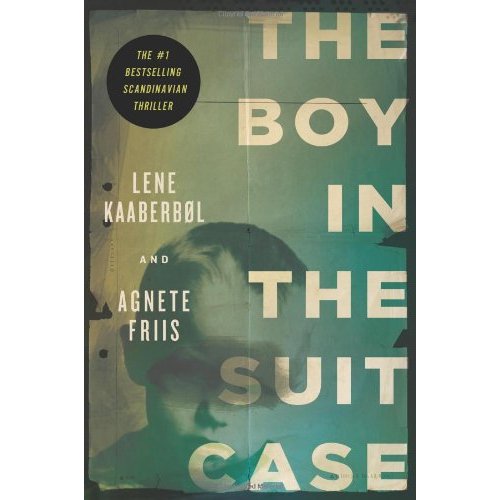
UK Launch of The Boy in The Suitcase


(L-R Barry Forshaw, Dr Jakob Stougaard-Nielsen, Lene Kaaberbøl and Agnette Friis (© Ayo Onatade))


I first met authors Lene Kaaberbøl and Agnette Friis at Bouchercon that took place in St Louis in 2011. At the time they were with promoting the first English translation of their book The Boy in the Suitcase.


Our second meeting took place when I attended the UK launch of The Boy in the Suitcase, which took place yesterday evening (17 January) in the Gallery at Foyles Bookshop, which is based along Charing Cross Road in London. Crime fiction expert Barry Forshaw, author of Death in a Cold Climate: A Guide to Scandinavian Crime Fiction and editor of Crime Time chaired the event and they were joined by Scandinavian Crime enthusiast and founder of the legendary Nordic Noir Book Club Dr. Jakob Stougaard-Nielsen (UCL).


The event started off with a brief introduction by Dr Jakob Stougaard-Nielsen who introduced Barry Forshaw. The two authors Lene Kaaberbøl and Agnette Friis where then introduced by Barry Forshaw before he started to talk/ interview them about their book.

One of the first things that was commented on was that aside from the fact that The Boy in The Suitcase was a brilliant multi-stranded book, it was also quite complex. Barry was interested in finding out from them both why this was the case as they had more than 3 voices in the book. They explained that what they wanted to do was to ensure that all the important characters were not only seen from the inside but were also able to view the world. This of course meant that they needed to have 5 different voices, which included that of the villain and Nina’s husband.


They also expressed the view that the villain was not only filled with rage but also still human but when asked how they felt about such a character for example Hannibal Lecter they expressed the view that whilst they felt he was an interesting character he was also seen as a psychopath. Their villain on the other hand (they explained) was a person who had a very ordinary life/dreams that anyone could relate to. They could not go down the route of what Steig Larsson did with his villains. The hardest part is actually making the villain believable.


But what about Nina their heroine and why is she so irritating? They explained that they did not feel the need to make her a perfect person and thus annoying but they did need to find a delicate balance. They did not want readers to lose sympathy with her entirely but people did find her annoying and sometimes found her behaviour a barrier to them finishing the book. It seems that women were mainly the ones as they found it difficult to forgive her for being such a bad mother. Nevertheless, they felt that she did try very hard.


The authors also revealed that whilst doing their research they found out that there were a lot of unaccompanied children going missing in Denmark. Over 600 have gone missing in the last 10 years. Some had in fact moved on but others had been sold for prostitution etc. The difficult was that hardly anything was being done about this because they were immigrants but it would be a different matter if the missing children were from Denmark. There were different rules for immigrants as opposed to Danes.


One of the other questions that was raised was whether or not there was a legacy of Russia hanging on the Danes? They felt that there was not and they did not just want to write a Danish novel but wanted to ensure that Nina came into contact with all sorts of people.


With journalists currently being in the news they were also asked how journalists were currently being viewed in Denmark. It was explained that unlike in the UK they did not really have tabloid newspapers and thus they were not seen to be as bad as UK journalists but that the quality of journalism was indeed going down what with the internet and the failure to properly check sources.

They authors were also asked how did they work together. They pointed out that they wrote separate chapters before going through each other’s chapters and commenting on them. It did (they agreed) sometimes lead to the odd argument but this was something that they got over very easily. They both had a basic mutual respect for each other’s work and were thus able to point out where they saw problems.


It was also agreed that not only were Scandinavian writers likeable but there was a sense that writing crime fiction was a good way of communicating ideas.


The topic of titles was discussed. It is well known the Eva Gabrielson was not happy about the fact that the title to the first Stieg Larsson book was changed from Men Who Hated Women (Män som hatar kvinnor) to The Girl With the Dragon Tattoo. The title of the second book in the series is (in English translation) A Quiet Unfelt Killing, which is a line from the book. However they explained that the titled worked better in Danish and that they did not believe that once it had been translated into English that it would still have that title. The third book is set in Ukraine with references to Stalin.


One of the things they made clear was that they wanted to avoid clichés. They explained that they were not so much interested in corruption for example but more interested in the complacency surrounding it.


The success of such television programmes as The Killing and Borgen was also commented on. Both authors were bemused by the phenomenon and wide spread acclaim both programmes had received as Danes were less overwhelmed by them. There were as they explained others, some that were good and some that were bad. The fact that so many people were prepared to sit through programmes with English subtitles amazed them. They could to a certain extent understand The Killing but could not understand Borgen since it is about Danish politics.


Dr Stougaard-Nielsen commented that well crafted writing and art was very much appreciated by anybody who came into contact with it as they saw it for what it was.


The Boy in The Suitcase won two major awards and was also nominated for The Glass Key they were asked whether or not this had raised their profile. Both authors agreed that it had. They had thought that they would win Best First Novel as the book has only been published three to four months earlier but they had surprisingly won Thriller of the Year. Sadly however, The Glass Key is not so well known outside Scandinavia and usually it is accompanied by the comment that it is the award that Steig Larsson won twice”.


Boundaries were also discussed with the authors and whether or not they had boundaries that they would not cross. The reason for the question was because Barry Forshaw had just finished reading Hans Koppel’s She’s Never Going Back which he found to be a very dispiriting read with humiliating sex scenes. They agreed that the did have boundaries which hey would not cross. They indicated that they would not write about anything that they were uncomfortable with themselves and that there was a fine line between titillation and showing things for what they were. Real crime is as far as they were concerned bad enough and they did not feel the need to go overboard. Their book is from their point of view not really a howdunnit or a whodunit but a whydunnit.


The audience were also informed that the film rights for the books were under discussion but they could not really talk about it. They also confirmed that Lene Kaaberbøl had in fact done the English translation of the book.


The authors were also asked questions one of which was whether or not they felt it was right that authors should use their books for social commentary or should they be seen as pure entertainment. Both authors agreed that they should but that the books should also entertain. It was as they explained supposed to do both.


The event at Foyles was extremely well attended. It was a testament this evening to how much Nordic crime is read by the full room. The Galley was full and the authors had an extremely receptive audience. At the end of the evening the authors joined the attendees for drinks and signed books as well.


My thanks go to Lene Kaaberbøl, Agnette Friis, Barry Forshaw and Dr. Jakob Stougaard-Nielsen for such an enjoyable evening and Foyles Bookshop for hosting it. If you have not yet read The Boy in The Suitcase then I urge you to do so. It will in my opinion be one of the best crime novels this year.

Tuesday, 17 January 2012

Crime Fiction News

Excellent article by Ian Rankin who would like the Government to introduce tax incentives to help new authors. The full article can be read in the Guardian.

Lots of viewers must have heaved a massive sigh of relief when the BBC revealed that there will indeed be a third series of Sherlock. On Sunday night there was a dramatic conclusion to the second series which was only belied by the tweet subsequently sent out by the co-creator Steven Moffat on Twitter "Of course there's going to be a third series - it was commissioned at the same time as the second. Gotcha!" Those of you wondering who on earth Professor Moriarty is might want to read the Blagger’s Guide To …. Professor Moriarty in the Independent. An excellent review of the final episode of series 2 can be found at The Arts Desk by Adam Sweeting.

Congratulations go to Peter Temple for winning the 2012 German International Crime Novel (International Deutscher Krimipreis) with his novel 'Truth'. The 28th German Crime Prize 2012 (National Deutscher Krimipreis) was awarded to 'Wer das Schweigen bricht' (Anyone who Breaks the Silence) (Pendragon) by Mechtild Borrmann.

Having just managed to have a look at the Guardian’s bestselling books of 2011, it is pleasing to note that out of the top 100, 34 were crime novels. Out of the 34, Jo Nesbo and James Patterson are joint top with five books each whilst all three of the late Steig Larsson once again made the list and John Grisham, John Le Carre and Harlan Coben round up the list with two each. All the other crime writers out of the 34 had one book each on the list. The full list (top 100) can be read here.

With the award season up and running the BAFTA nominations were announced this morning. It was in my opinion very pleasing to see the brilliant cold war thriller Tinker, Tailor Solider Spy nominated for 11 awards. They include nominations for Best Film, Outstanding British Film, Best Adapted Screenplay, Best Director for Tomas Alfredson and Best Leading Actor for Gary Oldman. Drive, which starred Ryan Gosling, has received a Best Director nomination for Nicolas Winding Refn as well as Best Film and Best Editing. Philip Seymour Hoffmann has also received a best supporting actor nomination for his turn in the American Political drama thriller The Ides of March. The film also received a nomination for Best Adapted Screenplay. The Irish Film The Guard starring Brendan Gleeson and Don Cheadle has been nominated for Original Screenplay. . The Orange British Academy Film Awards take place on February 12. Read the full list of nominations here.

According to the Bookseller, Waterstones have launched a “book club” promotion under the tagline "Books you will love or your money back". All the books bar one are fiction books. The only crime novel to make the list is of course Before I Go to Sleep by S J Watson (Transworld) each week a book will be chosen as a book of the week.

Orion has acquired a debut speculative thriller novel by A K Benedict, called The Beauty of Murder, which features a time-travelling serial killer. Editorial director Genevieve Pegg bought UK and Commonwealth rights, excluding Canada, from a partial on submission from Rupert Heath, and said: "Macabre, suspenseful and hugely inventive, I was spellbound from the start. Once I'd met its compelling characters, I knew I couldn't let go of them." Orion plans to publish in late 2012. German rights have been sold to Droemer.

The Independent’s Invisible Ink: No 106 is on Leslie Charteris the author of the Saint novels and is by Christopher Fowler. The full article can be read here.

Now that we have lost what was essentially Sunday night viewing on television with the last episode of the current series of Sherlock being shown how are we to replace it? BBC 1 have adapted Sebastian Faulks novel Birdsong into a 2 part drama and it is set to be shown on BBC1 on Sunday 22 January. An article in the Guardian can be found here. One of the very first reviews (a preview of it was apparently shown at the BAFTA’s can be found here.

Monday, 16 January 2012

The Face through the Key Hole

Following Stephen King’s remarkable 11 / 22 / 63 the great folks at Hodder and Stoughton have organized a rather surreal competition to celebrate the upcoming Dark Tower novel -

To celebrate the publication of The Wind through the Keyhole, the hotly anticipated new episode in Stephen King’s fantasy series The Dark Tower, we’re inviting you to help make literary history; lucky entrants will have their faces featured on the back of the jacket artwork.

Using mosaic design technologies, thousands of readers’ images will be incorporated in the illustration on the back cover of The Wind through the Keyhole.

One winner will also be selected at random to receive the entire STEPHEN KING backlist published by Hodder in the UK.

For your chance to be a part of this once-in-a-lifetime opportunity, all you have to do is upload your photo via this facebook app

Or click > https://www.facebook.com/stephenkingbooks.

We can’t guarantee that everyone’s photo will make it on – but we’ll contact you when the jacket is ready so you can see if your face is featured, and if you’ve been lucky, you can share your pixels of fame with friends and family!

The closing date for entries is 23rd January 2012. Terms and conditions apply, click here for more details.

The Wind through the Keyhole is published in April 2012

Friday, 13 January 2012

In Memoriam - Reginald Hill

In Memoriam


3 April 1936 - 12 January 2012

Reginald Hill author of the bestselling series Dalziel and Pascoe has died at the age of 75 after a brain tumour. He was regarded as one of Britain's most consistently successful crime writers and had a huge loyal following. He was best known for his Dalziel and Pascoe (Supt Andrew Dalziel and Sgt Peter Pascoe) series the first of which was entitled A Clubbable Woman (1970). In the original pilot they were portrayed by the comedians Hale and Pace but when the television series was finally commissioned the characters were subsequently played to perfection by Warren Clarke and Colin Buchanan and were adapted for television by the BBC between 1996 to 2007.


Reginald Hill was also the author of five books featuring Joe Sixsmith, a black machine operator turned amiable private detective in a fictional version of Luton. The first book in the series was Blood Sympathy (1993) and the last book to be written featuring Joe Sixsmith was The Roar of Butterflies (2008).


Sadly it was to take twenty years before he won the Crime Writer's Association Gold Dagger with his novel Bones and Silence in 1990. Bones and Silence was also nominated for an Edgar Award® for Best Novel. In 1995 he was awarded the Crime Writer's Association Cartier Diamond Dagger for Lifetime Achievement. In 1999 On Beulah Heights was nominated for an Anthony Award for Best Novel. In 2004 his novel Good Morning, Midnight won The Mystery Thriller Book Club People's Choice Award. His novel A Cure for All Diseases was shortlisted for the 2009 Theakston Old Peculier Crime Novel. His short story On the Psychiatrist's Couch won the CWA Short Story Dagger in 1997.

Hill also wrote more than 30 other novels under the names Dick Morland, Patrick Ruell and Charles Underhill. Many of these books have been republished under his name Hill.


His last Dalziel Pascoe novel Midnight Fugue appeared in 2009. His last published novel The Woodcutter was published in 2010.


Richard Lea’s article in the Guardian can be found here. Mike Ripley’s obituary in the Guardian can be found here.

The Telegraph obituary can be read here, whilst the Independent obituary is available here.

A tribute from Martin Edwards can be read here.

Mike Ripley’s appreciation of Reginald Hill can be found here. Reginald Hill’s Deconstruction of Dalziel which he wrote for Shotsmag can be found here.


The death of Reginald Hill is a blow to the crime writing community and he will be sorely missed by not only his fellow crime writers but also his fans. Our condolences go to his family.

Thursday, 12 January 2012

Win a chance to become a Mulholland Driver

Do you love suspense fiction? Crime novels, thrillers, police procedurals and supernatural suspense? If you love these books then Mulholland Books is the imprint for you, bringing exciting American thriller writers to the UK alongside British crime authors who deliver what thrill-hungry fans demand. If you are interested then hop on over to the Mulholland website where you can find all the information about how to join the team.

Wednesday, 11 January 2012

Books to look forward to from Bitter Lemon Press

During the period known as the Days of Awe that lead up to Yom Kippur, Ariel Kafka, inspector in the Violent Crime Unit of the Helsinki police and one of two Jewish policemen in Finland, is confronted with the most difficult case of his career. Two Arabs are killed near the capital and, shortly after, Kafka discovers two more bodies at an Iraqi-owned garage. Are these deaths evidence of gang warfare or international terrorism? When it transpires that an Israeli Minister will make an unofficial visit to Helsinki, matters become truly complicated. The Finnish Security Police and Mossad all have a role to play and Kafka is on a trail that leads back to his youth. Nights of Awe is by Harri Nykanen and is due to be published in February 2012. He has twice won the Finnish Crime Fiction Award “The Clue” (Johtolanka) in 1990 and 2001.

The Tyrant by Jacques Chessex is a haunting work, reminiscent of Albert Camus, which portrays, with exquisite psychological detail, the emotional crisis in the life of Jean Calmet, a young Swiss schoolteacher. As we watch the father’s cremation in the opening chapter, we sense that, even though his father’s body has been reduced to ashes, his spirit survives to haunt Jean. His father’s prodigious vitality and virility had crushed his family and ruined his son’s childhood. Even after his father’s death, Jean cannot be free. The parental ogre’s actions continue to suck Jean into a vortex of despair. The Tyrant is due to be published in March 2012.

In Lagos operatives of the Norwegian secret service extract Nwankwo, head of financial investigations for the Nigerian government, and deliver him to London. Felix, a junior prosecutor in Nice, is called to investigate the violent death of the wife of a powerful banker based in the Faroe Islands. His investigation takes him to London. In St. Petersburg, Lira Kazan, a journalist famed for her anti-corruption investigative work decides to go to London to report on an oligarch involved in arms deals. An investigation too far for all three as Lira, Felix and Nwankwo become allies and witness a series of killings, obviously linked by financial and political interests. They are isolated, terrified, and end up pursued by the oligarch’s men, the Western secret services and goons sent by Nigerian oil magnates. It ends wonderfully at a dinner at Versailles, honouring the oligarch and attended by the British Prime Minister and the French President, which ends in chaos triggered by a series of tweets disclosing the foul play all have entered into. The Eyes of Lira Kazan is by Eva Joly who is a member of the European Parliament for France and Judith Perrignon a French thriller writer. The Eyes of Lira Kazan is due to be published in April 2012

No Sale is by Patrick Conrad and is due to be published in June 2012. Must each man kill the thing he loves? For Victor Cox, a professor of film history, the Hollywood films noirs of the 1940s and 1950s are more real than his daily life. When his wife is found drowned, Cox is the first murder suspect. He falls in love with a student who looks like the 1920s film star Louise Brooks, but she disappears at a Belgian seaside resort. Smeared in lipstick in their hotel room are the words “No Sale”, the same words Elizabeth Taylor wrote on a mirror in Butterfield 8 (she won her first Oscar in that film). Subsequently, a series of gruesome killings of young women, all modeled on violent deaths in films that he knows and loves, lead the police back to Cox, who starts to doubt his own sanity and innocence. With its stylish writing, pointed references to cinema classics, and blend of horror and humor, this is a powerful psychological thriller. No Sale won the Diamond Bullet Award, the Dagger award for Belgium.

Liar Moon is by Ben Pastor and is due to be published in January 2012. Italy, autumn 1943, the Italian government has switched sides and declared war on Germany. Italy is divided, the North controlled by the fascists, the South liberated by Allied forces slowly fighting their way up the peninsula. Having survived hell on the Russian Front, Wehrmacht Major and aristocrat Martin Bora is sent to Verona. He is ordered to investigate the murder of a prominent local fascist: a bizarre death, threatening to discredit the regime’s public image. The prime suspect is the victim’s twenty-eight year old widow Clara. Not far from Bora’s headquarters, Italian police inspector Sandro Guidi, is facing a difficult case, involving an elusive serial killer. The two join forces but, haunted by his record of opposition to SS policies in Russia, Bora must watch his step. Against the backdrop of relentless anti-partisan warfare and the tragedy of the Holocaust, a breathless chase begins.

Tuesday, 10 January 2012

The Lewis Man comes to London

Quercus Publishing are rather busy currently, with the David Fincher version of THE GIRL WITH THE DRAGON TATTOO on world-wide release currently. The Publicity Team of Lucy and Nicci have barely time to breathe, now with the second of Peter May’s Scottish Trilogy hitting the Bookstores this week THE LEWIS MAN.

The Shots Team of Mike Stotter, Ayo Onatade and I were delighted to join Peter May last night in North London for the launch of this hypnotic thriller. The Quercus team had invited many of the London Critics to meet Peter over wine and canapés, including Laura Wilson of the Guardian, Chris Simmons of Crimesquad, Jake Kerridge of The Telegraph, John Dugdale of The Guardian and The Sunday Times, and many others.

Shots have been impressed by Peter May’s new series as the review from our man Calum MacLeod indicated, when reviewing The Black House –

If our crime writers are to be believed our apparently placid Scottish islands are hot beds of crime. Ann Cleeves has won the Crime Writers Association Gold Dagger for her tales of murder in Shetland and Louise Welsh has delved into mystery and intrigue on little Lismore.Now Peter May has turned to Lewis, though with a murder rate currently running at one a century, as the author notes, it is hardly seems likely to offer fertile ground for a crime series, even if it is first of a planned trilogy.However, May knows his Lewis. Though he comes to the setting as an outsider, he spent six years on the island working on STV’s Gaelic language soap "Machair", obviously filing away the details of island life.

These feeds into a story which, remarkably in 21st century Britain, could not have worked anywhere else, from the stark Calvinism which ensures the island Sabbath remains very much the Lord’s Day, to the annual guga hunt of baby gannets conducted by the men of Ness on an inhospitable islet, recently the subject of a BBC2 documentary, which provides the meaty climax to the tale.

Read the Full Review of THE BLACK HOUSE here

And Crime Writer Jim Kelly’s verdict on THE LEWIS MAN, the second in the planned trilogy is equally enthusiastic –

May is very clever here, writing from inside Tormod’s head, because he limits his diction and pallete, so that he tells a brilliant story but with the sparest of language, so that the old man’s inner voice sounds genuine. He’s also managed to inveigle a more conventional crime novel into the package as well – and that provides us with a satisfying climax spiked with genuine fear, as violence – Glasgow-style – tracks Fin and Tormod down to their clifftop hamlet. The book’s a delight: bringing people and place alive in equal measure.

Read the Full Review of THE LEWIS MAN here

And if those snippets haven’t got you reaching for these two remarkable books, then this atmospheric video should chill you into grabbing copies -


Peter May is a member of International Thriller Writers and an accomplished and prolific novelist, as well as spending much time in the TV industry.

Peter’s breakthrough came with THE BLACK HOUSE, the first in his ‘Lewis Trilogy’, which became a Richard and Judy Selection, but wait till your read THE LEWIS MAN, but ensure you have a free evening, because once the spine’s cracked, you will be captured by this wintery tale.

Buy Your Copy Here

Photos (c) 2011 A Karim & Jacket Covers (c) 2010 and (c) 2012 Quercus Publishing

Monday, 9 January 2012

The Belgian and the Beekeeper

So there I was sitting on the Sussex Downs, looking down on the giddy seaside resort of Brighton and across at a cremation site for Indian soldiers wounded in the Great War. I imagined that Sherlock Holmes might have retired right here to raise his bees. I was also thinking about the fact that, during World War One, Brighton's Royal Pavilion, a weird 19th century Indo-Chinese confection that Walt Disney would have wished he had created, was converted into a hospital for those soldiers of the Indian army who were wounded on the Western Front. The idea was that they would feel at home there. Yeah, right.


How I came up with the next bit eludes me. I was aware that Agatha Christie's first Hercule Poirot novel, The Mysterious Affair At Styles, was written and set in 1916 (though not published until 1920). That was just two years after Holmes and Watson had foiled a German spy's nefarious plans in His Last Bow. Poirot and Holmes were, for a few years, contemporaries.

Wouldn't it be great if they encountered each other? Well, yes, it would, but when I checked I found only a couple of short stories by the late, great Julian Symons, in which such a meeting had happened. Why had nobody else thought to put those two great, eccentric egos together?

I discovered the main reason, in recent years, was probably copyright. Sherlock Holmes is fair game but Poirot is tenaciously protected by the Agatha Christie Estate. Hmm. I dug a little further and discovered that before Christie created Poirot there had been a fictional French policeman called Jules Poiret. And contemporaneously with the first appearance of Poirot there was an Hercules Popeau.

Meanwhile, back on those beautiful South Downs I'd been thinking about Indian soldiers recuperating in Brighton (or being cremated on the Downs) and then about The Sign of The Four. Three of the four were Indians, although Arthur Conan Doyle's grasp of Indian culture was rudimentary so their names suggested they had dual religions, both Sikh and Muslim.

In Conan Doyle's novel we never find out what happened to them.

I found out what happened to them writing The Belgian and The Beekeeper. It covers the Sikh Wars and the Indian Mutiny and the battle of Maiwand where Watson got that pesky Jezail bullet wound that moved around a lot in the course of Conan Doyle's short stories. There is Sherlock Holmes at the flickers and an unlikely partnership between two great detectives and much, much more.

I avoided copyright issues with a little sleight of hand. I put the novella up on Kindle with some other goodies as a Kindle Original. It's the first of three Holmes adventures I'm bringing out over the next twelve months. It was fun to write. I hope it's fun to read. Click here to buy.

UK Launch of The Boy In The Suitcase At Foyles


The Boy in the Suitcase (Drengen i kufferten) by Lene Kaaberbøl and Agnette Friis is being launched at Foyles, on 17th January at The Gallery, Foyles, Charing Cross Road, London, WC2H 0EB; TIME: 6.30pm to 8.00pm


Celebrate with the authors the English language release of the award-winning Danish thriller The Boy in the Suitcase. The evening will feature a lively discussion with the authors chaired by crime fiction expert Barry Forshaw, author of Death in a Cold Climate: A Guide to Scandinavian Crime Fiction and editor of Crime Time. It will include compelling insights from Scandinavian Crime enthusiast and founder of the legendary Nordic Noir Book Club Dr. Jakob Stougaard-Nielsen (UCL).


Lene Kaaberbøl has sold more than two million books worldwide as a fantasy writer. Her collaborator, Agnete Friis, is a children's writer. The bestselling Nina Borg series has been translated into nine languages and was a finalist for the coveted Scandinavian Glass Key Crime Fiction Award in 2009. It received the 2008 Harald Mogensen award for best crime novel.

Nina Borg, a Red Cross nurse, wife, and mother of two, is a compulsive do-gooder who can't say no when someone asks for help—even when she knows better. When her estranged friend Karin leaves her a key to a public locker in the Copenhagen train station, Nina gets suckered into her most dangerous project yet. Inside the locker is a suitcase, and inside the suitcase is a three-year-old boy: naked and drugged, but alive.

Is the boy a victim of child trafficking? Can he be turned over to authorities, or will they only return him to whoever sold him? When Karin is discovered brutally murdered, Nina realizes that her life and the boy's are in jeopardy, too. In an increasingly desperate trek across Denmark, Nina tries to figure out who the boy is, where he belongs, and who exactly is trying to hunt him down.

Sunday, 8 January 2012

Crime fiction news

With Sherlock Holmes currently riding high in the charts the Observer sets out whom they
consider the most brilliant detective minds. Of course, one can expect Sherlock Holmes to be on the list, but who else is on it. To find out read here.

The long awaited film version of Susan Hill’s excellent gothic supernatural thriller The Woman in Black is finally being released on 10 February staring Daniel Radcliffe as a haunted lawyer.

March is also the 20th anniversary of the death of Philip K Dick and to celebrate BBC 1 is set to screen a Ridley Scott mini-series adapting (with Dick's own title, unusually) The Man in the High Castle.

Those of you that attended Theakston’s Crime Festival in Harrogate 2011 will remember the
interview that took place with Lee Child. Of course, at the same time there was the furor (still ongoing) over the fact that it became known that Tom Cruise’s production company had bought the rights to One Shot and that he would be playing the main character Jack Reacher. The World Street Journal online has the scoop on the long and tortious route to it being made into a film. The article can be read here.

For those of you that missed the Twitter announcement by Don Winslow announcing the prequel
title to the novel Savages it is of course The King of Cool. According to Deadline News, to coincide with this the Oliver Stone directed film of Savages will also be released. Savages stars Oscar winner Benicio Del Toro and Oscar nominee’s Uma Thurman, John Travolta and Salma
Hayek.

More 4 TV Book Club have announced the books for the book club. The have started with the award winning novel Before I go to Sleep by S J Watson. The other books on the list can be found here.

The Spring 2012 reading list for the Richard and Judy Club has also been released. The full list is here and once again S J Wastson makes the list along with Mons Kallentoft’s Midwinter Sacrifice.

Not sure how I managed to miss this but lovely people at Bitter Lemon Press have just launched the internet's first collaborative crime fiction map and they are looking for additions for the map. Contact them at map@bitterlemonpress.com or tweet the relevant details by using the hashtag #intcrimeficmap.

Eoin McNamee has written an excellent article in the Guardian about Adrian McKinty’s novel The Cold Cold Ground. McNamee talks about how he uses the tools of the crimewriter's trade to examine and reshape the recent past. Certainly well worth reading.

With Borgen the new Danish political thriller currently being shown on BBC 4, Gerald Gilbert discusses the new thriller and the similarities with The Killing. They are both as he comments not only political thrillers but also police procedurals. The full article which is in the Independent can be read here.

With the recent publication of Barry Forshaw’s Death in a Cold Climate Time Out have managed to persuade Mr Forshaw to explain to readers how to write a Nordic bestseller like The Killing.

The shortlist for the 2011 Independent Literary Awards have been announced and thanks to Elizabeth A White’s blog Musings of an All Purpose Monkey for the information. The following
have made the mystery shortlist –

Missing Daughter, Shattered Family by Liz Strange (MLR Press)
The Cut by George Pelecanos (Reagan Arthur/Little, Brown)
A Trick of the Light by Louise Penny (St.Martin’s Press)
The Two Deaths of Daniel Hayes by Marcus Sakey (Dutton)
Fun & Games by Duane Swierczynski (Mulholland Books/Little, Brown)

Friday, 6 January 2012

Want to become an Authority on Scandinavian Crime Fiction? No, you don’t...

Today’s guest blogger is from crime fiction critic Barry Forshaw. A former Vice-Chair of the Crime Writer’s Association Barry is a writer and journalist whose books include British Crime Writing: An Encyclopedia and The Rough Guide to Crime Fiction. He was the first author to publish a biography on Stieg Larsson with his book The Man Who Left Too Soon: The Biography of Stieg Larsson in April 2010. He is also the editor of the crime fiction website Crime Time. His booklet which gives you a brief introduction to all things Scandinavian crime fiction can be found here and should be read in conjunction with his book Death in a Cold Climate, A Guide to Scandinavian Crime Fiction which is published by Palgrave Macmillan today!

Never become an expert – it’s a heavy load to carry, believe me. Being asked to write Death in a Cold Climate, a guide to Scandinavian crime fiction for Palgrave Macmillan was further proof that I seemed to have become (without really trying) the default go-to guy for the massively popular genre of Nordic crime fiction. I’m not necessarily a Nordic authority by choice – those I’ve shared a glass of wine with will know I have an equal enthusiasm for criminous writing of the British, American and Italian varieties – murderous fare from all points of the compass, in fact. But as pigeon-holing goes – well, I suppose there could be worse fates.

As “The Scandi Man”, all the standard authors from Northern Europe are under my belt – as are most of the rest (because I read into the wee small hours, Yrsa Sigurðardóttir or Camilla Läckberg positioned on my chest). I’ve also met and broken bread with a great many of them – which is definitely a pleasant corollary of writing so much about these Nordic talents. I’m now on the guest list of all the Scandi embassies, not necessarily for my amiable personality – the cultural attachés like Brits who proselytise on behalf of their nationals.


But I now spend my life nervously looking over my shoulder. Hardly a week passes when a Norwegian – or a Finn – or a Swede – or an Icelander) doesn’t say to me: ‘You may have read X, but are you familiar with Y?’ They then proceed to name someone who I may have heard of but who isn’t yet translated into English. In such cases, I’m already feeling guilty -- why isn’t my Finnish or Swedish good enough to read this new name in the original language?

Scandinavian crime fiction, while increasingly popular, has happily embraced the literary gravitas that scholarship and newspaper critics (such as myself!) have dressed it with, and the fact that there are few Nordic writers who attempt to present themselves as mere catchpenny entertainers is perhaps proof that such a respectable literary cachet does their sales absolutely no harm.

Apart from the sheer pleasure of reading a good crime novel, the ‘added value’ in many of the best examples has long been the implicit (or sometimes explicit) element of social criticism freighted in by the more challenging writers. Of popular literary genres, only science fiction has rivalled the crime novel in ‘holding the mirror up to nature’ (or society). Best-selling Scandinavian writers such as Henning Mankell and Arnaldur Indridason have kept alive (and nurtured) the tradition of social commentary that was always a key element in the genre – though rarely at the expense of sheer storytelling skill, the area in which the crime field virtually demolishes all its rivals – and when (in the early 21st Century) crime fiction became quantifiably the most popular of popular genres (comprehensively seeing off such rivals as romance fiction), it was only the inevitable coda to a process that had been long underway. And Scandinavian crime fiction, more than most genres, combines narrative grip with social insights.

Mapping this Nordic territory is a dirty job, but someone’s got to do it. And, frankly, I don’t mind being one of the cartographers...

Thursday, 5 January 2012

THE ALPHABET IS NOT ENOUGH

Today’s guest blog and the first blog of the year is from Belinda Bauer. Belinda’s first novel Blacklands was nominated for the CWA debut dagger and won the CWA Gold Dagger in 2010. She is the first author since 1973 to win the Dagger with a debut novel. A former journalist and screenwriter her script the Locker Room earned her the Carl Foreman/Bafta Award for Young British Screen Writers. Her latest novel is Finders KeepersThe eight year-old boy has vanished from the car and – as if by slick, sick magic – had been replaced by a note on the steering wheel. …. You don’t love him. Finders Keepers is published today.

Why not be a writer
?

We’ve all seen the ads. Back of the Sunday newspapers, or in magazines aimed at those of us in love with reading who nonetheless dream – fantasize – of cheating on reading with the dirty little whore that is writing. Of doing it for money. In public!

Most people never dare. Most people might scribble a few lines; a poem. They may keep a teenaged short story in the back of a bottom drawer and take it out when everyone else is asleep and think ‘this is good; I was good’ – and wonder: Could I do it? Should I?

Most people don’t do it. And – to be brutally honest – most people are right. Some people could and should be writers. Most people can’t and shouldn’t and never will be.

I’m not being mean. I want you to be a writer. I want everyone to be a writer. Basically I think it’s nice when people are happy so, naturally, I want everyone in the world to write books and to own puppies and to zip up size 10 jeans without having to roll around on the floor, moaning.

But writing for fun and writing professionally are two different animals. In a few years time I sincerely hope to have forgotten what it was ever like not to write professionally, and so I thought I’d get this down while the memory of wanting to succeed, and yet failing, is still nice and raw. Still hurts. Still feels uncomfortably close behind me, like a big, scary dog following me home from the park, panting on my ankles.

Writing is like anything else in life and like nothing else at all. There’s something about writing that makes otherwise rational people think they can do it, when they would shrink from feats that require similar innate talent. Learning to be a writer is like learning to be Usain Bolt. It can’t be done. You might train hard enough to run, and run well. But having legs and a dream doesn’t win Olympic gold. Writing is not a career to be embarked upon on a whim. Yet for some curious reason, there are people out there who seem to believe that once they’ve mastered the alphabet, they’re equipped with all they need to write a bestseller.

And, even more worryingly, there are other people out there who are happy to indulge them – for a price. Thus, why not be a writer?

Of course, it’s tempting to think that all we need is a bit of practise and a few tips, for our fledgling talent to grow feathers and soar away on the wings of literary recognition. Luckily for me, it was left to a friend of mine to dip her toe into the water of a correspondence course that promised just such results – not to mention a virtual guarantee of a career at the end of a pen. What happened next convinced me that mine was money well saved.

My friend – let’s call her Jamie – was a keen reader but she was no writer. I could tell that halfway through her first paragraph. Her prose was wooden and dull – as if English was her second language. Even worse, she had no grasp of how to tell a story – or even of what a story was. However, she was buoyed by what looked suspiciously like an economy with the truth in the notes she was being given. Oh, there was plenty of red pen, but embarrassing holes in her style and content were overlooked in favour of schoolroom comments about semi-colons and formatting. Now and then the ‘tutors’ would suggest sensible improvements but at no point did they tell Jamie the obvious truth – that she was never going to make it as a decent writer of anything more than a shopping list.

It shocked me and depressed me. Jamie wasn’t in this for the fun; Jamie was paying hard-earned money in the hopes of moving out of a dead-end job and up in the world. She believed the brochure’s claims of thousands of pounds to be made from magazine short stories, editing from your bedroom, and rocketing up the fiction charts. Instead of that, her destiny was to be misled by the people who were being paid to help her improve her writing.

I blushed at my own naiveté and pitied Jamie’s. Of course, these organisations are in it for the money, and who am I to stifle free trade? And it certainly made Jamie a happier person – for a while. But something inside me balked at the idea of deceiving a writer. Isn’t writing about truth? Isn’t misleading someone who is seeking the truth – however deluded they may be – a cruel trick? Isn’t there something about writing – of all creative endeavours – that requires honesty? Professional writing is not singing in the shower – it needs an audience to fulfil its destiny, and must therefore satisfy more than just the perpetrator. It has to take its chances in the competitive world of editors and agents and publishers if it is to find a market, however small and meanly paid.


I admit that I could not be honest with Jamie. At the time I had less than no writing credentials, and the idea of bursting her bubble of happiness with what may well have seemed churlish criticism, made a coward out of me. But had I enjoyed the distance of an envelope and a red pen, it would have been a carefully worded different story. At the end of the first year, Jamie got glowing marks – and encouragement to sign up for a second. No job, no change in circumstances, only confusion, disappointment and a hole in her pocket. And I got a bad taste in my mouth.

Writing is not something you can be taught like times tables. It’s not a logical or quantifiable. If the ad said: Why not be a millionaire? we would all find it laughable. But I guess some people would still sign up for the correspondence course…

That’s not to say that you can’t improve your writing and, for a few people, improvement is all they need to make it a viable career. But you have to have enough self-awareness to know whether you’re that kind of person.

So, if you want to be a writer, first be honest with yourself. Give your writing to someone who doesn’t love you. Then listen to their opinion with an ear primed for bullshit. If someone tells you your work is ‘interesting’; if they look at the kettle when they say that it’s great; if they never speak of it again, then I will be honest with you, if not with Jamie, and tell your that it’s back to the drawing board. If you see this pattern repeated over the years, then do yourself a favour and quit. Or at least quit showing your writing to other human beings. There’s no shame in failing when you’ve done your best. No shame in trailing in behind Usain Bolt. Sometimes your best is never going to be good enough. If that’s the case then enjoy it for what it is – a pastime that brings you pleasure, but is unlikely to pay the milkman, let alone the mortgage. You are a fun-runner, not a medallist. Learn to let it go.

On the other hand, if people get excited talking about your work; if they are moved; if they pester you for more – but if they are also not your mother, or someone who would like to have sex with you – then you’re probably doing something right. You are the person who would benefit from a writing course – a real life workshop, class or retreat, where you can see the whites of people’s eyes. It really doesn’t matter what it’s about – they are all inspirational. They push you to do your best work, and are an immediate measure of it. They offer support and encouragement and funny anecdotes about rejection letters that make you know you are not alone. Just being around the creativity of others is a joy that can last for months. Not a bad investment in a job where you have to be your own slave driver and motivational speaker.

And if you want unfettered honesty, then post your writing online and invite the slings and arrows of random, real and – most importantly – anonymous people. There are myriad writing and fan sites where you can test your mettle and get a reality check without laying out a single penny. Even when their identities are veiled, people are usually generous with their praise for a job well done, and cavernously silent if your work has not impressed.

If you’re still in one piece after all the honesty, then enter competitions. Good, industry-related competitions guarantee you at least one professional read, which is above rubies to most new writers. Winning, or even being shortlisted for, a respected contest – as my first novel Blacklands was for the CWA Debut Dagger – can be life-changing. One week I was unpublished and about to default on the mortgage, the next I had an agent and a two-book deal. My agent warned me not to buy a Ferrari; I told her that just using my central heating was going to be luxury enough for a long time to come.

So, why not be a writer?

Well, when it’s good, it’s very very good but – like the little girl with the little curl – when it’s bad it’s horrid. Heartbreak beckons on every corner – even for the most talented and the most dogged. Luck is a wild card that can make you or break you, regardless of your skill and dedication. And, even if you’re fortunate enough and good enough to get a book or story published, that’s only a foot in the door of your future. That’s when the real work starts, when you have to consolidate your position and build a career to a remit, a deadline and a marketing model. It’s a rollercoaster, where the ups are slow and difficult and the downs are dizzying drops – and where only a lucky few avoid the ravages of self-doubt, writer’s block and haemorrhoids.

I wouldn’t want to face that kind of attrition armed only with an ego bloated by the false praise of people who have a vested interest in my failure.

Would you?

More information about Belinda and her work can be found on her website.