Showing posts with label John Creasey. Show all posts

Wednesday, 28 February 2024

2025 Daggers Open for Submission 


You are invited to submit eligible titles to the new and expanded 2025 CWA Dagger awards, which are now open for entries. 

Daggers Submissions

The Crime Writers’ Association (CWA) Daggers are considered a marker of excellence in the industry and have been synonymous with quality crime writing for over half a century. The awards are judged by independent expert panels. 

The oldest membership organisation for crime writers in the UK, the CWA was founded in 1953. It began its awards in 1955, with Agatha Christie as the principal guest at its first awards ceremony in 1956. 

2025 includes two new Daggers, announced earlier this year - the CWA Twisted Dagger and the CWA Whodunnit Dagger. Eligibility criteria for both can be found below. 

The CWA has also refreshed the name of two of its categories: the John Creasey New Blood is now known as the John Creasey First Novel Dagger, and the Debut Dagger is now the Emerging Author Dagger. 

Vaseem Khan, Chair of the CWA, said: “It’s always exciting when the Daggers open for submission, knowing that the very best books in the genre will shortly be winging their way to our independent judging panels. This year is extra special. Expanding the Daggers was one of my pledges as chair. The new Daggers recognise two subgenres that have grown to dominate the publishing landscape in recent years and I, for one, am excited to see who the first recipients of these Daggers will be. And in terms of refreshing the titles of the John Creasey New Blood and Debut Daggers – that was simply rectifying a longstanding point of confusion. The John Creasey First Novel Dagger is for a full-length debut novel while the Emerging Author Dagger is for early chapters of a work by an unpublished, unagented author.” 

Crime fiction is now the most popular genre in publishing, with this trend showing no signs of abating. 

The CWA’s mission is to promote the genre and act as a voice for the interests of its author members. 

The Daggers are one of the most inclusive genre awards, with categories for crime fiction in translation, short stories, and new authors, alongside the Gold Dagger for the novel of the year and Ian Fleming Steel Dagger for best thriller. 

Eligible books for the CWA Twisted Dagger are psychological thrillers (set in any period), suspense thrillers, and domestic noir. The Dagger will celebrate dark and twisty tales that often feature unreliable narrators, disturbed emotions, a healthy dose of moral ambiguity, and a sting in the tail. Judges for this Dagger are Gavin Bell (aka writer Mason Cross), Tracy Fenton (founder of THE Book Club on Facebook) and writer Susi Holliday 

Eligible books for the CWA Whodunnit Dagger include cosy crime (including the ‘modern cosy’), traditional crime, and Golden Age inspired mysteries. These books focus on the intellectual challenge at the heart of a good mystery and revolve around often quirky characters. The judges for this Dagger are writers, Steph Broadribb, Derek Farrell and Gytha Lodge. 

Submission guidelines for the 2025 Daggers are now live on the CWA website. 

The longlist will be announced at the CWA annual conference on 20th April, and the shortlist at the UK’s biggest crime fiction convention, CrimeFest, hosted in Bristol on Friday 10th May; the Dagger awards ceremony takes place in the summer. 

Wednesday, 31 May 2023

Crime Writers’ Association Announce New Chair

One of the UK’s most prominent writers’ societies, the Crime Writers’ Association (CWA) has elected Vaseem Khan as its new chair.

Vaseem Khan is the author of two award-winning crime series set in India, the Baby Ganesh Agency series, and the Malabar House historical crime novels. He is the first non-white author to chair the CWA.

The CWA, which celebrates its 70th anniversary this year, was founded in 1953 by the prolific author John Creasey.

Vaseem Khan was voted in as chair on 20 May at the CWA’s Annual General Meeting, taking over from publishing polymath, Maxim Jakubowski.

 Vaseem Khan’s debut, The Unexpected Inheritance of Inspector Chopra, became a top ten bestseller, and was translated into 17 languages. He was awarded the CWA Historical Dagger for Midnight at Malabar House.

Vaseem also co-hosts one of the UK’s most popular crime fiction podcasts with Abir Mukherjee, The Red Hot Chilli Writers, and created an online course Writing Crime Fiction for Curtis Brown Creative.

Vaseem Khan said: “It goes without saying that following in the footsteps of crime fiction greats such as Ian Rankin, Dick Francis, Peter James, and Lindsey Davis, is a singular honour. Crime writing has led the way in opening itself up to new voices and new stories. I’ve often joked that criminals are the most inclusive members of our societies, happily willing to murder, rob, and cheat anyone regardless of creed, colour, and background. I’d put crime writers in that same bracket – albeit only in fiction!” 

The CWA’s determination to promote the genre remains central to its mission. Recent initiatives include its Debut Dagger, a competition for uncontracted writers, and National Crime Reading Month, both of which help to connect crime writers and readers, as well as supporting libraries and bookshops.

 Vaseem said: “When I was published, almost a decade ago, I didn't know anyone. I was told by my agent to join the CWA and I found some friends here, and suddenly I felt less alone in an industry that can be truly frightening and confusing. If I’ve had any writing success today it’s because I’ve had the support of friends and well-wishers, especially through the difficult times. That’s what I want the CWA to be.

He continued: “My vision for the CWA is for it to be a home for all crime writers, whether you’ve sold ten million copies or ten copies. It should be a place where writers of all backgrounds can come, and know that they will be treated with respect. Ultimately, the CWA should be about inspiring the next generation of crime writers.”

Outgoing CWA chair, Maxim Jakubowski, will formerly hand over the Creasey Bell to Vaseem Khan at the annual Dagger Awards hosted in London on 6 July, a tradition passed on from chair to chair for 70 years.

The CWA hosted its first awards ceremony in 1956; Agatha Christie was the principal guest. The oldest awards in the genre, the CWA Daggers are an annual fixture on the literary calendar, and this year the awards ceremony will be co-hosted by authors Victoria Selman and Imran Mahmood.

Maxim Jakubowski said: "After two years at the helm, I leave the CWA chair with a sense of great satisfaction, with membership at an all-time high and an organisation restructured to face a promising future and in great health. I am confident my erstwhile partner in crime Vaseem will take over the baton and continue to make the CWA even more prestigious and rewarding for our members. The Creasey Bell remains in great hands.

The CWA board also sees new faces with co-vice chairs Sarah Ward and William Shaw, who take over from Antony Johnson, who will continue to provide support to the organisation. It also welcomes new board members, Nadine Matheson, Stella Oni and Morgen Witzel.

Vaseem said: “Our board is now the most diverse it has ever been, in terms of age, gender, and background, reflecting the incredibly broad church that crime writing now represents. My hope is that this signals just how welcoming we intend to be, to old members and new.”


Wednesday, 5 April 2023

Crime Writers’ Association (CWA) Marks 70th Jubilee Year


The Crime Writers’ Association (CWA) marks its 70th Jubilee year in 2023 with a series of events, including an exhibition of memorabilia from its archives.

Official archivist of the CWA, Martin Edwards, said the anniversary is a, “cause for celebration, not just among its members, but among crime genre fans everywhere.


The exhibition will be part of the Alibis in the Archives crime writing weekend which runs 9—11 June at Gladstone’s Library in Wales, as well as other special events linked to National Crime Reading Month in June. There will also be a special Jubilee reception at the Mansion House, York, as part of the CWA’s conference.


 One of the UK’s most prominent writers’ societies, the CWA was founded by the prolific author John Creasey, who wrote over 600 books under various pseudonyms. The first CWA meeting was on 5 November 1953 at the National Liberal Club in Whitehall.


The invite from Creasey for the very first meeting, read: ‘The threatened meeting of mystery writers planned for the afternoon of Thursday, November 5th, has been arranged to take place at the NATIONAL LIBERAL CLUB, WHITEHALL PLACE, LONDON, S.W.1 …at 2.45 for 3 p.m. (It cannot go on much longer than about 5.15 p.m. as the room is needed for politics) On arrival at the Club ask for (a) Creasey and if you get a blank stare, (b) the Oak Room…IF YOU DON’T WANT AFTERNOON TEA, PLEASE LET ME KNOW. I SHOULD HATE TO ORDER IT AND SEE IT WASTED.’


Its founding aims were to provide a social network as well as help crime writers with business matters. In Creasey’s words: ‘to give reasonable hope that both the prestige and the fortunes of crime writers generally should be improved.


In 1956, it hosted its first awards ceremony for the best crime book of the year, which went to Winston Graham, best known for Poldark. Agatha Christie was the principal guest.


The oldest awards in the genre, the CWA Daggers feature the highest honour in crime writing – the CWA Diamond Dagger – which recognises careers marked by sustained excellence. Recipients over the years include PD James, Ruth Rendell, Colin Dexter, John Le CarrĂ©, Lee Child, Ann Cleeves, Ian Rankin, Martina Cole, Val McDermid, and Walter Mosley.


Today, the CWA’s determination to promote the genre remains central to its mission, seen by the success of more recent initiatives including, starting in 1999, the Debut Dagger, a competition for uncontracted writers, and National Crime Reading Month (held annually in June), both of which help to connect crime writers and readers, as well as supporting libraries and bookshops.

 Maxim Jakubowski, CWA Chair, said: "As my two-year term as Chair of the CWA winds down to an end, I feel I can't leave the scene of the crime on a better occasion than the celebration of an impressive 70 years of so many activities indefatigably supporting the crime writing community and promoting our beloved genre. We have achieved so much and it makes me very proud that we are toasting such a jubilee in 2023. I raise the tip of my fictional fedora to another brilliant 70 years, which I'm sure my successors will make as memorable."


Vaseem Khan, Vice-Chair of the CWA, said: "Longevity in any organisation is a sign that

something is going right. The CWA's star has shone over British crime writing for seven decades, never more brightly than now. Over the years, the CWA has welcomed, championed, and recognised the greatest writers of the genre, whilst nurturing future stars. Today, the CWA continues to evolve, just as the genre has evolved to become the most popular and most inclusive in publishing. Next stop…the CWA centenary!”


Tuesday, 19 July 2022

First Deadline Looms for Famed CWA Daggers


Authors and publishers have until 31 July to nominate titles published in the first half of 2022 for the Crime Writers’ Association (CWA) 2023 Dagger awards.

The famed annual Daggers are the oldest awards in the genre and have been synonymous with quality crime writing for over half a century. Past winners of the awards include icons of the genre, including Ruth Rendell, Reginald Hill, John le Carré and Lee Child, and in the 2022 Daggers, awarded in a ceremony on 29 June, winners included MW Craven, Janice Hallet, Ray Celestin, Mark Billingham and Simone Buchholz.

One of the UK’s most prominent societies, the CWA was founded in 1953 by John Creasey; the awards started in 1955 with its first award going to Winston Graham, best known for Poldark.

The CWA has undergone a refresh in recent years, updating and diversifying its Dagger judging panels and its board. To reflect the changes in the publishing landscape, the awards are now open to all traditionally published authors and to self-published authors who are CWA members, as well as publishers.

The deadline is 31 July for nominating titles published between January and June 2022 and 15 November for those published between July and December. For the first time in many years, the Daggers 2023 will be awarded along with a cash prize.

Maxim Jakubowski, Chair of the Crime Writers’ Association, said: “We are delighted not only to open the Daggers to author-nominations but also to recognise the very best crime writing in this way.”

Categories include the coveted Gold Dagger for the best crime novel of the year and the Ian Fleming Steel Dagger for best thriller, sponsored by Ian Fleming Publications Ltd, the Fleming family-owned company that looks after the James Bond literary brand.

The awards also recognise best historical crime novel, crime fiction in translation, the best short story, and the ALCS Gold Dagger for non-fiction titles. An annual highlight is the anticipated John Creasey (New Blood) Dagger for the best debut novel. The Dagger judging panels include leading authors, bloggers, newspaper reviewers, academics and media professionals.

The Daggers also provide a platform for unpublished writers, many of whom enter the Debut Dagger competition sponsored by ProWritingAid, and for authors who are favourites with libraries and their borrowers with the librarian-nominated Dagger in the Library.

To enter visit the website: The CWA Daggers - The Crime Writers’ Association

Wednesday, 29 June 2022

2022 CWA Dagger Awards Announced


Ray Celestin, Janice Hallett and Mark Billingham awarded 2022 CWA Daggers.

The winners of the 2022 CWA Daggers, which honour the very best in the crime writing genre, have been announced.

Ray Celestin takes home two Daggers for his novel Sunset Swing. Celestin was awarded the CWA Gold Dagger for the crime novel of the year as well as the Historical Dagger.

Sunset Swing is the closing act of Celestin’s City Blues Quartet set in Los Angeles at the end of 1967. Judges praised the novel for its cast of original characters that mingle with historical figures on a big and ‘evocative canvas’.

Maxim Jakubowski, Chair of the Crime Writers’ Association, said: “This is a book bursting with heart, soul and spirit, at once all-encompassing and intimate, superbly paced and immaculately constructed. It’s a testimony to this book that Ray has scooped not just one, but two CWA Daggers.

Past winners of the CWA Gold Dagger include John le Carré, Reginald Hill and Ruth Rendell.

The prestigious Crime Writers’ Association (CWA) Daggers are the oldest awards in the genre and have been synonymous with quality crime writing for over half a century.

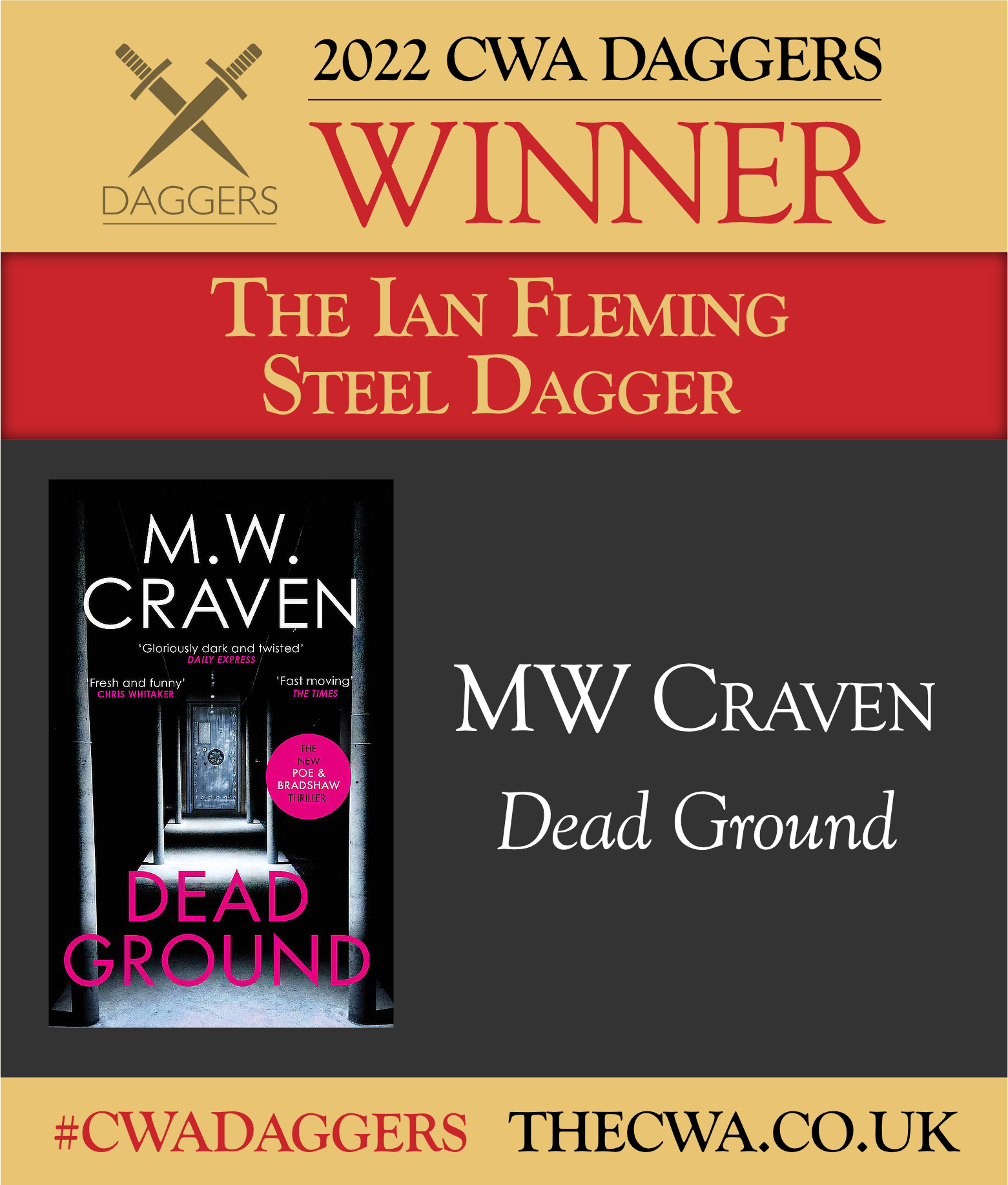
The winner of the Ian Fleming Steel Dagger is MW Craven for Dead Ground. Awarded for best thriller, the Dagger is sponsored by Ian Fleming Publications Ltd, the Fleming family-owned company that looks after the James Bond literary brand.

MW Craven credited the CWA Debut Dagger competition in 2013 for opening the door to his career as an author. He went on to win the CWA Gold Dagger in 2019 for The Puppet Show.

Dead Ground was praised by the judges for its complex characters and deftly constructed plot: “Once again Craven proves himself the master in the art of writing suspense and action.

The anticipated John Creasey (New Blood) Dagger highlights the best debut novels.

This year the accolade goes to Janice Hallet for The Appeal, which was a Sunday Times Crime Book of the Year, praised as a “dazzlingly clever cosy crime novel”.

The ALCS Gold Dagger for Non-Fiction goes to Julia Laite for The Disappearance of Lydia Harvey: A True Story of Sex, Crime and the Meaning of Justice, a poignant account of the short life of a New Zealand woman trafficked as part of the burgeoning sex trade at the start of the twentieth century.

This is the first year the Crime Fiction in Translation Dagger has been sponsored by the CWA Chair, Maxim Jakubowski, in honour of his wife Dolores Jakubowski, now suffering from Alzheimer’s, who was a translator and university lecturer, and a great friend to the crime-writing community. Maxim will sponsor the Dagger in her honour in perpetuity.

This year the Crime Fiction in Translation Dagger 2022, sponsored in honour of Dolores Jakubowski, goes to Simone Buchholz for Hotel Cartagena, a tense hostage drama set in a hotel in Hamburg.

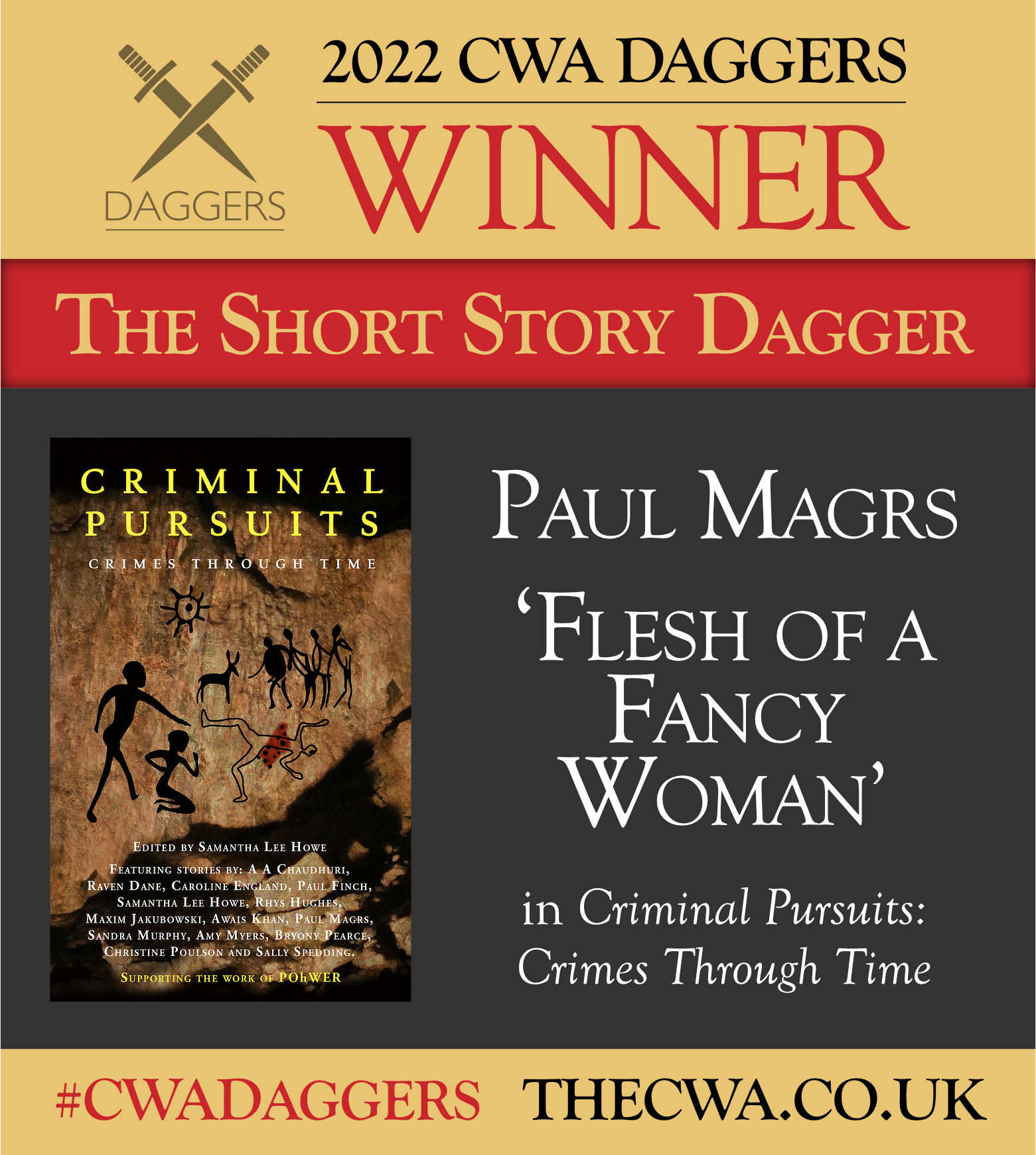
The CWA Daggers are one of the few high-profile awards that honour the short story. Paul Magrs scoops the award for ‘Flesh of a Fancy Woman’, praised as “a wonderfully evocative mix of the Dickensian and the Ealing black and white films.

The Dagger in the Library is voted on exclusively by librarians, chosen for the author’s body of work and support of libraries. This year it goes to Mark Billingham. After a career as an actor and stand-up comedian, Billingham published his first crime novel in 2001. He’s best known for his London-based detective Tom Thorne, which series was adapted by Sky TV starring David Morrissey. His latest book is Rabbit Hole.

This year the chair of the Dagger in the Library judges, Sue Wilkinson MBE, sadly died. At the event the CWA paid tribute to Sue for her passion for reading and her hard work, and thanked Ian Anstice for assuming the role of Acting Chair.

One of the anticipated highlights of the annual Daggers is the Debut Dagger competition, open only to uncontracted writers. The competition can lead to securing representation and a publishing contract – corporate and associate members of the CWA can access the shortlisted entries and often go on to make offers to the writers.

This year, the winner of the Debut Dagger 2022 sponsored by ProWritingAid is Anna Maloney, who has written for TV and works as a script consultant. Her novel, The 10:12, is about a train hijacking and the woman who leads a counter attack, and the aftermath.

The Dagger for the Best Crime and Mystery Publisher, which celebrates publishers and imprints demonstrating excellence and diversity in crime writing, goes to Faber & Faber. The shortlist is selected by a representative group of leading book reviewers, booksellers, agents and journalists.

The CWA’s Red Herring, for services to crime writing and the CWA, was awarded posthumously in memory of Thalia Proctor, who died this year aged 51, and was highly regarded in publishing circles. Maxim said: “Thalia endeared herself to everyone and will be sadly missed.” Her family were present to collect the award.

The CWA Diamond Dagger, awarded to an author whose crime-writing career has been marked by sustained excellence, is announced in early spring each year and in 2022 it was awarded to CJ Sansom, author of the acclaimed Matthew Shardlake series set in Tudor times, as well as standalones such as alternative history Dominion.

On the night, the previous two winners of the Diamond Dagger, Martina Cole in 2021 and Martin Edwards in 2020, were also celebrated after the hiatus of the pandemic.

The winners were announced at a Gala Dinner at the Leonardo City Hotel on Cooper’s Row in London on Wednesday 29 June. The ceremony was compered by genre expert and author, Barry Forshaw, and bestselling author Victoria Selman. CWA Booksellers Champion and bestselling author Elly Griffiths was the after-dinner speaker.

Maxim said: “It’s always an honour to be part of the annual Dagger awards. This year feels extra special as it’s the first time we’ve gathered to celebrate the best in crime writing since 2019. I’d like to congratulate not only all the winners, but also all those shortlisted. It’s a terrific achievement.

One of the UK’s most prominent societies, the CWA was founded in 1953 by John Creasey; the awards started in 1955 with its first award going to Winston Graham, best known for Poldark.

Dagger Winners 2022

CWA GOLD DAGGER

Sunset Swing by Ray Celestin (Macmillan; Mantle)

CWA IAN FLEMING STEEL DAGGER

Dead Ground by MW Craven (Little, Brown; Constable)

CWA JOHN CREASEY (NEW BLOOD) DAGGER

The Appeal by Janice Hallett (Profile Books; Viper Books)

CWA HISTORICAL DAGGER

Sunset Swing, by Ray Celestin (Pan Macmillan; Mantle)

CWA ALCS GOLD DAGGER FOR NON-FICTION

The Disappearance of Lydia Harvey: A True Story of Sex, Crime and the Meaning of Justice by Julia Laite (Profile Books)

CWA CRIME FICTION IN TRANSLATION DAGGER sponsored in honour of Dolores Jakubowski

Hotel Cartagena by Simone Buchholz and translated by Rachel Ward (Orenda Books)

CWA SHORT STORY DAGGER

Flesh of a Fancy Woman’ by Paul Magrs in Criminal Pursuits: Crime Through Time edited by Samantha Lee Howe (Telos Publishing)

CWA DAGGER IN THE LIBRARY

Mark Billingham

CWA PUBLISHERS DAGGER

Faber & Faber

CWA DEBUT DAGGER sponsored by ProWritingAid

The 10:12 by Anna Maloney

THE CWA RED HERRING for services to crime writing and the CWA

In memory of Thalia Proctor


Thursday, 22 October 2020

CWA Dagger Awards 2020 Winners Announced


Michael Robotham, Lou Berney, Casey Cep, and Abir Mukherjee win 2020 CWA Dagger awards.  The winners of the 2020 CWA Daggers, which honour the very best in the crime writing genre, have been announced.

The world-famous Crime Writers’ Association (CWA) Daggers are the oldest awards in the genre and have been synonymous with quality crime writing for over half a century. 

The winners were announced during a live virtual ceremony (22 October, from 7.30pm), hosted by one of the UK’s leading experts on crime fiction, the writer and reviewer Barry Forshaw. The evening also featured guest speaker, Richard Osman. 


The 2020 CWA Gold Dagger for the best crime novel went to Michael Robotham for Good Girl, Bad Girl, featuring forensic psychologist, Cyrus Haven. Born in Australia, Michael worked as a journalist in Australia, America and the UK as senior feature writer for the Mail on Sunday before becoming a ghost writer collaborating with politicians and show business personalities to write their autobiographies. Since his first psychological thriller, The Suspect caused a bidding war at the London Book Fair in 2002, his novels have won numerous awards and have been translated into 25 languages. He was previously awarded the Gold Dagger for Life or Death in 2015.


Lou Berney has won the Ian Fleming Steel Dagger for best thriller for November Road, a poignant crime novel set against the assassination of JF Kennedy. The novel attracted widespread acclaim from reviewers and fellow authors alike, with Stephen King declaring it ‘exceptional’. The American author has previously won the Edgar, Anthony, Macavity, Barry, and Oklahoma Book awards. Berney was also Highly Commended in the CWA Gold Dagger category.


The much-anticipated John Creasey (New Blood) Dagger highlights the best debut novels. This year the accolade goes to Trevor Wood for The Man on the Street, featuring a homeless veteran grappling with PTSD, dubbed by Lee Child as ‘an instant classic’. Wood, a journalist and playwright, has an MA in Creative Writing from the University of East Anglia. He served in the Royal Navy for 16 years.


Abir Mukherjee wins the Sapere Books Historical Dagger for his fourth novel featuring Sam Wyndham, Death in the East. The accountant turned crime writer was inspired to become an author after watching Lee Child on breakfast TV say he started writing age 40. Abir’s debut, A Rising Man, won the Dagger for best historical crime novel in 2017. Death in the East explores the legacy of colonialism in India. 

The Crime Fiction in Translation Dagger goes to Hannelore Cayre for The Godmother, translated by Stephanie Smee. Hannelore Cayre is an award-winning French novelist, screenwriter and director, as well as a practising criminal lawyer. The Godmother has been made into a feature film starring Isabelle Huppert. Stephanie Smee, who lives in Sydney, worked as a lawyer in Sydney and London before becoming a translator, specialising in French to English. 

The ALCS Gold Dagger for Non-Fiction is awarded to Casey Cep, a staff writer at the New York Times whose first book Furious Hours: Murder, Fraud and the Last Trial of Harper Lee, has received acclaim on both sides of the Atlantic. An instant New York Times bestseller, Furious Hours was a Barack Obama Book of the Year.


The CWA Daggers are one of the few high-profile awards that honour the short story. Lauren Henderson receives the Short Story Dagger for #Me Too which features in the anthology Invisible Blood, edited by Maxim Jakubowski. 

Linda Stratmann, Chair of the Crime Writers’ Association, said: “The winners, and all those who were in contention for a Dagger are, as always, to be commended. One thing the pandemic and lockdown has taught us is the value and importance of books and storytelling – for escapism and comfort and for our well-being. Books have always been the conduit to other worlds and into other lives. They let us know we are not alone, so our 2020 virtual awards feel even more significant as many vulnerable people are in enforced isolation and we are all socially distancing. We’re proud to celebrate the crime genre.

The Dagger in the Library is voted on exclusively by librarians, chosen for the author’s body of work and support of libraries. This year it goes to Scottish novelist Christopher Brookmyre, whose books mix comedy, politics and social comment. The journalist turned award-winning novelist is widely considered as one of Britain’s leading crime authors, selling more than two million copies of his novels in the UK alone.

One of the anticipated highlights of the annual Daggers is the Debut Dagger competition, open to unknown and uncontracted writers. The competition for unpublished writers can lead to them securing representation and a publishing contract. This year the winner is Josephine Moulds for Revolution Never Lies. Anna Caig was Highly Commended for The Spae-Wife


The Best Crime and Mystery Publisher of the Year Dagger, which celebrates publishers and imprints demonstrating excellence and diversity in crime writing, goes to Orenda Books. The London-based publisher was established in 2014 by Karen Sullivan. 

Writer Barry Forshaw, MC for the Dagger Awards evening, said: “The CWA Dagger Awards are the most prestigious prizes in crime fiction, and this year has furnished a particularly strong set of books and authors. Nothing dampens the excitement of the Daggers – not even pandemics!

DIAMOND DAGGER

Awarded every year to an author whose crime-writing career has been marked by sustained excellence, and who has made a significant contribution to the genre. Votes from CWA members go forward to be deliberated on by an independent panel. 

This Dagger is announced in early spring each year and in 2020 goes to celebrated Golden Age specialist, anthology editor, reviewer and fiction writer Martin Edwards.

One of the UK’s most prominent societies for the promotion and promulgation of crime writing, the CWA was founded in 1953 by John Creasy; the awards started in 1955 with its first award going to Winston Graham, best known for Poldark. They are regarded by the publishing world as the foremost British awards for crime-writing.

The Winners:

GOLD DAGGER 

Michael Robotham: Good Girl, Bad Girl (Sphere)

Lou Berney: November Road (Harper Fiction) – Highly Commended

IAN FLEMING STEEL DAGGER

Lou Berney: November Road (Harper Fiction)

JOHN CREASEY (NEW BLOOD) DAGGER

Trevor Wood: The Man on the Street (Quercus Fiction)

SAPERE BOOKS HISTORICAL DAGGER

Abir Mukherjee: Death in the East (Harvill Secker)

CRIME FICTION IN TRANSLATION DAGGER

Hannelore Cayre: The Godmother, translated by Stephanie Smee (Old Street Publishing)

SHORT STORY DAGGER

Lauren Henderson: #Me Too in Invisible Blood, edited by Maxim Jakubowski (Titan Books)

ALCS GOLD DAGGER FOR NON-FICTION

Casey Cep: Furious Hours (William Heinemann)

DAGGER IN THE LIBRARY

Christopher Brookmyre

DEBUT DAGGER 

Josephine Moulds: Revolution Never Lies 

Anna Caig: The Spae-Wife - Highly Commended 

PUBLISHERS’ DAGGER 

Orenda Books


Thursday, 30 July 2020

New CWA Anthology Celebrates Vintage Crime

A new short story anthology with a difference celebrates short stories from the archives of the Crime Writers’ Association (CWA).

Vintage Crime gathers gems from the mid-1950’s, when the CWA began, until the twenty-first century. The new compilation features an array of award-winning authors including Andrew Taylor, Kate Ellis, Simon Brett, Liza Cody, HRF Keating, Anthea Fraser and Mick Herron.

Published by Flame Tree Press, the anthology is edited by former Chair of the CWA and CWA archivist, author Martin Edwards.

Martin said: “This is a collection with a difference, celebrating the work of CWA members since the Association was founded in 1953. Entertaining in their own right, the stories also demonstrate the evolution of the crime short story during the CWA’s existence, from the Fifties until the early twenty-first century.

The CWA was established by John Creasey, the prolific author of over 500 novels with worldwide sales in the 1970’s of over 80 million copies in 28 different languages. The long-standing membership organisation is for authors at all stages of their career and works to promote, support and celebrate the diverse crime genre, from psychological thrillers, paranormal crossovers to police procedurals.

The first CWA anthology, Butcher’s Dozen, appeared in 1956, and was co-edited by Julian Symons, Michael Gilbert and Josephine Bell. Over the years, the anthology has yielded many award-winning and nominated stories in the UK and overseas by such luminaries as Ian Rankin, Lawrence Block and Reginald Hill. 

Martin added: “There are countless gems of crime writing in the CWA archives. I’ve picked the juiciest stories from some of the best and most well-known authors, but you’ll also find some hidden treasures by less familiar writers.

Edwards, author of The Golden Age of Murder, is also President and Archivist of the world-famous Detection Club and series consultant to the British Library’s series of crime classics.

The CWA has for over 50 years run the prestigious, world-famed CWA Dagger Awards, which celebrate the best writing in the genre. It’s also renowned for supporting aspiring and debut writers with its annual Debut Dagger competition and Margery Allingham Short Mystery competition.

To celebrate publication of Vintage Crimes, a special online panel Flame Tree Live: CWA and Vintage Crime will take be screened on Sunday 16 August at 6pm on Facebook. To watch, register in advance at https://flametr.com/CWAvintage. 

The panel features authors Martin Edwards, Kate Ellis, Andrew Taylor and the secretary of the CWA, Dea Parkin, discussing the anthology and crime writing, writers, stories and themes.

A blog tour for the book will also take place. It starts on 10 August at Karen Reads and Recommends ending on 21 August at Bookish Jottings.

Vintage Crime, the new CWA Anthology is published in paperback and hardback by Flame Tree Press on 11 August 2020.

Sunday, 21 February 2016

John Creasey and Dennis Wheatley

As part of its celebration of the life and work of classic crime writers I spent a number of hours on Saturday 20 February 2016 re-acquainting myself with the works of John Creasey and Dennis Wheatley courtesy of Peters Fraser Dunlop’s Crime Classic team at their bloggers event.  The event was held at the Groucho Club, Soho, London in the presence of Richard Creasey (the son of John Creasey) Dominic Wheatley (Dennis Wheatley’s grandson) and Charles Beck who is an authority on Dennis Wheatley.
 
Charles Beck & Richard Creasey
The event started with Charles Beck talking about Dennis Wheatley and his work and him explaining that there was much more about Dennis Wheatley than his horror novels which is best known for.  He shared further interesting insights on Dennis Wheatley one of them being that he enjoyed working with Christopher Lee and that the actor really wished that he had been able to act in more films that had been made of Dennis Wheatley’s books.

Richard Creasey
John Creasey's son Richard told several amusing stories about his father including the fact that he started writing under a pseudonym because he was writing so quickly and his publisher could not publish his prodigious output under the same name. When asked about his father (who founded the CWA) on what he would have thought about the CWA now, he explained that he founded the CWA because there was no where for crime writers to gather and talk together and that he thought that his father would have been incredibly pleased with the way in which it had turned out.  He also went on to say that his father would have been really delighted to learn that the CWA New Blood Dagger was named after him.  

It was a fascinating afternoon with clips from various films made of Dennis Wheatley’s books and those of John Creasey being played in the background.

Thanks to Peters Fraser Dunlop’s Crime Classic team for arranging the event.  It was certainly an enlightening event and thanks to @PFDAgents for organising it.

Ayo Onatade & Richard Creasey