Showing posts with label Welbeck Publishing. Show all posts

Thursday, 17 August 2023

Gavin Collinson on the Romanov Code

The producers of The Crown missed a trick. If they’d wanted a royal family with twisting storylines, a sense of the epic and genuinely world-changing pedigree, they should have focussed on the Romanovs. Even the secondary characters would have been more interesting. Paul Burrell vs Rasputin? Come on! It isn’t even a fair fight!

My new contemporary thriller, The Romanov Code, draws on the mysteries, allure and downright dazzling wonder of Russia’s last Imperial rulers. Okay, first up, let’s address the elephant in the library. Yes, I know title is far from original, but I wanted to convey the idea that this, like a certain other Code book, will present historically authentic questions and offer solutions that are both plausible and audacious. 

The book opens with my private detective, Marc Novak, being approached to find the lost treasure of the Romanovs. So far so good. True enough, the last Tsar and his family left an awful lot of riches behind. Even in their final residence, the jail that was ominously known as ‘the House of Special Purpose’, they managed to conceal more jewellery and gemstones than the V&A’s insurance quota could comfortably allow them to display in a single exhibition. In fact, so many diamonds were sewn into the lining of the Romanova’s clothing that when their execution began, the jewels offered an effective bullet-proofing from the incessant gunfire. 

This treasure, along with that taken from their previous residences, was catalogued and later auctioned, although several of the items in question went missing before the sale. Historians often focus on their disappearance and overlook the bigger picture: literally billions of dollars worth of gold, precious stones and royal regalia - including several of the fabled FabergĂ© Eggs - vanished during the period between Tsar Nicholas II’s ‘abdication’ in 1917 and the aftermath of the Romanov massacre in July, 1918.

So my detective, Marc Novak, asks two questions. First, and most obviously – what happened to all this loot? And secondly, how did the soldiers at the House of Special Purpose manage to overlook the enormous stash of precious objects the Romanovs kept in what were effectively their cells? Aside from the gems hidden in the women’s clothing - 18lb of diamonds alone were recovered – following their deaths, hundreds of other valuables were found in their rooms, ranging from gold chains and a platinum cigar case, to rubies, furs and dozens of items made of solid silver. 

We know the guards were vigilant to the point of torment, implementing spot checks and vigorous searches on the Romanovs on a daily basis. So, how did the soldiers somehow miss this vast hoard as their bayonets brushed aside the blankets and their fingers sifted through the suitcases? 

Well, there’s an obvious answer, of course, but it’s a fascinating thread that you can keep pulling and pulling until accepted so-called truths are slowly unravelled. And naturally, that’s exactly what Marc Novak does – not so much gently tugging these strands of inconsistency, but yanking them into the light like his life depends upon it. Which, funnily enough, it sort of does: he’s been given one week to find the Romanov riches or his friends and loved ones will be executed. As incentives go, it’s not as welcome as that offer of a 5% pay rise, but it’s a damn site more motivating.

And that’s just the start. Quite apart from the Romanovs’ missing riches, throughout history, a mind-boggling wealth of masterpieces and treasure has vanished. In the last fifty years alone thousands – let’s pause over that word – thousands of significant paintings have been stolen and never rediscovered. The ‘misplaced’ art ranges from the works of modern artists like Geddes, to Old Masters such as Rembrandt and the greats including Degas, Cezanne and Renoir. And we can add ‘ephemera’ to this mysterious roll-call… The Florentine Diamond, the Comtesse de Vendome’s necklace (valued at over $30 million), the Ivory Coast Crown Jewels, Tucker’s Cross (the most valuable object ever found in a shipwreck), the treasure stolen from the palace of Prince Faisal… All this and thousands of other irreplaceable items - poof! – gone! The police ostensibly as helpless and hapless as Inspector Clouseau seeking the Pink Panther in this continuing seepage.

Yes, make no mistake, it is a continuing seepage. Because when viewed not simply as individual thefts but an ongoing process of removal, it begins to look like a over-arching procedure. 

How would you explain it?

Why not join Novak’s investigation in The Romanov Code to see if his explanation bears any resemblance to yours!

The Romanov Code by Gavin Collinson is published by Welbeck, £8.99 paperback. Also available in ebook.

'Danger, intrigue and glamour. My job's got the lot. If it wasn't for the hitmen paid to kill me and this ticking bomb of a case I should have never accepted, who knows? I might even enjoy it . . .' Private detective Marc Novak is given one week to find the lost treasure of the Romanovs, or his friends and family will be killed. But he's got to stay one step ahead of assassins, the Russian secret service and a mysterious, beautiful former spy if he's to stand any chance of saving his own life, let alone those of his loved ones. Outnumbered, outgunned but never out-thought, Novak must use all his guile and audacity if he's to unravel the deadly riddle of the Romanov Code . . .

Please visit gavincollinson.com for more information on The Romanov Code.

Thursday, 25 May 2023

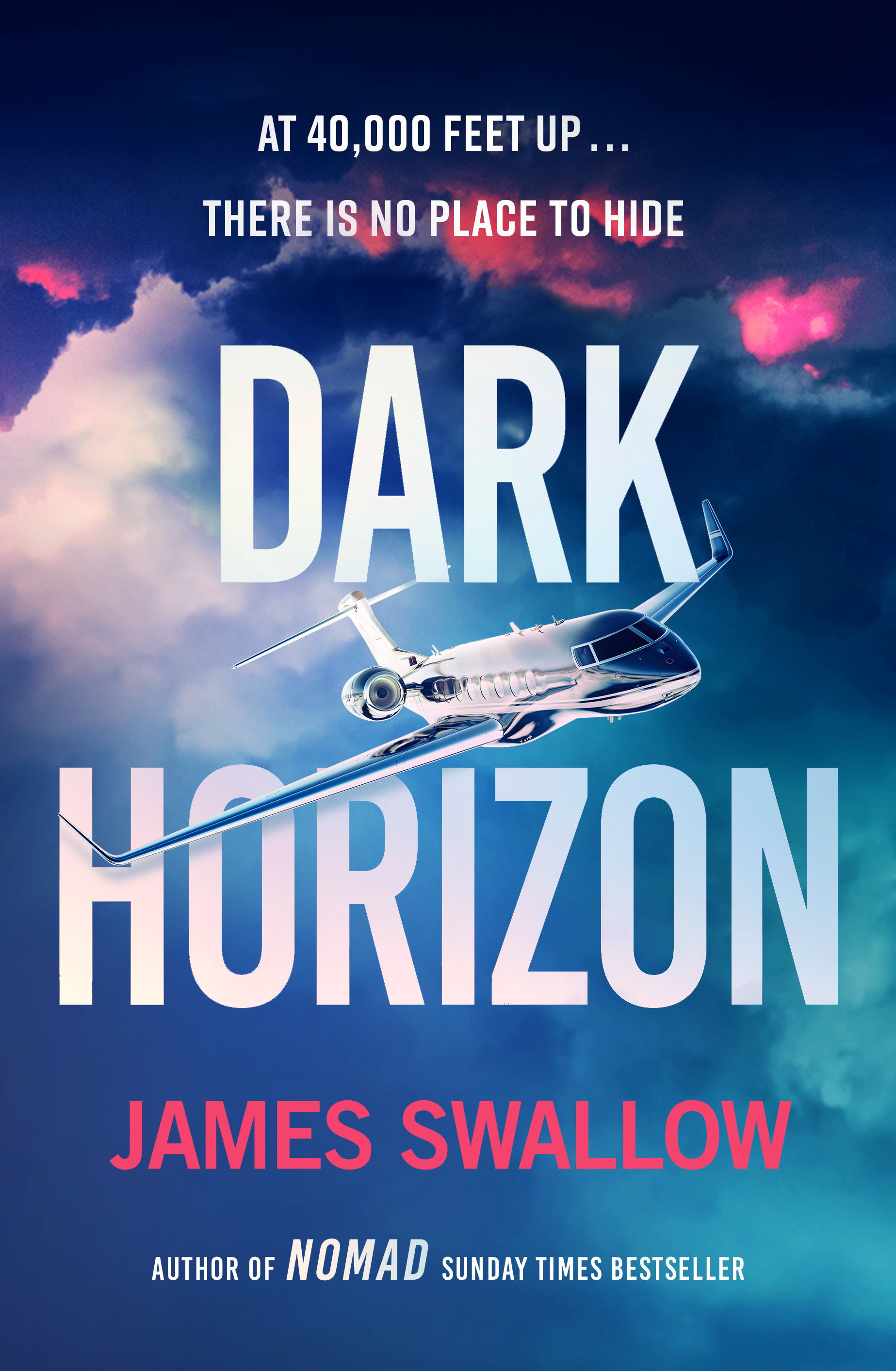
Flying in the Dark by James Swallow

I’ve always been a bit of an aviation geek; I mean, with a surname like mine, how could I not love things that fly? 

I grew up in North London under the approaches to Heathrow, not far from the aerial car park known as the “Lambourne Stack” – for the uninitiated, that’s one of the four volumes of sky around the edges of Greater London, where airliners circle in race-track patterns while they’re waiting permission to land at one of the world’s busiest airports. I watched jets from my bedroom window when I wasn’t making models of them; I had parents who shared my interest, who toured me around museums and air shows, and when I reached seventeen, they gifted me my first flying lesson, in a little single-engine Cessna 152. 

I love the drama of flight, the romance and the excitement of it. The thrill never gets old for me, even when I’m experiencing it from back in coach class, crammed into a seat too small for my long-legged frame. I’m still looking out of that window, watching the sky streak by. 

In my previous novel AIRSIDE (Welbeck,2022) I wrote a thriller about a man whose luck had run out, bumped off the last flight home and trapped in a storm-bound airport terminal. Following it with my newest book DARK HORIZON, I realized I was writing a loosely-connected duology, with both books carrying a common aviation theme – but where AIRSIDE is about being stuck on the ground, DARK HORIZON’s pilot heroine Kate Hood finds herself trapped in the air, in the middle of a violent conspiracy that she wants no part of...but that fate won’t let her escape.

When I write a thriller, my stock in trade is a narrative at a fast pace, a page-turner high on the action. So to give that a foundation, I do my best to make sure the setting of the story is as genuine as I can make it. Writing DARK HORIZON, I talked to experts, aviation historians, fighter pilots and civil flyers alike, to make Kate’s dramatic journey feel authentic.

The concept behind her story takes inspiration from real events – several years ago, after I moved south to the leafy environs of Kent, I once more found myself under an airport approach path, but this time it was for Biggin Hill, a former World War II RAF airfield. I still get to watch flights from my office window, but now they are sleek executive jets, helicopters and occasionally, my old friend the Cessna.

As I read up on the history of the area, a detail pinged on my thriller writer radar and I immediately filed it away as the seed of a potential story. In the early-to-mid 2000s there was a scandal about the alleged use of British airports like Biggin as waypoints for clandestine “renditions” undertaken by America's Central Intelligence Agency. In these covert operations, the CIA would transport suspected terrorist captives outside of US borders, to countries with non-extradition treaties and lax laws with regard to forcible interrogation. The end-point of these flights were the infamous off-grid prisons known in the intelligence community as “black sites”. Morally and ethically grey, operations like these challenge us to consider the lines our governments and security forces are prepared to cross in the name of security. 

It’s the nature of the author that we go through life sifting the world around us for the starting points of our stories, and when I read about these “dark flights” I knew that the enclosed set-up and the secret, highly-charged nature of it would form the solid bedrock of a compelling thriller novel; and from that concept, I formulated the plot line that would become the novel DARK HORIZON, putting a lone pilot with a past she can’t escape on a collision course with a mysterious passenger who may be an innocent victim, or a murderous terrorist hiding in plain sight.

DARK HORIZON by James Swallow is published by Welbeck, out now in hardcover and eBook.

At 40,000 feet up... There is no place to hide. A fatal crash on a rain-slick road and a brutal murder in an English village set off a deadly chain of events, leading from stormy skies over the Mediterranean Sea to an explosive confrontation on a remote airstrip in North Africa... Only a handful of people know the reason why Kate Hood left the military in disgrace; now a contract pilot for a private jet company, she’s looking for a second chance and a better life. But to keep her secrets, she must take a last-minute assignment to fly a covert cargo out of the country to a non-extradition nation, with no questions asked. The cargo is a prisoner who may be the key to a violent terrorist conspiracy – but he swears he is an innocent man, wrongly accused of crimes he played no part in. And as Kate races through the night, on the ground a team of ruthless killers are hunting the people she cares about, threatening their lives to force the pilot to hijack her own aircraft. But do they plan to liberate the captive – or execute him? Trapped at the heart of an escalating crisis, Kate and her mysterious passenger must navigate the conflicting agendas of enemies and allies alike, on a flight into danger that neither of them may survive...

Learn more about James Swallow and his writing at his website www.jswallow.com. You can also find him on Twitter @jmswallow


Wednesday, 16 February 2022

Twins in Thrillers by L V Matthews

Writers and filmmakers have been capitalising on twins and their infinite possibilites for decades but it's in the crime/thriller genres where I think twins can particularly shine. Google 'twins in books' and there is a plethora of titles and most of them are thrillers. In fact, I know of seven twin books coming out in the first quarter of this year alone! We are intrigued by the premise that twins can feel one anothers pain, that they can communicate telepathically, that they are almost supernatural, and this intrigue leads writers down some fantastic creative routes. 

I could write for pages on crime/thriller books featuring twins but I'm going to pick five to - excuse the crime pun – dissect. 

The key – for me – in writing twins well is not defining the characters by their twin-ness, but having the characters deal by being defined by it. An excellent example of this is True Crime Story by Joseph Knox (Paperback, March 2022) The truth about a missing university student, Zoe, is brought to light in this unique novel written in the style of a true-crime documentary. This book is completely ripped up the rule book for me – it's so smart, dark, and mischievous. And the best thing about it was the twin element.

There are definitely twin tropes and sometimes that's exactly why we enjoy reading them, but taking a fresh twist on an existing stereotype will surprise people. Take The Ice Twins by S.K. Tremayne which explores the twin-swapping trope to perfection. A year after one of their identical twin daughters, Lydia, dies in an accident, the Moorcraft family move to a Scottish island hoping to put the past behind them. But when their surviving daughter, Kirstie, claims they have mistaken her identity - that she is Lydia – everything is turned upside down. What I love about this novel is that the swap is not the cliche reveal at the end, but that it creates friction and complexity throughout.

Thinking about how to use twins differently in a thriller is done in one of the most famous to date – Gillian Flynn's Gone Girl which has key character Nick Dunne and his twin Margo. Though their twinship plays a small part in the narrative, Margo is crucial to the story. In a story of bent truths where a reader is constantly second guessing the main two characters, Margo gives real reactions and clues to point the reader in the right direction throughout the plot. She's the moral compass of the piece. She also brings light relief to the book with her wit which I, personally, love in a thriller. 

Body Double by Tess Gerritsen is one of my favourite twin thrillers because of the premise it sets out right from the beginning - Dr. Maura Isles is a pathologist and has seen more than her share of corpses but never before has her blood run cold when the face of the lifeless body on the medical examiner’s table been the mirror image of her own. It immediately raises the question of her own identity, of dark family secrets, of trying to solve the murder of the twin sister she never knew. Cue a pacy plot, and excellent writing that Tess is so well known for.

One of my favourite duos in a thriller (I'm flexing the genre slightly for this one) are Samneric (Sam and Eric) from the most excellent The Lord of the Flies. Identical twins Sam and Eric have always been a group and they know no other way of life than submitting to the collective identity which is the clear analogy for the whole book – keeping to a tight group is what will save them all. Except then it goes badly wrong. Samneric are again the perfect characters to see the fall out through – they are initially devoted to rescue but are easily overwhelmed by the vehemence of tribe: they take part in the horror of Simon's death, they betray Ralph. They are only ever marked out from one another towards the end of the novel when they receive injuries that change their faces and then begin their own individual journeys. 


The Twins by LV Matthews (Welbeck, £8.99) Published 17 February 2022

Two sisters. An intense bond. A bitter rivalry. Margo is a solitary live-in nanny for an upper-class Kensingon family. Cora is a promiscuous dancer on the cusp of a big break, living hand-to-mouth in a run-down London flat. Different though they are, an unspeakable incident from childhood haunts them both. When the terrible secret comes to light, their fragile existences shatter, pitting them against each other in a race for survival. But can there be a winner when a secret is so dark?

Yo can follow her on Twitter @LV_Matthews


Tuesday, 20 October 2020

Scott Carson On The Chill


Why another supernatural book?

It’s a common question, both from readers who are excited to wander back to the dark side with me and those who scoff at ghost stories. (We all know that type – too sophisticated for such silliness. And we all know that ninety percent of them wouldn’t feel comfortable walking through a graveyard in the dark, either. Explain that one to me.)

But most of us embrace a good ghost story. We drift back time and again, savor a good scare, and then move on. Why do we feel that pull?

Supernatural. Emphasis on natural.

It’s October right now. I’m in Maine, and the fog today is so thick that I can’t see the mountain from my office window at all, and the mountain is usually hard to miss, as mountains tend to be. Right now, though? Could be the ocean out there. Could be nothing but trees. Maybe an overgrown orchard. Certainly, there’s an old cemetery; this is New England, there’s always an old cemetery. The point is, I don’t know what’s out there. I know what I can see – blood-red leaves shivering out of skeletal birch trees, blanketing dead grass – but it’s what I can’t see that grabs the mind.

That’s a central theme to THE CHILL, which was born when I read an article in the New York Times describing a very real threat to New York City that was grounded in the most boring of topics: infrastructure. Water tunnels. There are only three of them for the entire city, tasked with providing water to more than eight million people. Those water tunnels were blasted and dug out of ancient rock by forgotten hands. More than a dozen massive reservoirs in faraway Catskill mountain towns contain the supply of precious life-and-city-sustaining fresh water. In my early research, I found some mesmerizing old photographs. One stands out to me even now: a picture of a farmhouse on a flatbed truck. There are men sitting on the roof of the house, mountains visible just beyond. The truck is towing the house away from the farm where once it stood sentry. The farm and the town around it are about to become the basin for a few million gallons of water to quench a city’s thirst.

The name of that town? Neversink.

You can’t make that up. A drowned town named Neversink. Shadowed mountains holding the water for a city of skyscrapers and subways. And someone built that! Imagined it, designed it, built it…what a story that is. What a triumph. Of course, the builders ran into some problems along the way, frustrations and obstacles. There were the headaches with the upstate locals, issues like eminent domain money and relocated farmhouses, relocated graveyards.

Now, tell me how you consider a backstory like that and don’t think of ghosts? Multi-generation family farms, small town squares, old orchards and, yes, old graveyards. They’re all still out there…just underwater now. It is easy to forget the things you cannot see. All in the past. But the past, as Faulkner famously told us, is never dead. It’s not even past.

That line is one I reference whenever I’m asked what draws me back to the supernatural. It’s the idea of human hubris, human control. We move through a natural world so infinitely complex you could devote a lifetime to studying any aspect of it, from mountains to anthills, and still be learning new things each day. Against that backdrop and amid that reality, we humans are able to maintain a fascinating notion: that we are in control of things.

Anyone who has ever seen the aftermath of a tornado – and I have a few times now – can tell you just how quickly that sense of control over the natural world evaporates. Implodes. Shatters and scatters. We’re watching large battles with nature on a daily basis, from global pandemics to wildfires and hurricanes and landslides. Floods.

And still, many of us can believe we’re running the show. Most of the time, at least.

Then the sun goes down and the wind rises and even though we were absolutely certain we knew what the terrain looked like beyond that bank of fog, we begin to doubt ourselves. To wonder.

What if we were wrong? What don’t we know? What have we forgotten? And at what cost.

Keep the lights on. Out there in the dark and the wind and the fog, why, you could begin to believe you’re not really in control, at all…

The Chill by Scott Carson (aka Michael Koryta) is published by Welbeck in paperback original, priced £8.99.

In upstate New York a drowned village lies beneath the dark, still waters of the Chilewaukee reservoir. Sacrificed a century ago to bring water to the millions living downstate, the town's destruction was for the greater good . . . at least that's what the politicians said. Years later an inspector overseeing the dangerously neglected dam witnesses something inexplicable. It seems more than the village was left behind in the waters of the Chill; some never left at all. Now a dark prophecy comes to fruition. Those who remember must ask themselves: who will be next? For sacrifices must be made.  As the dark water begins inexorably to rise, the demand for a fresh sacrifice emerges from the deep . . .