Showing posts with label Nigeria. Show all posts

Friday, 15 October 2021

Sights and Sounds of Storytelling by Onyeka Nwelue


I wrote The Strangers of Braamfontein, because of my fascination of telling the human story, whether through cinema or book.

The Strangers of Braamfontein is a novel set in present day Braamfontein, a suburb of Johannesburg.

It tells the story of Osas, a young and impressionable Nigerian painter, who escapes poverty and hardship in Benin City, and through the help of a travel agent, finds his way to Johannesburg. To survive, Osas must, out of necessity, live rough and spontaneously. In Braamfontein he encounters the Nigerian Janus-faced Chike, the Zimbabwean Machiavellian Chamai, the pawky Don Papi, the duplicitous Ruth, the savvy April and the fiendish Detectives Jiba and Booysen. Each encounter presents a never-ending string of adventures that lead him further into the dark and twisty underbelly of Johannesburg.

Aside portraying young characters who are both original and energetic, The Strangers of Braamfontein boldly grapples with issues that we don’t always get to tell, even though they pervade the larger part of our society. I am talking about violence, sex, drugs, murder, prostitution, bribery, religion and betrayal. These are the major themes this story seeks to explore through the lives of immigrants: the Nigerian drug-dealers, assassins, prostitutes, scammers, cultists, the Ethiopian human traffickers, the Congolese kidnappers, down to the Zimbabwean homosexual prostitutes and drunks; there are also the Malawian forgers, Angolan and Francophone syndicates, down to the South African blackmailers and gangs. These issues are quite urgent, and that is why I used a 19-year old Osas to set the path that I beat in the story.

A certain US publisher, who read the manuscript of The Strangers of Braamfontein after a mutual friend sent it to him, said: “It has taken me until now to read his novel – I have been struggling to keep my publishing house going during the economic downturn, and it has been hard! Can you offer me any advice? This is a new world for me, but I do very much want to publish African literature if I can. The dialogue in the book is in Nigerian Pidgin English. I completely understand that this lends realism to the book – and I grant that a reader of standard English has some obligation to stretch beyond his or her comfort zone in trying to comprehend this sort of dialect, but it does make a portion of the book unintelligible.”

He also went on to say, “The narration is generally speaking OK but even the English prose needs a lot of work.”

I lived in Mexico and Italy and find their literature quite alluring. Somehow, I thought there is no way I would write a work of fiction like a British author, because I am not British. In what way can I communicate as an African? As a Nigerian? Why would I write a story about Nigerians and not use Nigerian expressions? It was when I realized that all those revisions suggested by the editors were a way of rejecting the book, that I thought it is important to have this story out there. As a result, I set up Abibiman publishing to publish the book, as well as other works of literature, particularly from African voices, that choose to write in an authentic style and expression.

The Strangers of Braamfontein is my way of encouraging people to be authentic, to live the way they would and should, culturally. The idea of setting the dialogue in different languages is to discover and mine the originality in mimicking people: as an anthropologist, I spend my time, sitting at airports and parks, listening to people speak. This, I thought, would be the beauty of the book. It can only spark people to go find the meanings of words, to learn a new language and to learn about people.

The Strangers of Braamfontein by Onyeka Nweleue (published by Abibiman Publishing) Out Now

Osas is a young and impressionable Nigerian painter, who escapes poverty and hardship in Benin City, into the chaotic and crime-ridden belly of Johannesburg, through the help of a travel agent. But to survive, he must live a life of adventure and spontaneity and criminality. As Osas walks through the corners of Braamfontein, a suburb of Johannesburg, he encounters the Nigerian Janus-faced Chike, the Zimbabwean Machiavellian Chamai, the pawky Papi, the duplicitous Ruth, the saavy April and the fiendish Detectives Jiba and Booysen, leading to a bolt from the blue. 

A review of The Strangers of Braamfontein can be found here.


Sunday, 10 April 2016

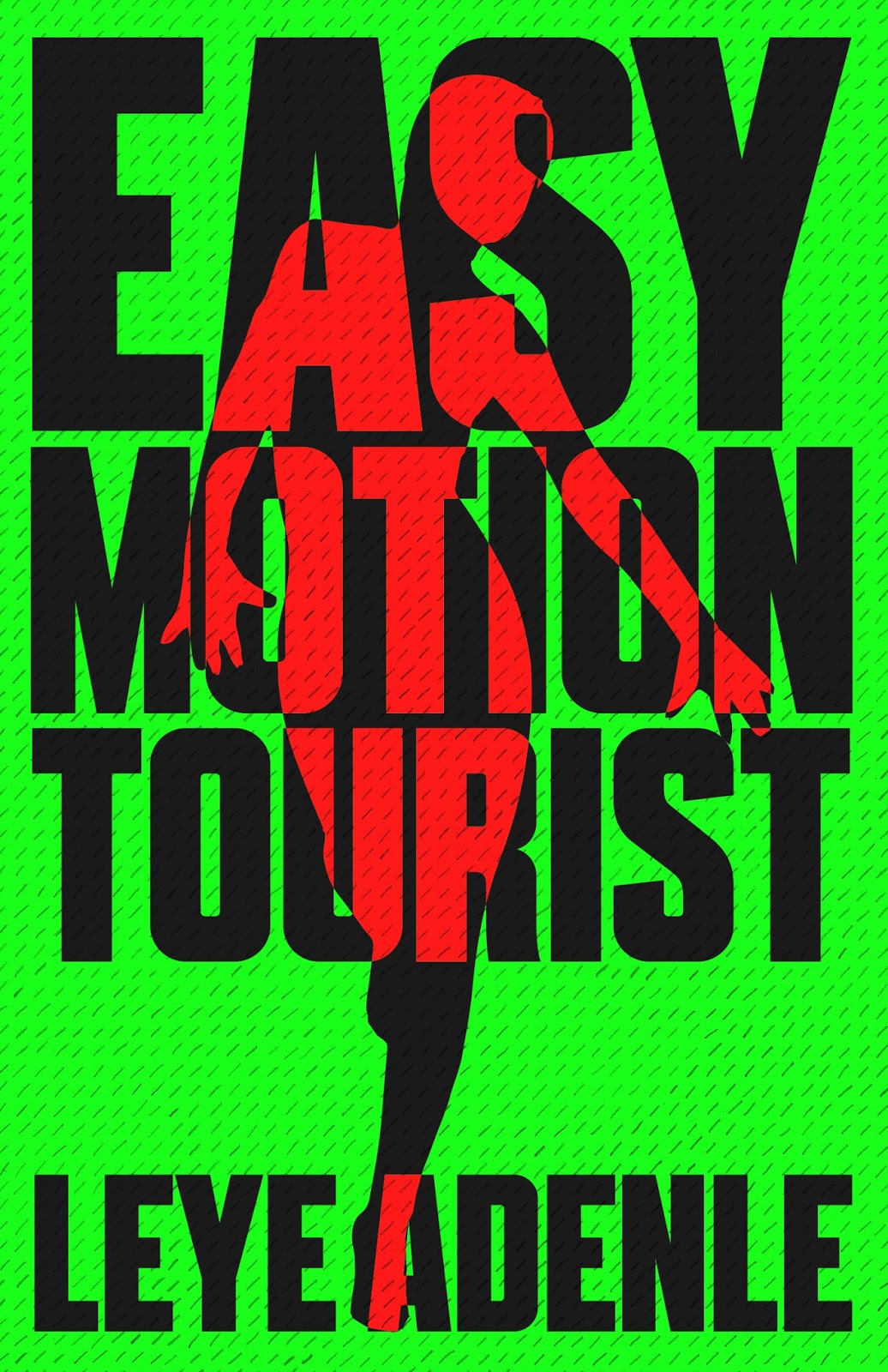
Easy Motion Tourist: The Nigerian Police in Crime Fiction

A murder is reported. You are a policeman. You arrive on the scene, you and half a dozen other armed officers. Indeed there is a body. But there are no witnesses. The corpse is bloated and festering on the pavement of a bridge. It has been there for a while, cooking under the relentless African sun. Lorries, vans, trailers, and motorcycles speed past, only slowing down slightly due to the parked police van. Meters ahead and behind on the pavement, as far as the odour of putrefaction is carried, pedestrians cross the dangerously impatient traffic to get to the other side, and there they carry on. Nobody stops. They see the body, they place their palms over their noses, but they don’t stop. It is not anything new for them and it is not their problem.

Your colleagues are taking pictures with their mobile phones. You go in for a closer look. What makes this one interesting enough to share with phone contacts?

The discoloured corpse is female. Naked, as such dumped bodies tend to be. Perhaps it was clothed when it was first dumped on the bridge. Perhaps the road people; beggars, hawkers, thieves, stripped it of clothes and shoes it no longer needed. The body appears intact. Eyes: check. Breasts: check. Incisions: none. Strange. But maybe the tongue. Maybe that’s all they took. You lean in for an even closer look. You're holding your breath but the offensive odour still registers. The mouth does not look disturbed. You can’t be sure if the purplish dark brown of the lips is blood or just decay. Lipstick? You won't know for sure until  you look inside the mouth. A fly rises quickly to your face. You swat but it lands on your cheek.

You turn from the body and walk away as you scrub the spot on your cheek with your handkerchief. You spit on the cloth and scrub again. You fold it inside out, spit, and scrub again, then you throw it far from you, over the side of the bridge and into the lagoon. You’re done.

Maybe they took her tongue; maybe they didn’t. But it's not your problem. It’s no one's problem. In fact, you’re only there because a caller to a morning radio show complained of a body on the bridge. He called on his mobile from his car on his way to work. Phoning and driving. An offence. The self-righteous show host then called the chief of the local police station. On air! Then your boss, the chief, had no choice but to promise, on air, to send her boys to investigate. But everyone knows that no one investigates a naked, butchered body dumped on the road. Or bridge. Well, maybe this one is different. Maybe they didn’t even take the tongue. Maybe it was a hit and run. A hit and run that may or may not have been witnessed. Witnesses who, if identified, might mention the make and colour of a car. Maybe even the registration number.

You had suggested, when your boss got off the phone from the radio show presenter and after she finished questioning the intelligence of the minister of police whose decision it was to publish the mobile phone numbers of all police officers above a certain rank, that the matter be passed on to the environmental agency. ‘It is their job, after all’. And thus you secured your ride in the police van that carried you to the scene because, as your boss, who had just been spoken down to by a common radio presenter, reminded you, in case you had forgotten, ‘It is the job of the police to investigate all crimes.’ Not just crimes with a known suspect and reliable witnesses. Not just crimes where the motive is clear and arrests are guaranteed. Not just ‘open and close’ cases. All crimes.

As you walk further away from the naked corpse, spitting because you can now taste the odour, paranoid over the spot on your cheek where the fly had landed, you fantasise about collecting fingerprints post mortem, combing the body for alien DNA, running the prints and DNA through a database, finding a match and a suspect. Doing your job. But it's all fantasy because there is no national database to query. There is no lab to process the body. There is no lab to process gathered materials and isolate DNA. Your investigation is over - you have seen the body. You will now call the environmental agency and they will arrive at their own convenience to remove the body destined for an unmarked grave or the cadaver market.

There will be no investigation. The victim is unknown. The murderer is unknown. And in this case, with no apparent body parts missing, the motive is unknown. Perhaps the coroner would determine a cause of death. Perhaps not. Perhaps the shaven head means something, perhaps not. Perhaps they now use hair as well. But why kill a person just for their hair?

They are people who deal in human body parts for rituals. Wealth magic. Power magic. Protection magic. And you are a Nigerian policeman. Underpaid, under-trained, under-equipped. And I am a writer. A Nigerian author. My genre is crime fiction. Between you and them, do you see my problem? How do I write a recognisable police procedural? My debut novel does just that, and truthfully too, as a subplot to a far more macabre plot: the illicit trade in human body parts.

More information about Leye Adenle and his writing can be found on his website. You can also follow him on Twitter @LeyeAdenle and find him on Facebook.