Tuesday, 2 October 2012

Forthcoming books to look forward to from Atlantic and Corvus books


They call him Herod – a killer of unimaginable cruelty, with an unthinkable desire London is in the grip of a barbaric serial killer. Four women have been abducted in quick succession, their bodies mutilated and dumped. When a fifth woman is taken from her home, DCI David Rosen knows that time is running out... Then Rosen gets a mysterious phone call from Father Sebastian Flint, an enigmatic priest who seems to know rather too much about the abductions.  But it isn’t until Rosen discovers the existence of an ancient text – said to be the devil’s answer to the bible –that the true horror of Herod’s plan begins to unfold.  The Sixth Soul is the debut novel by Mark Roberts and is due to be published in February 2013.

Blessed Are Those Who Thirst is by Anne Holt and is due to be published in April 2013. In Oslo, crime scenes are being found covered with blood, but there is no victim. Only an odd series of numbers is left behind. When a girl is brutally raped in her apartment, Hanne Wilhelmsen quickly notices strange similarities with the blood-stained crime scenes. But the girl’s father has started an independent hunt for the rapist... Also by Anne Holt and due to be published in June is Death of the Demon. The cheerful façade of the Spring Sunshine Children’s home hides a brutal regime. When the manager is found dead in her office, Hanne Wilhelmsen is called in to investigate.

Welcome to fifth-century Britain: the Romans have left, the Saxons have invaded, the towns are decaying and the countryside is dangerous.  Malgwyn ap Cuneglas, an embittered ex-soldier who lost a limb in the Saxon wars, has become the trusted counsellor to Arthur, High King of all Britannia. So when a monk dies in horrific circumstances in Glastonbury Abbey, the Abbot calls for Malgwyn to investigate.  His search for the truth will draw him into an intricate web of religious, economic and political deceit – and a conspiracy that could endanger everything Arthur has fought for. The Divine Sacrifice is by Anthony Hays and is due to be published in April 2013

Traitor’s Field is the second book in the series by Robert Wilton (the winner of the inaugural Goldsboro Crown Award for debut historical novel) to feature John Thurloe.  It is due to be published in May 2013. As England tears itself apart, two spymasters fight for its future: It is 1648 and Britain is at war with itself. The Royalists are defeated but Parliament is in turmoil, its power weakened by internal discord.  Royalism’s last hope is Sir Mortimer Shay, a ruthless veteran of decades of intrigue who must rebuild a credible threat to Cromwell’s rule, whatever the cost.  John Thurloe is a young official in Cromwell’s service. Confronted by the extent of the Royalists’ secret intelligence network, he will have to fight the true power reaching into every corner of society: the Comptrollerate-General for Scrutiny and Survey.

False Gods of Rome is the third novel in the Vespasian series by Robert Fabbri. Sickened by Tiberius’s insane debauchery, Vespasian places his faith in the new Emperor, Caligula. Instead, he watches Rome’s shining star deteriorate into a blood-crazed, incestuous, all-powerful madman. Lavish building projects, endless games, public displays of his  relationship with his sister and a terrified senate are nothing to Caligula’s most ambitious plan: to bridge the bay of Neapolis and ride over it wearing Alexander’s breastplate. And it falls to Vespasian to travel to Alexandria and steal it. False Gods of Rome is due to be published in January 2013.


A Darkness Descending is by Christobel Kent and is due to be published in May 2013.  Silvano Rosselli, the gaunt, charismatic leader of a Florentine political movement, collapses at a rally. His longtime partner Flavia has disappeared, leaving him literally holding their new baby, at least until Rosselli’s formidable mother takes charge. Meanwhile, Sandro Cellini has been reduced to looking into a possibly fraudulent insurance claim. Soon he is drawn into the mystery surrounding Rosselli, and when Flavia’s fate is revealed, events take a terrifying turn.

No Way Back is by Matthew Klein and is due to be published in March 2013. Jimmy Thane has always taken the wrong path. Now he has one last chance to save both his career and his marriage – he has  seven weeks to turn round a failing company. But when the police start asking questions about the disappearance of the former CEO, Jimmy begins to wonder what he’s got himself into.  Then he discovers surveillance equipment in his neighbour’s house. And he begins to notice that his wife isn’t just tired, she’s terrified. Jimmy no longer feels like he’s living the dream – instead he’s plunged into the worst kind of nightmare.

Brodie is approached by the Jewish community in Glasgow to solve a series of thefts. But when the thief is knifed by a householder, who is then also murdered, Brodie’s easy case becomes a terrifying, violent mess. When Brodie investigates further, he discovers that the dead man wasn’t a brutalized Jew, but a sadistic camp guard. What starts as a small case soon escalates into a relentless personal quest for the truth. And when it begins to seem that the guards are protecting someone high up in the old Nazi organization, Brodie faces the biggest moral dilemma of his career.  Pilgrim Soul is by Gordon Ferris and is due to be published in April 2013.

Sherlock Holmes meets Flashman in the first instalment of Adam Carver’s adventures, a wonderfully exuberant piece of Victoriana.  It is 1870. When amateur archaeologist Adam Carver and his loyal but obdurate retainer Quint are visited by an attractive young woman, they are pitched headlong into an elaborate mystery which comes to centre on the existence (or not) of a lost text in Ancient Greek, one that may reveal the whereabouts of the treasure hoard of Philip II of Macedonia. With the scene shifting from the roughest and most genteel parts of the teeming metropolis to the fastness of a Greece gripped by political unrest, Carver and Quint soon realize that nothing is quite what it seems.  Carver’s Quest is by Nick Rennison and is due to be published in June 2013. 


Monday, 1 October 2012

Charlie Brooks is Switched

Today’s guest blog is by newspaper columnist racehorse trainer and former jockey Charlie Brooks.

The best bit about writing a novel on a drug deal, Amsterdam, forgery, a bent spy and gambling is the ‘research and development.’  How else would one explain away frequent trips to the dodgiest city in Europe?  I deliberately omitted to thank any of my contacts that gave me chapter and verse on the world in which ‘Switch’ is set because I didn’t want to end up in the bottom of a Dutch canal.

My favourite source, however, was an alarmingly frank MI6 officer who filled me in on the reality of being a spook.  To start with, they’re extremely badly paid given the talents with which they need to be blessed.  So it wasn’t stretching the truth when Max Ward admits to his lover Sophie – who is distractingly sexy – that he couldn’t resist shorting an African government’s currency after he’d heard the content of their phone calls.  He knew it was wrong – that it had to stop – but he certainly wasn’t giving the money back on his wages.

The opportunity to meet a real forger was a stroke of luck.  He was, in the nicest possible way, the most devilishly naughty person I’ve ever met.  Which is probably why he’s so good.  I now feel quite intoxicated with the knowledge that generations of Dukes have been selling off works of art on the quiet to fix their roofs.  And replacing them with copies, so not to upset their heirs.

Good forgers have an immense amount of guile, even if it is channelled in the wrong direction.  But what I hadn’t realized about forgery is that it’s equally important to forge the provenance as the work of art itself.  Sophie’s father Jacques comes unstuck because the forged magazine, dated sixty years previous, which he created containing an essay on his creation, was unfortunately not published that month.  Unlucky, because only a bent spy such as Pallesson might have checked such a detail; but Jacques should have been more thorough.

Sophie creates two copies of the Peasants in Winter, that well-known Breughel masterpiece.  And I love the way she distinguishes between the two of them.  ‘You always add a detail, rather than subtract,’ she explains to Max.  ‘People miss what they know should be there, but they don’t see a small added detail.’
 
The obsession with delusion that a forger must have is also interesting.  Knowing that a yellow pigment derived from the urine of cows, which were only fed mangoes, for instance, is an opportunity for the meticulous forger.  Because any painting containing that pigment will be assumed to pre-date the era, during which that pigment production was made illegal.

Some say that a good novel revolves 80% around the plot, and 20% around the characters.  Others say it is the opposite.  I don’t agree with either.  What is the point in Max Ward having a beautiful French forgeress as his lover and a seductive banker’s wife as a mistress if every male [and some female] reader doesn’t want to screw them?  In addition, how can Max work as a hero if women reading Switch don’t want him?  Moreover, none of that works, anyway, if there is no sense of place.  Therefore, if Eton, Castle Vleuylen or the British Embassy in The Hague don’t feel instinctively real, the characters also fail.

I hope Switch doesn’t.

Thursday, 27 September 2012

Trust in Linwood Barclay's “Eyes”


Well today is when Linwood Barclay’s tremendous thriller TRUST YOUR EYES is released from Orion Publishing, and we have other big news about this rip-roaring novel.

When I read an exceptional crime / thriller, I am known for my excitability, and when I put this book down, it felt like I had been mainlining espresso into my aorta. I have followed Linwood Barclay’s work since his breakout novel NO TIME FOR GOODBYE, and as much as I found last years THE ACCIDENT captivating, little prepared me for the intensity and elegance of TRUST YOUR EYES. During the reading experience, I found myself laughing, touched, puzzled, horrified and even as a reader who sees well beyond ‘technical miss-direction’ in a narrative, this book got me every time.

We have published a feature review at Shots today to celebrate the launch of Trust Your Eyes and it is one of my lengthier peices, though there are no plot spoilers, it does contain considerable detail, and analysis, so you have been warned - it is located here. This feature has been edited down by our Editor Mike Stotter, and an even more lengthy review and analysis with an interview with Linwood is featured later this week at Jeff Peirce’s The Rap Sheet.

After reading the last word, I sat in total silence - then I re-read the prologue, and then understood the significance of what I considered Barclay’s theme in Trust Your Eyes. The windows that we open in our lives to show people who we are, may have less significance than what we don’t show people; because most of the time we place curtains over these windows in order to protect ourselves from what fate, circumstance and the decisions we’ve made have shaped who we are. Many times these glimpses can be very ugly, that’s why the view from the window should be guarded. Revealing one’s inner self sometimes allows us to understand how we became who we are.

Added to the UK release of TRUST YOUR EYES comes this news from Hollywood’s Variety –

Warner Bros. is entrusting Canadian author Linwood Barclay's novel "Trust Your Eyes" to an unlikely on-the-lot favorite son -- "Hangover" helmer Todd Phillips, who's agreed to direct his first thriller for the studio.

Phillips' production banner Green Hat Films has a first-look deal at WB, which won the book in a bidding war. Studio has been supportive of Phillips' decision to branch out into other genres after a string of hit comedies, including "Due Date" and the "Hangover" trilogy.

Phillips will produce and Jon Silk will co-produce. Barclay will exec produce with Scott Budnick and Mark O'Connor of Green Hat. WB exec Niija Kuykendall will oversee for the studio.-

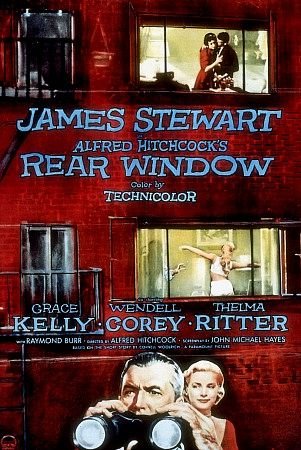
Described as a cross between Alfred Hitchcock's "Rear Window" and Barry Levinson's "Rain Man," story follows a schizophrenic, map-obsessed savant who witnesses a murder online on Manhattan's Lower East Side. He insists that his older brother investigate, and the siblings cross paths with a politically connected ex-cop and his ice pick-wielding henchwoman.

APA's Steven Fisher negotiated the film deal, while Helen Heller repped the book deal.


We’re blessed that Barclay has another book out early 2013 in the UK entitled ‘NEVER SAW IT COMING’, [available as an eBook in the US currently]; it’s a coda to his breakthrough ‘NO TIME FOR GOODBYE’ and the novella ‘CLOUDED VISION’, because this week, his work just enriched my life.

And remember, for those of you attending Bouchercon in Cleveland next week, Linwood Barclay will be there, to sign copies of Trust Your Eyes. Also joining Linwood will be his Editor at Orion Publishing Bill Massey and his agent Helen Heller, two of the top professionals in contemporary publishing.

The Shots team this year will be represented by Mike Stotter, Kirstie Long and I on the adventure that is Bouchercon.

In case this post has not wetted your appetite for this elegant thriller, here’s a book video and this is an excerpt read by the author – you’ll be hearing a great deal about this novel, because you need to trust your eyes.


 Photo (c) Ali Karim from The Orion Publishing Party 2008 London, England
 'Shots Editors Mike Stotter and Ali Karim congratulate Linwood Barclay following the Richard and Judy Book Club Selection for NO TIME FOR GOODBYE'


Mons Kallentoft's Travelling Road Show

© Tobias Lundqvist

Today's guest blog is by Mons Kallentoft. His debut novel Pesetas was awarded the Swedish Writers Union’s Award for Best Debut Novel, the Katapult Prize.  He is most widely known for his crime series about Police Inspector Malin Fors, which takes place in the Swedish town of Linköping, Kallentoft's place of birth.  The series consists of six books and the first one, “Midwinter Sacrifice”, has been translated into more than fifteen languages.
He has also won several prizes, such as the Gourmand World Cookbook Award (2005), the Hagdahl Prize (2008) and Primo Espana (2009).

The last few years I have been on the road a lot, travelling from country to country, from festival to festival, talking about my books and my heroine Malin Fors.

I love these trips.

I love meeting readers, fellow writers and the nice intelligent people in the book business.  I like to give interviews to interested journalists, not yet completely tired of us Scandinavian crime writers.

What I don’t like are all the flights, the loneliness of hotel rooms, and the sadness when I hear my children’s voices on the telephone: ’When are you coming home, Daddy?’

Tomorrow.

Or the day after that.

I usually hit a bar after those phone calls.  A cold beer or something much stronger.  If I am in France, I reward myself with a too-expensive Burgundy.  I did that recently in Edinburgh as well, in the rather dull fine dining restaurant at The Balmoral Hotel.  I drank a homesick bottle of burgundy on my own and thought; what am I doing here?

Apart from that, I had a nice time in Edinburgh.

Many of my British colleagues are manic jokers; they can´t open their mouths without cracking a joke, it seems.  I am not much of a comedian and while I certainly love my colleagues’ company and the entertainment of it all, it makes me feel like a stiff polar bear with a frozen sense of the world.  Don´t take it so bloody seriously, man, I say to myself.  Relax.  Tell a Viking joke.

One fixture on the travelling writer’s scene is R J Ellory.  A serious fellow like me, and regarded as a bit pompous by many.  I always found him nice, but when I met him outside Paris after Midwinter Sacrifice had been successful in the UK, I had the sense that he saw me as just another competitor, best ignored.

Or worse.

It was with sadness and some amusement that I read about his sock-puppeting.

Why do it?
 
It is not just a thing you do.

His books have not received much attention here in Sweden.  But his sock-puppeting made quite a stir.

This is another sad thing.  Good books don´t always travel well.  Mistakes always do.
I read A Quiet Belief in Angels and thought it was a good novel, daring within the genre, risk-taking as few crime novels are.

I am writing this in bed in Stockholm, thinking about the time I was on Polish morning television.  The guest before me was R2D2 of Star Wars fame.  I was tired, hungover, and a bit high on pain medication for my bad back and simply not in the mood for a translated conversation with a robot in Polish.  My handler was not happy after the show: ’You didn’t smile’, was the verdict.

But I am smiling now.  At the memory of the aggressive little robot.

A big wide killer of a smile.

Tomorrow the travelling road show that is me goes to Gothenburg, to the annual book fair.  It is the big party of the Swedish book industry, and can best be described as one long hangover for everybody.  It is great fun, and in Sweden, I am considered something of a man about town, so I am a fish in the right water there.

After that, I am scheduled to go to Rome, then to Canada, then to . . .

I don’t know where yet.  But there will be more of those nice, funny people to meet.  And more of those dreaded phone calls.

I realise I am a lucky man.  I get to live in many worlds.  Both a stranger and not.


Tuesday, 25 September 2012

Gary Phillips in BIG WATER


At Shots, we’re big followers of award-winning crime writer and graphic novel writer Gary Phillips, as we first met Gary when he visited London’s Crimescene Event as a guest of honour with actor Richard Widmark in 2002

We’re excited about his new venture BIG WATER, which he’s working with Gilda Haas, via Kickstarter. We also support worthy enterprises that use Crime / Thriller Fiction as a springboard to influence our world for the better.


This Video Explains the concept of BIG WATER –


The Team is halfway there to get this graphic novel out, and apart from a great story from LA’s coolest dude Gary Phillips it also address an important issue, often neglected by the media, and something that will become important to all of us in the future – the control of water.

If the video does not play on your PC, you may need to upgrade your browser or click Here 

BACKGROUND
Water –– who owns it, who controls it –– that's the world's biggest environmental struggle. Water, an essential life force that makes up 60% of our bodies and 70% of the planet, is being commodified, corporatized, and stolen from the people.

In BIG WATER we’re using the medium of the graphic novel to tell an entertaining and informative tale about the fight to keep the water flowing, written by mystery writer Gary Phillips [The Rinse, The Warlord of Willow Ridge].

OUR STORY
BIG WATER takes place in the fictional Southeast L.A. town of Bell Park, where local activists, led by home town organizer Melinda Cruz, are fighting to keep their water out of private hands.  Meanwhile across town, the Double Six designer water label, where Melinda’s kid brother Jaime is a sales rep, is backing the privatization play so as to take over Bell Park’s historic aquifer.

WHO WE ARE
BIG WATER is brought to you by Dr. Pop, your friendly neighborhood website that breaks down complicated issues about the economy, democracy, and the city in simple and intriguing ways. 

WHERE YOU COME IN
Gary's script has been written, and we are now raising money to:

1.  Hire the talented Mani Magalhães (Bicycle Cop Dave, Brand & Reese, Vincent Price Presents) to produce the sequential illustrations.
2. Publish the book.
3. Get BIG WATER into the hands of the eager masses.

More information Here

THANK YOU IN ADVANCE FROM GARY PHILLIPS AND GILDA HAAS

For information about the work of Gary Phillips Click Here [from last month’s Publishers Weekly Special Feature] and Click here for information about his work from PM Press.

We do hope you get involved in BIG WATER and support this venture.

Photo Top © 2011 Ali Karim of Shots Editor Mike Stotter taking over as Gary Phillips Security Man at Bouchercon in St Louis

Monday, 24 September 2012

Sakey’s Scar Tissue


The Shots team would like you to support the efforts of bestselling writer Marcus Sakey as he supports a charity close to his heart, one that battles childhood cancer. Marcus Sakey is releasing an eBook entitled Scar Tissue to raise funds for the Team Julian Foundation. Marcus spoke candidly about this venture with Joe Konrath here

The Team Julian Foundation, a not-for-profit that raises research funds for childhood cancer, is teaming up with an acclaimed thriller novelist to raise money through e-book sales. The foundation was started by The Boivin family in memory of their son Julian who was diagnosed with an incurable brain tumor at the age of 4. Marcus Sakey, television host and author living in Chicago, is a personal friend of Brad and Nettie Boivin, and together, they are using the growing popularity of e-books to raise money for a worthy cause.

Marcus Sakey published his first book in 2007, but his friendship with the Boivin’s and their son Julian started long before his writing success. Seeing first-hand how the popularity of e-books and independent publishing is changing the publishing industry, decided to use his readership to raise money for the cause. He collected seven short stories and published the e-anthology, Scar Tissue. During the month of September, Pediatric Cancer Awareness Month, 100% of the proceeds will go directly to the Team Julian Foundation. After that, he will contribute 50% of the proceeds.

Sakey knew Julian since he was born and he was a sweet, happy-go-lucky kid. But Julian’s life changed dramatically one terrible morning in 2010 when he woke up feeling disoriented. His parents rushed him to the hospital, where Julian was diagnosed with an atypical brain stem glioma.

“One of the most terrifying nightmares a parent could ever face is learning that their child has cancer,” Nettie Boivin recalls. “What’s worse is when they’re told that a cure does not exist.”
The Boivins lost their son just 7 months later and created Team Julian shortly thereafter. Since its inception, the foundation has raised over $100K for pediatric cancer research. It is completely volunteer- based which means funds go directly to supporting research that ultimately leads to breakthroughs in cures for brain tumors and childhood cancer.
The e-book revolution has already changed the way we read, but now, it’s changing our ability to raise funds. Unlike gala dinners or organized walks, Scar Tissue will provide funds to the Team Julian foundation for years to come.

Boivin states, “Knowing Julian’s friendship with Marcus and their affinity for playing out stories of good and evil, Jules would be so proud to know his pal has joined forces to beat the ultimate bad guy - pediatric cancer.”

Buy Scar Tissue from : Amazon – B&N

More information available from –

Shots would like to thank Dana Kaye of Kaye Publicity for alerting us about this venture

Friday, 21 September 2012

The Relentless American


I’ve enjoyed Simon Kernick’s crime and thrillers for over a decade now, being energized by his early police procedurals featuring corrupt cop [turned hit-man] Dennis Milne. Simon debuted with ‘The Business of Dying’ in 1991, and followed up his furious London-based police action with The Murder Exchange, A Good Day to Die and The Crime Trade. I always wonder where the time went, as I recall vividly going to my first Bouchercon in 2003 with Simon in Las Vegas. We also went, with Sarah Weinman to the very first Harrogate crime writing festival in the same year. We found time to record a lengthy interview with Paul Johnston at the last Dead-on-Deansgate Crime Convention, meet up and interviewed Lawrence Block when he was presented with the Diamond Dagger Award by the British Crime Writers Association. We even went to a waste oil recycling plant in the East End of London. Our visit to this industrial plant was integral to the plot of one of his novels. During the visit, the hard-man of crime fiction felt somewhat queasy due to the pervading stench produced in the chemical process.

Simon changed writing direction radically in 2007 turning his hand away from the police procedural into thriller territory, with Relentless, a novel printed on solidified adrenaline. It was greeted to great acclaim winning the Richard and Judy Award in 2007, other winners in the crime and thriller category have been R J Ellory [A Quiet Belief in Angels], Linwood Barclay [No Time for Goodbye], Gregg Hurwitz [You’re Next] among others. The Richard and Judy Award in the UK is akin to the Oprah Winfrey Book Club awards.

So while at Harrogate earlier this year I got talking to Simon asking when would his thrillers finally surface in US; as several of my American colleagues were asking when they could access these titles, so I asked Simon to let us know -

Relentless, which is released on ebook in the US on September 18th at a special introductory price of $2.99, is my fifth novel, and my first one published in the States for seven years. I’ve recently signed a four book deal with Simon & Schuster, which will see Relentless and The Last Ten Seconds out in ebook this year, before my latest, Siege, is released in paperback next spring.

And I’ve got to say, after all this time it’s good to be back. I’ve still got a lot of readers and friends in the US from the time when my early books were published, and I’m looking forward to renewing acquaintances. I’ve also had a huge amount of encouragement from American writers like Harlan Coben and Lee Child, who’ve said some really nice things about my work, so I’m hoping to reach a lot more people with the books this time round.
Relentless is a good great one to be starting with too, as it was my breakout book. To date it’s sold over 400,000 copies in the UK, and 300,000 more copies overseas. It’s a high-octane, twisting and turning, thriller about an ordinary suburban man, Tom Meron, who suddenly finds himself on the run from a group of ruthless killers. With his wife missing, and wanted for murder, Tom only has hours to find out why he’s being targeted before his luck runs out.
Take a look at it. I promise you won’t be disappointed.


Following Relentless, he continued his thriller theme with Severed which was based upon a nightmare Kernick suffered, which he detailed here. Long known for his late nights and drinking, one night when Mike Stotter, Micheal Marshall, Simon Kernick and I were drinking late at the opening party on Thursday at Crimefest 2008; at 4am Friday Morning, the Shots Editor-in–Chief Mike Stotter asked if [when Simon had the nightmare that lead to the plot of Relentless] he had wet his bed? We all roared laughing, especially Simon, as he has very good sense of humour, something he deploys to bring relief to the unbearable tension he ratchets up in this thriller novels. 

Though full of life and fun, Simon Kernick takes his writing very seriously, and is on the board at The Crime Writers Association and always working hard promoting literacy.

I urge you to explore the threatening world of Simon Kernick’s thrillers now that they are available in the US in eBook editions.

More information is available here

Top Photo of Richard and Judy Award Winners Linwood Barclay and Simon Kernick at Theakston’s Crime Writing Festival Harrogate  © 2011 A Karim 

Bottom Photo of Simon Kernick being interviewed by ITV3 at Theakston's Old Peculiar Crime Writing Festival 2011

Thursday, 20 September 2012

A Dark Place to Die with Ed Chatterton


Today's guest blog is an interview of author Ed Chatterton by Nick Quantrill.  

Ed Chatterton has worked at various points as an illustrator, written for children and set up his own design company. Nick Quantrill talks to Ed about his first adult novel, “A Dark Place To Die”, a slice of ‘Brit Grit’ set in Liverpool and Australia.

NQ – Congratulation on a great crime debut, Ed. In your own words, what’s “A Dark Place To Die” all about?

EC – Thanks for the compliment, Nick. ‘A Dark Place To Die’ focuses on Menno Koopman, an ex-Liverpool cop with Dutch ancestry and freshly-retired to Australia, who is sucked back into his old world when a burnt body is discovered amongst Antony Gormley’s iron men sculptures on a Liverpool beach. The victim turns out to be connected on a personal level with Koopman and he returns to his home city to conduct his own investigation. The killing on the beach is the start of a story about a large scale drug deal gone wrong between Liverpool and an organised gang operating out of Australia’s Gold Coast. The violence escalates in unexpected and savage ways as Koopman, and his protege, DI Frank Keane, dig deeper into the case.

NQ – Although it’s your first crime novel, it’s certainly not your first appearance in print, is it?

EC – No, I have been writing children’s fiction for almost twenty years. Mostly that’s been for upper primary levels with a few YA novels in there too. ‘A Dark Place To Die’ is actually my 32nd book as a writer. There have been a couple of forays into crime fiction before within the world of children’s books. Two other YA novels: ‘The Brain Finds A Leg’ (Little Hare) and ‘Michigan Moorcroft RIP’ (Scholastic), although surreally comedic, were essentially crime books. I started out as an illustrator - which is something I still do - and I have probably illustrated around 140 books in total.

NQ – Why did you want to write a crime novel? Have you always been a big reader of the genre?

EC - I found that I was becoming slightly frustrated operating within the boundaries of children’s fiction. Don’t get me wrong: I’ll continue to write for children if there’s a demand, but I wanted to write about subjects that interested me (primarily violence, sex and death!) without being constrained by the age of the reader. There was also the aspect of the sophistication of the language. Although I’ve always written ‘up’ in my children’s fiction, there are concepts and language that you can only use when writing for adults. I was prodded into action by meeting another children’s writer, Phillip Gwynne, at an event. His first crime novel (‘The Build Up’) had just been published and I was incredibly envious; an underrated emotion I always think. Prompted by envy, I set about writing what turned out to be ‘A Dark Place To Die’ which I had been kicking around since 2002 when I was living in the US.

I have always been a big crime reader; from Conan Doyle and Agatha Christie as a child through to my current tastes which lean towards Elmore Leonard, George Pelecanos and Patricia Highsmith. I believe that the very best writers are working in crime fiction. Almost every feted writer I read appears flabby and self-indulgent when placed next to Leonard or Pelecanos. That doesn’t mean there aren’t terrible crime writers: there are, far too many, but if there’s a better book by a living writer than ‘Get Shorty’ then I’d like to see it. I think also that the way Pelecanos weaves his home town of Washington DC into his work, without it ever becoming claustrophobic or cloying, is masterful.

NQ – Turning back to “A Dark Place To Die”, the split location between Liverpool and Australia is very intriguing and one of the novel’s major strengths. Did the character of Menno Koopman, a Liverpudlian now settled in Australia draw heavily on your own background?

EC – Yes, probably it did although there are a number of key differences. I was at the Brisbane Writers Festival a few weeks ago appearing with the Swedish crime writer, Asa Larsson, and she made the comment that it is often in the first novel that a writer uses the most personal stuff. I agree to an extent but I think because this is not my first fiction (by a long shot) there is perhaps less than with most ‘new’ writers. I picked the name Menno Koopman from a Dutch guy I play football with as I wanted him to have a less than typical Liverpool background. I didn’t want the book(s) to be too ‘scouse’ in flavour as I think that being too much in love with your setting can be a problem if you want readers from elsewhere. The reason for the settings is the old adage of ‘write what you know’. That sentiment isn’t something I completely agree with but it helped me in this case. The contrast between the apparent paradise of Australia and the grit of Liverpool was appealing although I won’t be revisiting the Australian setting in the sequel.

NQ – And in relation to Liverpool as a setting, it seems to be one of the great British cities which is very much underrepresented in crime writing. What do you think makes it a place worth exploring?

EC - I’m an emigrant which I feel gives me a more objective view of the place and one of the things I wanted to do was not to be too ‘local’. Liverpool is a big city with a massive global history. I don’t think it thinks of itself as English and I have tried where possible to reflect that. Its history as a port - a spectacularly bloody one when you think about the emergence of the place through the slave trade - makes it a great starting point for stories which begin ‘small’ and expand. I find that the city seems to have more in common with places like New York, Boston, Dublin, Hamburg and Glasgow than other English cities, largely because of its one time importance as a port, but also because of a long-standing multi-cultural mix.

The crime rates in Liverpool are no worse than elsewhere but there is a streak of almost piratical entrepreneurship at work in the criminal psyche which makes it interesting as a writer. There’s a small reference I make in the book about the Liver Bird being an appropriate symbol for Liverpool due to it being based on a poorly-copied drawing of an eagle. The result was a new creature. There’s something very Liverpool about that.

NQ – One of the most striking things to me is that although “A Dark Place To Die” is billed as a police procedural, we don’t learn an awful lot about DI Keane and DS Harris away from their work. It’s maybe a little unusual. Was that a deliberate decision?

EC – Yes, it was. As a fan of George Pelecanos I wanted to have a series that while utilising characters who re-occur in book to book, the size of the roles they play in each book are not predetermined. So, for example, while ‘A Dark Place To Die’ has at its centre the character of Menno Koopman, the sequel shifts emphasis to Frank Keane and, to a lesser extent, Emily Harris. The third book will probably move Emily Harris to the forefront. I like this approach in the books I read so I’m hoping it will appeal to my readers. The ‘police procedural’ is a little bit of a misnomer. I deliberately didn’t get the manuscript read by anyone connected to the police force although I do have several good contacts. This was because I don’t want to get bogged down in the endless detail of bureaucracy. From a narrative point of view the ‘correct’ procedure is often the dullest. I tried to be as accurate as I could - just so long as it didn’t impede the narrative or make the characters less believable. Keane and Harris’s lack of background came from knowing a number of coppers who like to keep things very close to the chest. Koopman, being retired and having a very unusual home life, is fair game. The character of Keane will emerge more slowly; just like any relationship with a real-life copper. They don’t give too much personal information away.

NQ – On the other hand, many of the peripheral characters are so vivid and rich, maybe they have the potential to reappear in future work. I’m thinking about Gittings, the washed-up alcoholic former Merseyside police officer and Warren Eckhardt who handles the Australian side of the investigation. Again, was that deliberate or just an example of those happy accidents which occur when you’re writing?

EC – I love peripheral characters and Eckhardt is one of my favourites. It’s easy to write these kind of characters but I didn’t want to have anyone like that at the forefront. The reason is one of believability; I’m a bit sick of reading cop novels in which the main character is peppered with flaws and psychological ticks. I think you can get away with that in the more minor characters. Warren Eckhardt reappears in book two in the series but I’m afraid Gittings is no more.

NQ – The novel has been out for a while now in Australia. What kind of reception has it had?

EC – It’s had a really good reception. It was Random House Book of the Month in August and the feedback from reviewers and readers has been uniformly positive. It has also been optioned by a movie company which is pretty exciting.  One of the unexpected things has been that over here I am now seen as representing the really dark, gritty, grungy end of the crime spectrum. I appeared on a recent festival panel called ‘I Like It Confronting’ in which I was there as the representative of hard-nosed, edgy fiction.  I’m in a schizophrenic place right now with the book coming out in the UK. My feeling is that when books two and three come out I will be seen as a British crime writer, not an Australian (at festivals many people assume I’m visiting Australia).

NQ – And what can we expect next? Will the next novel be set solely in Liverpool?


EC - I have just completed the first draft of the second book. I wish I could give you the title but I’m still arm-wrestling with Random House about what it will be called.  My suggestions: ‘In The Belly Of The Beast’ and ‘From The Cradle To The Grave’ had a lukewarm reception . . . but we’ll come to a gentlemanly agreement soon.  What I can tell you is that the setting is Liverpool and Los Angeles and centres around the movie business (Liverpool is, after London, the most used film location in the UK). Australia doesn’t get a look in although Koopman and Eckhardt do figure. This story begins with a murder-suicide in a leafy middle-class suburb (it’s actually set in my old next-door neighbour’s house). Keane and Harris soon discover that the apparently simple case has wider implications. Without giving too much away I can say that the Liverpool end of things focuses on a movie being made in the city which has as its subject the Joseph Williamson Tunnels. These tunnels (which are real) were built by an eccentric Victorian for no apparent reason. They run for hundreds of metres under the city and range in size from narrow crawl spaces to huge arched caverns. The labyrinthine setting echoes the theme of the novel which is (cue drum roll) based on the legend of Theseus and the Minotaur. As with ‘A Dark Place To Die’, there is blood, there is sex and there is realism as the narrative unfolds in an unexpected but believable way. From dead dentists to global conspiracies in 500 pages.

A Dark Place to Die by Ed Chatterton is published 27th September (Arrow)

More information about Ed and his writing can be found on his website.

Tuesday, 18 September 2012

Marshall’s Killer Move


It’s been over a decade since Michael Marshall Smith, truncated his name and entered the world of crime / thriller fiction with the worldwide bestseller THE STRAW MEN. This novel of his The Straw Men established Michael Marshall as writer of crime thrillers that saw the world slightly off kilter, almost from a parallaxed view, unsettling, disturbing and most of all - different.

He followed up this startling novel with two further novels that explored this terrifying theme, THE LONELY DEAD, and BLOOD OF ANGELS. He wrote an essay for Shots on why he had made The Straw Men into a trilogy and what compelled him to write such disturbing work.

He followed up this trilogy with two equally unsettling thrillers, THE INTRUDERS and BAD THINGS. Since then we’ve had a gap in his novels as Michael has been occupied writing for the screen, and splitting his time between California and London. He recently joined the crime fiction cabal at Orion Publishing with his novel KILLER MOVE, which has just been released in Paperback in the UK and by William Morrow in the US, and again prepare to be unsettled –

Bill Moore already has a lot, but he wants more... much more.

He's got a lucrative job selling condos in the Florida Keys, a successful wife, a good marriage, a beautiful house. He also has a five-year plan for supersuccess, but that plan has begun to drag into its sixth year without reaping its intended rewards. So now Bill's starting to mix it up—just a little—to accelerate his way into the future that he knows he deserves.

Then one morning Bill arrives at work to find a card waiting for him, with no indication who it's from or why it was sent. Its message is just one word: modified.

From that moment on, Bill's life begins to change.

At first, nothing seems very different. But when things begin to unwind rapidly, and one after another, people around Bill start to die, it becomes increasingly clear that someone somewhere has a very different plan for Bill's future.

Confused and angry, Bill begins to fight against this unseen force until he comes to a terrifying, inescapable realization: Once modified, there's no going back.

Michael came to London to launch the Paperback of Killer Move, with Mike Stotter and Ali Karim from Shots invited to join some of the London Critics for lunch and drinks. As a long term reader of Michael’s work, I am excited to see that he has a new and highly anticipated novel due in March 2013 from Orion Publishing entitled THE FORGOTTEN.

Shots Ezine thanks Angela McMahon of Orion Publishing in having organized a special competition to celebrate the return of Michael Marshall in print with a prize of a signed paperback copy of KILLER MOVE.

All you have to do is answer this simple question –

Name the title of Michael Marshall Smith’s debut novel released in 1994.
Hint - it was the winner of the August Derleth Award [1995] and Philip K. Dick Award [2000]

[a] Only Backward
[b] Only Sideways
[d] Only Forward
[e] The Three Stigmata of Palmer Eldritch

Send your answer in an email to shotscomp@yahoo.co.uk marking the subject line “KILLER MOVE” and please include a postal address.

The Closing date for entries is 1 / November / 2012 12:00:00 AM

Terms and Conditions for the competition are below –

Good Luck, and if you've not read Michael Marshall or Michael Marshall Smith or even M.M. Smith - you have some wonderful books and short stories ahead of you Click this link to learn more >  http://www.michaelmarshallsmith.com 

Photos Top  © 2012 Ali Karim L-R Ali Karim, Jake Kerridge, Michael Marshall, Barry Forshaw, Mike Stotter and Peter Guttridge

Terms and conditions for the Michael Marshall "Killer Move" Competition
  • Closing date for entries is 1 / November / 2012 12:00:00 AM
  • All correct entries will be entered into a prize draw and the first correct answer picked at random on 2nd / November / 2012 will be declared the winner of the book.
  • The winner will be notified by email within 14 days of the promotion closing date and is required to accept their prize by email or phone call within 14 days of notification.
  • In the event of non-acceptance within the specified period, the promoter reserves the right to reallocate the prize to the next randomly drawn correct and valid entry.
  • The winner will be notified within 28 days of the closing date. No responsibility can be accepted for lost or misplaced entries
  • The prize is non-transferable and there is no cash alternative
  • Only one entry per person
  • Incorrect or illegible answers or entries received after the entry date will not be entered into the prize draw
  • The judges decision is final and no correspondence will be entered into
  • No geographical restrictions