Wednesday, 17 April 2019

Final call for entries for the McIlvanney Prize for Crime Fiction and the NEW debut prize for crime fiction


Final call for entries for the McIlvanney Prize for Crime Fiction and the
NEW debut prize for crime fiction
 AND revealing the debut authors selected for Alex Gray’s New Crimes

Best-selling crime writer Alex Gray created the Bloody Scotland International Crime Writing Festival with fellow author, Lin Anderson, in order to celebrate the best of crime writing and to support aspiring crime writers.

As the Festival celebrates 8 years Alex reveals her debut selections for this years New Crimes panel and reflects on the success stories which have emerged from it including Abir Mukherjee (‘lovely to see the trajectory of Abir’s writing career since then’), Felicia Yap (‘blend of futuristic novel and contemporary crime made it quite unique’) and Olga Wotjas (‘crime and humour are hard to combine but I laughed out loud several times’).

On Saturday 21 September four new crime writers will be taking the stage in Stirling all of which she praises for ‘how well the stories stuck in my mind and, more importantly, the superb quality of writing’:

Freefall by US author, Jessica Barry (Harvill Secker) was just one of those thrillers that creates a lasting impression long after finishing the story, a crime debut by a writer previously known for romantic fiction. Quite a leap!

Close to the Edge by Toby Faber (Muswell Press) was a story I thought I would not like, given that much of the setting is in the tunnels of the London Underground and I am horribly claustrophobic. Yet it kept me reading and I loved the setting and characters in equal measure.

Past Life by Dominic Nolan (Headline) combines Police Procedural with a harrowing account of one woman’s amnesia, not a tale for the faint-hearted and never falling into the trap of a predictable outcome but a book that grabs you and refuses to let go till the very end.

The Rumour by Lesley Kara (Bantam Press) takes what might be considered a small thing, a mere rumour, and build it into a thrilling story. The Rumour might be compared to the recent BBC drama, The Victim, but its resemblance is pure coincidence, just showing the zeitgeist prevailing right now.

None of the above books are eligible for the new McIlvanney Prize for debut fiction - which requires authors to be born in Scotland live in Scotland or set their books there - so there is still all to play for. Entries for the prize close at 5pm on Friday 26 April. PDFs of the book (published between 1 August 2018 and 31 July 2019) should be sent by email to Director, Bob McDevitt bob@bloodyscotland.com with McIlvanney Prize Entry 2019 plus the book title in the header. The winner will be selected from the highest scoring titles in the first round and judged by the board of Bloody Scotland, including crime writers Lin Anderson, Craig Robertson, Gordon Brown and Abir Mukherjee.

A new Scottish debut panel will precede Alex Gray’s New Crimes event so the morning of Saturday 21 September at Bloody Scotland is the place to be for discovering new crime fiction. The Scottish debut line up will be revealed after the programme launch on 3 June (in Stirling) and 4 June (in London).
 
For further information contact fiona@brownleedonald.com 07767 431846 @brownlee_donald


Tuesday, 16 April 2019

Books to Look Forward to from Pan Macmillan

July 2019

A Nearly Normal Family is a psychological thriller from M. T. Edvardsson and asks what would you do if your child was suspected of murder, how far would you go to protect them? Do you want to know the truth? Every murder case starts with a suspect. What if the suspect is your daughter?   Would you believe her, or the evidence against her?  The Father - Believes his daughter has been framed.  The Mother - Believes she is hiding something.  The Daughter - Believes they have no idea what she's truly capable of . . . There are three sides to the story.  And the truth will shatter this family to pieces.

It is 1949 and handsome, young ex-soldier Aloysius Archer arrives in Poca City, Oklahoma. On parole following a stint in prison back east when he was convicted of a crime he didn’t commit, Archer is looking for a fresh start and a peaceful life after his wartime experiences in Italy. However, he soon understands that there’s a lot more going on in this town than he’d bargained for as he meets some very colourful, extremely intriguing and often dangerous residents living above and below the law. All seem to have deeply buried secrets which he must uncover if he’s to avoid going back behind bars.  One Good Deed is by David Baldacci.

August 2019

Time for the Dead is by Lin Anderson and sees forensic scientist Rhona MacLeod discover that a terrifying war is unfolding on Scotland's Isle of Skye.  When forensic scientist Rhona MacLeod returns to her roots on Scotland's Isle of Skye, a chance encounter in the woods behind a nearby activities centre leads her to what seems to be a crime scene, but without a victim. Could this be linked to a group of army medics, who visited the centre while on leave from Afghanistan and can no longer be located on the island?  Enlisting the help of local tracker dog Blaze, Rhona starts searching for a connection. Two days later a body is found at the base of the famous cliff known as Kilt Rock, face and identity obliterated by the fall, which leads Rhona to suspect the missing medics may be on the island for reasons other than relaxation. Furthermore, elements of the case suggests a link with an ongoing operation in Glasgow, which draws DS Michael McNab into the investigation.  As the island's unforgiving conditions close in, Rhona must find out what really happened to the group in Afghanistan, as the consequences may be being played out in brutal killings on Skye . . .

Has the killer in DC Maggie Neville's cold case returned after a decade of silence?  Katy Pope was seventeen when she was brutally murdered on a family holiday in Majorca. Despite her mother's high rank in the Met and the joint major investigation between the British and Spanish police, Katy's killer was never caught. Ten years later, Katy's family return to the Spanish island to launch a fresh appeal for information, taking with them the now skeletal team of investigating Met detectives, and newly seconded Maggie as the family liaison officer.  But Maggie's first international investigation quickly goes from being more than just a press conference when another British girl there on holiday goes missing, and Katy's killer announces that it's time for an encore . . .  Dead Guilty is by Michelle Davies.

Desperate to put her past in the rearview mirror, Finn Hunt leaves the Midwest for Phoenix, Arizona, where no one knows her story.  While she's working a dead-end job, a chance meeting with Philip Martin, son of a prominent US Senator, leads Finn to a position as nanny for Amabel, his precocious four-year-old daughter. Quickly seduced into the Martins' privileged world, Finn can almost believe she belongs there, almost forget the dark past that haunts her.  Then, in the stifling heat of a desert summer as the Senator's re-election looms, a strange woman begins to follow Finn, claiming a connection to Philip and threatening to expose the family to scandal. As Finn tries to protect Amabel, and shield the Martins, she's inadvertently drawn deeper and deeper into their buried secrets.  The family trusts Finn, for now, but it will only take one mistake for everything she holds dear - the Martins' world, her new life - to fall apart . . .  Girl in the Rear View Mirror is by Kelsey Rae Dimberg

September 2019

Blood in the Water by Jack Flynn is a thriller set in Boston in the gritty world of mob bosses, con artists and gangs, where allegiances are formed with law enforcement and criminals just as easily as they are broken.   Homeland Security agent, Kit Steel, is committed to avenge terrorism. And she's after the blood of her nemesis, one of world's most ruthless and dangerous criminals, Vincente Carpio. He has the blood of her husband and young son on his hands, and Kit is unwavering in her determination to see him kept behind bars forever. Clever, calculating, and manipulative, Carpio has aid and influence on the outside, and he's waiting for the perfect moment when the final pieces of the jigsaw fall into place.  Harbour Union chief, Cormack McConnell, has lived his life close to the wire above and below the law, and he controls everything that happens on Boston's waterfront. Someone wants him out of the way, fast. After he narrowly survives a brutal attack on his bar, The Mariner, complications arise when Cormack believes he's been betrayed by one of his crew - a young man, Buddy Cavanaugh, who he's shocked to discover is the love of his precious nineteen-year-old daughter, Diamond.  Everyone has a game to play until it becomes apparent that there are much darker, far-reaching forces of evil at work which look to be preparing for the international stage. What follows is a gripping race against time, a rollercoaster action-packed story with international terrorism at its core and family at its heart.

The Long Call is the first book in a brand new series by Anne Cleeves.  In North Devon, where the rivers Taw and Torridge converge and run into the sea, Detective Matthew Venn stands outside the church as his father's funeral takes place. The day Matthew turned his back on the strict evangelical community in which he grew up, he lost his family too.  Now he's back, not just to mourn his father at a distance, but to take charge of his first major case in the Two Rivers region; a complex place not quite as idyllic as tourists suppose.  A body has been found on the beach near to Matthew's new home: a man with the tattoo of an albatross on his neck, stabbed to death.  Finding the killer is Venn's only focus, and his team's investigation will take him straight back into the community he left behind, and the deadly secrets that lurk there.

This is not a detective story, this is a story about the making of a detective . . .  William Warwick has always wanted to be a detective, and decides, much to his father's dismay, that rather than become a barrister like his father, Sir Julian Warwick QC, and his sister Grace, he will join London's Metropolitan Police Force.  After graduating from university, William begins a career that will define his life: from his early months on the beat under the watchful eye of his first mentor, Constable Fred Yates, to his first high-stakes case as a fledgling detective in Scotland Yard's arts and antiquities squad. Investigating the theft of a priceless Rembrandt painting from the Fitzmolean Museum, he meets Beth Rainsford, a research assistant at the gallery who he falls hopelessly in love with, even as Beth guards a secret of her own that she's terrified will come to light.  While William follows the trail of the missing masterpiece, he comes up against suave art collector Miles Faulkner and his brilliant lawyer, Booth Watson QC, who are willing to bend the law to breaking point to stay one step ahead of William. Meanwhile, Miles Faulkner's wife, Christina, befriends William, but whose side is she really on?  Nothing Ventured is by Jeffrey Archer.

The Fifth Column is a novel about the only man who can thwart a Nazi sympathizer uprising in New York during the Second World War, by Andrew Gross.  A Man in Trouble - February 1939 and Europe is on the brink of war. Charles Mossman is in a bar in Hell's Kitchen, New York, reeling from the loss of his job and his failing marriage, whilst outside thousands of Nazi sympathizers are attending a hate-spewing rally. As he confronts one, Charles makes a horrendous mistake with deadly consequences.  A City of Secrets - Two years later, Charles is released from prison and tries to reunite with his family. The US has kept out of the war for now but the pressure in the city is rising as those sympathetic to the Nazi cause lay the foundations for what lies ahead.  The Enemy Within -   As he tries to make amends with his wife and daughter, Charles starts to understand that surrounding them there are forces that will use any means necessary to bring about the downfall of his nation. And when his daughter is befriended by a seemingly amiable Swiss couple, it brings to the surface his fears of a 'Fifth Column' of embedded German spies in their new neighbourhood. All Charles wants is to redeem himself as a husband and father, but sometimes a man must do questionable things to stand up for his family and what he believes, even sacrificing his life to do so . . .

Solomon knew that he had one advantage. A pawn ticket belonging to a dead man tucked into his top pocket - the only clue to the truth . . .  An old soldier dies alone in his Edinburgh nursing home. No known relatives, and no Will to enact. Just a pawn ticket found amongst his belongings, and fifty thousand pounds in used notes sewn into the lining of his burial suit . . . Heir Hunter, Solomon Farthing - down on his luck, until, perhaps, now - is tipped off on this unexplained fortune. Armed with only the deceased's name and the crumpled pawn ticket, he must find the dead man's closest living relative if he is to get a cut of this much-needed cash.  But in trawling through the deceased's family tree, Solomon uncovers a mystery that goes back to 1918 and a group of eleven soldiers abandoned in a farmhouse billet in France in the weeks leading up to the armistice.  Set between contemporary Edinburgh and the final brutal days of the First World War as the soldiers await their orders, The Inheritance of Solomon Farthing is Mary Paulson-Ellis and shows us how the debts of the present can never be settled unless those of the past have been paid first . . .

The Other End of The Line is by Andrea Camilleri.  In Inspector Montalbano's coastal town of Vigata, a surge of migrants have been coming in by boat, and all the town's hands are on deck to help the arrivals. At the heart of the scene are the police - on the lookout for the people smugglers responsible - and long night-shifts are rendering Inspector Montalbano and his officers exhausted.  Then one night, while Montalbano is enduring yet another gruelling stint at the port, a separate crime is committed - unexplained, unexpected, and unpleasant. Elena, the dressmaker at the town's famous tailors, has been found dead - slaughtered by her own scissors . . .   As a swell of desperate people arrive in search of a better life, Inspector Montalbano finds himself trying to unravel the mystery of who murdered the dressmaker. But as he makes his enquiries, the Inspector can't help but wonder: what will happen if he keeps tugging on this thread? And what will he find at the end of the line?

December 2019

When the body of twenty-nine-year-old social worker Gloria Montoya, seven weeks pregnant with her first child, shows up on Chief New York City Medical Examiner Laurie Montgomery’s autopsy table, she’s baffled to find no apparent causes of death. With no clues to go on, Laurie enlists the help of Dr Tricia Albanese, a forensic pathology resident with a background in genetic science, to help her trace the identity of the unborn baby’s father using DNA from the mother and child. But when Tricia is found dead in her apartment in a manner strikingly similar to Gloria’s death, Laurie realizes she might have two linked homicides on her hands . . . and now it’s up to her, with the help of her husband, ME Jack Stapleton, to continue the tracking work Tricia had begun before a killer can strike again.  Genesis is by Robin Cook

Monday, 15 April 2019

Sam Shephard grills Vanda Symon

In which Vanda Symon is interrogated by Detective Sam Shephard...

SS       SS I will remind you that anything you say can be taken down as evidence and held against you at a later date.

VS       Noted. As long as you don’t whine about it.

SS      I don’t whine.

VS       Sure. 

SS       First up, why did you make me so bloody short?

VS       You’re not short, you’re vertically challenged. 

SS       (Withering look)

VS       Oooh, enough with the eye-daggers. There was good reason for that. My Mum was a shortie, she just squinked in over 5 foot tall, so she was small but mighty. One of the things she often complained about was that when you were short, people didn’t take you seriously, so I thought, it’s always good to give your characters a challenge to overcome, I’ll make her short.

SS       Gee, ta.

VS       You’re welcome. But there are distinct advantages to being short.

SS       Yeah, right. If there are I haven’t encountered them yet.

VS       Actually, you have. When people don’t take you seriously, they underestimate you. And dare I say it, Sam, people underestimate you at their peril.

SS       Okay, come to think of it you might have a point there. I’ll give you a begrudging thanks.

VS       Sometimes I happen to know what I’m doing. Not always, but occasionally I get it right.

SS       Hmmmmm. So, do people ask you if you are me? I mean, I am you? That sounds weird, but you know what I mean.

VS       People often ask me if I am you, but no. I have far better manners, don’t swear as much as you do and have better taste in pyjamas. But seriously, you are definitely your own woman. You arrived fully formed, full of the saSS, quirks and insecurities we love about you. If you insist on trying to find common ground, there is one characteristic of mine that you share, it is our hopeless optimism and faith in people. 

SS       So if you’re not me, who are you like?

VS       People tell me I’m a lot like my mum, which I take as an immense compliment, but if I was like anyone in your world, I am more of a Maggie – a steady Eddie.

SS       So if your mum was so cool, how come mine is such a battle-axe?

VS       Your mum is not a battle-axe. Sure she can be a bit stubborn and abrasive, and she seems a bit stand offish and judgemental with you, but she loves you to pieces, and don’t you ever forget that. Truth be told, you are both quite a lot alike.

SS       I’m nothing like her!

VS       Protest all you like. In case you hadn’t noticed, your dad’s besotted with the both of you. Doesn’t that tell you something?

SS       Hurrumph. 

So, if they happened to make a movie, or put me on telly one day, who would you want to play me?

VS       I don’t actually care, as long as the actor is short! I’d be a bit miffed if they cast a statuesque actor as your height informs so much of who you are, how people treat you and how situations pan out. They need to have a shortie. (So for all you vertically challenged actors out there – here’s your perfect role...)

SS       Who would you want to play you in a movie?

VS      I don’t think they could find anyone with frizzy enough hair to play me...

SS       True!

VS       One last question?

SS       Sure. Of all the things you could have made me addicted to, why was it a biscuit? Why Toffee Pops?

VS       Hellloooooo, Toffee Pops – does that need explaining?

SS       Good point

VS       And it does mean I have to do quality control research on them regularly - for your benefit, of course.

SS      Naturally, sacrifices you make.

VS       You have no idea.

The Ringmaster by Vanda Symon (Published by Orenda Books)
Death is stalking the South Island of New Zealand.  Marginalised by previous antics, Sam Shephard, is on the bottom rung of detective training in Dunedin, and her boss makes sure she knows it. She gets involved in her first homicide investigation, when a university student is murdered in the Botanic Gardens, and Sam soon discovers this is not an isolated incident. There is a chilling prospect of a predator loose in Dunedin, and a very strong possibility that the deaths are linked to a visiting circus... Determined to find out who's running the show, and to prove herself, Sam throws herself into an investigation that can have only one ending...

Fled by Meg Keneally

It’s an odd thing about historical fiction – the most outrageous, outlandish elements of a story are often the ones which are based on fact.
There’s the Flying Pieman, who dispensed philosophy along with his pies and engaged in “feats of pedestrianism” including outrunning the mail coach between Sydney and Windsor. The political prisoner who nearly managed to escape on a whaler sent to Van Dieman’s Land especially for him from America. The newspaper editor continually arrested for criminal libel, who calmly edited his paper from prison.
The people who inspired the characters actually existed, and I have gleefully fictionalised all of them. Yet as extraordinary as they are, none of them have anything on First Fleet convict Mary Bryant, the woman behind one of history’s greatest escapes.
It’s my first non-crime novel, but in a way it’s all about crime – the crimes which propelled 1,500 people, convicts and their guards, to an impossibly distant, unknown shore in one of history’s largest mass migrations.
It’s a cliché, in Australia at least, to talk about convicts who stole food for starving families. But it’s also the truth – the vast majority of crimes committed by convicts sent to Australia (including my great-great grandmother, who stole clothing in Limerick) were survival crimes.
Mary’s case, though, was a little more interesting. With two other girls, she robbed and assaulted a woman who was walking from the Plymouth ferry.
In other words, she was a highwaywoman.
She found herself transported alongside a range of other convicts, from those convicted of petty theft to embezzlers, prostitutes, smugglers and animal rustlers.
Mary eventually became part of a group of convicts who stole the governor’s cutter. She sailed it with her husband, children and nine other convicts from Sydney to West Timor, passing herself off as a shipwreck survivor before her luck ran out and her identity was revealed.
I first heard Mary’s story from my father, on long road trips in the days before iPads. I assumed he was making it up. Dead-of-night escapes? Sea chases? Survival against impossible odds? Surely such things didn’t happen.
But when I returned to the story as an adult, I was amazed to find he’d actually been quite restrained.
Mary’s story (and that of Jenny Trelawney, her fictional counterpart in Fled) contains so many twists and coincidences (lucky and unlucky), so many poignant and painful moments, that any writer who made it up out of whole cloth would be accused of melodrama. 
Her tale reads like fiction. 
A female highway robber, living in the forest and bailing people up while dressed in breeches, sent for her crime to the other side of the world.
An almost impossible voyage in a small, stolen open boat, over 5,000 kilometres, with the last 2,000 or so in uncharted waters, gripping onto two young children while facing monstrous seas and the constant threat of capsize, starvation and death from thirst.
Salvation, betrayal, recapture, and eventually a possible affair with one of the most famous men of the age, James Boswell.
One of the focal points of Mary’s tale, and of the novel, is of course the escape itself. But so many stars needed to align for it to happen at all.
Mary and the other escapees needed knowledge of the local conditions, tides and currents. This they got from Bennelong and other Aboriginals with whom they were friendly, with Mary’s husband Will taking Bennelong’s family out to fish in government boats.
They needed a destination, and a means of navigating there. Fortunately for them, Governor Arthur Phillip had a blazing row with a visiting Dutch sea captain, Detmer Smit. The Bryants befriended Smit, and eventually learned from him of the Dutch colony of Coepang (Kupang, West Timor). Crucially, he also gave them a quadrant and a chart. If he had not visited Sydney Cove, or if he had been on better terms with Phillip, the convicts would have had nowhere to go.
And they needed darkness. They got this on the night of March 28, 1791 – a new moon. That day, Detmer Smit’s ship had left, and the last remaining English ship had recently been sent to Batavia for provisions. Suddenly, there was no ship capable of pursuing them, just when the sky was at its blackest.
But while the details of Mary’s story are fascinating, the main reason she refused to leave me alone until I wrote about her was her character – her resourcefulness, her courage, and her refusal to be cowed. Since childhood, I’ve been captivated by the tale of a woman (and a convict at that) who navigated her way through a male-dominated world, and dragged her children to safety (at least for a while) across an angry sea.  

Fled by Meg Keneally (published by Zaffre Books) £7.99

She will do anything for freedom, but at what cost? Jenny Trelawney is no ordinary thief. Forced by poverty to live in the Devon forest, she becomes a successful highwaywoman - until her luck runs out. Transported to Australia, Jenny must tackle new challenges and growing responsibilities. And when famine hits the new colony, Jenny becomes convinced that those she most cares about will not survive. She becomes the leader in a grand plot of escape, but is survival any more certain in a small open boat on an unknown ocean?

Sunday, 14 April 2019

2019 THEAKSTON OLD PECULIER CRIME NOVEL OF THE YEAR LONGLIST REVEALED

A novel longlisted for the Man Booker is up against debut authors in the most hotly contended crime writing prize in the country.
 
2019 marks the 15th year of the Theakston Old Peculier Crime Novel of the Year award. The prize was created to celebrate the very best in crime fiction and is open to UK and Irish crime authors whose novels were published in paperback from 1 May 2018 to 30 April 2019.

Belinda Bauer, a previous winner of the Crime Novel of the Year Award for her novel Rubbernecker in 2014, enters the longlist with her 2018 Man Booker longlisted, Snap. Bauer however battles an awards-heavy longlist. 

Multiple-award winner Val McDermid, the No.1 bestseller and ‘queen of crime’, received the Outstanding Contribution to Crime Fiction at the Festival in 2016 and won the Crime Novel of the Year in 2006. Her latest, Broken Ground, makes the 2019 longlist.

Chris Brookmyre won the Novel of the Year award in 2017 for Black Widow. He returns in the guise of Ambrose Perry, the pseudonym for his collaboration with his wife, consultant anaesthetist Dr Marisa Haetzman, for their gripping historical crime novel, The Way of All Flesh.

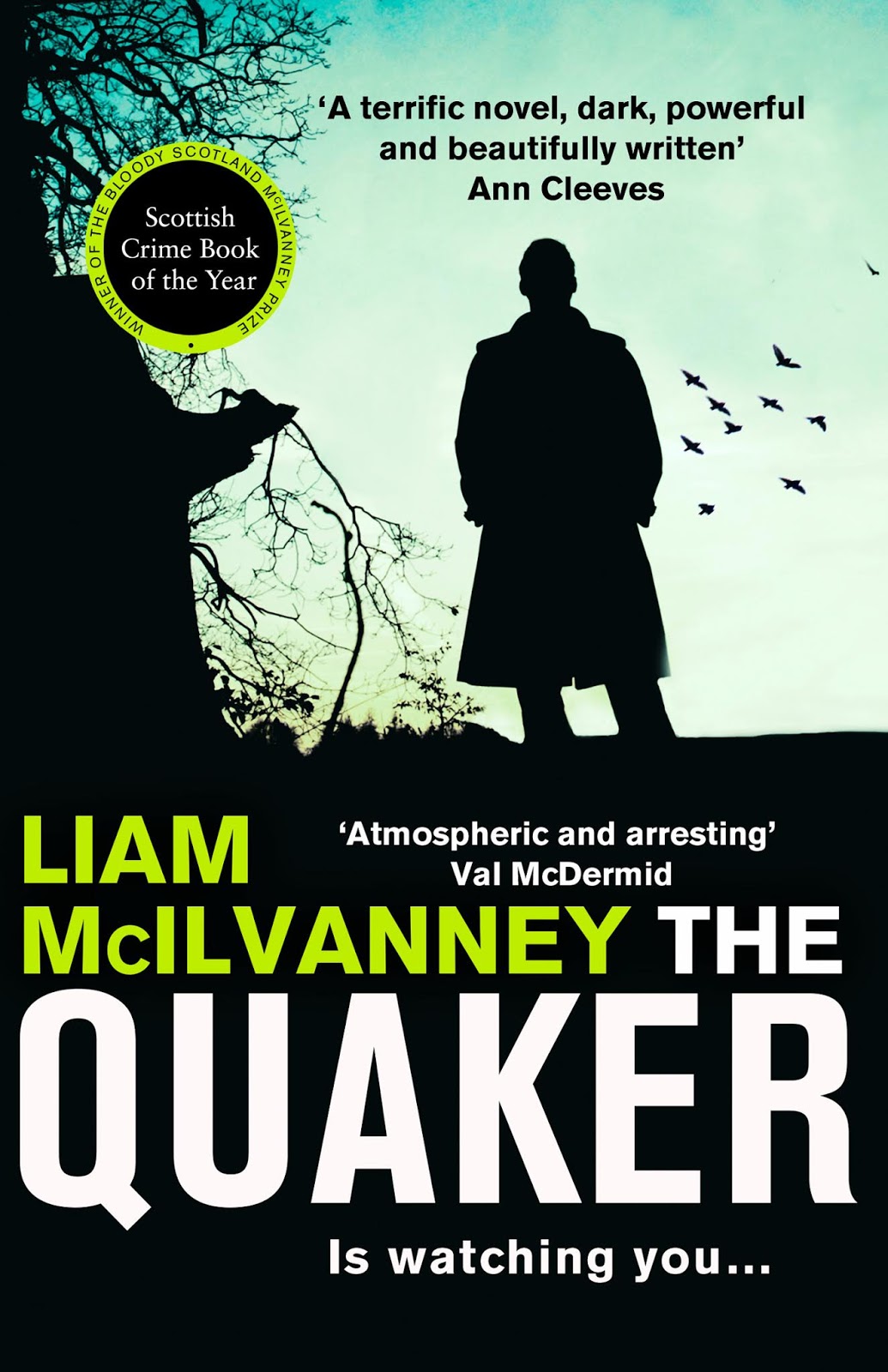
Liam McIllvanney also makes the longlist with The Quaker, awarded the 2018 McIlvanney  Prize which was set up in memory of his father, William. Stuart Turton weighs in with. The Seven Deaths of Evelyn Hardcastle, a debut which won the Costa First Novel Award 2018.


Mick Herron’s widely-acclaimed Jackson Lamb novels have been shortlisted three times for the Theakston Old Peculier Crime Novel of the Year, the fifth in the series, London Rules puts him back in the running.

Senior IT Officer turned novelist, Rahman Khurrum, is also on the list for his first novel, East of Hounslow.  Mixing edgy humour and pulse racing tension, Khurrum was shortlisted for the CWA John Creasey Debut Dagger Award 2018.

The winner is announced at the Theakston Old Peculier Crime Writing Festival, hosted in Harrogate each July. The festival was co-founded in 2003 by Val McDermid, agent Jane Gregory, and arts charity Harrogate International Festivals.

2019’s longlist also sees the return of previous shortlisted authors, Elly Griffiths for her Dr Ruth Galloway novels, with her latest The Dark Angel, and Ann Cleeves for Wild Fire, the eighth, and final book, in the bestselling Shetland series – a major BBC One drama starring Douglas Henshall as Jimmy Perez.

The Longlist in Full:
Snap by Belinda Bauer - Transworld
Our House by Louise Candlish - Simon & Schuster UK
Thirteen by Steve Cavanagh - Hachette
Wild Fire by Ann Cleeves - Pan Macmillan
This Is How It Ends by Eva Dolan - Bloomsbury Publishing
Take Me In by Sabine Durrant - Hodder & Stoughton
The Dark Angel by Elly Griffiths - Quercus
London Rules by Mick Herron - John Murray Press
Broken Ground by Val McDermid - Little, Brown Book Group
The Quaker by Liam McIlvanney - HarperCollins
The Way of All Flesh by Ambrose Parry - Canongate Books
East of Hounslow by Khurrum Rahman - HarperCollins
Hell Bay by Kate Rhodes - Simon & Schuster UK
Salt Lane by William Shaw - Quercus
The Chalk Man by C. J. Tudor - Penguin Random House
The Seven Deaths of Evelyn Hardcastle by Stuart Turton - Bloomsbury Publishing
Anatomy of a Scandal by Sarah Vaughan - Simon & Schuster UK
Changeling by Matt Wesolowski - Orenda Books

Executive director of T&R Theakston, Simon Theakston, said: “So many authors on our longlist have been nominees for major mainstream awards. The literary world is perhaps catching up to the fact that crime fictionis leading thepublishing world and shaping our cultural landscape. In 2018, sales of crime novels outstripped general fiction for the first time. It’s a genre that dominates the small and big screen, and attracts critical acclaim, as well as being incredibly popular. There is however, only one Crime Novel of the Year, and the reputation of our Award, built over 15 years, makes this accolade hotly contended.”

Established authors on the list include Louise Candlish, the bestselling author of 12 novels; Our House has been optioned for TV by Death in Paradise producers Red Planet Pictures.

Take Me In is the fourth sensational thriller from Sabine Durrant, author of the Richard & Judy bestseller Lie With Me. Kate Rhodes, an acclaimed author 
and award-winning poet, makes the list with Hell Bay.

Courtroom drama, Thirteen by Steve Cavanagh was hailed by Ian Rankin for ‘plotting that takes the breath away.’ CJ Tudor, dubbed Britain’s ‘female Stephen King’ became a Sunday Times bestseller with The Chalk Man.

Praised as a savage indictment of class, privilege and toxic masculinity, Sarah Vaughan’s Anatomy of a Scandal combined Vaughan's experiences as a political correspondent on the Guardian with her time as a student reading English at Oxford, in the Nineties.

Eva Dolan, won the CWA Dagger for unpublished authors as a teen. Her Zigic and Ferreira series - addictive socially aware stories - are a magnet for acclaim. Her first standalone This is How it Ends propels her onto the A-list.

Pop culture journalist William Shaw also joins the list with Salt Lane, alongside Matt Wesolowski, who made a stir with his debut thriller, Six Stories, with film rights sold to a major Hollywood studio. He enters the longlist with the third book in his series. Changeling.

The award is run in partnership with T&R Theakston Ltd, WHSmith, and The Mail on Sunday.


The longlist of 18 titles were selected by an Academy of crime writing authors, agents, editors, reviewers and members of the Theakston Old Peculier Crime Writing Festival Programming Committee.


Titles will be promoted in a dedicated online campaign with WHSmith and a nationwide library promotion.

The shortlist of six titles will be announced on 19 May.

The winner will be announced at an award ceremony hosted by broadcaster Mark Lawson on 18 July on the opening night of the 17th Theakston Old Peculier Crime Writing Festival at the Old Swan Hotel, Harrogate. They’ll receive a £3,000 cash prize, as well as a handmade, engraved beer barrel provided by Theakston Old Peculier.

The night will also feature the Outstanding Contribution to Crime Fiction Award, with past recipients over the years including PD James, Ruth Rendell, Reginald Hill and Colin Dexter.

For further media information please contact Ann Chadwick at Cause UK 07534892715 ann@causeuk.com

Friday, 12 April 2019

Lee Child to produce dramatised true crime series

According to Dark Horizons Lee Child is teaming with Fremantle-backed producer Dancing Ledge Productions (“Delhi Crime,” “The New Pope”) to develop a true crime anthology drama series, which has been described as “Black Mirror-meets-Three Billboards Outside Ebbing, Missouri”.

The show which is to be called “Lee Child: True Crime,” will be a series dramatizing the stories of real-life men and women from around the world who have been driven to stand up and put their lives on the line, fighting for justice in the face of great danger.

More information can be found here.

Hat-tip to Paul Hirons and The Killing Times.

Kjell Ola Dahl on The Courier

The Courier is about a murder in a country at war. One of my earlier crime novels, The Man in the Window, also featured the occupation of Norway during WWII, and when I was doing my research I learned a lot about how the German authorities delivered justice and coped with crime in the country. It was partly this research that inspired The Courier, in which the murder victim is closely connected with the resistance movement. My initial idea was that the investigation into such a crime – at such a time – would automatically be influenced by politics; and I liked how a search for truth would inevitably be infected by lies. 

Another inspiration for The Courier was the Norwegian Holocaust; I particularly wanted to write about the fact that it was planned, organised and performed solely by Norwegian Nazis. The Germans were not involved in the arrests; their involvement only started with the transportation of Jews from Norway to Auschwitz. 

The choice of 1942 as one of the timeframes for the book was therefore natural, as the arrest of the Jews and their transport from Norway to the gas chambers was conducted in the autumn of that year, and at the same time, a lot of Norwegian Jews escaped. 1942 is also one of the most interesting years of WWII, because it was then that Hitler made his fatal decision to attack the Soviet Union, an invasion that had serious implications for the resistance movement in Norway. 

What I really wanted to do with this book was write a story of revenge. I like to think that people's choices are affected by things that have happened to them previously in their lives – it’s a Freudian thing. I wanted to explore how things that happened during WWII had implications for the characters much later. But I also wanted the present day to feature in the book, so I decided my protagonist had to around twenty in 1942. In the sixties she would be in her forties, which I liked, because she is mature by then, has developed a stronger will, but at the same time she is not old and could therefore still be searching for a direction in her life. 

Ester as a character was mainly inspired by a man I once knew. His family were all killed in the gas chambers, but he managed to flee – first to Sweden in 1942, then to Scotland, where he was trained as a saboteur. He was then sent on commando raids behind enemy lines in Norway. However, I was more interested in his personality than his wartime history, as I did not want to write a soldier’s tale, and that is one of the reasons I decided my protagonist had to be a woman. I also liked how her gender made her somewhat distant from me, the writer; it made her more mysterious. 

I chose the other main timeline to be 1967. The sixties reflect the forties in one way: there was a war then too, but it was a cold war, with new frontlines. Twenty-five years have passed since 1942, and those years have affected all the characters in various ways. Ester’s life after WWII is a mystery, as is Gerhard's life after the war, and the lives of Markus and Sverre. 

Writing about the same characters in two layers of time – one when they are younger, idealistic and a bit innocent, and one when they all are shaped by life – was truly inspirational. I found they were all different people in 1967 from the ones they were in 1942. I had to explore what had happened to them after 1942, what directions their lives had taken, and of course how the fate of Ã…se – the murder victim in 1942 – had shaped the people they eventually become. 

The Courier by Kjell Ola Dahl (Published by Orenda Press)
In 1942, Jewish courier Ester is betrayed, narrowly avoiding arrest by the Gestapo. In a great haste, she escapes to Sweden, saving herself. Her family in Oslo, however, is deported to Auschwitz. In Stockholm, Ester meets the resistance hero, Gerhard Falkum, who has left his little daughter and fled both the Germans and allegations that he murdered his wife, Ase, who helped Ester get to Sweden. Their burgeoning relationship ends abruptly when Falkum dies in a fire.  And yet, twenty-five years later, Falkum shows up in Oslo. He wants to reconnect with his daughter. But where has he been, and what is the real reason for his return? Ester stumbles across information that forces her to look closely at her past, and to revisit her war-time training to stay alive...