Showing posts with label Danish. Show all posts

Tuesday, 1 March 2022

Anne Mette Hancock interviewed about The Corpse Flower…


When and how did the idea for "The Corpse Flower" originate?

The idea originated a few years ago in a small town in the South of France, the same town that I lived in as a child and where I have spent every summer since. One day, I was at the market square, and I was watching this brisk-looking guy feeding a kid goat with a feeding bottle while my children were standing around and petting the animal. As I was standing there, I suddenly noticed this woman sitting at a café across the street. She stared at me, and I could see in her eyes that she recognized me from somewhere without being able to put her finger on it. It turned out to be an acquaintance from my childhood, but for some reason, the look on her face made me think of the opening scene of a crime novel: A woman on the run is recognized in a small town in France and immediately flees the scene. That evening I wrote the opening scene for "The Corpse Flower". The plot then marinated in my thoughts for a long time before I wrote the rest of the book, and by then the two main characters, journalist Heloise Kaldan and homicide detective Erik Schäfer, were born.

How did you come up with the title "The Corpse Flower"?

A few months into the writing process, I saw a documentary about corpse flowers on the National Geographic channel and was wildly fascinated by the phenomenon. A cunning plant that smells like death? How wonderfully disgusting and exciting at the same time. I knew that I had to incorporate this Frankenstein-like plant in the story and I thought that it would make for a good title, too.

Many crime novels tend to have the protagonists solving crimes on their own, without much input from the police, who are usually incompetent, corrupt or just hostile. And then there are often journalists as secondary characters in police procedurals. But towards the end of The Corpse Flower, Kalden and Schäfer are working as a team, which is quite unusual. Will they be doing so in future novels?

Well, I suppose it is a rather unusual set-up, but like my main character, Heloise, I am a journalist, so it was natural for me to write about someone in that line of work. And in a crime novel you naturally have to include the police to some degree. But to me, the most unusual thing about this particular duo, is Schäfer’s character. In most of the crime novels I’ve read, the homicide detectives always have some kind of darkness or a deep struggle within, like a substance abuse problem, a failed marriage, strained relationships with their children, etc. I wanted to introduce a different type of detective; someone who is happily married, well functioning in life and good at his job, and I liked the idea of him and Heloise forming a friendship of sorts. It’s true that they sometimes work together and in some cases share information, and they’ll continue to do so throughout the series, but they are also very aware of the fact that he is a policeman, and she is a reporter. They certainly don’t always keep each other in the loop.


The Corpse Flower by Anne Mette Hancock is published by Swift Press, £12.99 hardback.

Danish journalist Heloise Kaldan is in the middle of a nightmare. One of her sources has been caught lying, and she could lose her job over it. And then she receives the first in a series of cryptic letters from an alleged killer. Anna Kiel is wanted for murder but hasn't been seen by anyone in three years. When the reporter who first wrote about the case is found murdered in his apartment, detective Erik Schafer comes up with the first lead. Has Anna Kiel struck again? If so, why does every clue point directly to Heloise Kaldan? As Heloise starts digging deeper she realises that to tell Anna's story she will have to revisit her darkest past, and confront the one person she swore she'd never see again...


Tuesday, 7 September 2021

The Long Game: From Short Story Author to Danish Noir Crime Novelist, by Heidi Amsinck

Can I write a crime novel? For years, my answer to that question was a flat ‘No’. Some writers do long, some short, I would say, planting myself firmly in the latter category. I devoured crime novels – especially of the Nordic Noir variety – but somehow, when it came to my own work, I preferred stories distilled down to a single chilling epiphany. Preferably one involving little old homicidal Danish ladies.

Until lockdown happened and I sat down to write. And kept writing. And writing. And writing. Stuck for months in my London flat with nowhere to go, except daily walks, and an enormous TBR pile which had curiously lost its appeal, I soon found myself with a finished draft for my debut novel, ‘My Name is Jensen’.

What happened? After all, it wasn’t as if I hadn’t tried before. I began jotting down notes for the book in 2018 after publishing ‘Last Train to Helsingør’, my collection of Danish twilight tales for Radio 4, and, like all short story writers, I had been asked a thousand times when I was going to write a novel. But every time I had sat down to it, I had ended up writing something short, giving into what I had started to think of as a guilty pleasure.

Nor is it down to the shorter form being in any way faster. With very few exceptions, most of my short stories were written over periods of two or three years: after spending a few weeks drafting, I would put them away to stew for ages, before rewriting, rewriting and rewriting. You get the picture.

Yet, while living through the early days of the coronavirus horror show, that all changed for me. I badly missed the city of my birth, and my loved ones back home, so writing a novel set in Copenhagen, with the city very much centre stage, was pure escapism. 

And then my characters began to turn up, demanding to have their stories told. The journalist Jensen who (like me), was a London Correspondent for years, and who (unlike me) has returned home to Denmark. Gustav, the teenage delinquent, whom Jensen is forced to take on as a journalist apprentice. And DI Henrik Jungersen, her on-off married lover who guiltily feeds her titbits from the police investigation.

I always knew that my novel was going to begin in Magstræde, one of Copenhagen’s oldest streets, a twisted lane with red and yellow townhouses leaning over the cobbles. A lumpy mound in the freshly fallen snow turns out to be the body of a young man. From that point on, during those early months of the first lockdown, the plot spiralled, sometimes to an extent where the only way I could regain control was through a complicated mosaic of flash cards laid out all over my dining table – a different colour for each story arc, and neon stickers for the timeline. 

It is a method I have reused for Book 2 in the Jensen Thriller series, written during spring this year as I went for my first COVID vaccination and then the second, followed by my first visit to Copenhagen in 18 months. The first thing I did after hugging my family was to visit all my favourite haunts – the canals, the leafy suburb where my late parents met as youngsters, the Lakes and the harbour. 

I never used flash cards for my short fiction, admittedly, but I did write out story arcs in my notebooks. Always. A novel, it turns out, is not so different after all. Writing in the Guardian, George Saunders, author of Lincoln in the Bardo, put it perfectly when describing how he made the leap: “It was as if, over the years, I’d become adept at setting up tents and then a very large tent showed up: bigger frame, more fabric, same procedure.”

You might still be able to tell that I am started out writing short stories. My chapters are brief and numerous. Treating each like a little tale in its own right made them so, as did my years of trimming away words to fit the radio format. But the end result is the same: a setting, a group of characters and a series of dark events that utterly change them.

A story is a story is a story, after all.

My Name is Jensen by Heidi Amsinck is published by Muswell Press on 31 August at £14.99

Guilty. One word on a beggar’s cardboard sign. And now he is dead, stabbed in a wintry Copenhagen street, the second homeless victim in as many weeks. Dagbladet reporter Jensen, stumbling across the body on her way to work, calls the only person she can think of – DI Henrik Jungersen, her married ex-lover. The front page is an open goal, but nothing feels right…When a third body turns up, it seems certain that a serial killer is on the loose. But why pick on the homeless? And is the link to an old murder case just a coincidence? With her teenage apprentice Gustav, Jensen soon finds herself putting everything on the line to discover exactly who is guilty.


Wednesday, 11 May 2016

Breaking News: Six season TV-series for Jorn Lier Horst's William Wisting - from the man behind Wallander


Award-winning Sandstone author Jorn Lier Horst has partnered with Cinenord and the Danish production company Good Company Films to bring Chief Inspector William Wisting to life. The series will be based on the five novels which Sandstone Press has published: Dregs, Closed for Winter, The Hunting Dogs, The Caveman and Ordeal, plus the novel preceding Dregs. The budget is estimated to be around 100 million kronor, roughly £8 million.
 
Ole Sondegard of Good Company Films is the man behind both the British and Swedish version of Wallander, the Millennium trilogy and the Beck series. Recording will begin in late autumn of 2017, and the character of William Wisting has yet to be cast. ‘The finished series will have English subtitles, and will be sold internationally. Lier Horst is already an internationally bestselling author. The Wisting series has been sold to 25 countries, and has sold over 1 million copies in Norway alone.
 
Jorn Lier Horst says, ‘There are good people who are going to work with this. I look forward to seeing William Wisting come to life.’ The series will be a character-driven thriller with Wisting in the center, aided by the police team. Central to the series is also the relationship between William Wisting and daughter Line, who works as a criminal reporter. Lier Horst has been praised for his detailed and credible portrayal of both the police and of journalism. Key to the series is a sense of place: ‘It is important that action takes place in Larvik Stavern area of Norway. The place is a character in itself,’ says Lier Horst.
Sandstone Press Managing Director Robert Davidson says, ‘I am thrilled to hear this news about the William Wisting Series. Not only is Jorn Lier Horst one of the hardest working authors in the business, and one of the most talented, he is also a supremely decent guy. We have been working with Jorn, and his Norwegian publisher Gyldendal, and translator Anne Bruce, for five titles now and all of these will be dramatised. The viewing public has a great treat in store, as has the reading public whose attention is going to be drawn to the amazing writing of Jorn Lier Horst even more strongly.’
 
Sandstone Press holds World English Language rights for their five Jorn Lier Horst titles. Ordeal has been sold to St Martin’s Press in North America and agreement has been reached with Affirm Press for all five titles in ANZ. Sandstone Press is represented by David Segrue Ltd.

Thursday, 7 May 2015

David Hewson on - The Wrong Girl: Where the Story Came From

Today's guest blog is by David Hewson. David Hewson is the author of The Costa Series, The Killing Books I-III,  and the Pieter Vos series.

Readers always wonder where stories come from. So do authors too. The truth is… sometimes yesterday. Sometimes a year before. Sometimes nowhere. And on occasion a very long time ago indeed, which is the case with the second Pieter Vos book set in Amsterdam, The Wrong Girl.

When I set out on a new book I always have a specific aspiration for it. Trying to write ‘a good story’ isn’t enough. Every tale needs a challenge and a goal of its own. The first Vos book, The House of Dolls, was a murder mystery set around Vos himself, a man who thought his world had vanished only to discover he was wrong. He did have some meaning and purpose in life; unfortunately they lay in police work, the very thing that almost destroyed him in the first place.

For The Wrong Girl I decided to tell a broader story but one that had, at its heart, someone at the very bottom of the social ladder. A woman dispossessed, terribly wronged, desperate for help… and pretty much unable to find it except from Vos and his colleagues.

It took me a while to work out where this came from and then I realised: it was back in the Eighties when I was a reporter on The Times. There’d been one of those terrible cases of child neglect: an impoverished single mother had failed to look after her son who’d died in dreadful circumstances. She was jailed, of course, and plastered across the newspapers with all the predictable coverage you’d expect, especially from the tabloids.

About eighteen months later an official report on the background to the case slipped out. I was asked to read it and write a news report. It didn’t make much because the investigation revealed the truth behind the tragedy: the mother had been ill, neglected, badly in need of support she never got. But no one was much interested hearing that. The myth of the mother from hell was much more palatable than the grim truth that this was a tragedy with a much broader cause, some of which lay in the very people who’d castigated the mother in the first place.

I realised then that, though we live in a society that thinks of itself as caring, that degree of compassion depends very on circumstance. If the pretty white, middle class child of pretty, professional white middle class parents goes missing it makes the front pages, full of sympathy. If the ordinary-looking kid of a black single mother does the same the first thing we’re likely to do is look at the parent and ask: how could you allow this to happen? Context determines everything.

And so it does in The Wrong Girl. At the beginning we’re in Amsterdam in November. It’s
one of the happiest family days of the year, the Sunday when Sinterklaas — Saint Nicholas — arrives in the city. He’s greeted by something like four hundred thousand people as he turns up on grand barge with six hundred or so ‘elf’ followers, then climbs onto a grand white horse for a parade through the squares and along the canals.

Finally, from the balcony of the municipal theatre in Leidseplein, he addresses the children of the Netherlands, a speech that’s carried live throughout the land on TV. It’s a wonderful occasion I can’t recommend enough, one of the most family-friendly city festivals in Europe (this year on November 15).

Doing what I do I make it less wonderful, of course. In the book an attempt is made to kidnap the daughter of an old and respected city family during the final ceremony in Leidseplein. It fails and a similar-looking child is snatched in her place. She’s the daughter of an illegal Georgian sex worker, an intelligent and loving mother who’s working the Red Light District to put food on the table.

Pieter Vos and his fellow detectives are determined to find the child, who appears to have been snatched to gain the release of an Islamist preacher in custody. But as the case details begin to muddy it becomes apparent that there are others who feel the life of a foreign girl, the daughter of a prostitute, isn’t as important as the bigger political and security issues at stake.

This isn’t a story about the sex trade or terrorism, though both come into it. It’s the tale of Hanna Bublik and her daughter Natalya, the mother and child who find themselves on the verge of being abandoned to their fate. However much Vos and his colleagues try to support them, will they accept that kind of compromised help? What would a lone mother to in a foreign, hostile city if she thought the people who were supposed to protect her weren’t really on their side?

It’s a grey area and this is fiction, so it’s more interested in throwing up hard questions than trying to offer easy answers. The book also reflects my firm belief that a second title in a series has to fight any temptation to go soft on its regular characters. This is a tough and at time quite shocking story. As usual I did as much research as I felt necessary. That threw up some pretty appalling details of ways in which the manipulators of the sex trade in Amsterdam control their women. One, which I use in the book, may well turn out to be one of those true stories that some readers refuse to believe.

Just as, thirty years ago, we didn’t want to believe that report into the sad death of a little boy at the hands of a sick mother.

Hanna isn’t sick. She’s smart, she’s angry and she’s determined she’ll get her daughter back. With or without Vos’s help.


The Wrong Girl by David Hewson is published 7th May by Macmillan, price £12.99 in hardback

The Wrong Girl

With Christmas around the corner, the friendly saint Sinterklaas is set to mark his arrival in Amsterdam with his ‘Black Pete’ helpers, leading a parade televised live throughout the country. Though the city is bursting at the seams with families determined to witness the saint on his golden barge on the Amstel River, Brigadier Pieter Vos and his assistant Laura Bakker are not expecting much trouble. And then the first grenade is thrown. Excitement turns to fear as explosions shake the city, and in the chaos, an eight year old girl wearing a pink jacket is kidnapped. But the abducted child isn’t the daughter of Amsterdam aristocrat Henk Kuyper as the terrorists intended. She is the daughter of an illegal Georgian prostitute trapped in Amsterdam’s Red Light District. As the perpetrators’ demands become clear, the case sparks a turf war between security forces and the police, both clashing over the ensuing investigation. Vos and Bakker realise that no one can be trusted, as they begin to unravel a sinister operation that reaches higher than they could have ever imagined. And at its heart is the life of an eight year old girl, snatched from a loving mother who will do anything to get her back…
----
David Hewson is a former journalist who has worked at The Times, The Independent and The Sunday Times. He is the author of nearly twenty crime thrillers set in various European cities, including a highly commended literary interpretation of acclaimed Danish TV drama The Killing and the Nic Costa series set in Rome. His ability to capture the sense of place and atmosphere of the cities in his novels comes from spending considerable research time there. David was inspired to write his new detective crime series starring Pieter Vos (The House of Dolls and its sequel The Wrong Girl) after exploring the city of Amsterdam whilst visiting for a book festival and accidentally stumbling into the Jordaan: ‘once a rough working class district of the city, very local, very much a tight community…It had lots of visual appeal. Houseboats on the Prinsengracht canal. Bikes everywhere. And those odd statues and slogans which made me curious to discover where they came from.’

In 2011, he and A.J. Hartley wrote an audiobook adaptation of Macbeth, which was read by Alan Cumming and nominated for Audiobook of the Year. In 2014, they followed it up with Hamlet, Prince of Denmark: A Novel, which was read by Richard Armitage and won Audiobook of the Year.

Monday, 9 January 2012

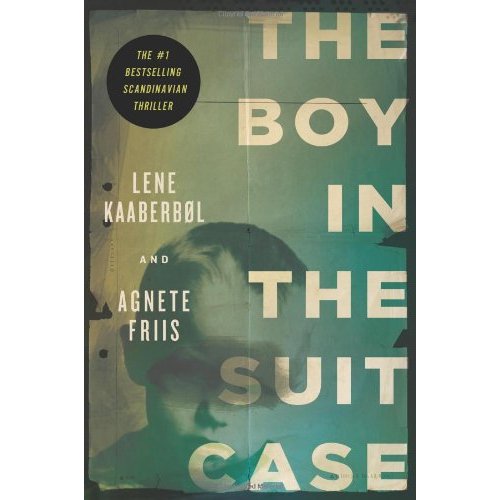
UK Launch of The Boy In The Suitcase At Foyles


The Boy in the Suitcase (Drengen i kufferten) by Lene Kaaberbøl and Agnette Friis is being launched at Foyles, on 17th January at The Gallery, Foyles, Charing Cross Road, London, WC2H 0EB; TIME: 6.30pm to 8.00pm


Celebrate with the authors the English language release of the award-winning Danish thriller The Boy in the Suitcase. The evening will feature a lively discussion with the authors chaired by crime fiction expert Barry Forshaw, author of Death in a Cold Climate: A Guide to Scandinavian Crime Fiction and editor of Crime Time. It will include compelling insights from Scandinavian Crime enthusiast and founder of the legendary Nordic Noir Book Club Dr. Jakob Stougaard-Nielsen (UCL).


Lene Kaaberbøl has sold more than two million books worldwide as a fantasy writer. Her collaborator, Agnete Friis, is a children's writer. The bestselling Nina Borg series has been translated into nine languages and was a finalist for the coveted Scandinavian Glass Key Crime Fiction Award in 2009. It received the 2008 Harald Mogensen award for best crime novel.

Nina Borg, a Red Cross nurse, wife, and mother of two, is a compulsive do-gooder who can't say no when someone asks for help—even when she knows better. When her estranged friend Karin leaves her a key to a public locker in the Copenhagen train station, Nina gets suckered into her most dangerous project yet. Inside the locker is a suitcase, and inside the suitcase is a three-year-old boy: naked and drugged, but alive.

Is the boy a victim of child trafficking? Can he be turned over to authorities, or will they only return him to whoever sold him? When Karin is discovered brutally murdered, Nina realizes that her life and the boy's are in jeopardy, too. In an increasingly desperate trek across Denmark, Nina tries to figure out who the boy is, where he belongs, and who exactly is trying to hunt him down.