Showing posts with label Legal Thriller. Show all posts

Monday, 25 August 2025

From Non-Fiction to Legal Thriller by S J Fleet

Authenticity in fiction is tricky. That has been perhaps my biggest takeaway from the transition between non-fiction polemic and legal thriller. When I first started sketching my idea for The Cut Throat Trial, I identified authenticity as my lodestar. I wanted to show readers the criminal justice system as it really is, through the eyes of the people directly involved, rather than as a Hollywood screenwriter or tabloid editor imagines it to be. There is so much truth about the human condition played out in our criminal courts each day that tacking closely to reality would, I figured, create a far more gripping story and compelling cast of characters than anything I could invent. More truth in fiction than non-fiction, and all that.

I wanted readers to be able to breathe in the sticky, airless hum of our dilapidated court buildings. To feel the gentle buzz of the robing room, as egomaniacal barristers who, moments ago, were tearing chunks out of each other in court, take off their wigs and laugh uproariously. To reach out and touch the tension that mounts as an untruthful witness is led, by a series of carefully calibrated questions, to the climax of a cross-examination in which the implausibility of their evidence is laid bare. And to be exposed to perhaps the most enticing and fascinating dimension: the complexity. Not of the law, but of the people; contrary to popular renderings, this is not a world of heroes and villains, neatly divided into opposing camps. Every facet of human life and behaviour, every outward emotion and hidden motivation, runs through the heart of the cases that come before the courts, and extracting an easily-identifiable truth is all-but-impossible. 

A better laboratory for a thrilling novel you would struggle to find. And it would be easy, surely? This, after all, is literally my life as a criminal barrister. Up to 70 hours a week. This should, I smugly told myself as I leaned back at my desk to take a swig of tepid mint tea, write itself.

Well. 

Reality swiftly, unwelcomely, kicked down the door and entered the party. Because while criminal justice is, for all of those reasons above, utterly gripping, the trial process can be – as any juror will testify – tooth-bendingly dull. Parts of that – the delay, the frustrations at the inefficiency of the system – I wanted to capture. But I absolutely didn’t intend for readers to actually feel like jurors in a waiting room, hanging around listlessly for hours just waiting for something to happen. Even inside the courtroom, even in a murder trial where everybody is pointing the finger at each other, there are elements – the legal arguments, the dense science, the playing of hours of mostly-uneventful CCTV, the hundreds of pages of documentary evidence – which are less than exhilarating. My first draft actually encompassed many of these. I opted to include transcripts, tables and charts, legal documents – every hallmark of a genuine trial. And, it’s probably fair to say, the book was in parts unreadable. Necessary as they may be in the real world, they did not, I had to concede, need trouble a reader hoping to be entertained.

The characters posed a different, but equally unhappy, problem. The temptation not simply to base characters on the people I have met, but to incorporate them fully-formed, was, in the planning stages, almost impossible to resist. But they are so real and interesting! I kept grumbling to myself as I scrubbed out another lifted line of dialogue, conscious that, as much as anything, easily recognisable characters pose a fatal risk to an anonymous author’s anonymity. Eventually, after much reworking, I managed to forge what I hope are convincing and compelling amalgams, blends of multiple people I have encountered with a liberal lashing of fantasy.  

But striking that balance has taken time. More than I, in my naivety, had appreciated. Writing about what you know is not, it turns out, easy. 

So what I am left with – what now stands as my debut foray into fiction – is, I hope, realistic and authentic, even with my concessions to artistic licence. My modified rule has become not to remorselessly replicate reality, but to allow myself anything that would not cause me, as a reader, to ruin my partner’s evening by superciliously explaining How Very Wrong This All Is. 

It's still a high bar. But I hope I have just about cleared it. If not, I’m sure I will hear about it in the robing room…

The Cut Throat Trial by S. J. Fleet aka The Secret Barrister will be published on 28 August 2025 (Picador) in hardback, ebook and audio. 

It is one of the biggest trials of the year. Three seventeen-year-old boys are accused of the brutal murder of an elderly teacher on New Year's Eve. Each boy denies it. Each points the finger at the other two. But they can’t all be innocent. The three defence barristers have only one job: to persuade the jury that their client is not guilty. But they’re up against a prosecutor who needs to win the case, no matter the cost. Because when the game is murder, the competition is deadly.

You can follow S J Fleet on X @SJFleetAuthor


Sunday, 2 March 2025

Amy Engle on writing I Did It For You

Before I became a full-time writer, I spent a decade working as a criminal defence attorney. It was rewarding, exhausting, heart-breaking work. I’m glad not to be practicing any longer, but I also feel lucky to have had the experiences I did during those years. They shaped me into a better, more empathetic person, one who is able to look past a stark black-and-white perspective and see all the subtle grey space in between the extremes. Given my background, writing a legal thriller might seem like the obvious choice, but so far setting a book inside a courtroom hasn’t appealed to me. But keeping the courtroom out of my novels doesn’t mean that each of my books isn’t informed by my time as a defence attorney, and I Did It For You is no exception. Every experience I had during those years as a defence attorney bleeds into my writing. The men and women I defended, most of whom weren’t horrible people, but simply people who had made a horrible choice. The system that is so blatantly stacked against defendants. The understanding that even people who have committed crimes often still have something worth contributing to the world.

When I sat down to write I Did It For You , there were two particular lessons I’d learned from my time as a defence attorney that I wanted to bring to the story. The first is the knowledge that most people who commit crimes are not simply evil, with no other facets to their personalities. Of course there are exceptions, true sociopaths whose humanity is almost impossible to find. But the vast majority of criminal defendants don’t fit the stereotype, so often portrayed in the media, of a monster with no redeeming qualities. During my years as a defence attorney, I never represented a single person whom I thought was beyond hope. They all had someone who loved them; they all loved someone in return; they cried, and laughed, and told stories. And many of them expressed remorse for the crimes they’d committed. I think there is a tendency to write off anyone convicted of a crime, especially a crime of violence. To assume such a person is disposable. But in doing so, we risk losing a bit of our own humanity in the process. It’s a hard thing to extend mercy, to do the work of recognizing someone’s humanity after they’ve done something terrible. But mercy is a gift we can offer that benefits both the giver and the receiver. It doesn’t take the place of punishment, which has a vital role in civilized society. But mercy can live alongside consequence. They don’t have to be mutually exclusive. That idea, that someone can be both deserving of punishment and worthy of mercy, was something I wanted to explore in I Did It For You

The second issue I wanted to highlight with this book is the way we treat the families of criminals. During my years as a lawyer I worked on a variety of cases—embezzlement, health care fraud, drug trafficking, federal hate crimes, and one death penalty murder. When I began writing I Did It For You, I knew I wanted to include a death penalty strand within the story, because of all the cases I ever worked on, the death penalty trial sticks with me the most. It wasn’t just the grueling, relentless hours of work or the frustration with the way death penalty trials are conducted in this country. It wasn’t even knowing that a few exhausted, over-worked lawyers were all that stood between a man and death. I still vividly remember the moment the jury announced a sentence of life in prison rather than the death penalty. I watched my generally poker-faced colleagues burst into tears, all of us sobbing as we hugged one another and our client. But what I remember most clearly are the faces of our client’s family, the sheer relief that his life had been spared tempered with the knowledge that they would never again see him outside of prison walls.

In the years since that trial, it is those family members my thoughts have turned to again and again. They had done nothing wrong. Their only crime was raising and loving a man who would one day be involved in a criminal conspiracy that would end in murder. They weren’t guilty of any crime, but they were treated as an extension of the perpetrator, painted with the same broad brush. The family of the victim was treated with empathy and kindness, as they should have been. But the family of our client was looked at with scorn, their pain ignored by almost everyone in that courtroom. As if being related to someone on trial automatically meant their heartbreak wasn’t real or valid. When thinking about violent crime, we tend to only consider the victim and their family. But the family of the accused is, at best, forgotten and, at worst, branded as guilty along with the defendant. I think it is easier for us that way. Viewing people in black and white, good and evil, right and wrong, is so much simpler than diving into the nuances, of forcing ourselves to confront all the murky grayness of real life. And that is one of the ideas I wanted to explore in I Did It For You —the ways in which violent crime and the death penalty impact not only the family of the victim, but also the family of the perpetrator, who are so often overlooked or vilified.

Every time I write a book, my primary goal is to tell a good story. I want readers to be immersed in both the plot and the characters. But if, in the course of entertaining readers, I can also cause them to take a second look at an issue they may have avoided or never even given much thought to, then that’s a bonus. And I hope that’s what I’ve accomplished with I Did It For You

I Did It For You by Amy Engel is out in paperback now (HQ), £9.99.

Everything changed the night Eliza Dunning died. The residents of Ludlow turned on their neighbours, the Dunning family fractured, and Eliza’s sister Greer moved away, grieving and unconvinced by the police’s version of events. Now, fourteen years later, there has been another murder. It’s time for Greer to go home. But will she finally find the answers she has been searching for? Is it a copycat killer, or one that never went away?

More information about Amy Engle can be found on her website. Amy Engle can also be found on X @aenglewrites and on Instagram @amyengleauthor


Tuesday, 28 March 2023

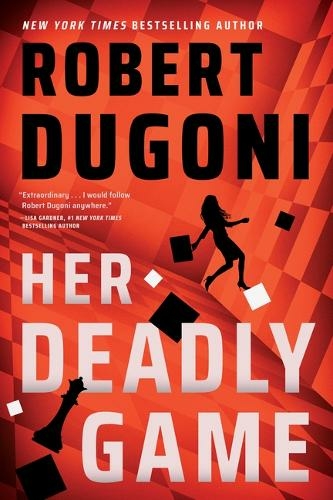
Introducing Keera Duggan by Robert Dugoni - Extract from Her Deadly Game

Keera Duggan peered across the King County courtroom to the swinging wooden door and willed her father to walk in. Leaving him to lunch alone had been a mistake. The bailiff entered from a door behind the elevated bench and commanded the few people in the courtroom to rise as Superior Court Judge Ima Patel retook her seat behind her desk, instructed the three people in the gallery to sit, and invited Officer Greg Walsh to retake the witness stand. Walsh pushed through the railing gate and made his way past the jurors. He looked official in his navy-blue uniform and utility belt. His SPD badge glistened. Walsh wore the belt at the request of the young prosecutor standing at the adjacent table. Keera used to give officers the same advice, despite the efforts of many judges to prohibit weapons in their courtrooms. 

 Patel turned her attention to Keera. “Counsel,” she said. “Will Mr. Duggan be joining us this afternoon?”

Patrick Duggan had sparred with King County prosecutors for four decades, including Ima Patel before she ascended to the bench. “Sparring” was a polite term. Patsy had routinely knocked out prosecutors, earning his nickname, the Irish Brawler, a moniker he wore as a badge of honor. The prosecuting attorney’s office felt differently. Patsy had not been opposed to hitting below the belt, throwing elbows in the clenches, and rabbit-punching out of the break. He defended his clients the way he’d won a Golden Gloves boxing tournament as a young man—any way he could. But alcohol abuse had softened Patsy’s punches and slowed his reflexes, if not yet his razor-sharp mind, and prosecutors and jurists on the King County bench knew well his binge drinking. When she’d been a prosecutor, Keera had heard colleagues in the office say, “If you want a chance to beat the Brawler, save your best witnesses for the afternoons, and hope Patsy Duggan goes on a bender.”

Clancy Doyle, apparently now Keera’s client, looked at the empty chair at counsel table with genuine concern. With good reason. Keera sat second chair at this DUI trial only at the insistence of her eldest sister, Ella, now the managing partner of Patrick Duggan & Associates. Babysitting duty. Ella had suspected Patsy to be on the brink of a binge. Damned if she hadn’t been right.

 Keera knew almost nothing about the details of Doyle’s case.

 “Counsel?” Patel asked, sounding impatient.

 Keera rose and tugged at the lapels of her black suit. “Mr. Duggan has been detained,” she said, as if her father had a dental appointment that had run long. “I’ll conduct the cross-examination of Officer Walsh.”

 Patel’s lips nearly inched into a grin. Keera clearly wasn’t fooling at least one person in the courtroom. “Proceed,” Patel said.

 Officer Walsh looked tightly wound as Keera approached. He expected a confrontation. The prosecuting attorney, also young, inched to the edge of her chair, prepared to stand and defend Walsh with objections and interruptions intended to throw Keera off her game.

They wouldn’t.


Her Deadly Game by Robert Dugoni (Thomas & Mercer) Out Now

A defense attorney is prepared to play. But is she a pawn in a master's deadly match? Keera Duggan was building a solid reputation as a Seattle prosecutor, until her romantic relationship with a senior colleague ended badly. For the competitive former chess prodigy, returning to her family's failing criminal defense law firm to work for her father is the best shot she has. With the right moves, she hopes to restore the family's reputation, her relationship with her father, and her career. Keera's chance to play in the big leagues comes when she's retained by Vince LaRussa, an investment adviser accused of murdering his wealthy wife. There's little hard evidence against him, but considering the couple's impending and potentially nasty divorce, LaRussa faces life in prison. The prosecutor is equally challenging: Miller Ambrose, Keera's former lover, who's eager to destroy her in court on her first homicide defense. As Keera and her team follow the evidence, they uncover a complicated and deadly game that's more than Keera bargained for. When shocking information turns the case upside down, Keera must decide between her duty to her client, her family's legacy, and her own future.

More information about Robert Dugoni and his work can be found on his website. You can also find him on Twitter @robertdugoni and on Facebook.

Friday, 7 May 2021

BM CARROLL - Defending the Indefensible


Many years ago, when I was researching an earlier novel, I spoke to a criminal lawyer who was brilliant, dedicated and extremely tolerant of my naïve questions. The lawyer was also, at the time, representing a woman who had stabbed her estranged husband to death on a Sydney freeway during morning peak-hour traffic. It was a horrific crime, deeply shocking for witnesses, responding emergency services and the general public. I couldn’t help deviating from my research to ask the lawyer: Why on earth would you want to defend this case? And what defence can there possibly be? 

The lawyer’s answer was along these lines. Because what happened on the freeway is only one part of the story. And because everyone – no matter how awful the crime – is entitled to a thorough, high-quality defence. 

The danger of a good defence 

 Her response has been percolating in my mind for almost twenty years and every time a similarly shocking crime occurs, I think not only of the victim, but also the accused, and what caused them to commit such a terrible act … and also the defence team who step up to defend the indefensible. 

 In my latest novel, You Had It Coming, a barrister, who has made a name for himself defending sexual assault cases, is shot outside his home. William Newson is a beloved father, a considerate boss and a strong advocate for the rights of the accused. He is also responsible for the acquittal of defendants who are guilty of their crimes and enabling at least one repeat offender. His profession leads to irreconcilable differences with his wife, who divorces him because ‘all those girls can’t be lying, William’. His profession causes numerous threats on his personal safety by angry complainants and their distraught families. His profession ultimately costs him his life. 

 It’s true that every defendant, no matter how heinous the crime, is entitled to the presumption of innocence and a strong legal defence. Without these basic standards, our legal system would be neither just nor fair and innocent people could be wrongly accused and convicted of crimes they did not commit. 

 However, it is a mistake to believe that the verdict in a trial is always just and fair. A miscarriage of justice seems more likely in sexual assault cases, because most of the time only two people know what actually happened and their perceptions of reality can be very different. ‘Reasonable doubt’ can flourish and all too often there is simply not enough evidence to return a guilty verdict. But just because there is not enough evidence and the final verdict is NOT GUILTY, doesn’t necessarily mean that the crime did not occur. It can even be argued that the more diligent and aggressive the defence, the better chance that a rapist will walk free … and go on to reoffend. 

He said vs. She said 

 You Had It Coming explores the murky matters of consent, admissible evidence, reasonable doubt, the rights of the accused, victim blaming, and the appalling reality that some offenders are not convicted for their crimes. Our legal system is imperfect, lawyers on both sides are endeavouring to do their jobs to the highest standard, and what can really be done if it’s one person’s word against another’s? 

 She said: Everything done and said that night was funnelled down, down, down until it became one singular question: had consent been given? The one thing she knows for sure is that she did not consent. Therefore, it should have been black-and-white. 

 He said: It’s one thing convincing a judge and jury you’ve done nothing wrong, it’s another convincing yourself ... I was sorry and ashamed, but incredibly relieved when we were acquitted. I thought I could walk out of court, leave it all behind me, and finally start my life. But something like that doesn’t go away. It affected every relationship I had, every job I interviewed for. To be upfront or not. To tell the truth, or hope they’d never find out. 

 Back to the woman on the freeway, where the crown and the defence agreed that the defendant was suffering from schizophrenia when the attack occurred. The court was told she had delusional beliefs about her estranged husband, that he was poisoning her food and abusing their daughter. She pleaded not guilty due to mental illness and was acquitted of the charges. 

 The criminal lawyer had done her job superbly and, in this case at least, there was a legitimate defence despite the damning circumstances.


  • YOU HAD IT COMING
  • Publisher : Viper; Main edition (13 May 2021)

B.M. Carroll (also known as Ber Carroll) was born in Blarney, a small village in Ireland. The third child of six, reading was her favourite pastime (and still is!). Ber moved to Sydney in 1995 and spent her early career working in finance. Her work colleagues were speechless when she revealed that she had written a novel that was soon to be published. Ber now writes full-time and is the author of ten novels. Over the last few years, Ber's writing has become darker and more suspenseful (probably reflecting her state of mind). Her most recent novels The Missing Pieces of Sophie McCarthy, Who We Were, and You Had It Coming are published under B.M. Carroll.

Thursday, 13 August 2020

Megan Goldin on writing Courtroom Dramas

"I want the truth.”
You can't handle the truth.”
Who among us doesn't know which movie these lines are from!

The courtroom scene from the showdown between Tom Cruise and Jack Nicholson's characters in the 1992 movie A Few Good Men is one of the most quoted and memed movie scenes ever.

There's arguably no moment more suspenseful in literature or cinema than a trial with justice hanging in the balance, and the awful possibility of injustice triumphing. For my money, no jump scare, or shootout can ever trump a great courtroom scene.

From Tom Robinson’s murder trial in To Kill A Mockingbird to the trial in John Grisham’s legal thriller A Time To Kill, fictional trials provide almost unparalleled heart stopping drama without a a single shot being fired. The palpable surge of elation when good wins out, or tears and bitter disappointment when justice does not prevail, make courtroom dramas compelling reading or watching.

Among my favorite courtroom dramas is the 1957 movie Witness for The Prosecution. The suspense. The twist. The brilliant tactics of the defence lawyer, played by Charles Laughton. Or Spencer Tracey's fiery courtroom rhetoric in the film Inherit The Wind, about the 1925 Scopes 'Monkey' Trial which pitted Darwinism against Creationism but which was also a parable for McCarthyism, at its height when the film came out in 1960.

Or of course Gregory Peck's famous courtroom scene as Atticus Finch in the 1962 film adaptation of To Kill a Mockingbird. The heart-wrenching consequences of that trial hung over the rest of the novel, and the film, like a dark shadow as it did the life of the young narrator of the story, Scout. .

Having watched, read and loved many of these movies and books, it was as if I'd been preparing to write about a trial all my life when I wrote the courtroom scenes for my thriller The Night Swim. The novel is about a true crime podcaster covering a rape trial in a small coastal town while investigating the mysterious drowning of a teenage girl decades earlier.

In preparation for the courtroom battle between the prosecutor Mitch Alkins and the defence lawyer Dale Quinn, I did plenty of research. I watched trials and talked to lawyers and judges and many others. I read transcripts and judgements from many different trials and I researched all sorts of details in the interests of accuracy. Then I wrote, and rewrote, those scenes until they were exactly as I’d seen them unfolding in my imagination when I first thought of the plot for the novel.

Research is important and it's one of my favorite parts of writing a novel. Although, too much research may be a double edged sword when it comes to writing a fictional trial. Writing suspenseful fiction often necessitates taking liberties with the truth. Real trials can be a snooze fest.

Sit in the public gallery in a real courtroom and you will be forced to endure excruciatingly long hours of listening to witnesses giving dry and repetitive testimony as well as plenty of hushed inside-baseball discussions on rules and legal technicalities.

There will be chairs squeaking, throats clearing and endless re-reading of transcripts in the echoey courtroom. But dramatic cross-examinations will be few and far between. In the fictional courtroom, days or even weeks of dry testimony are boiled down to a few dramatic moments. Lawyers can and do catch witnesses in lies in the most delicious ways. Watch Witness For The Prosecution for one of the best examples of this.

There’s a constant flow of clever repartee between sparring lawyers. Closing statements are filled with passionate rhetoric that move the courtroom to tears. Judges are irascible. Witnesses drop unexpected bombshells, or are broken under cross-examination. It’s rare in real life for a lawyer to break a witness on the stand and force him, or her to confess to being the real culprit as happens almost routinely in episodes of the long running TV show Law & Order and its spin-offs as well as many other legal dramas.

But it doesn't really matter because fictional trials might be a little loose with the facts but they often encapsulate the essence of the truth.

The Night Swim by Megan Goldin. Published by Mirror Books (Out Now)
Ever since her true-crime podcast became an overnight sensation and set an innocent man free, Rachel Krall has become a household name - and the last hope for people seeking justice. But she's used to being recognised for her voice, not her face. Which makes it all the more unsettling when she finds a note on her car windshield, addressed to her, begging for help. The new season of Rachel's podcast has brought her to a small town being torn apart by a devastating rape trial. A local golden boy, a swimmer destined for Olympic greatness, has been accused of raping the beloved granddaughter of the police chief. Under pressure to make Season 3 a success, Rachel throws herself into her investigation - but the mysterious letters keep coming. Someone is following her, and she won't stop until Rachel finds out what happened to her sister twenty-five years ago. Officially, Jenny Stills tragically drowned, but the letters insist she was murdered - and when Rachel starts asking questions, nobody in town wants to answer. The past and present start to collide as Rachel uncovers startling connections between the two cases - and a revelation that will change the course of the trial and the lives of everyone involved.

The Night Swim can be bought here.

Bio
Megan Goldin worked as a correspondent for Reuters and other media outlets where she covered war, peace, international terrorism and financial meltdowns in the Middle East and Asia. She is now based in Melbourne, Australia where she raises three sons and is a foster mum to Labrador puppies learning to be guide dogs. The Escape Room was her debut novel.

#TheNightSwim

Friday, 24 April 2020

Presumed Innocent by Scott Turow and BBC Radio 4 Book Club


Fans of legal thrillers and especially of Scott Turow will be pleased to hear that he will be the BBC Radio 4 Book Club guest on 4 June and will be answering questions about his bestselling debut novel Presumed Innocent which was published in 1987.  If there are any Scott Turow fans out there that are interested in asking him a question then get in touch with bbc.in/r4bookclub.  You will also have to send in a question and to have read the book Presumed Innocent.

Presumed Innocent by Scott Turow.
Prosecutor Rusty Sabich enters a nightmare world when Carolyn, a beautiful attorney with whom he has been having an affair, is found raped and strangled. He stands accused.  Fighting to prove his innocence, Rusty uncovers a tangled web of sex, corruption and betrayal. With no one to trust, it's up to Rusty to uncover who is really behind this deadly crime . . .

Saturday, 15 June 2019

Harper Lee Prize for Legal Fiction Finalists

The Finalists for the 2019 Harper Lee Prize for Legal Fiction have been announced, and now readers will have a chance to weigh in. The books nominated for the ninth annual award are:

The Boat People by Sharon Bala
Class Action by Steven B. Frank
The Widows of Malabar Hill by Sujata Massey

Vote HERE:
http://www.abajournal.com/polls/2019HarperLeePrize 

From The ABAJournal
This year’s Harper Lee Prize was particularly difficult to judge,” said Molly McDonough, editor and publisher of the ABA Journal. “We were evaluating so many gripping and compelling reads.”

The prize, which was authorized by the late Harper Lee, was established in 2011 by the University of Alabama Hugh F. Culverhouse Jr. School of Law and the ABA Journal to commemorate the 50th anniversary of the publication of To Kill a Mockingbird. It is given annually to a book-length work of fiction that best illuminates the role of lawyers in society and their power to effect change.

The finalists represent the diversity of this year’s submissions, from a novel about Sri Lankan refugees seeking a new start, to the story of a trailblazing woman lawyer fighting for her clients in 1920s India, and finally a charming middle school book featuring a spunky student who goes to court after he’s suspended for protesting homework,” said McDonough. “The characters are as inspiring as they are engaging.”

The Harper Lee Prize for Legal Fiction will be awarded at an August ceremony at the Library of Congress in Washington, D.C., in conjunction with the National Book Festival. The winner will receive a copy of To Kill a Mockingbird signed by Harper Lee. The authors whose books have previously won the prize are John Grisham (in 2011 and 2014), Michael Connelly, Paul Goldstein, Deborah Johnson, Attica Locke, James Grippando and C. E. Tobisman.

Voting closes at 11:59 p.m. CT on Sunday, June 30.

VOTE HERE!
http://www.abajournal.com/polls/2019HarperLeePrize 

Sunday, 25 June 2017

What Makes Me Write asks Peter Murphy

I’m Peter Murphy.  My day job, from which I’m now retired, was in the law, as an advocate, teacher, and judge.  I worked in England, the United States, and for a decade as counsel at the Yugoslavian War Crimes Tribunal in The Hague.  I began writing fiction seriously more than twenty years ago, partly as an antidote to the legal writing that consumed so much of my life, but I’ve only been published in fiction in the last six years.  I’ve published five legal thrillers set in Sixties and Seventies London, featuring barrister Ben Schroeder: A Higher Duty; A Matter for the Jury; And is there Honey still for Tea?; The Heirs of Owain Glyndŵr; and Calling down the Storm.  I’ve also published two political thrillers about the US presidency: Removal; and Test of Resolve.  More recently, I’ve completed a volume of humorous short stories, under the title Walden of Bermondsey.  My publisher is No Exit Press.  

My parents told me that I’d learned to write the alphabet and a few odd words before I went to school.  When I was a bit older, I remember boring one or two baby-sitters by making them read short stories I’d scribbled on a page or two of paper.  In other words, for whatever reason, I’ve always loved to write, and I’ve always loved language.  When I became a lawyer there was ample opportunity to write, as part of my practice and also academically.  I have been widely published on legal topics.  But when I was in my forties, I found that technical writing wasn’t enough. I wanted to write fiction, and I didn’t want to wait any longer.  The novel was a natural form for me, because I’ve always loved to read novels, both older writers like Henry James and Sir Arthur Conan Doyle, and contemporary novelists.

The first novel I completed was the first in the Ben Schroeder series, A Higher Duty.  I was teaching at a law school in the United States at that time.  It was by working on this novel that I learned most of what I know about writing novels.  But it wasn’t the first to be published.  After re-working it endlessly, as it seemed, and getting equally endless rejection letters from agents, I changed direction with Removal, a political thriller about the American presidency.  When I eventually returned to England in 2007, a chance encounter with Clem Chambers (creator of the excellent Jim Evans series) led me to No Exit Press. They liked Removal.  After Removal had been published, we started the Ben Schroeder series with A Higher Duty. The moral of this is: never give up, however many rejection letters you get.

When I retired from the law in 2015 I was able to become a full-time writer.  I’ve suddenly entered the world of literary festivals and library events – and blogs, which are something of a mystery to many of my generation, myself included.  I enjoy writing just as much as ever.  I’ve recently tried my hand at humorous short stories. I’ve always loved John Mortimer’s books and the great TV series starring Leo McKern.  My Walden of Bermondsey is an unashamed homage to Rumpole.  It is based partly on experiences I myself had as a lawyer and judge, and partly on imagining what Rumpole would have been like as a judge. 

I am often asked what it takes to write a novel, and how to go about it.  I’m never quite sure how to answer that question.  But I have put together a few pages of notes on the subject, which anyone interested can download from the home page of my website

The basic principles, it seems me, are:

1.   You must really want to do it (it’s a very laborious and time-and-energy-consuming process);

2.   You must have a story, or combination of stories, strong enough to keep the reader engaged for 300-400 pages;

3.   You must do your research and prepare a detailed synopsis of the book before starting to write.

4.   Then all you have to do is to sit down and write the book (harder than it sounds).  If you have a good synopsis, this should be a mechanical process of writing each scene as well as you can.  You shouldn’t be having ‘writer’s block’ or sitting around waiting for the ‘muse’ to descend. If you do experience this, your research or synopsis isn’t good enough.  Go back and work on it again.

5.   Never show your work to anyone until it’s finished.  This is controversial – there are many flourishing writer’s groups bearing witness to the opposite idea. It’s just my own experience talking.  With A Higher Duty, I showed the developing text to a number of people, and got so many conflicting comments and suggestions that I ended up feeling that I had to scrap what I had and start again.  Others have different experiences, and I’m not saying that my way works for everyone.

6.   But this is important: don’t revise the book until you’re well over half way through.  If you try to revise too soon, you may have to change back again and you may upset the stability of your synopsis, and if that goes wrong, you’re back to square one.

7.   Finally, don’t worry if you’re not sure how the book ends.  I was at least 75% through Removal before my heroine, FBI Agent Kelly Smith, told me how she would end it.


Calling Down the Storm by Peter Murphy (Published by No Exit Press) Out 29th June.

Calling Down the Storm is the story of two separate but strangely parallel lives: the life of a defendant on trial for murder, and the life of the judge who presides over his trial.  April 1971. When DI Webb and DS Raymond receive an emergency call, a horrific scene awaits them. Susan Lang is lying on the ground, bleeding to death. Her husband Henry is sitting nearby, holding a large, blood-stained knife. In shock, Henry claims to have no memory of the events that led to his wife's death, leaving his barrister, Ben Schroeder, little to defend a potential charge of murder.  Unknown to his strict Baptist wife, Deborah, Mr Justice Conrad Rainer has a secret life as a high-stakes gambler. In his desperation for money, he has already raided his own and Deborah's resources, and now he has crossed another line - one from which there is no return.  To his horror, as the trial of Henry Lang starts, Conrad discovers a sinister connection between it and his gambling debts, one that will cause his world to unravel.