Showing posts with label Cold War. Show all posts

Thursday, 10 July 2025

92 Is Just a Number

 So, who says so? Me of course!

My name is Dennis Higgins. Born in Surrey but now living in Yorkshire, I am a debut author at the grand old age of 92, but don't let my age put anyone off. 'The Heidorf Legacy ‘is a unique Cold War thriller that is as appropriate today as it would have been at the time of the original Cold War between the old Soviet Union and the Western Allies.

The inspiration for the story comes from the many visits that I made behind the so-called 'Iron Curtain' to East Germany, or the German Democratic Republic as it was then known as, during the time between 1953 and 1964 whilst I was serving in the Royal Air Force. This was at the height of the Cold War when East Germany was still under Russian rule.

Whilst serving time at RAF Oldenburg in West Germany I met and married a girl who had escaped to the West via the Berlin Underground Railway, a journey fraught with danger for anyone travelling without a permit. All of my friends were smitten by her, but it was a case of 'to the victor the spoils' as I was the only one who spoke fluent German. She was never able to return to her home in East Germany and sadly she died from cancer at a very young age. One of the main characters in my book, Helga, is my tribute to her. In the meantime I managed to make contact with her family on several of my visits to the East, and it was from her father, an ex-member of the old Kaiser's Prussian Guard that I learned much about Germany's decline during the rise of the Nazi regime. At the same time, I was also able to witness for myself the oppressive and devious methods used by both the Russian rulers and the East German Nationals who chose to support them.

As a widower with two very young children I was granted a compassionate discharge from the RAF but found the transition to civilian life very difficult. I tried my hand at several jobs, all of which I failed at before becoming the Administrator for a small group of Care Homes for elderly dementia sufferers, a post from which I retired at the age of seventy-five.

Fast forward fifteen years into the Covid epidemic. Now housebound by lockdown, I started to spend most of my time on the internet where I saw an advert for an international song-writing contest and, despite never having written anything before, decided to enter the lyric writing category. The contest attracted over ten thousand entries from eighty-three different countries worldwide and, much to my surprise and delight I not only won the lyrics category, but I became the overall winner of the whole contest. As a result of this I was asked to write lyrics for the late Queen's Platinum Jubilee Song.

Now ninety years old, and spurred on by these successes, I decided to try and write a thriller from an idea that had been lurking at the back of my mind ever since my time in East Germany, and The Heidorf Legacy is the result.

I am currently married to my second wife Bettina. We have been married sixty years this year and I describe her as the person who made my life worth living again. In total I now have three wonderful sons and an equally wonderful daughter.

My second novel, a crime thriller, based on a terrorist campaign against the innocent citizens of London, is almost ready for publication, as are my memoirs. I am also trying to follow another new path by attempting to write a film script for The Heidorf Legacy. Hopefully, I live long enough to finish it.

The Heidorf Legacy by Dennis Higgins (Foreshore Publishing) Out Now

Destiny is no matter of chance. It is 1945 and a young German physician pioneering genetic experiments to breed the new Nazi race is killed during the fall of Berlin to the Soviet Red Army. Straightforward: secrets to the grave. But a shocking legacy is discovered. A unique set of new-born identical twin boys - the world's first with matching fingerprints - are found by a Russian army officer. The babies are taken to Moscow for further examination. There plans are made to exploit the twin boy’s uniqueness. Years later with the Cold War rapidly becoming a distant memory the fate of the twin boys could not be more different. One is working for the Soviet Union's secret intelligence agency. The other has a privileged life in the upper echelons of American society. Both powerful men in their own right. The plan is simple. make the switch. reignite the cold war. from the inside.


Monday, 23 August 2021

Ilkley Literature Festival


The Ilkley Book Festival have announced their programme. The festival is due to take place between 1st and 17th October 2021. The full programme can be read here. This year they will be producing a hybrid event of over 70 events with it beaning a mixture digital events, 'live” in person interviews, talks and panels. 

Booking opens Tuesday 31 August at 10:00am. 

The crime fiction events are -

Cold War Spies - Tim Tate and Trevor Barnes – (Saturday 2nd October at 3:00pm)

Award-winning documentary filmmaker, investigative journalist and best-selling author Tim Tate is joined by crime novelist Trevor Barnes to discuss some of the most gripping true stories of Cold War history. From a supposed Polish secret service agent passing Soviet secrets to the West, to the Portland Spy Ring where KGB ‘illegals’ operated under false identities stolen from the dead. Tate’s The Spy Who Was Left Out in the Cold draws on a wealth of previously unpublished primary sources to tell the dramatic true story of Michal Goleniewski, the best spy the West ever lost. Barnes’ Dead Doubles explores a case that justified the West’s paranoia about infiltration and treachery.

Graeme MacRae Burnet: Case Study (Saturday 2nd October at 4:00pm)

London, 1965. An unworldly young woman believes that a charismatic psychotherapist, Collins Braithwaite, has driven her sister to suicide. Intent on confirming her suspicions, she assumes a false identity and presents herself to him as a client, recording her experiences in a series of notebooks. In Case Study, Booker Prize-shortlisted novelist Graeme Macrae Burnet presents these notebooks interspersed with his own biographical research into Collins Braithwaite. The result is a dazzling meditation on the nature of sanity, identity and truth itself. Interview by The Telegraph book critic Jake Kerridge.

Imran Mahmood & Jenn Ashworth: Lying Eyes – (Sunday 3rd October at 1:00pm)

Join novelists Jenn Ashworth and Imran Mahmood as they discuss the role of unreliable narrators in fiction. Ashworth’s Ghosted explores a deeply affecting and unconventional love story, shot through with anger, black humour and grief. Mahmood’s I Know What I Saw is a thriller that centres on a now-homeless former banker who witnessed an impossible murder, and how the consequences of the crime force him to confront his vexed past and the unreliability of his memory. Interview by The Telegraph book critic Jake Kerridge.


Tuesday, 19 January 2021

Who is Vera Kelly - The Short Version? by Rosalie Knecht


My interest in Cold War intelligence came from a real-life beginning. My maternal grandfather was hired by the Office of Strategic Services after World War II and stayed there as it became the Central Intelligence Agency, in a non-covert post, analyzing Soviet radio broadcasts. He and my grandmother settled down in the inner-ring suburbs of Washington, DC in the early 1950s to raise their family. Then history intruded in the form of Senator Joseph McCarthy.

McCarthy made his bones on the claim that a secret Communist conspiracy had infiltrated the U.S. government. As McCarthy’s accusations of Communist spies in the civil service grew broader and wilder, my grandfather’s bosses at the CIA began a review of all personnel files. In 1955, internal investigators turned up a number of things in my grandfather’s background that they found troubling. 

Decades later, the memoranda they wrote detailing their findings, and the letters my grandfather wrote responding to them, are still in my family’s papers. The memos listed seventeen charges. He was accused of being friends, twenty years before and a thousand miles away in South Dakota, with a list of named Communists; visiting local party headquarters; handing out Communist pamphlets; and on one occasion, giving a known Communist a lift from Sioux Falls to Minneapolis. He was further accused of hanging around with two named women, also Communists, in Greenwich Village in 1943, and attending a Communist meeting there. More charges: he had founded a leftist newspaper in Sioux Falls, had started a local chapter of the Workers’ Alliance, and finally—this last one jarring with the more mundane activities around it—had joined the Republican side of the Spanish Civil War and been interned in France. 

He responded meticulously to these accusations. In 1935, when he was twenty years old, he had been a socialist, not a communist, he said. He had known some of the people mentioned but could not recall others. He had never handed out any pamphlets. He admitted to the drive from Sioux Falls to Minneapolis. He had no recollection of visiting any party headquarters, unless—he began to speculate here, and his fatigue and anxiety is palpable on the page, all these years later—unless perhaps the Sioux Falls Communist Party was headquartered in the Communist bookstore operated by his friend, the one he drove to Minneapolis, which he had visited several times and where it was possible he might have bought some Communist literature, but probably not, because he was “poverty-stricken at the time.” He knew the two women in Greenwich Village, he said, but his relations with them were “entirely personal,” and they had never tried to convert him to their cause.

The rest—the Workers’ Alliance, the leftist newspaper, the Spanish Civil War? He confessed that he had made those things up in 1943 in an application for a journalism fellowship. He had been told that a leftist resume would help him get it. He deeply regretted the mistake. He had apparently been polygraphed already during the investigation; he referred to this in his statement, and repeatedly offered to be polygraphed again to confirm this or that part of his sworn testimony.

As he sat writing this defense in 1955, he was forty years old and had three young children to support. The charges that were true, he wrote, came down to one charge: that he was friends with Communists a long time ago, and had been a socialist himself. He was fired.

In 1961, my grandfather fell from the roof of the family home while making repairs. He died of his injuries. Sixty years is a lot of silence. It was partly to sound out this lacuna that I began to write about the professional middle classes ringing Washington, DC at midcentury, the intelligence services where they worked, and the way people lived and continued to live with lies—big lies and small lies, public lies and personal lies. What stands out more in his story—the socialist politics of a young man coming out of rural poverty in the midst of the Depression, clearly interested in the radical organizing happening all around him in Sioux Falls, South Dakota? Or is it the extravagant lies for personal gain—the fictitious service in a bloody war from which most volunteers did not come back? Was it about fantasy, glamor, social cache? Was it about justice for the injuries of poverty? Was it both? Who was he? What does any of it tell me about this person I never met, whom even my mother barely remembers? I have only this very small window into his life, this brief instant when he sat sweating over a typewriter with his career on the line, admitting to humiliating deceptions, wracking his brain for the names of passing acquaintances, summoning up a dingy Greenwich Village function hall filled with earnest young people hoping for a better future in the middle of a world war. I can feel him trying to make contact with that younger self, trying to remember what he wanted, who he told people he was, what he believed and when he stopped believing it. He confesses it all. It’s not enough.

Who is Vera Kelly by Rosalie Knecht (Verve Books) Published 21 January 2021

"New York City, 1962. Vera Kelly is struggling to make rent and blend into the underground gay scene in Greenwich Village. She's working night shifts at a radio station when her quick wits, sharp tongue, and technical skills get her noticed by a recruiter for the CIA. Next thing she knows she's in Argentina, tasked with wiretapping a congressman and infiltrating a group of student activists in Buenos Aires. As Vera becomes more and more enmeshed with the young radicals, the fragile local government begins to split at the seams. When a betrayal leaves her stranded in the wake of a coup, Vera learns the Cold War makes for strange and unexpected bedfellows, and she's forced to take extreme measures to save herself.


Thursday, 14 January 2021

Time is Slippery by Tim Glister


The funny thing about decades is that they don’t really start when they say they do. I don’t mean this in the ‘actually the millennium was technically 2001’ sort of way. I mean that era-defining cultural and social shifts don’t happen suddenly whenever there’s a zero or a one at the end of a year.

 Everyone who lived through the 2010's will probably agree that they weren't exactly fantastic. But we’d probably also say that things didn’t really start to bite until 2013. And now, given how 2020 went, it’s pretty easy to imagine that we’ll still be dealing with the fall out of it beyond 2021.

The sixties were the same. When we collectively think back to them, we imagine they were swinging, economically resurgent, and increasingly liberal. And they were. But not in 1961. At least, not quite.

1961, like the start of every decade, was a transitional time. It had one foot stretching boldly out into the future and its other one still rooted firmly in the past. This was true across Europe, but particularly in the UK, and especially London, which is so iconically connected to the time.

Conservative Prime Minister Harold Macmillan had famously - and somewhat optimistically - said that Britons ‘have never had it so good’ in 1957. But even though the economy was on the up, the nation’s post-war recovery was taking a long time to trickle all the way down to every resident of the country, and its capital.

The city’s skyline was starting to change as new towers grew out of the gaps left by the Second World War. But not as many as you might think, and not as quickly either. Mid-century icons like the Southbank were in their infancy, with just the Royal Festival Hall left standing after the Festival of Britain. It would be another two years before the Centre Point office block started to be built on top of Tottenham Court Road Tube station. And another four before work began on the Barbican Estate in the vast Blitz crater that had destroyed almost the whole of the old Cripplegate area in the heart of the city.

Old barges still slowly made their way up and down the Thames. Men still pushed carts laden with fruit and veg through Soho. And, while miniskirts were getting shorter and flares were getting wider, you were more likely to see businessmen strolling around Bank in top hats and tails, Teddy Boys lingering on the corners that hadn’t yet been colonised by teenagers and hippies, and old war veterans in demob suits shuffling down Carnaby Street.

Yet, profound social and cultural change was on the horizon. Test tunnels for the Victoria Line had been completed, the Post Office Tower was beginning to rise above Fitzrovia, and in September police arrested 1,300 protestors in Trafalgar Square after a rally for the Campaign for Nuclear Disarmament.

Time is fluid. It slips over, round and past itself in interesting ways. Things don’t change at the same rate or in nice fixed blocks, no matter how we choose to measure them or cut them up into generalised, easy to digest chunks. There’s always a little bit of yesterday and tomorrow mixed in with today - whenever today happens to be.

This makes period writing really interesting for authors, because you can infuse your writing with unexpected details that don’t just help build your narrative world but also inform and surprise your readers.

And for espionage writers, it gives you fantastic real-world and literary source material to play with. 1961 was the year George Smiley was born in Call For The Dead, and the year SPECTRE stole two atomic bombs that James Bond had to get back in Thunderball. It also saw the Bay of Pigs crisis, the construction of the Berlin Wall, and the start of the Apollo space programme. The Cold War was spilling over from the 1950s, and morphing into something new.

But, writing about the past also comes with its own challenges. For one thing, it’s incredibly precious to the people who lived through it and remember it, so you must respect it while also moulding it around the story you want to tell. You have to make sure your research is as accurate as possible, create a world that feels authentic, and keep tight control on your artistic license. Because the absolute last thing you want is to have your characters driving cars that shouldn’t be on the road yet, or riding tube lines that haven’t been dug out of the ground yet…


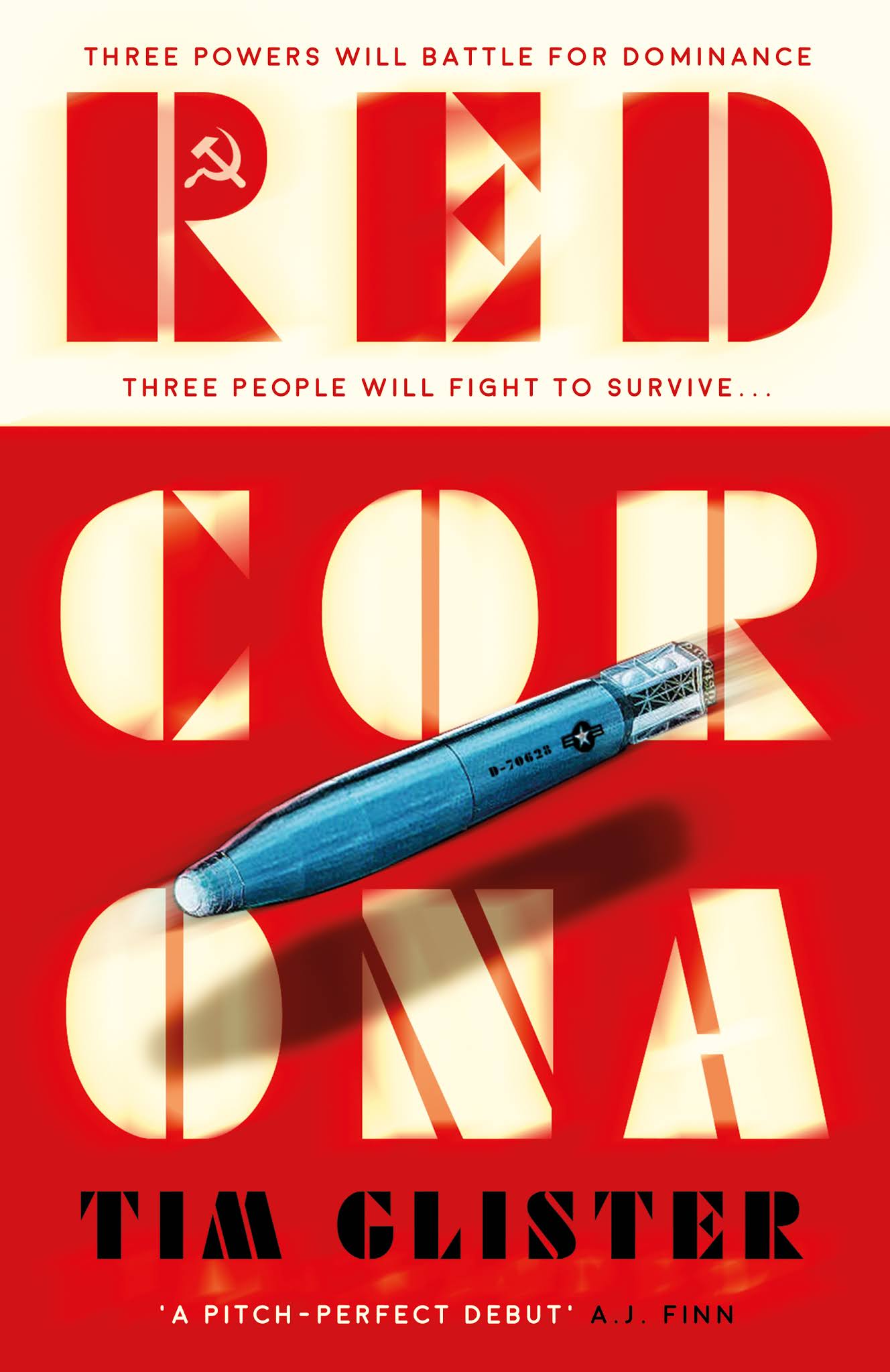
RED CORONA by Tim Glister is out on 14 January from Point Blank, hardback £14.99

It's 1961 and the white heat of the Space Race is making the Cold War even colder.  Richard Knox is a secret agent in big trouble. He's been hung out to dry by a traitor in MI5, and the only way to clear his name could destroy him. Meanwhile in a secret Russian city, brilliant  scientist Irina Valera makes a discovery that will change the world, and hand the KGB unimaginable power.  Desperate for a way back into MI5, Knox finds an unlikely ally in Abey Bennett, a CIA recruit who's determined to prove herself whatever the cost...  As the age of global surveillance dawns, three powers will battle for dominance, and three people will fight to survive...


Friday, 16 October 2020

Six Best Cold War Crime Books by Ben Creed


Identifying six of the best Cold War crime books is a bit of a trick question – not just Cold War books, but Cold War crime books. That seems to rule out, for example, the likes of classic Cold War “weapons tech” thriller The Hunt for Red October (unless you count stealing a nuclear submarine as a crime). And what about The Spy Who Came in from the Cold? The death of an agent gets the ball rolling but the novel is not about that killing.

Indeed, there are plenty of Cold War tales with murder and skulduggery in them but which are not crime novels. Or are treason and espionage catch-all crimes (or acts of heroism, depending on your viewpoint) that bring many of the classics back into contention?

We decided to interpret the rules freely. Here are six excellent books with a Cold War setting and a heavy dose of criminality.

Polar Star: All of the initial trilogy of Martin Cruz Smith’s Arkady Renko novels are brilliant, and all kick off with a crime. But the second book wins on tension and atmosphere, perhaps because its hero has nowhere left to run. Renko is on the Polar Star, a ship fishing in the freezing waters between Soviet Russia and Alaska. A murdered crew member returns to the surface after being snagged in a fishing net and Renko, a former investigator with an unreliable political past, has to solve the mystery. All Soviet life can be found onboard, with the mysterious Westerners floating alongside.

Child 44: Tom Rob Smith’s bestseller is as much a personal drama as a thriller, and its emotional impact comes from the author’s focus on the jangling emotions of his protagonist, Leo Demidov. Demidov, an MGB captain, is forced to pursue a murderer in a society that refuses to admit murder exists. The brutal serial killer is based on the real-life Andrei Chikatilo, also known as the “Rostov Ripper”, but Rob Smith transplants Chikatilo’s crimes to the Soviet Union of the 1950s. As well as having one of the best prologues ever, Child 44 takes you into the mind of the killer through the redemptive journey of a detective who is almost as conflicted himself. 

The Third Man: Graham Greene wrote a few other candidates for a place in any list of Cold War literary thrillers – The Quiet American and Our Man in Havana spring to mind. But even though The Third Man was first written as a novella simply to help inform the script for film producer Alexander Korda and not meant for publication, it wins a place here for perfectly capturing the mood of the times. Just like the famous zither music Anton Karas wrote for Korda’s film, the bleak noir sensibility of The Third Man stays with you long after you have finished it.

Stasi Child: Oberleutnant Karin Müller, an East Berlin cop, finds herself in the unwelcome company of the Stasi as she investigates the murder of a teenage girl who appears to have been shot by Western guards while trying to escape to the east. Fairly obviously, all is not what it seems, and a parallel narrative from the point of view of Irma, a girl who is virtually imprisoned in an East German workhouse, leads us to a particularly repellent crime implicating the highest levels of the regime.

Tinker, Tailor, Soldier Spy: More than anything, the Cold War was a mood – a high-pressure system of mistrust lingered for nearly 50 years. John Le Carré is the master translator of its mundane calumnies, andTinker, Tailor is perhaps his greatest novel. An ex-MI5 and MI6 officer himself, he used this personal experience to transplant the real-life skulduggery of Kim Philby and create George Smiley – a fastidiously polite, umbrella-carrying, British Torquemada – as his grand inquisitor. The characters live and breathe on the page, the plotting feels as effortless as a street vendor’s game of “Find the Lady” and that Cold War mood is note-perfect. Admittedly, not a crime story per se but one of the best detective stories ever written. 

Fatherland: Counterfactual Cold War – Robert Harris’s thriller about a plot to bury the atrocities of the Holocaust in order to facilitate a thaw between America and Nazi Germany, rivals in this alternate universe. Xavier March of the Kripo is looking into the death of a high-ranking Nazi when he discovers that participants in the Wannsee conference, at which the “Final Solution” was formalised, have been turning up dead. With the help of an American journalist, March determines to reveal the truth.


City of Ghosts by Ben Creed (the pen name of Barney Thompson and Chris Rickaby) is published on 15th October by Welbeck, price £8.99 in paperback original) 

Leningrad, Russia, 1951. The shadow of war lingers. Revol Rossel - once a virtuoso violinist with a glittering future - is now a humble state militia cop, forced to investigate desperate crimes in this desperate era. But when five frozen corpses are found neatly arranged between railway lines, Rossel is faced with the most puzzling - and most dangerous - case of his career. His hunt for the truth leads him to the dark heart of Leningrad's musical establishment, and, ultimately, to the highest levels of the Kremlin itself. It's a world he knows intimately. A world where his dreams were shattered. A world where a killer may now be hiding...

Tuesday, 18 February 2020

Call For Abstracts: Through a Glass Darkly: European History and Politics in Contemporary Crime Narratives

Through a Glass Darkly:
European History and Politics in Contemporary Crime Narratives
Monica Dall’Asta, Jacques Migozzi, Federico Pagello, Andrew Pepper eds.
To talk about the crime genre—as opposed to detective or spy or noir fiction—is to recognise the comprehensiveness of a category that speaks to and contains multiple sub-genres and forms (Ascari, 2007). In this volume, we want to uncover the ways in which the crime genre, in all of its multiple guises, forms and media/transmedia developments, has investigated and interrogated the concealed histories and political underpinnings of national and supranational societies and institutions in Europe, particularly after the fall of the Berlin Wall in 1989. 
Two most popular expression of the crime genre, the detective novel and the spy novel, have long been identified as ‘sociological’ in their orientation (Boltanski, 2012). These forms often tackle enigmas or uncover conspiracies that are concealed by and within states, asking searching questions about the failures of democracy and the national and international criminal justice systems to deliver just societies. Similarly, following the example of U.S. hard-boiled fiction, the ‘noir’ variant of the genre has also established itself as a ‘literature of crisis’ (according to Jean-Patrick Manchette’s formula), where the shredding of official truths and of ‘reality’ itself ends up revealing dark political motives that elicit an even starker set of ethical and affective interrogations (Neveu, 2004). While the obvious links between the ‘noir’ and the ‘hard-boiled’ traditions of crime fiction (e.g. between Manchette and Hammett) suggest an American-French or trans-Atlantic connection, we are keen to stress that the sociological and political orientation of the European crime genre—especially since 1989 and the corresponding opening up of national borders and markets—requires examining both global/glocal and multi-national (and state-bound) issues and challenges. It is here that the European dimension of the proposed volume is best articulated because, to do justice to this context, we need to pay attention not just to discreet national traditions, but the ways in which contemporary iterations of the genre interrogate the workings of policing, law, criminality and justice across borders and nations (Pepper and Schmid, 2016).
The transnational framework of the DETECt project (Detecting Transcultural Identities in Popular European Crime Narratives) is necessarily and acutely concerned with civic and ethical issues linked to the construction of new European new identities. The proposed volume aims to explore the ways in which these new identities are formulated and thematised in European crime novels, films or TV series, particularly in relation to the interrogations raised by the uncovering of hidden aspects of both the historical past and the contemporary political landscapes. Contributions are encouraged which look at particular case studies or identify larger national and/or transnational trends or synthesise the relationship between individual texts and these larger trends. It is envisaged that the volume will be organised into the three sections outlined below. Prospective contributors are invited to identify where their articles might sit within this structure as well as to outline the particular focus adopted by their essay in relation to the general topic. The list of topics in each section is to be regarded as indicative rather than exhaustive. 
Crime Narratives and the History of Europe
European crime narratives from the last thirty years have frequently referred to collective traumas and conflicts that have torn European societies apart throughout the 20th century. Contributions are invited that look at the ways in which these fictional works have restaged and critically reinterpreted some of the most tragic pages in European recent history, including (but not limited to) the following iterations of violent rupture and social breakdown:
The Civil War and Francoist dictatorship in Spanish crime narratives (e.g. Montalbán, La isla minima);
Fascism, surveillance and the police-state (e.g. Lucarelli, Gori, De Giovanni) and the role of oppositional memory (e.g. Morchio, Dazieri) in Italian detective fiction;
Fascistic/right-wing nationalist movements in interwar Scandinavia (e.g. Larsson, Mankell);
The Third Reich as the historical biotope of crime fiction (e.g. Kerr, Gilbers);
The constant presence of wars as a breeding ground for crime in French crime novels: World War I and II, collaboration, the Algerian War, colonisation, post-colonisation (e.g. Daeninckx, Férey);
The heavy presence of Cold War images and axiology in spy novels and films, including those appeared after the fall of the Berlin Wall, both in Western and Eastern Europe (e.g. Kondor, Furst);
The ‘Troubles’ in Irish and British crime fiction (e.g. Peace, McNamee).
Crime Narratives and the Present of Europe
Our present time is characterized by a number of social, political, financial/economic crises that threaten the construction of a cosmopolitan pan-European identity in line with the EU’s founding ideals. Crime narratives attempt to offer realistic representations of such contemporary crises by putting in place a number of ‘chronotopes’ that symbolise social divisions and peripheral and marginalized identities. We encourage essays that examine the ways in which post-1989 European crime narratives have represented the emergence of nationalisms, xenophobia, racism and other threats to the social cohesiveness of European democracies. We also invite contributions that use the trope of the crisis to explore how the links between crime, business and politics have polluted or corrupted the democratic imperatives of European social democracies and institutions from the outset. Topics might include:  
The Kosovo War, and more broadly the Balkan conflicts of the 1990s, as the first signs of a generalised geopolitical chaos (e.g. in French noir novels);
The financial crisis of 2008 and its devastating consequences for individuals, communities and whole societies (e.g. Bruen and French in Ireland; Markaris in Greece; Dahl in Sweden; Lemaître in France);
The migrant crisis (within and outside the EU) and the emergence of new anxieties about belonging and/or otherness (e.g. Mankell, Dolan, Rankin);
Climate change, pollution, and environmental destruction (e.g. Tuomainen, Pulixi);
The blurring of crime and capitalism and the depiction of crime as a form of social protest vis-à-vis the effects of global capitalism and neoliberal deregulation and privatisation (e.g. Manotti, Carlotto, Heinichen, the TV series Bron);
Inquiries into the effects of contemporary forms of patriarchy, gendered violence and misogyny and their links to other forms of oppression and domination (e.g. Lemaître, Slimani, Macintosh, Gimenez-Bartlett Larsson, McDermid).
Crime Narratives and the Future of Europe 
European crime narratives explore a broad range of social and cultural identities across different scales: from the more stable identities attached to local contexts through the new mobile, precarious and mutating identities fostered by the dynamics of globalization. This section will look into how these different identities and their complex interplay can suggest ways to frame the future of Europe. Contributions could address how crime narratives try to make sense of the complex, if yet perhaps contradictory, set of representations circulating across different European public spaces and collective imaginaries. On the one hand, we might ask whether something like a European crime genre even actually exists, given that these works typically demonstrate suspicions about ‘outsiders’ and only rarely offer positive representations of post-national transcultural identities. On the other hand, however, the genre does give us glimpses into what might be achieved through cross-border policing initiatives, organised under or by Interpol and Europol, in the face of organised crime gangs involved in transnational smuggling and trafficking networking. Contributions to this final section are encouraged to reflect upon how crime narratives produced by and in between the discreet nation-states frame the hopes and limits of European cohesiveness and the continent’s future or futures. Essays could focus on one or more of the following topics:
The interplay between local, regional, national and transnational identities as represented through specific narrative tropes, such as in particular the local police station, the interrogation room, the frontier or border, and so on;
The connection between social deprivation at the local end of the geopolitical scale and different global systems and networks at the other end;
The role of borders, cities, violence, rebellion, policing and surveillance in producing new identities and subjectivities not wholly anchored in discreet nation-states. Attention could also be given to formal innovations insofar as these allow or enable the expression of new identities;
The hope and consolation offered by the resilient community or village (Broadchurch, Shetland) or the extended family (Markaris’s Kostas Charistos series) in the face of the messy, brutal contingencies of a world ruled by criminal and business elites; 
Social banditry as a form of contestation directed against social inequalities produced by capitalism (Carlotto’s Alligator series; La casa de papel). 
If you are interested in submitting a proposal to be considered for inclusion in this volume, please send an abstract of no more than 300 words and a short biography to info@detect-project.eu by May 31, 2020. We would encourage you to identify the section of the proposed volume where your essay would be best situated. We are looking to commission up to 14 essays in total of 7000 words each including footnotes and bibliographic references.

Wednesday, 4 July 2018

Warming Back Up to the Cold War by Dan Fesperman


The Cold War spy novel, left for dead in 1989 beneath the ruins of the Berlin Wall, is looking pretty healthy these days. After three decades of mouldering in the grave it has clawed its way back to relevance, partly by emerging in the guise of another sub-genre, the historical spy novel.

Works for me. Or it had better, I suppose, since my latest book, Safe Houses, is a Cold War spy novel wrapped inside a contemporary murder mystery. Whatever you prefer to call it, I am happy for its resurrection, both as a reader and a writer.

Nostalgia is certainly part of the appeal. In so many of today’s spy tales – whether in fiction or in the news – the stakes involve an imminent danger to the general public. In most Cold War novels, the casualties were usually the players within the game – the spymasters themselves, and their many vulnerable agents. Danger, but at arm’s length.

I also miss the days when spies had to rely more on brain power and nimble footwork than on cell phones, tracking chips, drones, CCTV, data mining or satellite imagery. And while many readers are fascinated by these advances (I know I am, and I’ve often used them in previous books), it can be a relief to make them all disappear.

So, we switch off the shining screen on that beeping little micro-computer in our pockets, and curl up instead with the vicarious thrills of some shadowy figure from the recent past as he makes a chalk mark on a wall. Neo-primitivism in all its comforting glory.

Even John le Carre couldn’t resist getting in on this vibe, with his retrospective tour through George Smiley’s greatest hits in his most recent novel, A Legacy of Spies. It was a wonderful gift to all of us who have dearly missed Smiley and his people. But the twist that made it work was the way Le Carre turned all those old operations on their heads, by looking at them from the inside-out, and finally holding the spymasters accountable for the human costs they’d once written off as the price of doing business.

And that illustrates the challenge for the rest of us who wish to revisit the Cold War in our writing. It’s not enough to fight the same battles as before – the old, gray rivalry of Us vs. Them, East vs. West. We must find something new to say, or at least offer a fresh point of view.

I tried to do so in Safe Houses by examining fault lines and tensions within the Agency itself. Never mind the Soviets for a moment. Instead, ask yourself what might happen if one of your own people began playing by his own rules, and for his own benefit, and while taking his own special brand of casualties. And what if the only players taking action to stop him were three women, fighting a hierarchy that had only reluctantly let them in through the door? Or, in another of the book’s subtexts, what would happen if a spinoff spy organization, long presumed gone, turned out to still be hiding within the deeper folds of this shadowy business?

The irony is that the intelligence community’s contemporary misdeeds have probably helped create this urge to re-examine past practices. When an outfit begins freely admitting to off-the-books imprisonments, “enhanced” interrogations and extrajudicial assassinations by drone, it’s pretty much inevitable that reporters and, yes, novelists will soon begin poking into the past for evidence that this mentality is really nothing new.

So, welcome back, Cold War novel. After twenty-nine years, it looks like we’ve got some catching up to do.

Safe House by Dan Fesperman (Published by Knopf on 3rd July 2018)


West Berlin, 1979. Helen Abell oversees the CIA’s network of safe houses, rare havens for field agents and case officers amidst the dangerous milieu of a city in the grips of the Cold War. Helen’s world is upended when, during her routine inspection of an agency property, she overhears a meeting between two people unfamiliar to her speaking a coded language that hints at shadowy realities far beyond her comprehension. Before the day is out, she witnesses a second unauthorised encounter, one that will place her in the sight lines of the most ruthless and powerful man at the agency. Her attempts to expose the dark truths about what she has witnessed will bring about repercussions that reach across decades and continents into the present day, when, in a farm town in Maryland, a young man is arrested for the double murder of his parents, and his sister takes it upon herself to find out why he did it.

Author and travel journalist Dan Fesperman is the winner of two Crime Writer’s Association Dagger Awards.  Lie in the Dark won the Crime Writers’ Association of Britain’s John Creasey Memorial Dagger Award for best first crime novel, The Small Boat of Great Sorrows won their Ian Fleming Steel Dagger Award for best thriller.  The Prisoner of Guantánamo won the Dashiell Hammett Award from the International Association of Crime.   More information about Dan Fesperman and his books cn be found on his website www.danfesperman.com