Showing posts with label J C Bernthal. Show all posts

Thursday, 3 July 2025

2025 CWA Dagger Awards Announced

The 2025 winners of the prestigious Crime Writers’ Association (CWA) Dagger Awards, which honour the very best in the crime-writing genre, have been announced.

Created in 1955, the world-famous CWA Daggers are the oldest awards in the genre and have been synonymous with quality crime writing for over half a century.

The awards were announced this evening 3rd July 2025 at the CWA gala dinner at De Vere Grand Connaught Rooms, London.

The prestigious KAA Gold Dagger, sponsored by Kevin Anderson & Associates, which is awarded for the best crime novel of the year, went to Anna Mazzola for Book of Secrets.

Inspired by real events, prosecutor Stefano Bracchi investigates why men are dying in unnatural numbers months after the plague has ravaged Rome. Judges praised it as an expertly crafted ‘engrossing cat-and-mouse thriller’ set in 17th century Rome.

The Ian Fleming Steel Dagger, sponsored by Ian Fleming Publications Ltd, showcases the thriller of the year and was awarded to Lou Berney for his masterful thriller, Dark Ride, where an unlikely hero goes up against a deadly crime boss. Judges praised it as ‘sublime thriller full of heartache and humanity’ and a ‘moving yet nail-biting novel.

The much-anticipated ILP John Creasey First Novel Dagger which highlights the best debut novels of the year went to Katy Massey’s debut set in the shadow of the Yorkshire Ripper, All Us Sinners. Judges praised it as ‘vivid and brutally honest’ and an ‘important and bold take on the Yorkshire Ripper murders told with passion and respect from the point of view of the women who were never heard.’

The Historical Dagger, sponsored by Morgan Witzel in memory of Dr Marilyn Livingstone, went to A.J. West with The Betrayal of Thomas True which is set in the excitement and squalor of London’s underworld in the year 1710.

Nadine Matheson, Chair of the CWA, said: "This has been another exemplary year, and our judges once again faced the exciting but difficult task of selecting from a truly impressive shortlist. The winners reflect the strength, diversity, and continuing legacy of crime writing today.

I would also like to extend our congratulations to the winners of the Twisted Dagger and the Whodunnit Dagger, Tracy Sierra and Lisa Hall. The inclusion of these two new categories continues to highlight the evolution and innovation happening within the genre.

The Crime Fiction in Translation Dagger, sponsored in honour of Dolores Jakubowski, was awarded to the debut gangland thriller The Night of Baba Yaga from Japan’s Akira Otani translated by Sam Bett – hot-on-the-heels from winning the 2025 CrimeFest Specsavers Debut Crime Novel of the Year.

Judges said: “Like a manga cartoon, this savage depiction of Japanese yakuza life is relentlessly violent if only to highlight the deep humanity of its fish out of water characters. Mean and lean, this saga sparkles with originality and delivers a splendid if bizarre love story.” 

The Night of Baba Yaga pipped another Japanese bestseller to the post, Asako Yuzuki’s Butter translated by Polly Barton.

The ALCS Gold Dagger for Non-Fiction was awarded to Kate Summerscale’s retelling of the Christie murders, The Peepshow: The Murders at 10 Rillington Place. It was praised as a ‘remarkable read, riveting without ever being salacious’ offering a fresh perspective on one of Britain’s most notorious cases.

The CWA Daggers are one of the few high-profile awards that honour the short story. This year Short Story Dagger went to the academic and expert on Agatha Christie, J.C Bernthal, for A Date on Yarmouth Pier, praised as a ‘mini-masterpiece with a killer twist.’

2025 saw the announcement of two new CWA Dagger Awards.

The Twisted Dagger celebrates psychological thrillers and dark and twisty tales that often feature unreliable narrators, disturbed emotions, a healthy dose of moral ambiguity, and a sting in the tail. 

It was awarded to Nightwatching by Tracy Sierra, a slow-burning tale of a mother who will do anything to protect her children. The books unusual voice captured the judges, who praised it as, ‘horrific, compelling, nerve-shreddingly tense and cleverly twisted.’

The Whodunnit Dagger celebrates books that focus on the intellectual challenge at the heart of a good mystery. Books in this category include cosy crime, traditional crime, and Golden Age-inspired mysteries.

The inaugural winner is Lisa Hall with The Case of the Singer and the Showgirl. Judges admired its cleverly handled twist on a classic mystery featuring Hollywood icons: ‘A glamorous, evocative timeslip mystery that took us right back to sparkling Vegas in the fifties.’ 
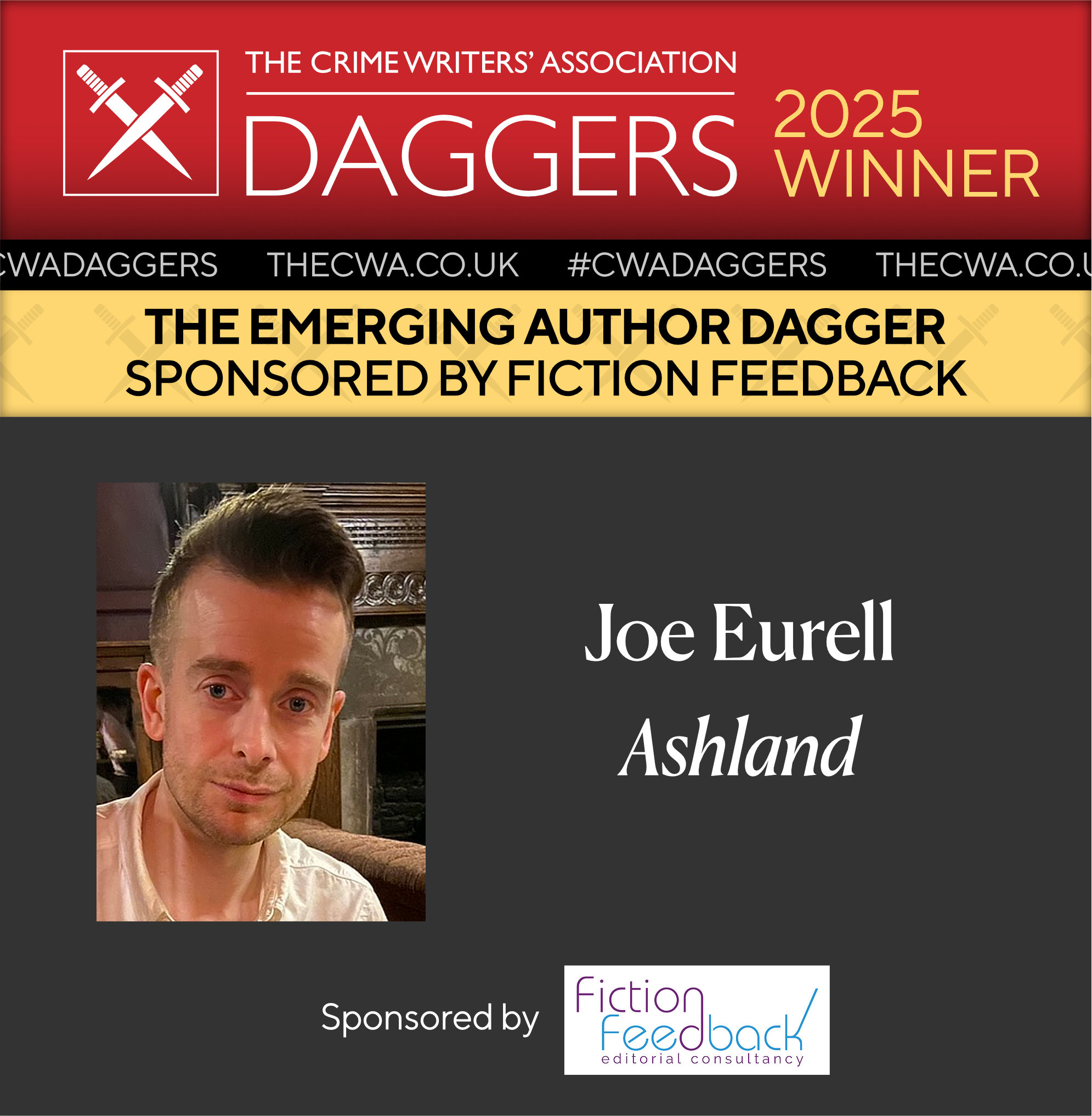
The Emerging Author Dagger, which has been going for over 20 years, celebrates aspiring crime novelists, sponsored by Fiction Feedback. The competition is open to unpublished authors, and is judged on the best opening for an unpublished crime novel. Over two dozen past winners and shortlisted Debut Dagger authors have signed publishing deals to date.

2025’s Emerging Author Dagger was awarded to Joe Eurell for Ashland. Judges compared it as Mare of Easttown meets We Begin at the End: “A beautifully written story evoking a powerful sense of place and conveying a rare energy. Rounded characters are portrayed in fascinating depth.” 

Richard Osman was awarded the 2025 Dagger in the Library award. The nominee longlist is voted by librarians and library users, chosen for the author’s body of work and support of libraries. 

Best Crime and Mystery Publisher of the Year Dagger, which celebrates publishers and imprints demonstrating excellence and diversity in crime writing, was awarded to Orenda Books. 


The CWA Diamond Dagger, awarded to an author whose crime-writing career has been marked by sustained excellence, is announced in early spring and in 2025 was awarded to Mick Herron.

Mick Herron said: “I’ve spent the best part of my life – not the majority of it; just the best part – in the crime writers’ community, and to receive this accolade from these friends and colleagues is both a career highlight and a personal joy. I’m touched and thrilled beyond measure, and will try to live up to the honour.”


The 2025 Winners in Full:

The KAA GOLD DAGGER

Book of Secrets by Anna Mazzola: (Orion)

THE IAN FLEMING STEEL DAGGER

Dark Ride by Lou Berney (Hemlock Press/ HarperCollins)

THE ILP JOHN CREASEY FIRST NOVEL DAGGER

All Us Sinners by Katy Massey (Little, Brown /Sphere)

THE TWISTED DAGGER

Nightwatching by Tracy Sierra (PRH/ Viking)

THE WHODUNNIT DAGGER

The Case of the Singer and the Showgirl by Lisa Hall (Hera)

THE HISTORICAL DAGGER (Sponsored in Honour of Dr. Marilyn Livingstone)

The Betrayal of Thomas True by A.J. West, (Orenda Books)

 THE ALCS GOLD DAGGER FOR NON-FICTION

The Peepshow: The Murders at 10 Rillington Place by Kate Summerscale: (Bloomsbury Circus)   

THE CRIME FICTION IN TRANSLATION DAGGER (Sponsored in Honour of Dolores Jakubowski)

The Night of Baba Yaga by Akira Otani:  (Faber) tr. Sam Bett

THE SHORT STORY DAGGER

A Date on Yarmouth Pier’ by J.C Bernthal in Midsummer Mysteries edited by Martin Edwards (Flame Tree Publishing/Flame Tree Collections)

THE DAGGER IN THE LIBRARY

Richard Osman

THE DAGGER FOR THE BEST CRIME AND MYSTERY PUBLISHERS

Orenda Books

THE EMERGING AUTHOR DAGGER (sponsored by Fiction Feedback)

Ashland by Joe Eurell, 

 THE CWA DIAMOND DAGGER AWARD

 Mick Herron


Friday, 28 February 2025

Call for Papers - Silent Echoes: Golden Age Crime Fiction and Trauma


Silent Echoes: Golden Age Crime Fiction and Trauma

FSU (Florida State University) London Study Centre, 

12–13 September 2025

The Golden Age of crime fiction, roughly associated with the interwar and immediate post-war period, has been commonly defined as a therapeutic and comforting form of literature. As Alison Light famously puts it, after the First World War, especially in Britain, detective writing became a ‘literature of convalescence’ (Forever England, 1991, 69). The conventions of Golden Age detective fiction – fair play, a closed circle of upper-class characters, isolated settings, ‘sacrificial’ bodies (Plain, Twentieth-Century Crime Fiction, 2000), and the final restoration of social and moral order – have been interpreted as mechanisms for containing, exorcising, and defusing the cultural anxieties emerging in the wake of war. 

However, the extent to which Golden Age crime fiction reflects, articulates, and reshapes the trauma shaping its consumption remains underexplored. While such a form of literature typically concludes with the apprehension of the criminal, the underlying trauma of profound cultural and individual disruption remains pervasive. War experience, as Wyatt Bonikowski writes, has a traumatic aspect: ‘there is something in the nature of modern war experience, both physical and psychical, that resists representation; it overwhelms the senses, disturbs memory, and leaves traces in the form of disruptive symptoms that persist years after the events have passed’ (Shell Shock and the Modernist Imagination, 2013, 3). Additionally, other traumas in the twentieth century – international, national, domestic, and personal – are inextricable from the pages of Golden Age crime novels, thematically, as backdrop, and ‘behind the scenes’ in writing and reception.

For this conference, we thus invite papers examining how, to what extent, and with what implications – textual, literary, sociocultural, political, medical, legal, and historical – the concept of trauma shaped crime writing between the 1910s and the 1950s. It aims to explore the influence of trauma on a variety of aspects (daily life, mental health, gender roles and relations, the environment, levels of violence, cultural memory, national identity, medical theory, and legal practice), examining how Golden Age crime fiction articulates the spatial, temporal, and psychic echoes of trauma.

Potential topics include but are certainly not limited to:

  • Mental health
  • Remembrance and convalescence
  • Space and trauma
  • Narrative structure and trauma
  • Veterans and the military sphere
  • Violence 
  • Place and Setting
  • Time and history
  • Identity, the self, and community
  • Gender roles, identities, and constructions
  • Disability
  • Ideas of ‘echoes’, ‘mirroring’ and ghostly presence as trauma 
  • Language and articulation
  • Crime, detection, and cultural memory
  • Spiritualism and death
  • Questions of genre
  • Crime, detection, and national identity
  • Colonialism and racism
  • Crime and emotions
  • Crime and insanity
  • Psychoanalysis and the unconscious mind
  • Medicine and detective narrative

Please submit a short abstract (up to 300 words) and brief biographical note for a 20-minute conference presentation to Directors of Golden Age Mysteries Ltd, Dr J C Bernthal (University of Suffolk), Dr Sarah Martin (Manchester Metropolitan University), Dr Stefano Serafini (Georgetown University, University of Padua) and Dr Mia Dormer: info@goldenagemysteries.co.uk no later than 5th May 2025. You may direct queries to the same address. Tickets to this event are non-refundable. 

The conference is generously sponsored by FSU (Florida State University) and takes place at its London Study Centre on 12 and 13 September 2025. This project has also received funding from the European Union’s Horizon Europe research and innovation programme under the Marie SkÅ‚odowska-Curie (MSCA) grant agreement no. 101105463.


Tuesday, 14 March 2023

CrimeFest Announce 2023 Award Shortlists


CrimeFest, one of Europe’s leading crime writing conventions, has announced the shortlists for its annual awards.

Now in its 16th year, the awards honour the best crime books released in 2022 in the UK.

The awards feature the hotly-contended Specsavers Debut Crime Novel Award which offers a £1,000 cash prize.

This year sees former detective turned advisor, Graham Bartlett, on the debut shortlist. Bartlett is known for advising some of the biggest authors in the crime genre, including Peter James, Mark Billingham, and Elly Griffiths, to help inject reality into their plots involving a crime or police officer. Now, Bartlett has put himself on the line with his debut, Bad for Good.

He's not the only former member of the police on the shortlist. John Sutherland served in a variety of ranks for the Met Police before he retired in 2018, and is shortlisted for his debut, The Siege.

They face strong competition from six other shortlisted authors, including Canada’s vice president and editorial director of the publishing house Simon & Schuster, Nita Prose, with her debut The Maid, which was a No.1 New York Times bestseller, a BBC Radio 4 Book at Bedtime and has already picked up the Ned Kelly Award for Best International Crime Fiction.

The eDunnit Award for the best e-book, sees giants of the genre in contention, including Ian Rankin for A Heart Full of Headstones, Sara Gran for The Book of the Most Precious Substance, Michael Connelly with Desert Star and Chris Brookmyre for The Cliff House.

The H.R.F Keating Award for best biographical or critical book on crime fiction sees TV’s Queen of History, Lucy Worsley, take on the Queen of Crime with Agatha Christie: A Very Elusive Woman.

A Private Spy, The Letters of John le Carré 1945-2020, edited by Tim Cornwell, is also shortlisted, as is crime fiction expert Barry Forshaw’s Simenon, The Man, The Books, The Films: A 21st Century Guide on the legendary and influential crime writer.

The Last Laugh Award sees Mick Herron’s Bad Actors on the shortlist. The Jackson Lamb series of dysfunctional British intelligence agents has become a major adaptation for Apple TV, starring Oscar-winner Gary Oldman. Herron’s up against Elly Griffiths with The Locked Room, Antti Tuomainen with The Moose Paradox, and the late Christopher Fowler for Bryant and May’s Peculiar London.

Elly Griffiths also features in the Best Crime Novel for Children (aged 8-12) shortlist with A Girl Called Justice: The Spy at the Window. She’s up against the acclaimed Anthony Horowitz for Where Seagulls Dare: A Diamond Brothers Case and M.G. Leonard’s Spark.

Nominees for the Best Crime Novel for Young Adults (aged 12-16) include Holly Jackson with Five Survive, Finn Longman’s The Butterfly Assassin and Sophie McKenzie’s Truth of Dare.

Adrian Muller, Co-host of CrimeFest, said: “The Specsavers Debut Novel Award has become one of the most coveted, and we’d like to thank Specsavers for their on-going support in celebrating new talent. We are also proud to be one of the few genre awards that recognise and celebrate e-books, humour, children, and Young Adult crime fiction novels. Our inclusive awards reflect the values of our convention, and showcase the incredible diversity and reach of the genre which dominates today’s cultural landscape.

Hosted in Bristol, CrimeFest is one of the biggest crime fiction events in Europe, and one of the most popular dates in the international crime fiction calendar, with circa 60 panel events and 150 authors attending over four days.

Featured Guests at the convention this May are Mark Billingham and Elly Griffiths.

Leading British crime fiction reviewers and reviewers of fiction for children and young adults, alongside the members of the School Library Association (SLA), form the CrimeFest judging panels.

CrimeFest was created following the hugely successful one-off visit to Bristol in 2006 of the American Left Coast Crime convention. It was established in 2008. It follows the egalitarian format of most US conventions, making it open to all commercially published authors and readers alike.

 All category winners will receive a Bristol Blue Glass commemorative award.

The 2023 Shortlists in full

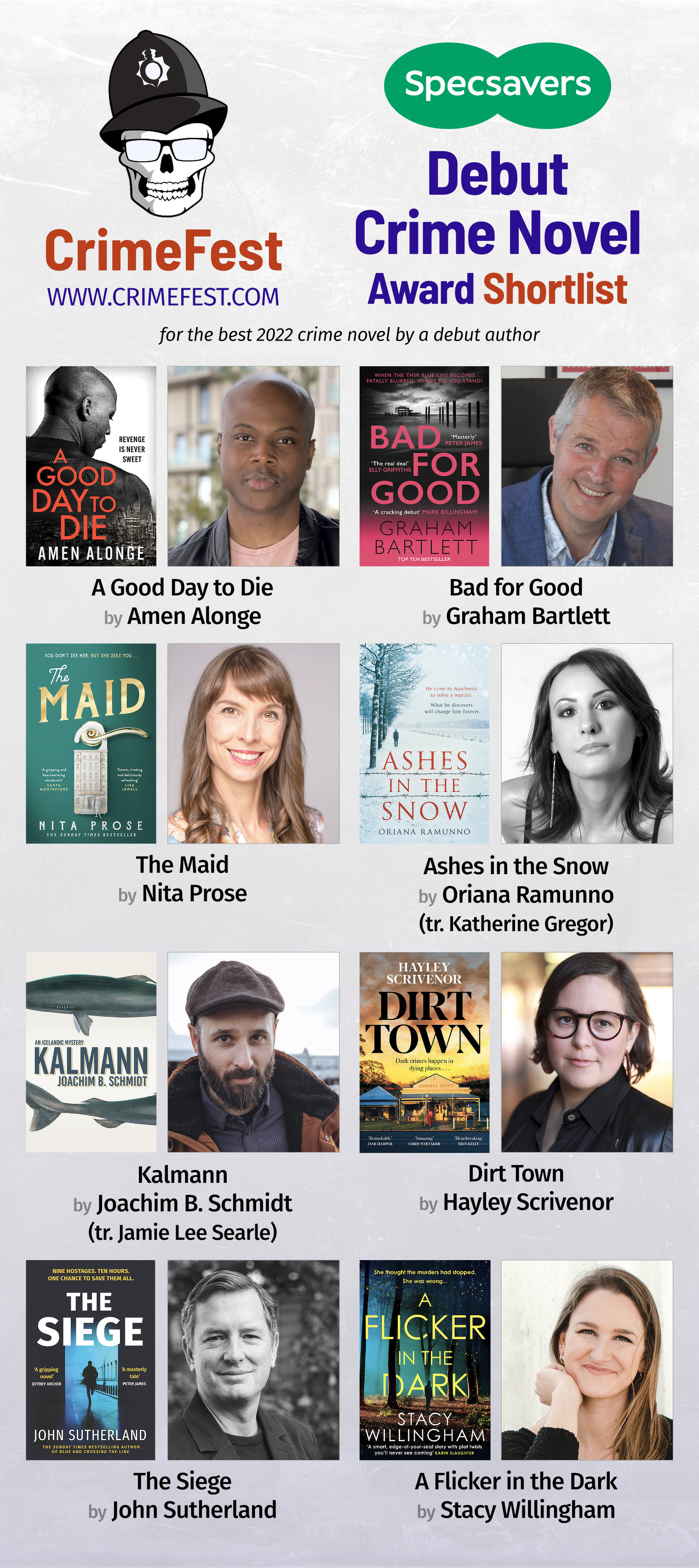
SPECSAVERS DEBUT CRIME NOVEL AWARD

In association with headline sponsor, the Specsavers Debut Crime Novel Award is for debut authors first published in the United Kingdom in 2022. The winning author receives a £1,000 prize.

- Amen Alonge for A Good Day to Die (Quercus)

- Graham Bartlett for Bad for Good (Allison & Busby)

- Nita Prose for The Maid (HarperCollins)

- Oriana Rammuno (translator: Katherine Gregor) for Ashes in the Snow (HarperCollins)

- Joachim B. Schmidt (translator: Jamie Lee Searle) for Kalmann (Bitter Lemon)

- Hayley Scrivenor for Dirt Town (Macmillan)

- John Sutherland for The Siege (Orion Fiction)

- Stacy Willingham for A Flicker in the Dark (HarperCollins)


eDUNNIT AWARD

The eDunnit Award is for the best crime fiction ebook first published in both hardcopy and in electronic format in the United Kingdom in 2022.

- Chris Brookmyre for The Cliff House (Abacus)

- Michael Connelly for Desert Star (Orion Fiction)

- M.W. Craven for The Botanist (Constable)

- Sara Gran for The Book of the Most Precious Substance (Faber & Faber)

- Ian Rankin for A Heart Full of Headstones (Orion Fiction)

- Peter Swanson for Nine Lives (Faber & Faber)

H.R.F. KEATING AWARD

The H.R.F. Keating Award is for the best biographical or critical book related to crime fiction first published in the United Kingdom in 2022. The award is named after H.R.F. ‘Harry’ Keating, one of Britain’s most esteemed crime novelists, crime reviewers and writer of books about crime fiction.

- J.C. Bernthal & Mary Anna Evans for The Bloomsbury Handbook to Agatha Christie (Bloomsbury Academic)

- John le Carré (edited by Tim Cornwell) for A Private Spy: The Letters of John le Carré 1945-2020 (Viking)

- Martin Edwards for The Life of Crime: Detecting the History of Mysteries and their Creators (Collins Crime Club)

- Barry Forshaw for Simenon: The Man, The Books, The Films (Oldcastle Books)

- Sian MacArthur for Gender Roles and Political Contexts in Cold War Spy Fiction (Palgrave Macmillan)

- Lucy Worsley for Agatha Christie: A Very Elusive Woman (Hodder & Stoughton)

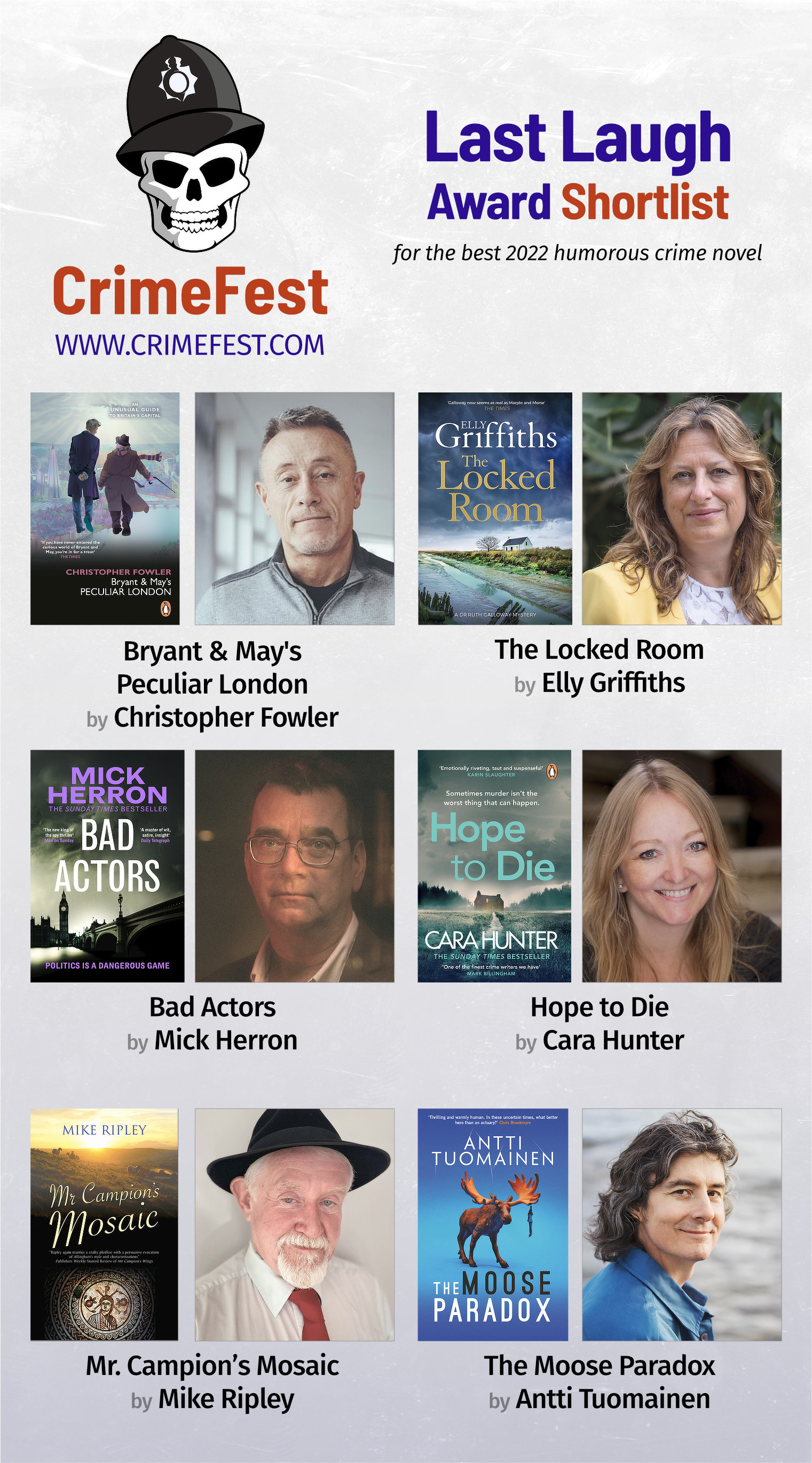
 LAST LAUGH AWARD

The Last Laugh Award is for the best humorous crime novel first published in the United Kingdom in 2022.

- Christopher Fowler for Bryant & May's Peculiar London (Doubleday)

- Elly Griffiths for The Locked Room (Quercus)

- Mick Herron for Bad Actors (Baskerville)

- Cara Hunter for Hope to Die (Viking)

- Mike Ripley for Mr Campion's Mosaic (Severn House)

- Antti Tuomainen for The Moose Paradox (Orenda Books)


BEST CRIME FICTION NOVEL FOR CHILDREN

This award is for the best crime novel for children (aged 8-12) first published in the United Kingdom in 2022.

 - Elly Griffiths for A Girl Called Justice: The Spy at the Window (Quercus Children's Books)

- Anthony Horowitz for Where Seagulls Dare: A Diamond Brothers Case
(Walker Books)

- Sharna Jackson for The Good Turn (Puffin)

- M.G. Leonard for Spark (Walker Books)

- Robin Stevens for The Ministry of Unladylike Activity (Puffin)

- Sarah Todd Taylor for Alice Éclair, Spy Extraordinaire! A Recipe for Trouble (Nosy Crow)

BEST CRIME FICTION NOVEL FOR YOUNG ADULTS

This award is for the best crime novel for young adults (aged 12-16) first published in the United Kingdom in 2022.

- Holly Jackson for Five Survive (Electric Monkey)

- Patrice Lawrence for Needle (Barrington Stoke)

- Finn Longman for The Butterfly Assassin (Simon & Schuster Children's)

- Sophie McKenzie for Truth or Dare (Simon & Schuster Children's)

- Ruta Sepetys for I Must Betray You (Hodder Children's Books)

- Jonathan Stroud for The Notorious Scarlett and Browne (Walker Books)

CrimeFest runs at the Mercure Bristol Grand Hotel from 11-14 May, 2023. For details and to book, go to: https://www.crimefest.com/


Sunday, 26 February 2023

Call for Papers:- The Mysterious Mrs Christie: Evidence, Elusion, Afterlives


The Mysterious Mrs Christie: 

Evidence, Elusion, Afterlives 

1.5-day international conference at the University of Exeter and Exeter Library 12-13 September 2023 

Keynote Speakers: Dr Mark Aldridge, Solent University and Prof. Michelle M. Kazmer, Florida State University 

2023 marks fifty years since the last novel Agatha Christie wrote, Postern of Fate, was published. By 1973, Christie was already established as the world’s bestselling novelist, and her popularity has only risen in subsequent years. In addition, a flame of scholarly interest has ignited and grown. The quintessential mystery writer, creator of Hercule Poirot and Miss Marple, is now also a legitimate figure in academic research. 

It is tempting to think that the there are no Agatha Christie mysteries left. Few writers have received such levels of popular scrutiny and her life and work have been approached from a range of angles. Millions of words have been written about this significant body of work. Recent or anticipated works such as Lucy Worsley’s Agatha Christie, Nina de Gramot’s The Christie Affair, and Mark Aldridge’s Agatha Christie’s Marple attest to the mainstream dissemination of detailed archival research and unconventional approaches. However, mysteries remain. As Worsley notes in her recent biography of Christie, she is ‘a very elusive woman’. 

For the seventh international Agatha Christie conference, we are seeking research and/or creative papers that consider underexplored aspects of Christie’s work, life, and legacies. These could be neglected topics/areas or reflections on critical conversations which could use a new perspective. 

Potential topics may include but are certainly not limited to: 

  • Across and beyond genre 

  • Afterlives and adaptations 

  • Character studies 

  • Christie and creative writing 

  • Christie in an international context 

  • Colonialism and racism 

  • Continuations and tributes 

  • Creative legacies 

  • Ecology and the environment 

  • Ethical considerations 

  • Gender, sex, and sexuality 

  • Gothic and the supernatural 

  • Life writing and autobiography 

  • Mary Westmacott 

  • New theoretical frameworks 

  • Place, space, and time 

  • Plays and dramatisations 

  • Religion and theology 

  • Radio and the BBC 

  • Short stories 

  • Teaching and pedagogy 

    Please submit a short (up to 200 words) abstract for a 20-minute presentation and a brief biographical note to agathachristieconference@gmail.com no later than 1 May 2023. You may direct queries to the same address. 

    Please note that speakers will be expected to register for the conference at the 1.5-day rate of £115. 

    Conference organisers: Dr Mia Dormer, Dr J.C. Bernthal, Sarah Martin, and Dr Stefano Serafini. 


Friday, 27 January 2023

Agatha Award Nominees


Best Contemporary Novel

Bayou Book Thief by Ellen Byron (Berkley Prime Crime)

Death By Bubble Tea by Jennifer J. Chow (Berkley)

Fatal Reunion by Annette Dashofy (Level Best Books)

Dead Man's Leap by Tina de Bellegarde (Level Best Books)

A World of Curiosities by Louise Penny (Minotaur)

Best Historical Novel

The Counterfeit Wife by Mally Becker (Level Best Books)

Because I Could Not Stop for Death by Amanda Flower (Berkley)

The Lindbergh Nanny by Mariah Fredericks (Minotaur)

In Place of Fear by Catriona McPherson (Mobius)

Under a Veiled Moon by Karen Odden (Crooked Lane Books)

Best First Novel

Cheddar Off Dead by Korina Moss (St. Martin’s)

Death in the Aegean by M. A. Monnin (Level Best Books)

The Bangalore Detectives Club by Harini Nagendra (Constable)

Devil’s Chew Toy by Rob Osler (Crooked Lane Books)

The Finalist by Joan Long (Level Best Books)

The Gallery of Beauties by Nina Wachsman (Level Best Books)

Best Short Story

"Beauty and the Beyotch," by Barb Goffman (Sherlock Holmes Magazine, Feb. 2022)

"There Comes a Time," by Cynthia Kuhn (Malice Domestic Murder Most Diabolical) Wildside Press

"Fly Me to the Morgue," by Lisa Q Mathews,( Malice Domestic Mystery Most Diabolical) Wildside Press

"The Minnesota Twins Meet Bigfoot," by Richie Narvaez, (Land of 10,000 Thrills, Bouchercon Anthology) Down & Out Books

"The Invisible Band," by Art Taylor (Edgar & Shamus Go Golden) Down & Out Books

Best Non-Fiction

The Life of Crime: Detecting the History of Mysteries and Their Creators by Martin Edwards (HarperCollins)

The Handbook to Agatha Christie: The Bloomsbury Handbook to Agatha Christie by Mary Anna Evans and J. C. Bernthal (Bloomsbury Academic)

The Science of Murder: The Forensics of Agatha Christie by Carla Valentine (Sourcebooks)

Promophobia: Taking the Mystery Out of Promoting Crime Fiction, Diane Vallere Ed.(Sisters in Crime)

Agatha Christie: An Elusive Woman, by Lucy Worsley (Pegasus Crime)

Best Children's/YA Mystery

Daybreak on Raven Island by Fleur Bradley (Viking Books for Young People)

In Myrtle Peril by Elizabeth C. Bunce (Algonquin Young Readers)

#shedeservedit by Greg Herren (Bold Strokes Books)

Sid Johnson and the Phantom Slave Stealer by Frances Schoonmaker (Auctus Publishers)

Enola Holmes and the Elegant Escapade by Nancy Springer (Wednesday Books)

Congratulations to all of the nominees! 

The Agatha Awards will be presented Saturday, April 29, 2023, during Malice Domestic 35

Malice Registrations and Agatha Banquet Tickets are available on the Malice Domestic website.

Tuesday, 1 February 2022

CfP: The Golden Age of Crime: A Reappraisal


The Golden Age of Crime: A Reappraisal

22nd – 23rd June 2022 at Bournemouth University

The Golden Age of crime fiction, roughly defined as puzzle-based mystery fiction produced between the First and Second World Wars, is enjoying a renaissance both in the literary marketplace and in scholarship. This conference intervenes in emerging academic debates to define and negotiate the boundaries of Golden Age scholarship.

As well as interrogating the staples of ‘Golden Age’ crime (the work of Agatha Christie and/or Ellery Queen, the puzzle format, comparisons to ‘the psychological turn’), this conference will look at under-explored elements of the publishing phenomenon. Joining us in this fascinating debate, keynotes will be given by Shedunnit creator Caroline Crampton, and Alistair Rolls of the University of Newcastle. This is a hybrid event, taking place both at Bournemouth University and online. Please note, at least one keynote will be online. Our second keynote subject to travel restrictions.

We invite proposals for 20-minute papers or panel presentations of one hour. Topics can include, but are by no means limited to, the following:

  • Defining the parameters of Golden Age crime

  • The Queens of Crime (Agatha Christie, Margery Allingham, Dorothy L. Sayers, Ngaio Marsh, Josephine Tey, Gladys Mitchell)

  • Significant male writers of the Golden Age (John Dickson Carr, Anthony Berkeley, Ellery Queen)

  • Lesser-known Golden Age practitioners

  • Collaborative and round robin novels

  • Continuation novels

  • The Detection Club

  • Parody, pastiche, and postmodernism

  • Psychology and psychoanalysis

  • Meta-fiction and self- or inter-referentiality

  • The language of crime fiction

  • The Golden Age and social value

  • Nostalgia and heritage

  • Writing the past

  • Gender, sexuality, and queerness

  • Clues and coding

  • Crime and the Gothic

  • Magic and the supernatural

  • Place, space, and psychogeography

  • Reissues and rediscovery

  • Archival finds and innovations

  • The ‘Second Golden Age’

  • The influence of Golden Age crime writers on subsequent and contemporary writers

  • Interdisciplinary perspectives

  • Teaching Golden Age crime fiction

We welcome academic and creative paper proposals. Please email your 200-word proposal and short biographical note to goldenageofcrime@gmail.com no later than 18th April 2022. Comments and queries should be directed to the same address.

Organisers: Dr J.C. Bernthal (University of Suffolk), Sarah Martin (Bournemouth University), Dr Stefano Serafini (University of Warwick).