Showing posts with label Eric Ambler. Show all posts

Friday, 13 February 2026

Ripster Revivals #21


Ripster Revivals # 21: An Apology

Actually, two apologies. First to frantic regular readers who have been wondering why this column has not appeared since before Christmas. This is due entirely to modern technology and problems with the website about which I neither know nor care. And secondly, to Ayo Onatade, who has graciously allowed me to impose upon the Shots blog which she curates so magnificently. {Note to Editor: We have told her, haven’t we?}


Happy New Reading Year

Readers of regular crime novels will need an entire suspension bridge of disbelief to cope with Vivian Dies Again by C.E. Hulse [Viper], which could have been called Groundhog Death Day. The titular anti-heroine and victim, Vivian, is a self-confessed ‘manic pixie dream slut in going-out underwear’ who has her drug-dealer on speed dial. 


Vivian’s special skill set of gate-crashing family parties, ravaging the cocktail bar and upsetting (or sleeping with) her relatives results in most of them having a good reason to murder her and the inevitable duly happens – eighty-four times as Vivian is caught in a time-loop which makes her re-live (should that be re-die?) the experience. Naturally (well, you would, wouldn’t you) she uses this supernatural reset button to try and solve her own murder with the help of a grumpy wine waiter.


Also out now is Sounds Like Trouble by American writing duo Pamela Samuels Young and Dwayne Alexander Smith [Faber]. I am not being disingenuous when I say this struck me as a traditional private eye story; there’s absolutely nothing wrong with that. It is set, naturally, in California and features a partnership of endearingly flirty detectives, Jackson Jones and Mackenzie Cunningham, who take it in turns to narrate their latest case which they have taken on with some trepidation as their client are the bosses of Los Angeles’ three main crime families. The tone is light, the pace sprightly and overall, great fun.


Coming next month is debut novel The Artful Anna Harris by Tracy Maton [Viper] which possibly falls into the category of ‘domestic noir’ as the predictably unpredictable protagonist Anna leaks details of her London past combined with her present situation in village life in Somerset. The problem for the reader is whether she is a faithful or a traitor as she adapts her own personality and adopts those of others. It’s not long before there’s a death – by herd of cows – and things begin to get rather creepy as Anna perfects her chameleon-like skills, having lost her moral compass somewhere along the way. The Talented Miss Maton is particularly good at depicting the suffocating effects of village life where an incomer is expected to conform to the ideals of the ruling extended families.


Illustrations in crime novels, other than maps, are rare but not unknown (I recall a Minette Walters’ novel from 2000 using the technique) but I have never before come across a book with such atmospheric, and relevant, commissioned artwork. Totem by Matthew Hall [Eye Books], published in May, is part legal, part environmental thriller set in British Columbia which highlights both the threat of ruthless developers to the natural forest and the treatment of Canada’s First Nation’s natives. The illustrations in Totem are by Jeff ‘Red’ George, an Ojibway artist from the Kettle and Stoney Point First Nation.


Remembrances of Readings Past

Readers of this column and many a book dealer will know, I have a weakness for the old A-format paperback (that slides easily into the poacher’s pocket of one’s Barbour waxed jacket), especially Pan or Fontana titles with the price in pre-decimal currency. So I can understand why I was attracted to The Storm Knight (cover price: five shillings) by Frederick E. Smith, whom I knew only as the author of 633 Squadron, the basis of an incredibly popular film in my youth with a theme tune still played to this day by the massed bands of the RAF on royal occasions.


I had honestly no idea that Frederick Escreet Smith (1919-2012) was the author of more than thirty books in various genres in addition to the ten war novels featuring his legendary squadron of WWII Mosquito fighter-bombers.

His 1966 novel The Storm Knight looked like just the sort of thriller I was brought up on, involving a wartime back story, a sunken ferry (containing vital secrets) in a Norwegian fjord and a passing Canadian tourist who just happens to be a skin-diver and underwater salvage expert. Oh, and there’s a girl who has an interest in the wreck and you know what’s going to happen there from the off, despite some cack-handed attempts at seduction by our skin-diving hero.

For a while it reminded me of a tale Hammond Innes might have told, but the geography, sailing and diving scenes are nowhere near what Innes could do. And despite decent baddies, a minefield and the wreck of the ferry lying on a rock shelf, teetering on the brink of an abyss, The Storm Knight does not actually thrill that much. The ‘skin diving’ scenes – an odd expression given the temperature of the water in a Norwegian fjord – are rather laboured and confusing unless you know that a Drager was a German breathing apparatus, as it is not explained, and the cover illustration suggests an aqualung. But I’m being picky. My main complaint was why was it called The Storm Knight? I think I missed that bit.

Thinking of Smith’s best-known work, plus the fact that the 1964 film was on television (again) this month, reminded me that 633 Squadron had been published in Air Ace Picture Library, one of several series of one-shilling comic books (would we call them graphic novels today?) which told stories of derring-do, mostly from WWII. 


Among these 64-page ‘pocket libraries’ produced by competing publishers, were Battle, Combat, Action and Commando, but the first, and my personal addiction, was War Picture Library which began in 1958 and ran through more than 2000 titles up to 1984. The artwork was noted for its precision when it came to uniforms and equipment and the stories for their historical accuracy. While individual authors were never specifically identified, it is safe to assume that many of the stable of writers had first-hand experience of the war and the stories they created were never simply of the gung-ho crash-bash-boom-kapow(!) variety. The storytelling was of the highest quality, and I do not think that is me looking back on a mis-spent youth through a soft-focus lens.

I still remember some of those stories more than fifty years on and one in particular has always stuck in my mind – I even remembered that it was War Picture Library #80 – from 1961, the dramatically titled Banzai! about a small group of Australian soldiers fighting a last-ditch action during the Japanese invasion of New Guinea.


A quick search on Ebay informs me that a reprint was issued in the Battle Picture Library in 1984 and can be bought for about ten quid. Makes me almost wish I’d kept my first edition, but that went – along with my collection of about 200 others – when I started secondary school and discovered my first James Bond book: Dr No in, you’ve guessed it, an A-format Pan paperback (which I still possess).


From the To-Be-Read Pile

I really cannot think why it has taken me so long to get around to reading Eric Ambler’s Send No More Roses as I picked up a 1977 first edition at a very reasonable price about five years ago.


It is a ‘late’ Ambler (1909-1998) whose personal golden age is usually regarded as the 1930s and early ’40s, though all Amblers are well worth reading even when, as in this case, the elements of suspense, jeopardy and violent action are deliberately toned down. This is a cerebral thriller covering familiar Ambler themes; primarily, the nature of crime – in this case, when does legal tax avoidance become illegal tax evasion – and, as always, who can you trust among your fellow criminals? (Some may be faithfuls but there are always traitors.) There is also the Ambler trademark of having an international cast of characters, several of them deliberately stateless, or at least of convoluted origins, all gathered in a rented villa on the French Riviera, an old Ambler stomping-ground. (As an aside: did Ambler ever set a novel completely in England?)

Published in the US as The Siege of the Villa Lipp, though in my UK edition it is the Villa Esmerelda, the location is seemingly perfect for a bizarre meeting between a shady but successful international money-launderer and a trio of criminologists determined to label him a super-villain and the archetype of a new breed of ‘Able Criminals’. The small main cast of six become embroiled in lengthy debates, with one side blustering and indignant, the other accused and seemingly defensive but definitely not telling all the truth. Interlaced with reports of this distrustful summit, the main protagonist provides flashbacks (honest ones?) to his early career in the British army in Italy during the war and the beginning of what today would be called money-laundering and white-collar crime.

An external but very real threat to the villa and its guests emerges resulting in a rapid and dramatic escape, the threads of the story then being tied up far away from the Riviera, in the Caribbean and on an obscure South Pacific island near Fiji. And once again Ambler demonstrates his long-held theory that the innocent can easily find themselves involved in crime (or espionage) and that there is no such thing as a super-villain, merely greedy and distrustful men.

The central subject matter – tax evasion/avoidance – may not seem to be the usual Ambler fare. Could it be that Ambler had some personal score to settle with the tax authorities? Who knows? The important thing is that in Send No More Roses, Ambler is as damnably readable as he ever was.


Bespoke Problems

The problem with having a bespoke book dealer is that they tantalise me with books which I simply have to have and thus my To-Be-Read continues to increase. Despite my best efforts, its growth seems unstoppable; so much so that I have nick-named my dealer The Sorcerer’s Apprentice.

My latest acquisition was Time Right Deadly the 1956 debut novel of ‘Sarah Gainham’ (Rachel Ames, 1915-1999), the edition being a 1957 Dragon paperback, an imprint I was unfamiliar with, but which was an imprint of publisher Arthur Barker which became Weidenfeld & Nicholson and subsequently Orion – publishers I have heard of.


The novels of Sarah Gainham, set mainly in the post-war Austria she knew well, have recently been reappraised as significant contributions to spy fiction. Her debut novel however, although there are hints of possible espionage, is primarily a detective story and the story of two detectives. When charming and rather randy journalist Julian Dryden is shot dead in a dodgy part of the Russian sector of occupied Vienna in 1947, suspicion falls on one of his lovers, Ellen Perrott, who is married to an unbelievably tolerant British diplomat. Ellen is not a sympathetic character, bitchily dismissing one of her rivals for Dryden’s affections as ‘A common little thing ...(with)…her provincial worries about her reputation in the intervals of concupiscence.’

In the first half of the book, the dim and lazy Colonel Thompson leads the British investigation, despite not speaking a word of German, or Russian. He is convinced of Ellen Perrot’s guilt but too worried about upsetting the status quo to take action. Then (for no clear reason I can see), the investigation is taken over by a retired Austrian policeman, Mollner, who chain smokes cigars, re-questions witnesses and uncovers Dryden’s involvement in a people smuggling ring which, for a price, helps people escape from behind the descending Iron Curtain.

It is the grizzled veteran Mollner, who knows the ways of Central Europe, rather than the stiff, humourless Thompson who doesn’t care about them, who brings the case to a conclusion.


True Crime 

I met Patricia Cornwell once. It would have been back in 1990 at a party to mark the UK publication of her ground-breaking debut thriller Postmortem and I was there as the crime fiction critic of the Sunday Telegraph (“an excellent chiller with pace and tension”), very much in the shadow of those far more experienced reviewers Harry Keating and Julian Symons.


Now, thirty-six years and thirty-six(?) best-selling novels on, Ms Cornwell gives us an autobiographical memoir, True Crime, to be published in May by Sphere, which has already been described as ‘achingly honest’ and, according to fellow bestseller James Patterson, ‘could be the best book she’s ever written’.


The Other Cornwell

Nicholas Cornwell, better known by his pen-name Nick Harkaway, has done sterling work continuing the legend of his father’s famous creation George Smiley, but I had no idea he himself must have had an adventurous past, as chronicled by novelist John Harris…


Until normal service is resumed,

The Ripster.


Tuesday, 17 October 2023

The Return of Penguin Greens

From the 1930s onwards crime novels published by Penguin had covers using a lot of green ink. This led to a clear distinction between two different kinds of novel – effectively all other novels (orange) and crime novels (green). This had the unintended effect of implying that these were different reading experiences or had different statuses when, of course, some ‘crime’ novels are simply among the best novels of any kind whereas orange novels came to seem more middle- to-upper brow even if they might be in practice be much less well written, ambition and plausible than novels by Dorothy M. Sayers, say, or Raymond Chandler. 

Famously it was on returning from a visit to Agatha Christie that Allen Lane, standing on a platform at Exeter station, had the idea for Penguin paperbacks and in the 1950s he once celebrated Christie’s birthday by printing in one go a million copies of her books (10 different novels x 100,000).

Crime of every description has therefore, from the most horrific to the most genteel, always stood at the heart of the entire Penguin enterprise. For reasons not now clear in the 1980s it was decided to drop the green spine and publish all fiction with an orange spine. Then design moved on again, often restricting the Penguin element to the bird logo itself and only keeping hints of Penguin orange. Around the same time light blue Pelicans were also dropped, with the Penguin colour schemes restricted to the black-spined Penguin Classics or the various shades of eau-de-Nil and grey for Penguin Modern Classics.

I have published various series as a Penguin employee over the years—Great Ideas, Little Black Classics and others—and it is really almost with a sense of embarrassment that it has taken until 2023 to realize that one of the most potent and fun traditional Penguin colour codes was simply lying around waiting to be reused: Green for Crime. I mention this because it is at some level shameful that it should have taken so many years to come up with something so straightforward that it barely qualifies as a concept or an idea: why didn’t we do this a decade ago? Two decades?

Lurking within Penguin Modern Classics we already published some of the greatest crime writers – Dorothy B. Hughes’s sensational In a Lonely Place, Eric Ambler’s great pre-War thrillers, Chester Himes’s wonderful, frenzied fantasies of Harlem, Ross Macdonald’s novels of southern California’s squalor lurking under the pretty surface. I am myself responsible at Penguin for the backlist of two great writers in the genre, John le Carré and Len Deighton, and yet had not noticed until very recently that these could be assembled into a matchless series of the greatest crime writers.

Once, very belatedly, we decided to proceed with the idea it seemed a shame not to add other writers. We already published Georges Simenon’s extraordinary books, of which he wrote so many (and at such a consistent level of excellence) that it would make sense to showcase a couple simply to give readers a way into his enormous oeuvre. Josephine Tey’s novels had just come out of copyright, so this provided the opportunity to publish her superb, unsettling The Franchise Affair and Brat Farrar. We also had C.S. Forester’s wonderfully nasty little shocker Payment Deferred about a murderous South London miser (written long before Forester became famous for the Hornblower novels).

For the series to be fresh though it needed some new discoveries and a lot of time was spent reading sometimes terrible books (please do not read anything by Peter Cheyney!) but also books which had just aged badly. I was particularly sorry that Helen MacInnes now seemed so lacklustre as my parents had loved her novels of international espionage when they were published – but now they seemed to consist predominantly of people endlessly walking around, having meals and checking into hotels, with very occasional outbursts of unengaging and tasteful violence.

Battling through some quite neither-here-nor-there stuff though made it much easier to spot wonderful things. Many recent crime novelists remain in print because of Kindle editions or print-on-demand versions, but it was very exciting to find two giants of British thriller writing from the 1970s and 1980s, Anthony Price and Michael Gilbert, available to be discovered. Both giants in their day, their work still has an ingenuity and excellence which has in no way dated – so Price’s Other Paths to Glory and Gilbert’s Game Without Rules joined the list. And I was tipped off to try Dick Lochte, whose 1985 debut Sleeping Dog is a classic, extremely funny piece of neo-noir with the simple but useful advice: if you are a jaded private investigator in L.A. and a girl on roller-skates asks you to help her find her missing dog, don’t say yes. The other great find was the Japanese writer Edogawa Rampo (real name Tarō Hirai – his pen name derives from the Japanese pronunciation of Edgar Allen Poe). Between the wars he wrote a number of thrilling and disturbing classics, some with a wonderful Tintin-like flavour (Gold Mask and The Black Lizard) and others with the depravity dialled up (Beast in the Shadows). All three of these are in the series. 

We are now finishing work on a third set of ten, including some just wonderfully recommendable stuff! Shirley Jackson’s We Have Always Lived in the Castle, Ian Fleming’s From Russia with Love, Anthony Price’s The Labyrinth Makers and John le Carré’s The Night Manager. Best of all (but of course they are all best) is a long forgotten classic of New York City noir, The Deadly Percheron by John Franklin Bardin, set in a gloomy wartime Manhattan and Coney Island. The fate of its decent psychiatrist hero as he unwillingly wades deeper and deeper into an inexplicable, surreal and truly horrible urban underbelly has to be experienced to be believed.

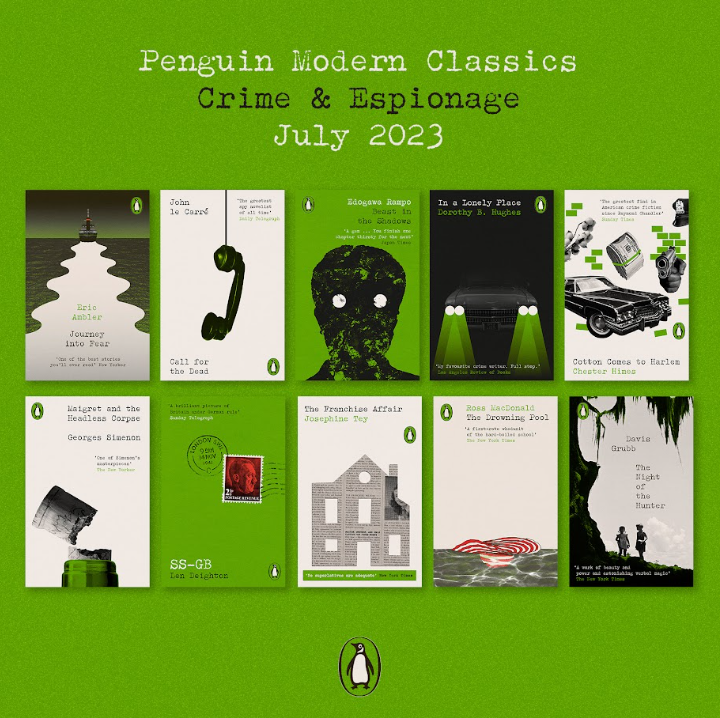
Here are the three sets, with the third not published until June 2024:

  1. Davis Grubb NIGHT OF THE HUNTER
  2. Edogawa Rampo BEAST IN THE SHADOWS
  3. Dorothy B. Hughes IN A LONELY PLACE
  4. Josephine Tey THE FRANCHISE AFFAIR
  5. Eric Ambler JOURNEY INTO FEAR
  6. John le Carré CALL FOR THE DEAD
  7. Georges Simenon MAIGRET AND THE HEADLESS CORPSE
  8. Len Deighton SS-GB
  9. Ross Macdonald THE DROWNING POOL
  10. Chester Himes COTTON COMES TO HARLEM
  11. Dick Lochte SLEEPING DOG
  12. Raymond Chandler THE BIG SLEEP & FAREWELL, MY LOVELY
  13. Anthony Price OTHER PATHS TO GLORY
  14. Michael Gilbert GAME WITHOUT RULES
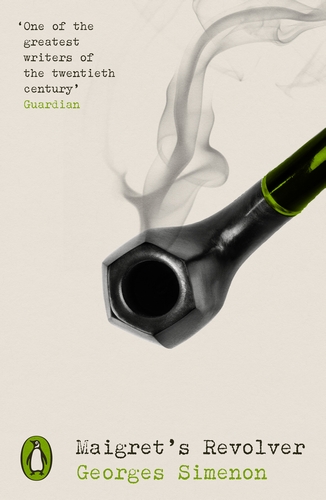
  15. Georges Simenon MAIGRET’S REVOLVER
  16. C.S.Forester PAYMENT DEFERRED
  17. Edogawa Rampo THE BLACK LIZARD
  18. Eric Ambler THE MASK OF DIMITRIOS
  19. Josephine Tey BRAT FARRAR
  20. John le Carré TINKER TAILOR SOLDIER SPY
  21. Anthony Price THE LABYRINTH MAKERS
  22. Chester Himes A RAGE IN HARLEM
  23. John le Carré THE NIGHT MANAGER
  24. Edogawa Rampo GOLD MASK
  25. Ian Fleming FROM RUSSIA WITH LOVE
  26. Georges Simenon NIGHT AT THE CROSSROADS
  27. John Franklin Bardin THE DEADLY PERCHERON
  28. Ross Macdonald THE UNDERGROUND MAN
  29. Shirley Jackson WE HAVE ALWAYS LIVED IN THE CASTLE
  30. Cornell Woolrich I MARRIED A DEAD MAN

Any suggestions anyone might have for unfairly out-of-print crime and espionage classics would be warmly received!

Simon Winder is the Publishing Director at Penguin Press. 


Wednesday, 6 September 2023

Penguin Classic Crime & Espionage -- 2nd tranche coming soon!

Reviving the iconic green Penguin Crime paperbacks, first published 75 years ago, this new series celebrates the endless variety and unique appeal of one of fiction’s great genres. The series, which continues to grow, is a careful selection of the very best from Penguin Classics’ extensive archives, combined with new discoveries unearthed from the golden age of crime and well overdue a new readership. The first tranche of titles, released in Summer 2023, took us from a sunshine soaked, yet bullet ridden California to a macabre Tokyo flat. Now the second tranche is here to take us through to Autumn with the best fireside reading for armchair detectives.

The series is carefully curated by author and Penguin Press publishing director Simon Winder, who is available for publicity: “These books are united by atmosphere, anxiety, a strong sense of time and place, and an often-appalling ingenuity, both on behalf of the authors and their characters. They have also all aged very well, gaining an additional pleasure from shifts in manners, clothes, wisecracks, politics, murder weapons and potential alibis.”

‘I needed a drink, I needed a lot of life insurance, I needed a vacation, I needed a home in the country. What I had was a coat, a hat and a gun. I put them on and went out of the room’

Farewell, My Lovely by Raymond Chandler

The Big Sleep & Farewell, My Lovely | Raymond Chandler | 1939 & 1940

There are no streets meaner than those of L.A.'s underworld - but luckily one detective has more than his fair share of street smarts. Here, in the first two novels featuring the immortal creation Philip Marlowe, we see the cynical sleuth taking on a nasty case of blackmail involving a Californian millionaire and his two devil-may-care daughters; then dealing with a missing nightclub crooner (plus several gangsters with a habit of shooting first and talking later).

Raymond Chandler was born in Chicago in 1888 but moved to England with his family when he was twelve. During the Depression era, he seriously turned his hand to writing, and his first published story appeared in the pulp magazine Black Mask in 1933, followed six years later by his first novel, The Big Sleep. 

Game Without Rules | Michael Gilbert | 1967

In a peaceful Kent village, Mr Behrens lives with his aunt at the Old Rectory, where he plays chess and keeps bees. His friend Mr Calder lives nearby with Rasselas, a golden deerhound of unnatural intelligence. No one would suspect that they are in fact working for British Intelligence, carrying out the jobs that are too dangerous for anyone else to handle - whether it's wiping out traitors, Soviet spies or old Nazis - in these gloriously entertaining stories.

Michael Gilbert was born in Lincolnshire in 1912. He worked as a lawyer and wrote his novels exclusively when commuting by train, 500 words a day in 50-minute stints. He was made a CBE in 1980, awarded a Diamond Dagger for the Crime Writers Association for lifetime achievement, and named a 'grandmaster' by the Mystery Writers of America in 1988. 

Maigret’s Revolver | Georges Simenon | 1952

Inspector Maigret receives a call from his wife to say he has a visitor at their apartment. But when he gets home, the young man has already gone, along with Maigret's prized Smith and Wesson .45. The trail to find the culprit - and the woman who may become his victim - takes Maigret across Paris and all the way to the Savoy Hotel in London. But getting to the truth may be even more complicated than he had first imagined.

Georges Simenon was born in Liège, Belgium, in 1903. He is best known in Britain as the author of the Maigret novels and his prolific output of over 400 novels and short stories have made him a household name in continental Europe. He died in 1989 in Lausanne, Switzerland, where he had lived for the latter part of his life.

Sleeping Dog | Dick Lochte | 1985

Leo Bloodworth, 'the Bloodhound', is a world-weary L.A. gumshoe with a reputation for finding anything - and a low tolerance of precocious teenagers. Serendipity Dahlquist is a precocious teenager. When the headstrong, roller-skating fourteen-year-old asks Bloodworth to help track down her lost dog Groucho, it leads this oddest of odd couples into the dark criminal underworld of the Mexican mafia, and into more trouble than they'd bargained for.

Dick Lochte's first novel, Sleeping Dog was published to enormous acclaim. He was a columnist for the Los Angeles Times for several decades, and formerly president of both the American Crime Writers League and the Private Eye Writers of America. Born in New Orleans, Lochte now lives on the West Coast.

Brat Farrar | Josephine Tey | 1949

Twenty-one-year-old Brat Farrar is an orphan, alone in the world without friends or family. So when he is offered the unexpected chance to impersonate Patrick Ashby, the long-lost heir to a vast fortune on a country estate, he agrees. Brat is the spitting image of Patrick, who disappeared years ago. At first it seems Brat can pull off this incredible deception, until he starts to realise that he is in far greater peril than he ever imagined.

Josephine Tey began to write full-time after the successful publication of her first novel, The Man in the Queue (1929), which introduced Inspector Grant of Scotland Yard. It wasn't until after the Second World War that the majority of her crime novels were published. Born in Inverness, Tey died in 1952, leaving her entire estate to the National Trust.

Tinker Tailor Soldier Spy | John le Carré | 1974

George Smiley, formerly of the Secret Intelligence Service, is contemplating his new life in retirement when he is called back on an unexpected mission. His task is to hunt down an agent implanted by Moscow Central at the very heart of the Circus - one who has been buried deep there for years. The dogged, troubled Smiley can discount nobody from being the traitor, even if it is one of those closest to him.

John le Carré was born in 1931. For six decades, he wrote novels that came to define our age. After a peripatetic childhood, a spell of teaching at Eton led him to a short career in British Intelligence (MI5&6), during which he published his first novel. He gained a worldwide reputation for his subsequent books. Le Carré died in December 2020. 

The Black Lizard | Edogawa Rampo | 1934

They call her the 'Dark Angel'. Queen of Tokyo's underworld, Mme Midorikawa is famed for her beauty, her jewels and the tattoo of a black lizard on her arm. Crime is so easy for her that she warns her victims in advance. When a wealthy jewel merchant receives letters saying his precious daughter Sanae is about to be kidnapped, he entrusts the renowned detective Akechi Kogoro to protect her. But he may have met his deadliest adversary yet...

Edogawa Rampo was the pseudonym of Taro Hirai, generally viewed as the greatest of all Japanese suspense and mystery authors. He was a prolific novelist and short story writer. Much influenced by writers such as Conan Doyle, Chesterton and Wells, his pseudonym is a Japanese transliteration of Edgar Allen Poe's name. Many of his works have been made into films. 

Payment Deferred | C.S. Forester | 1940

Bank clerk William Marble is facing financial ruin - until a visit from a wealthy young relative, a bottle of Cyanide and a shovel offer him an unexpected solution. But there is no such thing as the perfect murder. Gradually Marble becomes poisoned by guilt and fear, and his entire family corrupted. Sooner or later his deed will catch up with him, as events spiral out of control in the most unpredictable of ways...

C. S. Forester was born in 1899 in Cairo, where his father was a government official. On the outbreak of the Second World War, he entered the Ministry of Information. As well as the famous Horatio Hornblower series, his novels include The African Queen, adapted into the famous film, and crime novels Plain Murder and The Pursued.

The Mask of Dimitrios | Eric Ambler | 1939

English writer Charles Latimer is travelling in Istanbul when a police inspector tells him about the infamous master criminal Dimitrios, long wanted by the law, whose body has just been fished out of the Bosphorus. Immediately fascinated, Latimer decides to retrace Dimitrios' steps across Europe to gather material for a new book, but instead finds himself descending into a terrifying underworld of international espionage, Balkan drug dealers, unscrupulous businessmen and fatal treachery - one he may not be able to escape.

Eric Ambler was born in London. He studied engineering but left college and became a copywriter in the advertising industry, before publishing his great spy thrillers and working as a screenwriter. His profound influence on the espionage genre has been acknowledged by writers including Ian Fleming and John le Carré.

Other Paths to Glory | Anthony Price | 1974

Paul Mitchell is a young military historian whose life is changed forever when two men, Dr Audley and Colonel Butler of the MOD, visit him with a fragment of a German trench map - and a lot of questions. Then somebody tries to kill him. Paul, his life now in danger, agrees to go underground on a mission to solve a dangerous mystery: what really happened during the battle of the Somme in 1916? And why does somebody want to keep it secret?

Anthony Price was born in Hertfordshire. He began as a crime reviewer on the Oxford Mail and ending as editor of the Oxford Times. He won the Crime Writers' Association Silver Dagger for his first novel The Labyrinth Makers, and the Gold Dagger for Other Paths to Glory, which was later shortlisted for the Dagger of Daggers Award for the best crime novel of the last 50 years.


Wednesday, 26 April 2023

Penguin Modern Crime Announcement

 Penguin Modern Classics

CRIME & ESPIONAGE

Published by Penguin Modern Classics | 13 July 2023 | Paperback £9.99

First published 75 years ago, the iconic green Penguin Crime paperbacks have long held a special space in every crime lovers heart and bookshelf, as CrimeTime puts it: “If the Golden Age of Crime has a colour, it’s bottle green. And, if it has a smell, it’s the caramel of old paper. Nothing sums up crime fiction between the ages of flappers and flares quite so well as the classic Penguin Crime editions.” As one of our most popular imprints, the Penguin Crime series encompassed stories from Agatha Christie to Dashiell Hammett, and everything in between, expanding the horizons of crime readers with thrilling new discoveries in a familiar, trusted, and instantly recognisable green jacket. 


This summer, Penguin Modern Classics are thrilled to be reviving this beloved collection with our new Crime and Espionage series, celebrating the endless variety and enduring appeal of one of fiction’s great genres. Combining a careful selection of the very best from Penguin Classics’ extensive archives, including John le Carre, Josephine Tey, and Chester Himes, with exciting forgotten treasures which are well overdue a rediscovery, such as Edogawa Rampo and Davis Grubb, the first tranche of ten titles takes us from a sunshine soaked, yet bullet ridden California to a macabre Tokyo flat, through English country estates to the streets of Harlem. Transporting the reader through time and space, these novels can be outrageously entertaining but also chilling, filled with the darkest politics, vices, and betrayals.

The series, which will be released in ten-book tranches and continue to grow, is carefully curated by author and Penguin Press publishing director Simon Winder,  A long-time editor at Penguin and reader of crime, the revival of Penguin Crime and Espionage has seen Simon dig deep into the archives, reading hundreds of books to determine which of our existing titles should make the list, and which titles, previously not published by Penguin, should have been included years ago:

“Penguin Modern Classics is one of the great publishers of crime and suspense fiction.  I thought it would be enjoyable to pick out some highlights, add some new titles and revive the wonderful green livery Penguin used to use for all its crime fiction. 

These books are united by atmosphere, anxiety, a strong sense of time and place, and an often appalling ingenuity, both on behalf of the authors and their characters.  They have also all aged very well, gaining an additional pleasure from shifts in manners, clothes, wisecracks, politics, murder weapons and potential alibis.

The novels were designed to be entertainments, albeit sometimes of a very dark kind, and they all plumb extremes.  Fear of fascism or communism; fear of the anonymous city or of a fetid swamp; fear of vast global conspiracies or of just one rather odd family member with a glint in his eye….”

For lifelong crime lovers, who will no doubt be as excited as we are for the return of the bottle-green jackets as well as the previously unpublished titles, to new readers unsure where to start with the formidable back catalogues of Georges Simenon, Eric Ambler, or Len Deighton, the Penguin Crime and Espionage series is a collection of gems showcasing the best of the Golden Age of Crime.


Thursday, 12 January 2023

Penguin Modern Classics to publish three Eric Ambler novels

On 26th January 2023, Penguin Modern Classics will publish three wildly enjoyable novels from the father of the spy thriller, Eric Ambler: Passage of Arms, The Light of Day and A Kind of Anger. Ambler is often said to have invented the modern suspense novel, and his disciples include John le Carré, Alfred Hitchcock, Graham Greene and Len Deighton. These are a must-read for fans of the genre.

Eric Ambler (1909-98) was born in London to parents who were part-time entertainers. He studied engineering but left college without taking a degree and became a copywriter in the advertising industry. Between 1937 and 1940, he published his great anti-fascist spy thrillers: Uncommon Danger, Epitaph for a Spy, Cause for Alarm, The Mask of Dimitrios, and Journey into Fear. In 1940, he joined the Royal Artillery and was later transferred to the army film unit. After the war he worked as a screenwriter in England and Hollywood and married his second wife, a leading Hollywood producer. Passage of Arms, The Light of Day and A Kind of Anger are his post-war novels.

A Kind of Anger

The last time anyone saw Lucia Bernardi, she was driving at top speed away from a Swiss villa - leaving the body of her murdered Iraqi lover behind. Now she has vanished, along with a potentially explosive set of papers, and disgraced journalist Piet Maas has been sent to follow her trail to the South of France. But finding her is just the start of his problems. Soon, amid a cast of con men, secret agents and revolutionaries, he must decide whether to land the scoop of his lifetime - or follow Lucia into ever more dangerous waters.

A Passage to Arms

An Indian clerk, Girija Krishnan, sees the opportunity of his lifetime when he stumbles on an abandoned cache of arms hidden in the Malayan jungle. If he can sell the weapons, he will be able to achieve his lifelong dream of owning a bus company - although the penalty for gun-running is death. Soon his decision becomes the catalyst for a chain of events involving an entrepreneurial Chinese family, a corrupt Colonel and, finally, a naïve couple of American tourists who find themselves horribly out of their depth.

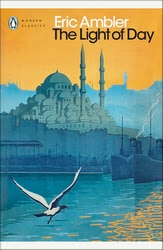
The Light of Day

Small-time hustler Arthur Abdel Simpson ekes out a living in Athens by robbing gullible tourists. But when an attempted theft backfires, he finds himself out-smarted and blackmailed into driving a highly suspicious car across the border to Istanbul. Then the Turkish secret police get involved, and Simpson becomes embroiled in something far deeper, and more dangerous, than he could imagine. Featuring a heart-stopping jewel heist, this compulsive, morally complex thriller became the basis for the classic filmTopkapi.