Showing posts with label Graham Greene. Show all posts

Tuesday, 21 October 2025

Merle Nygate on Why Spy Fiction

The first realistic espionage stories I ever read was Somerset Maugham’s Ashenden short stories. The narrator, a writer, trails around the Italian lakes during inclement weather and visits agents who are supposed to be gathering information or intel as we like to call it now. The agents are feckless; they lie and they cheat and the work itself is tiring and often dull. To me, it felt real. It was real, Maugham was recruited to run agents during World War I.

Later, much later, I read Graham Greene’s The Human Factor and in the author’s notes Greene described how he wanted to write about spies with pensions. Again, that felt real. 

But although I have written multiple genres and mediums, everything from fantasy to factual comedy to drama. I felt unable to peruse ideas o ideas about espionage and betrayal with any semblance of confidence for a long little. I recognise that as a writer you ned to know where you're ready to realise a particular idea, believe that you have the experience and the skills to make what you have in your mind the best it can be. I was determined that if I was going to attempt to write a spy novel it would have to feel and as realistic as the espionage that I admired.

For many years that particular goal seemed a long way off until the ambition was reignited when I read. Tom Rob Smith's Child 44. Child 44 is set in Stalinist Russia and is written from the point of view of a NKVD agent who is morally compromised.

It's a brilliant book. The setting is the miserable post-war deprivation of 1950s Soviet Union. The characters are terrified of who will betray them and they are all desperately trying to survive. When I reached the end of the book, I read the author's biography and was astonished that the author had achieved this level of authenticity solely on the basis of research.

Child 44 was inspirational. 

I now needed a story. 

I decided to write about the Mossad, the Israeli version of MI6 for several reasons. Among them was that while I think The Spy Who Came in From the Cold is an almost perfect book and I’m a great admirer of the rest of the Smiley series, I felt that le Carré, in The Little Drummer Girl hadn’t written either Jews or women particularly well and it bothered me. I found the needy and neurotic Charlie irritating and the dour, brooding case officer hard to believe

Another reason for choosing Mossad was cowardice and expediency; I don’t think I could attempt to better what le Carré and Deighton wrote about Cold War British intelligence. Nor what Charles Beaumont does now for MI6 and what David McCloskey and I. S. Berry do for the CIA. There also aren’t many authors writing about the Mossad despite all the mystique about this particular intelligence service.

But I still didn’t have a story.

I read and re-read le Carré, The Little Drummer Girl. Then I moved to The Honourable Schoolboy, Tinker Tailor, Soldier, Spy. Then Len Deighton’s Bernard Samson series and as I was reading I was trying to identify what it was that I liked about the narratives, why they worked and why they didn’t. I also watched Homeland episodes back-to-back and The Americans. 

It was while I was noodling around on the CIA website looking for reviews of spy fiction books that I saw a mention of a non-fiction book called Gideon’s Spies by Gordon Thomas. 

I have since been told by those who apparently know that there are inaccuracies in the book but there are also plenty of facts. It was my lodestar. I went through the book in forensic detail; marked it up, made detailed notes and I extrapolated the information I needed for a second document. From that document I brainstormed and identified the different types of true stories in espionage. All the facts suggested story ideas. There were disinformation and recruitment operations that had rich story possibilities and, of course, the ubiquitous, ‘find the mole’ story. 

From the list I brainstormed 13 different scenarios ranging from moles, recruitment, assassination and disinformation 

That was the beginning of the Amiram series. After that, of course, it wrote itself!

Merle Nygate’s latest novel, The Protocols of Spying, is out now as a £10.99 paperback from No Exit Press, part of Bedford Square Publishers.

In the aftermath of Hamas's October 7th attack on Israel, Mossad's London station chief Eli Amiram is fighting battles on all fronts. When his ambitious rival plans an assassination on British soil - supposedly authorized by Trump supporters - Eli suspects a deeper conspiracy. Meanwhile, British intelligence asset Petra is hunting for redemption. Tasked with recruiting Wasim Al-Arikhi - whose sister she failed to save from becoming a suicide bomber - Petra's drawn into a deadly game of cat and mouse. Can Wasim be trusted or has she become a target? As Eli and Petra's paths converge, they discover that in the shadow world of international espionage, the greatest threats often come from within. They must confront not just their enemies, but their own moral choices. A sophisticated spy thriller that weaves together tradecraft, betrayal and the human cost of intelligence work.

More information about the author and her work can be found on her website. You can find her on Facebook @merle.nygate and on X @merlenygate and on Instagram @mnygate 

Thursday, 12 January 2023

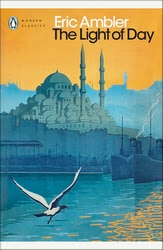
Penguin Modern Classics to publish three Eric Ambler novels

On 26th January 2023, Penguin Modern Classics will publish three wildly enjoyable novels from the father of the spy thriller, Eric Ambler: Passage of Arms, The Light of Day and A Kind of Anger. Ambler is often said to have invented the modern suspense novel, and his disciples include John le Carré, Alfred Hitchcock, Graham Greene and Len Deighton. These are a must-read for fans of the genre.

Eric Ambler (1909-98) was born in London to parents who were part-time entertainers. He studied engineering but left college without taking a degree and became a copywriter in the advertising industry. Between 1937 and 1940, he published his great anti-fascist spy thrillers: Uncommon Danger, Epitaph for a Spy, Cause for Alarm, The Mask of Dimitrios, and Journey into Fear. In 1940, he joined the Royal Artillery and was later transferred to the army film unit. After the war he worked as a screenwriter in England and Hollywood and married his second wife, a leading Hollywood producer. Passage of Arms, The Light of Day and A Kind of Anger are his post-war novels.

A Kind of Anger

The last time anyone saw Lucia Bernardi, she was driving at top speed away from a Swiss villa - leaving the body of her murdered Iraqi lover behind. Now she has vanished, along with a potentially explosive set of papers, and disgraced journalist Piet Maas has been sent to follow her trail to the South of France. But finding her is just the start of his problems. Soon, amid a cast of con men, secret agents and revolutionaries, he must decide whether to land the scoop of his lifetime - or follow Lucia into ever more dangerous waters.

A Passage to Arms

An Indian clerk, Girija Krishnan, sees the opportunity of his lifetime when he stumbles on an abandoned cache of arms hidden in the Malayan jungle. If he can sell the weapons, he will be able to achieve his lifelong dream of owning a bus company - although the penalty for gun-running is death. Soon his decision becomes the catalyst for a chain of events involving an entrepreneurial Chinese family, a corrupt Colonel and, finally, a naïve couple of American tourists who find themselves horribly out of their depth.

The Light of Day

Small-time hustler Arthur Abdel Simpson ekes out a living in Athens by robbing gullible tourists. But when an attempted theft backfires, he finds himself out-smarted and blackmailed into driving a highly suspicious car across the border to Istanbul. Then the Turkish secret police get involved, and Simpson becomes embroiled in something far deeper, and more dangerous, than he could imagine. Featuring a heart-stopping jewel heist, this compulsive, morally complex thriller became the basis for the classic filmTopkapi.


Sunday, 13 December 2020

My Favourite Non-Fiction Reads 2020

For the first time I have had to split my favourite reads this year into fiction and non fiction. This year I have read an eclectic range of non-fiction crime books and it has been great to see such a wide range of books being written. My favourite Non Fiction reads are as follows -

Agatha Christie's Poirot: The Greatest Detective in The World by Dr Mark Aldridge (HarperCollins Publishers) From the very first book publication in 1920 to the upcoming film release of Death on the Nile, this investigation into Agatha Christie's Hercule Poirot celebrates a century of probably the world's favourite fictional detective.This book tells his story decade-by-decade, exploring his appearances not only in the original novels, short stories and plays but also across stage, screen and radio productions. The hardback edition includes more than 400 illustrations. Poirot has had near-permanent presence in the public eye ever since the 1920 publication of The Mysterious Affair at Styles. From character development, publication history and private discussion concerning the original stories themselves, to early forays on to the stage and screen, the story of Poirot is as fascinating as it is enduring. Based on the author's original research, review excerpts and original Agatha Christie correspondence, Poirot: The Greatest Detective in the World is a lively and accessible history of the character, offering new information and helpful pieces of context, that will delight all Agatha Christie fans, from a new generation of readers to those already highly familiar with the canon.

Howdunit: A Masterclass in Crime Writing by Members of The Detection Club Edited by Martin Edwards (Collins Crime Club). Ninety crime writers from the world’s oldest and most famous crime writing network give tips and insights into successful crime and thriller fiction.  Howdunit offers a fresh perspective on the craft of crime writing from leading exponents of the genre, past and present. The book offers invaluable advice to people interested in writing crime fiction, but it also provides a fascinating picture of the way that the best crime writers have honed their skills over the years. Its unique construction and content mean that it will appeal not only to would-be writers but also to a very wide readership of crime fans. The principal contributors are current members of the legendary Detection Club, including Ian Rankin, Val McDermid, Peter James, Peter Robinson, Ann Cleeves, Andrew Taylor, Elly Griffiths, Sophie Hannah, Stella Duffy, Alexander McCall Smith, John Le Carré and many more. Interwoven with their contributions are shorter pieces by past Detection Club members ranging from G.K. Chesterton, Dorothy L. Sayers, Agatha Christie and John Dickson Carr to Desmond Bagley and H.R.F. Keating

Russian Roulette: The Life and Times of Graham Greene by Richard Greene (Little Brown) Probably the greatest British novelist of his generation, Graham Greene's own story was as strange and compelling as those he told of Pinkie the Mobster, Harry Lime, or the Whisky Priest. A restless traveller, he was a witness to many of the key events of modern history - including the origins of the Vietnam War, the Mau Mau Rebellion, the betrayal of the double-agent Kim Philby, the rise of Fidel Castro, and the guerrilla wars of Central America. Traumatized as a boy and thought a Judas among his schoolmates, Greene tried Russian Roulette and attempted suicide. He suffered from bipolar illness, which caused havoc in his private life as his marriage failed, and one great love after another suffered shipwreck, until in his later years he found constancy in a decidedly unconventional relationship. Often called a Catholic novelist, his works came to explore the no man's land between belief and unbelief. A journalist, an MI6 officer, and an unfailing advocate for human rights, he sought out the inner narratives of war and politics in dozens of troubled places, and yet he distrusted nations and armies, believing that true loyalty was a matter between individuals. A work of wit, insight, and compassion, this new biography of Graham Greene, the first undertaken in a generation, responds to the many thousands of pages of lost letters that have recently come to light and to new memoirs by those who knew him best. It deals sensitively with questions of private life, sex, and mental illness; it gives a thorough accounting for the politics of the places he wrote about; it investigates his involvement with MI6 and the Cambridge five; above all, it follows the growth of a writer whose works changed the lives of millions.

Cover Me The Vintage Art of Pan Books: 1950-1965 – An Appraisal by Colin Larkin (Telos)  An affectionate and thoroughly-researched celebration of the classic Pan Books paperbacks, beautifully illustrated with sumptuous full-colour reproductions of over 300 of the original cover artworks.

Detective in The Shadows: A Hard-Boiled History by Susanna Lee (John Hopkins University Press) Steadfast in fighting crime, but operating outside the police force―and sometimes even the law―is the private detective. Driven by his own moral code, he is a shadowy figure in a trench coat standing on a street corner, his face most likely obscured by a tilted fedora, a lit cigarette dangling from his hand. The hard-boiled detective is known by his dark past, private pain, and powers of deduction. He only asks questions―never answers them. In his stories he is both the main character and the narrator. America has had a love affair with the hard-boiled detective since the 1920s, when Prohibition called into question who really stood on the right and wrong side of the law. And nowhere did this hero shine more than in crime fiction. In Detectives in the Shadows, literary and cultural critic Susanna Lee tracks the evolution of this truly American character type―from Race Williams to Philip Marlowe and from Mike Hammer to Jessica Jones.Lee explores how this character type morphs to fit an increasingly troubled world, offering compelling interpretations of The Wire,True Detective, and Jessica Jones. Suddenly, in the present day, the hard-boiled detective wears his―or her―fatigue outwardly, revealing more vulnerability than ever before. But the detective remains resolute in the face of sinister forces, ever the person of honor. For anyone interested in crime fiction and television, or for those wanting to understand America's idolisation of the good guy with a gun.

From Aconite to the Zodiac Killer: The Dictionary of Crime by Amanda Lees (Little Brown). This is an indispensable guide for fans of true crime and crime fiction, whether in books, film or on TV, who want to look behind the crime, to understand the mechanics of an investigation, to walk in their favourite detectives' shoes and, most importantly, to solve the clues. To do that, one needs to be fluent in the language of the world of crime. We need to know what that world-weary DI is talking about when she refers to another MISPER. We have to immediately grasp the significance of the presence of paraquat, and precisely why it is still a poison of choice. If you want to know how many murders it takes for a killer to be defined as a serial killer, what Philip Marlowe means when he talks about being 'on a confidential lay' and why the 'fruit of a poisonous tree' is a legal term rather than something you should avoid on a country walk, this is the reference book you've been waiting for. It covers police and procedural terms and jargon of many different countries; acronyms; murder methods; criminal definitions, including different types of killers; infamous killers and famous detectives; notorious cases often referred to in crime fiction and true crime; gangster slang, including that of the Eastern European mafia; definitions of illegal drugs; weapons; forensic terminology; types of poisons; words and phrases used in major crime genres, including detective fiction, legal thrillers, courtroom dramas, hardboiled crime, Scandi and Tartan Noir, cosy crime and psychological thrillers; criminology terms; and the language of the courts and the legal systems of British, American, French, Nordic and other countries.

The Reacher Guy: The Authorised Autobiography of Lee Child by Heather Martin (Little Brown) The Reacher Guy as a compelling and authoritative portrait of the artist as a young man, refracted through the life of his fictional avatar, Jack Reacher. Through parallels drawn between Child and his literary creation, it tells the story of how a boy from Birmingham with a ferocious appetite for reading grew up to become a high-flying TV executive, before coming full circle and establishing himself as the strongest brand in publishing. Heather Martin explores Child's lifelong fascination with America, and shows how the Reacher novels fed and fuelled this obsession, shedding light on the opaque process of publishing a novel along the way. Drawing on her conversations and correspondence with Child over a number of years, as well as interviews with his friends, teachers and colleagues, she forensically pieces together his life, traversing back through the generations to Northern Ireland and County Durham, and following the trajectory of his extraordinary career via New York and Hollywood until the climactic moment when, in 2020, having written a continuous series of twenty-four books, he finally breaks free of his fictional creation.

Southern Cross by Craig Sisterton (No Exit Press) Southern Cross Crime is the first comprehensive guide to modern Australian and New Zealand crime writing. From coastal cities to the Outback, leading critic Craig Sisterson showcases key titles from more than 200 storytellers, plus screen dramas ranging from Mystery Road to Top of the Lake. Fascinating insights are added through in-depth interviews with some of the prime suspects who paved the way or instigated the global boom, including Jane Harper, Michael Robotham, Paul Cleave, Emma Viskic, Paul Thomas, and Candice Fox.

Unspeakable Acts: True Tales of Crime, Murder, Deceit, and Obsession by Sarah Weinman (Ecco) The appeal of true-crime stories has never been higher. With podcasts like My Favorite Murder and In the Dark, bestsellers like I'll Be Gone in the Dark and Furious Hours, and TV hits like American Crime Story and Wild Wild Country, the cultural appetite for stories of real people doing terrible things is insatiable. Sarah Weinman brings together an exemplary collection of recent true crime tales. She culls together some of the most refreshing and exciting contemporary journalists and chroniclers of crime working today. Michelle Dean's "Dee Dee Wanted Her Daughter To Be Sick" went viral when it first published and is the basis for the TV show The Act and Pamela Colloff's "The Reckoning," is the gold standard for forensic journalism. There are 13 pieces in all and as a collection, they showcase writing about true crime across the broadest possible spectrum, while also reflecting what makes crime stories so transfixing and irresistible to the modern reader.


Tuesday, 18 July 2017

Top 5 Books Set In Brilliant Brighton


EXQUISITE by Sarah Stovell
Exquisite is one of those rare books where you 'think' you have a handle on what's going on, but it rips the carpet from under you! Always one step ahead, this intriguing tale of obsession, stalking and violence never lets up from the get-go; there's dark characters, sublime plotting, with a brutal sting in the tale. Set primarily in the Lake District, Alice’s character nevertheless starts her journey to the dark side in Brighton, where Stovell paints a realistic picture of an aimless millennial lifestyle, where drugs and drink are more readily available than work or adequate housing. A terrifyingly plausible tale, this is well worth the read.

BRIGHTON ROCK by Graham Greene
“Hale knew, before he had been in Brighton three hours, that they meant to kill him” has to be one of the most famous starting lines EVER – and rightly so. This classic crime tome marked a change in direction for the genre: the notion the detective did not have to be front and centre, but the villain himself! In this case, it’s Pinky, a 17-year-old killer … In 1937, this must have been REALLY shocking, and not least the fact there is no happy ending. To this day, it’s cemented itself in popular culture and more than deserves its spot in this top 5.

THE LIAR’S CHAIR by Rebecca Whitney
Domestic noir at its finest, The Liar’s Chair grabs us via Rachel who mows down a homeless tramp in the country back roads near Brighton. Female leads are frequently under greater sympathy than male ones, or even – God forbid – supposed to be ‘likeable’, but Whitney sidesteps this expectation effortlessly. Rachel’s mix of selfishness, guilt, self-destruction and grief are painted in a myriad of colours, taking us into a troubled mind who’s caught in the midst of a terrible dilemma.

CUCKOO by Julia Crouch
OMG, don’t female characters know by now never let attractive women stay in their home? Well, no one told protagonist Rose anyway and despite the fact she ‘has it all’ – the gorgeous children, the husband, the beautiful home – she lets best friend Polly come to stay. UH OH! Cue Rose’s cosy world starting to fall apart at the seams – her baby falls dangerously ill, her husband is ‘distracted’ … I was reminded of various movies like The Hand That Rocks The Cradle or even that episode of The Simpsons when Marge yells ‘USURPER!’ at Otto’s girlfriend Becky who tries to oust her. A melting pot of middle class woe set in the affluent side of Brighton, this book is great fun.

DEAD SIMPLE by Peter James
Obviously no ‘Best of Brighton’ list is complete without a Roy Grace novel! I think of Grace as a modern day Sherlock Holmes and Dead Simple is a total classic: time is running out for our hapless stag, buried underground in a coffin, when all his mates die in a car crash! But of course it’s not quite as SIMPLE (arf) as that for Roy Grace, who must track down not only the stag, but the secrets and lies surrounding him too!


 The Other Twin by Lucy V Hay (Published by Orenda Books)
When India falls to her death from a bridge over a railway, her sister Poppy returns home to Brighton for the first time in years. Unconvinced by official explanations, Poppy begins her own investigation into India's death. But the deeper she digs, the closer she comes to uncovering deeply buried secrets. Could Matthew Temple, the boyfriend she abandoned, be involved? And what of his powerful and wealthy parents, and his twin sister, Ana? Enter the mysterious and ethereal Jenny: the girl Poppy discovers after hacking into India's laptop. What is exactly is she hiding, and what did India find out about her? Taking the reader on a breathless ride through the winding lanes of Brighton, into its vibrant party scene and inside the homes of its well-heeled families, The Other Twin is startling and up-to-the-minute thriller about the social-media world, where resentments and accusations are played out online, where identities are made and remade, and where there is no such thing as truth...


Buy it from SHOTS A-Store here.