Saturday, 26 March 2022

An unexpected consequence by Brian Price

I never thought I would write a thriller. I had read crime novels for decades, my childhood reading featuring Leslie Charteris’s Saint and John Creasey’s Inspector West among others. As an adult, I had written three books on chemicals and the environment, but had never considered writing fiction.

I turned to crime when I attended Crimefest in Bristol and found the writers who attended approachable and friendly, whether they were self-published or million-sellers. I wanted to contribute in some way, as a kind of payback for the pleasure crime writers had given me, so I set up a website where I used my scientific knowledge to offer tips to authors on how to avoid simple mistakes with things like knockouts (don’t use chloroform), firearms (silencers don’t work) and poisons (they take time to kill). At my wife’s suggestion, I pitched this concept to publishers and the result was Crime writing: How to write the science, a well-received guide, for writers, readers and students, to many aspects of science and crime.

I have advised a number of writers on a range of scientific topics, from lopping off limbs to poisoning celebrities and disposing of bodies, and I think something must have rubbed off. After writing a few short crime stories, I took the plunge and decided to write a novel. I was kick-started by a competition, run by Crime Fiction Coach, for the best first sentence of a novel. My entry ‘The small, grey-haired woman grimaced as she entered the police station, dragging a tartan shopping trolley containing her husband’s head’ won and, because someone said they couldn’t wait to read the rest, I had no alternative but to write the book.

This was a very new type of writing for me. Science writing is relatively straightforward. You decide on the subject you want to write about, and the facts you wish to convey. You do the research and then present the information in a way that suits your intended readership. You don’t have to make stuff up (unless you’re part of QAnon or wear a tinfoil hat). But, apart from factual things I needed to hang the plot on, like police procedures, everything in my novel had to come from my imagination. I had to write about people I had never met, doing jobs I had never done, in places I invented. 

At the time, I didn’t know any police officers, and I certainly didn’t know any gangsters or drug dealers, so creating realistic characters was difficult. The plot was easier, although I had to keep checking that it was credible but still entertaining, and I was OK with forensics. But I needed something a bit different from other thrillers, and I found this in the form of a novel type of profitable contraband.

So, after many months of toil, I had something I thought others might want to read. I had it critiqued and then submitted synopses to thirty or so agents and publishers. After repeated refusals, some friendly and some even offering suggestions for improvements, I considered self-publishing, although that would have required me to develop a whole new set of particular skills. But, late in 2020, Hobeck Books asked for the full manuscript and, shortly after, offered to publish it. I was thrilled! The result was Fatal Trade, which came out in September last year.

I was delighted with the reception Fatal Trade received. People seemed to like the characters, the pace and the plot, giving the book an average of 4.5 stars on amazon. Hobeck were keen to publish a sequel and Fatal Hate comes out on the 12th of April.

Most of the same characters are involved, and it is set in the same imaginary town. Like Fatal Trade, it is fast-paced, twisty and has some truly odious villains. A third novel, Fatal Dose, is in preparation.

I came to realise, quite early on, that there were two pitfalls I had to avoid when writing fiction. One was information-dumping. I might be fascinated by the biochemistry of a particular poison, but is the average reader? What it is, and how quickly it kills, is probably enough, with a few symptoms thrown in. I didn’t want to make the mistake of, for instance, spending a page and a half describing a particular type of rifle ammunition. 

The other danger zone was my personal attitudes. There are issues in both books about which I feel strongly, but I was careful to avoid preaching or writing an essay on politics. Readers want to be entertained, first and foremost, and I let my characters’ views and behaviours paint the picture. It is up to the reader whether they share or reject these views but, as long as they notice them, and enjoy the books, I’m a happy crime writer.

Fatal Hate by Brian Price (Hobeck Books) Published 12 April 2022

A boring office administrator is found dead outside the chocolate warehouse where he worked. But who would want to kill him and why? Did he see something he shouldn’t have or did one of his right-wing associates turn on him? DC Mel Cotton and her colleagues’ investigation takes them into the murky world of terrorism, smuggling and murder. What is in the mysterious packages moved from the warehouse in the dead of night and why did someone try to burn watching police officers to death? Meanwhile, a determined young woman vows vengeance on the two men responsible for her sister’s death. She will do anything for justice and she soon becomes involved with a member of a group of local notables with depraved tastes and extreme political views. Someone is going to die. As the two worlds converge, Mel Cotton’s courage is tested to the limit. And the presence of a hitman in town means no-one is safe. Is time running out for her?

M.W. Craven has described Fatal Hate as ‘High quality crime writing’, and Graham Bartlett called it ‘A turbocharged, complex and intelligent thriller with a stunning cast, told with the authority and authenticity we have come to expect from Brian Price. I dare you to put it down.’

Readers of Fatal Hate are invited to take part in a competition to spot the “Easter Eggs” – cultural references – in the book. The winner will receive a very special box of chocolates featuring such favourites as Strychnine Surprise, Cyanide Swirl and Belladonna Cream, plus a signed copy of Brian’s next book, Fatal Dose.

Fatal Hate is published as a paperback and ebook by Hobeck Books and is available on Amazon and Waterstones.

You can find more information about Brian Price and his books on his website. You can also find him on Facebook and follow him on Twitter @crimewritersci. 


Friday, 25 March 2022

CrimeFest 2022 Programme


Thursday 12 May 2022

13:30 - 14:20

PARTNERS IN CRIME: CRIME-SOLVING DUOS

Thomas Enger

Stuart Field

Michael Kurland

Russ Thomas

Participating Moderator: Sam Holland

14:40 - 15:30

Panel 1

ALL IN THE PAST: THE ENDURING FASCINATION WITH HISTORICAL CRIME FICTION

Kate Ellis

Mark Ellis

Carolyn Kirby

Leigh Russell

Participating Moderator: Linda Stratmann

Panel 2

BUBBLING UNDER: CREATING TENSION

Brian Price

Leslie Scase

Laura Shepherd-Robinson

Cath Staincliffe

Participating Moderator: Samantha Lee Howe

15:50 - 16:40

Panel 1

TICKING CLOCKS: IS CRIME FICTION A RACE AGAINST TIME?

Steve Cavanagh

Jørn Lier Horst

Tina Orr Munro

Trevor Wood

Participating Moderator: L.F. Robertson

Panel 2

A CHANGE IS AS GOOD AS A REST: WRITING MORE THAN ONE SERIES

M.J. Lee

Douglas Lindsay

Michael Stanley (Stan Trollip)

Robert Wilson

Participating Moderator: Michael Ridpath

17:00 - 17:50

Panel 1

AUTHORS REMEMBERED

Maxim Jakubowski (on Cornell Woolrich)

John Lawton (on Jerzy Kosinsky)

Nick Triplow (on Ted Lewis)

TBC

Participating moderator: Mike Ripley

Panel 2

YOU’RE HAVING A LAUGH: HUMOUR IN CRIME FICTION

Helen Fitzgerald

Dolores Gordon-Smith

Amita Murray

Antti Tuomainen 

Participating Moderator: Nev Fountain

20:00 – 21:30: CRIMEFEST Pub Quiz, with crime writer and critic Peter Guttridge as your quiz inquisitor. Prizes to be won!

LOCATION: TBA.


Friday 13 May 2022


09:00 - 09:50

Panel 1

40 YEARS OF CHANGE: FROM THE DEPRESSED 30s TO THE SWINGING 60s

Tim Glister

Michael Kurland

John Lawton

Niki Mackay

Participating Moderator: Luke McCallin


Panel 2

STICKING TO THE LAW: POLICE PROCEDURALS

Rachael Blok

Stuart Field

Leigh Russell

G.D. Sanders

Participating Moderator: Paul Gitsham

10:10 - 11:00

Panel 1

BEHIND CLOSED DOORS: NOT SO PERFECT LIVES

Tina Baker

L.F. Robertson

Amanda Robson

Catriona Ward

Participating Moderator: Caroline England

Panel 2

SUSPECT EVERYONE: TIGHT KNIT COMMUNITIES, SMALL TOWNS AND LOCKED ROOMS

Rachael Blok

James Delargy

Victoria Dowd

David Hewson

Participating Moderator: Martin Edwards

Panel 3

OUT OF UNIFORM: GIFTED AMATEURS

Elizabeth Mundy

Nell Pattison

Fiona Veitch Smith

Trevor Wood

Participating Moderator: Carolyn Kirby

11:20 – 12:10

Panel 1

THIS IS THE MODERN WORLD: SCIENCE, TECHNOLOGY AND SOCIAL MEDIA

Simon Conway

Fiona Erskine

Antony Johnston

Eve Smith

Participating Moderator: Christine Poulson

Panel 2

CROOKED PATHS: PLOTS THAT TWIST AND TURN

Simon Brett

Sam Carrington

Michael Ridpath

Simon Toyne

Participating Moderator: Katerina Diamond

Panel 3

A STRANGE BUSINESS? PRIVATE EYES AND PAID SLEUTHS

Mick Finlay

Felix Francis

Cath Staincliffe

Lesley Thomson

Participating Moderator: Cathy Ace

12:30 - 13:20

Panel 1

DIVIDED SOCIETY: HATE CRIMES AND SOCIAL FACTORS

Kia Abdullah

Antony Dunford

Sarah Sultoon

Holly Watt

Participating Moderator: Michael Stanley (Stanley Trollip)

Panel 2

BURYING SECRETS: WHO KNOWS WHAT, WHEN, AND WHY?

Mason Cross

Stephen Edger

Gilly MacMillan

Russ Thomas

Participating Moderator: Emily Koch

Panel 3

NETFLIX’ THE STAIRCASE: PLEADING GUILTY TO A CRIME YOU DIDN'T COMMIT?

Steve Cavanagh (Defence)

Imran Mahmood (Prosecution)

Ayo Onatade (The Judge)

13:40 - 14:30

Panel 1

CRIME IN THE CITY: LONDON SET CRIME FICTION

Elle Croft

Biba Pearce

Jeff Dowson

Victoria Selman

Participating Moderator: Linda Mather

Panel 2

HOW FAR WOULD YOU GO?: CHARACTERS AT THE EDGE

Andrew Child

Katerina Diamond

Robert Goddard

Yrsa Sigurdardottir

Participating Moderator: Alex North

Panel 3

LIFE IN THE SHADOWS: SPIES ASSASSINS & COVERT OPERATORS

Antony Johnston

Samantha Lee Howe

Neil Lancaster

Robert Wilson

Participating Moderator: Alex Shaw

14:50 - 15:40

Panel 1

SLEUTHS ABROAD: CRIME IN FOREIGN CLIMES

Peter Hanington

David Hewson

Vaseem Khan

Louise Mangos

Participating Moderator: Barry Forshaw

Panel 2

TRUTH AND REALITY: RESEARCH AND SOURCES

Sue Lawrence

Imran Mahmood

Linda Stratmann

Catriona Ward

Participating Moderator: Janet Laurence

Panel 3

TOXIC: WHEN RELATIONSHIPS TURN BAD

Claire Douglas

Nina Manning

Robin Morgan-Bentley

Rebecca Thornton

Participating Moderator: Amanda Robson

16:00 - 16:50

Panel 1

Ghost of Honour: DICK FRANCIS

Felix Francis

Andrew Hewson

Participating Interviewer: Simon Brett

Panel 2

ITW: THRILLING FOR A LIVING

Alison Bruce

Dugald Bruce-Lockhart

Alex Shaw

Michael Stanley

Participating Moderator: Zoë Sharp

Panel 3

VIOLENCE & GORE: SWEET OLD LADIES & SERIAL KILLERS

Vicki Bradley

Thomas Enger

Nadine Matheson

Alan McDermott

Participating Moderator: Victoria Selman

17:10 – 18:00

Panel 1

PLAYING GAMES: WHEN SOMEONE IS TORMENTING YOUR CHARACTERS

Neil Daws

Chris Ewan

Janice Hallett

Scott Kershaw

Participating Moderator: Jane Shemilt

Panel 2

REVIEWING THE REVIEWERS: IN REMEMBRANCE OF MARCEL BERLINS

Barry Forshaw

Maxim Jakubowski

Mike Ripley

Karen Robinson

Participating Moderator: Peter Guttridge

18:30 – 19:30
PALM COURT

CrimeFest hosts the CWA’s Dagger Announcement Reception

The rest of the weekend's programme can be found here.


Tuesday, 22 March 2022

“Snowdonia, the perfect backdrop for Welsh Noir” by Simon McCleave


‘It was winter and the rugged hills, valleys and lakes of Snowdonia were snowbound and bleak. This was a landscape that beat to the drum of Arthurian legend. The pounding heart of ancient Wales – a land of folklore and of myth … Llyn Llydaw was dark, deep, and utterly still. Carved into the flanks of Snowdon, the lake was long and thin and had formed in a cwm, a glaciated valley, about one third of the way up the mountain. The valley was believed to be the final resting place of Arthur, King of Britons. The site where a weary, dying King Arthur instructed Sir Bedevere to throw Excalibur to the porcelain hand of the Lady of the Lake. An area of immeasurable power and myth.”

(Excerpt From: Simon McCleave’s The Snowdonia Killings, the first book in the DI Ruth Hunter Crime Thriller Book series)

As a native South Londoner, I’m often asked, ‘Why do you write about Snowdonia?’ It’s a fair enough question. As environments go, South London and Snowdonia couldn’t be more contrasting. But in my Detective Ruth Hunter crime series, that’s the point. 

Before I go any further, I should point out that I do have some credentials here. Twenty years ago, I married a beautiful Welsh girl, and after a few years of London life, we moved to North Wales to raise our family. That was over a decade ago. Snowdonia is now quite literally on my doorstep and, as I planned a series of crime novels, it was a landscape that cried out to be the backdrop to these stories. In fact, it was so apt that I had to check several times to make sure it hadn’t already been used. Luckily, I found it to be a blank canvas.

Like all great settings for storytelling, Snowdonia has become a character in its own right. As a landscape it has it all. The ominous ridges of snow-dusted mountains that touch the sky. Vast lakes formed at the last ice age, and rocky, stormy beaches that border the Irish sea. Added to this, it boasts a mystical atmosphere where folk-tales and history merge to provide a dark and powerful narrative for the 900 square miles of Britain’s largest national park. The Mabinogion, a collection of Snowdonian legends, mythology and the supernatural, are over a 1,000 years old. And so, as a backdrop that is dramatic in mood and loaded with meaning, Snowdonia perfectly fits the distinguishing traits and traditions of noir fiction. 

Entering this landscape is Detective Inspector Ruth Hunter, a native South Londoner (ah, yes there is a biographical element!), who is suffering from burn-out after decades of dealing with the murder and mayhem in the high-rise, concrete jungles of Peckham. Snowdonia had been the destination of many blissful childhood holidays. Ruth transfers from the London Met to the North Wales Police force confident that her days will be filled with nothing more taxing than sheep rustling or tractor theft. Of course, nothing could be further from the truth. Crimes in rural North Wales are as brutal, harrowing and complex as anywhere else. And it wouldn’t be much of crime series with nothing more dramatic than an expired shotgun licence. 

Just as I had preconceptions of what life in North Wales would be like, so does DI Ruth Hunter. She soon realises that the CID team she now leads are a far cry from the parochial hicks that she had first imagined. The detectives are as sharp, intuitive, and caring as any she had encountered in the London Met. More so, in many ways. And much as I did, Ruth soon relishes the warm, friendly people most of whom value honesty, family and community over pretention, status and the need for skinny, de-caff lattes and smashed avocado on sourdough!

Released in 2020, The Snowdonia Killings has sold over 250,000 copies and reached No. 1 in the Amazon Chart. A television series based on the book is in development and set to start shooting in 2023. 

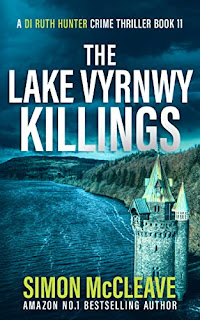
The latest novel in the Snowdonia series is ‘The Lake Vyrnwy Killings,’ and the first in Simon’s new series, set in Anglesey, The Dark Tide is published by Avon in May.

The Lake Vyrnwy Killings by Simon McCleave (Out Now)

Detective Inspector Ruth Hunter lives with the pain of her partner’s mysterious disappearance, but despite trading in the crime-ridden streets of London for rural Snowdonia, her life has been anything but peaceful… A missing husband. A gruesome discovery. Are the two events linked? When DI Ruth Hunter and DS Nick Evans are called to a gruesome discovery at beautiful Lake Vyrnwy, they have little to go on to identify the grisly remains. When a local man is reported missing, it seems that his links to a Merseyside gang might explain his disappearance. But when the missing man is spotted at various locations, Ruth and Nick must discover if he is on the run and hiding, or if a darker manipulation could explain the sightings.

More information about Simon McCleave can be found on his website. You can also find him on Facebook and on Instagram.


Sunday, 20 March 2022

April Books From Bookouture

America 1883: Cassie Gwynne feels like she’s finally found where she belongs, settling into her new life in Florida with her aunt and her mischievous kitten Esy. When a traveling theater group arrives in town Cassie can’t resist signing up for the chorus. But the production goes awry from the start and soon death takes center stage... With costumes going missing and strange voices heard coming from the dressing room, the cast are convinced they are cursed. And when the lead actor, William Gage, has a fatal accident, Cassie is certain someone is deliberately targeting the play. Off-stage Mr. Gage was known as a notorious flirt, so could a jilted lover be out for revenge? Determined that the show must go on, Cassie launches her own investigation into the peculiar events. She quickly discovers an expensive, embroidered handkerchief stashed away on the lighting platform. This part of the theater is supposed to be out of bounds, so could the cagey chorus girl or the uppity understudy have something to hide? When she returns at night to look around, Cassie is almost flattened as the wooden scenery crashes to the stage. Is this just the latest in a long line of catastrophes or is somebody out to stop Cassie learning the truth? Can Cassie solve the mystery and make it to opening night or will it be curtains for her too? Plot Most Peril is by Genevieve Essig.

214 Palmer Street is by Karen McQuestion. A house with a secret. A woman with nothing to lose.When Maggie sees the beautiful Venetian blinds moving in the Caldwells’ front window, she freezes. Her favorite neighbours Cady and Josh are away, so who is in their house? The pretty young woman who answers the door tells a convincing story. She’s Sarah. The house-sitter. Just here for a month. An old friend of Cady’s who needed a place to stay. She’s pleasant and warm, and Maggie wanders back to her house thinking she might have made a new friend. Yet she can’t help but wonder why Cady never mentioned Sarah. What Maggie doesn’t know is that on the other side of the door, Sarah is starting to panic. No one was meant to see her at 214 Palmer Street…

“Help!” she screams, kicking as hard as she can against the closet door. But it’s nailed shut, and nobody can hear her. She drops to her knees and curls into a ball like she did as a little girl, praying someone will find her before it is too late… When the body of single mother Melissa Rollins is found trapped inside a bedroom closet in her immaculate suburban home, Detective Jo Fournier races to the scene. The small town of Greenfern is sweltering in a heatwave, and Jo is horrified to find that Melissa’s heating was turned up to the max whilst she died of thirst. Who would kill a devoted mother in such a cruel way? Searching the house for clues, Jo’s team discovers that the front door was locked from the inside. And with no sign of a break-in, they realise the killer must be someone Melissa knew. But everyone in the frame has an alibi… As she delves deeper into the case, Jo uncovers a link between Melissa and a recent cold case: another single mother who was tied up and brutally murdered. Someone is on a mission to kill local mothers, and Jo knows they will claim their next victim soon. But as temperatures continue to rise and the team works around the clock to stop a twisted killer, someone from Jo’s past catches up with her. They’re watching her family’s every move, and they will stop at nothing to get revenge… Can Jo save the people she loves and catch the killer before it’s too late? Her Silent Prayer is by M M Chouinard.

Lake View House is by Helen Phifer. Icy water laps against the wooden jetty. But the girl doesn’t notice the cold as she slips slowly under the freezing surface… Running from a devastating relationship that almost cost her everything, Maddy Hart impulsively accepts a job as a live-in caretaker at imposing Lakeview House. She has no memories of having visited the crumbling mansion on the banks of Lake Thirlmere before, but when she arrives, something about the house feels familiar… The more time Maddy spends in the house, the more unsettled she feels. Why does the local story about the last woman who lived here, who drowned on her wedding day, chill Maddy to the bone? By day, she clears out the dusty rooms, but in the dead of night it’s hard to explain away the eerie noises or crackly radio she hears hours after she turned it off. Slowly, Maddy begins to fear that her worst nightmare is coming true, has her past caught up with her…? When a soaking wet wedding dress is left on Maddy’s doorstep she feels completely trapped. It is her exact measurements. Is her ex trying to send her a message? Or has Maddy’s digging uncovered an even deadlier secret? Will this perfect escape become the perfect trap?

My family keep telling me I’m safe. But why don’t I believe them? I stand at the very edge of the cliff face, looking at the roaring ocean below my feet. I’m in no danger, in fact my husband and his sister talk just feet away from me, watching my every move. They’re worried I’m losing my mind, and I sense their nerves as they watch me looking down on the jagged rocks below. Behind them sits our summer house. Apparently it’s my favourite place in the world, not that I can remember. Since the car accident, I’ve struggled to recall a lot of important things in my life, like giving birth to my daughter, Violet, just days after the crash. Or my supposedly perfect marriage… As I stare at the huge expanse of blue below, I have a flashback to the day of the crash—an argument, my husband’s face red with anger. Why is it so different to what everyone else is telling me about my life? Beads of sweat gather on my neck. If my memory is true, my life and my children’s lives are in danger. What really happened the day of the accident? And is there anyone I can trust? The Breakdown is by Arianne Richmonde.

Watch Her Disappear is by Lisa Regan. The girl’s prom dress, the color of champagne, shimmers in the dying light. A corsage of wilting pink sweetheart roses decorates her wrist. She is perfectly still, lying on the ground like a delicate china doll, trapped forever in a sleep from which she will never wake… When a call comes in about a young girl found dead at a high school prom—her life drained away from a fatal stab wound—Detective Josie Quinn drops everything to attend the scene. Taking in the girl’s neatly braided hair, Josie feels a flicker of recognition. But no one comes forward to identify this innocent child, murdered on what should have been the happiest night of her life. Trawling missing persons files, Josie realizes where she has seen the girl before. Gemma Farmer disappeared a few months ago, shattering her family. But why would her body appear now, on her sixteenth birthday? Josie’s only clue is the five neat little cuts on Gemma’s pale arm. Days later, another missing girl shows up, tucked neatly into her bed on the morning of her birthday, her favourite teddy beside her, her skin as cold as ice—and the autopsy reveals scars on her arm matching Gemma’s. Her head spinning, Josie fears the marks are a serial killer’s twisted way of counting his victims. But where are the other girls he’s killed, and how many more could follow? The case takes a terrifying turn when a local teen goes missing just days before she turns sixteen. Clock ticking, Josie turns the town upside down in search of answers. But when her own chief comes forward with a missing piece in this devastating puzzle spanning decades, will it be enough to get inside the mind of the most unexpected and elusive killer she has ever encountered, or will another precious life be taken?

Gone to Her Grave is by Wendy Dranfield. In the golden morning light, a beautiful young woman lies diagonally across the bed, dressed for a night out, her long lashes pressed against her cheeks as if she’s sleeping. But the crimson that creeps across the sheets tells the story of an innocent woman who has drawn her last breath… Detective Madison Harper is pulled away from Thanksgiving preparations when a local care worker, Terri Summers, is found dead in her home on the outskirts of Lost Creek, Colorado. Terri’s inconsolable mother can’t understand who would hurt such a kind soul who had dedicated her life to helping others. But analysis of the blood spatter at the scene indicates Terri knew her attacker, that she looked them right in the eye before her life was taken. The awkward way Terri’s body is positioned catches Madison’s attention. Carefully moving her, she finds a bracelet—possibly a child’s—with a single red bead clenched in the woman’s fist, as if she was hiding it. It’s the lead Madison so desperately needs, but the sudden death of one of her own team sends the investigation into a tailspin. With her coworkers crumbling around her, Madison must work day and night to trace the bracelet and crack the case. But when she’s dragged back into the disappearance of a woman and child from years ago, and finds a link to someone in her own family, can Madison stop this twisted killer before another precious life is taken? And at what cost?

A lovely day out takes a dark turn when a complaining customer is found dead… Luckily amateur sleuth Belinda Penshurst is on the scene – and ready to investigate! Belinda Penshurst has always loved Brabourne Gardens. A keen animal lover, she enjoys walking its winding paths and listening to the excited squeals of schoolchildren encountering the kind of wildlife you don’t normally find in England. So when one of the visitors is found strangled, she’s determined to learn whodunnit – and why. The victim, Simon Carter, had a reputation for making trouble… But surely that’s not a good enough reason to want him dead. Together with retired detective Harry Powell, Belinda investigates the goings-on behind the scenes, and learns that some of the staff are more savage than the animals. Is it Estelle Samuels, the anti-social owner, who clearly has something to hide? Or the security guard who takes his job too seriously? Most worrying of all, Belinda’s ex Ivan was there when the body was found, and she’s determined to clear his name. As suspicions swirl, one thing’s for sure: if Belinda keeps following the killer’s tracks, she might find herself in their sights… Can she sniff out a murderer, before she becomes prey? Murder at the Gardens is by Lisa Cutts.

Silent Little Angels is by Jennifer Chase. The water ripples as the girl’s body escapes the reeds and floats silently upwards. Her beautiful face—blue eyes frozen open, skin as white as snow—breaks the surface. But it’s too late, this innocent soul has taken her final breath… When camp counselor Carolyn Sable’s body is found floating in a lake beside Eagle Ridge Summer Camp, Detective Katie Scottmust dig deep to stay focused. As a child, Katie spent many happy weeks at that camp toasting marshmallows on the fire with her best friend Jenny… until the day Jenny disappeared. The loss will always haunt Katie, but Carolyn’s inconsolable family need answers. Searching the area, the devastating discovery of two more bodies sends the case into a tailspin. Suddenly on the hunt for a serial killer, Katie’s blood turns to ice when she finds newspaper clippings about her own past cases planted near one of the bodies. Was this twisted killer banking on Katie taking the lead? And why? Carolyn was adored by children and staff at the camp, so Katie thinks her sudden resignation is key to cracking the case. Uncovering a tragic accident involving a group of children the weeks before Carolyn left, Katie knows she’s getting close. But when the carefully laid trap Katie sets to catch Carolyn’s killer backfires, Katie finds herself in unthinkable danger and unable to even trust her own team. Can she stay alive long enough to crack the toughest case of her career, and how many more innocent lives will be lost before she does?

For seven years I believed my husband was dead – until the note arrived this morning… The day her husband Tom disappeared, Rachel’s life fell apart. Childhood sweethearts with two young children, they’d done everything together. And then, suddenly, Tom was gone. Without a word, without a note, without a single sign of where he might be, leaving Rachel to survive alone. Now, nearly seven years later, Rachel has come to terms with life as a single mother, caring for their children who still secretly long for their father’s miraculous return. But in his absence, Tom’s hidden life started to emerge, and Rachel has discovered things a wife should never have to. A secret life that betrayed everything Rachel thought she knew. Not knowing where he’d gone was no longer the main worry keeping her awake at night – it seemed much more likely he’d been silenced. Forever. Until today, when – with just one month until Tom is to be declared legally dead – Rachel receives a note in handwriting she recognises with dread: My darling, I’ve missed you so much. Give me a chance to explain. I’m coming home. The husband she’d lost is alive. And so are all his secrets… The Widow's Husband is by Lesley Sanderson.

The Light House Girls is by B R Spangler. The girl shivers in the boat, trying to hold back her sobs as the man silently rows them towards the lighthouse under a dark sky. She thinks desperately of her big sister, how they’d laughed just a few hours before as they rode the Ferris wheel at the funfair. Will she ever see her again? When the body of a teenage girl is found abandoned on a beach by a lighthouse in North Carolina’s Outer Banks, Detective Casey White is first on the scene. Breaking the news to the heartbroken parents, Casey is distraught to learn of a second tragedy: the girl’s eight-year-old little sister Shawna is missing too. Searching the lighthouse building, Casey soon finds traces that Shawna was kept there: her clothes, a teddy bear. Someone has been keeping her alive, but where have they taken her? When she learns that the girls were together at a visiting funfair the night they were taken, Casey races to interview the workers, but is only met with silence and turned backs. Digging into old cases, Casey’s blood runs cold as she realises there’s been a murder in the same location as the travelling fair going back years. Now the funfair has disappeared without trace. Thinking back to a shadowy figure she noticed by the hall of mirrors, Casey is certain when they find the fair, they will find the killer hiding in plain sight. But with the whole town terrified for their daughters,can Casey hunt them down before it’s too late for little Shawna?

Murder in the Neighborhood is by Ellen J Green. On 6 September 1949, twenty-eight-year-old Howard Barton Unruh shot thirteen people in less than twelve minutes on his block in East Camden, New Jersey. The shocking true story of the first recorded mass shooting in America has never been told, until now. The sky was cloudless that morning when twelve-year-old Raymond Havens left his home on River Road. His grandmother had sent him to get a haircut at the barbershop across the street—where he was about to witness his neighbor and friend Howard open fire on the customers inside. Told through the eyes of young Raymond, who had visited Howard regularly to listen to his war stories, and the mother trying to piece together the disturbing inner workings of her son’s mind, Murder in the Neighborhood uncovers the chilling true story of Howard Unruh, the quiet loner who meticulously plotted his revenge on the neighbors who shunned him and became one of America’s first mass killers. With Ellen’s access to Howard’s diaries, newly released police reports and psychiatric records alongside interviews with surviving family members, Murder in the Neighborhood is a compulsive page-turner that will have you asking—how well do we ever really know those around us? Are we ever really safe?

A Body on the Beach is by Dee Macdonald. Super sleuth Kate Palmer is Cornwall’s answer to Miss Marple, but when the semi-retired nurse finds herself in the wrong place at the wrong time can she prove her innocence and solve her most puzzling case yet? Kate Palmer thought spending the day at Tinworthy’s annual summer party would involve sea air, sunshine and Cornish cream cake – how very wrong she was! After a showdown with her new nemesis Sienna Stone, Kate goes for a cliff-top walk to cool off. But she is horrified to spot Sienna’s body on the sandy beach below. Rumours swirl around the close-knit Cornish community and all eyes are on Kate. Half the village witnessed her argument with Sienna. When Kate finds herself cast as a suspect and is accused of murder, can she solve the crime and clear her name? Kate knows that plenty of people disliked Sienna but would any of them go so far as to kill her and frame Kate? Could it be Sienna’s long-suffering husband Irving? Her jealous younger sister Sally? Or Timmy Thomson, the local loner who was infatuated with her? Just as Kate thinks she’s getting closer to an answer, Timmy is found dead in his own home. Does his untimely demise mean the other suspects, including Kate, are next on the killer’s list…? With time running out, Kate needs to find out the truth. Can she solve the case and save herself? Or have her days of sleuthing come to an end?

The Girl Before Me is by Laura Wolfe. I’m so worried. You aren’t safe in that apartment! You have to get out. Before it’s too late… When Rachel moves into a new apartment with her young daughter, Lily, it’s with a huge sense of relief. After escaping an abusive marriage, this perfect downtown fourth floor rental, within minutes from the lake, feels like the new beginning the two of them deserve. It’s a place to call home. A place for them to grow together. A place for them to heal. And, as Lily starts at a nearby elementary school, and Rachel begins to develop feelings for her neighbor, Alex, who lives just down the hall, she dares to hope that their life is looking up. But soon handwritten letters begin to arrive for someone called Annie. Alex says she was just the tenant who lived there before, who moved out one day without a word. Tentatively Rachel opens the first letter, intending to return it to the sender. But the note says ‘Annie. I’m so worried. You aren’t safe in that apartment! You have to get out. Before it’s too late.’ Something happened to Annie. And Rachel is not nearly as safe as she thinks she is…


Friday, 18 March 2022

Silje O. Ulstein on Plotting Like a True Panster


Where plotters are usually defined as storytellers who plot their stories before they start writing them, pantsers write by “the seat of their pants”. Most of us, I think, need a little bit of both, but some of us definitely has more inclination for planning their work than others. For me, writing seems to start with a few images or scenes in my head, or perhaps just a good sentence. From there I start to search through a hazy cloud after clues, and new images pop up as I go. If I don’t know exactly what will happen in the next scene, I just jump to one that I know, and work from there. It is a magical technique, but it is also a frustrating one. It takes a lot of editing to make everything work as a whole. And when writing four hundred pages with five protagonists, multiple timelines and plenty of plot twists, it became necessary at some point to do some plotting.

It all started with the image of a huge python. A friend of mine who was doing charity work helping ownerless cats find new homes, told me that she had this fear that one of the cats would end up at a snake owners house, as prey. I just couldn’t shake the thought. I started thinking of what sort of person would do such a thing. Could this be a good idea for a story? So, I knew what the basic idea was, but I didn’t know anything about the protagonist or what was going to happen when I started writing. I wrote about a man, then changed him into to a woman. I was going for a cold and heartless character, but as I was writing she grew more and more complex. I was writing scenes here and there, building character and figuring out the details of the story, doing research when it felt necessary and discovering interesting themes that I would never have guessed to begin with. Not until quite late in the process did I start to make plot charts or even taking plotting seriously.


For me, plotting is the least fun part of the process. I guess that’s the best reason I have for postponing it. I just love searching through that hazy cloud, and I love how the characters seem to constantly surprise me. I truly believe that the freedom I had in my writing process has worked wonders for the creativity, and that plotting ahead would have killed that creativity for me. But after dreading it for the longest time, I found out that I just had to do my plotting in a fun, creative way. So instead of making everything fit into neat little boxes, I let the whole plotting process be as messy as I wanted. And it worked. Not only did I finish my novel, Reptile Memoirs received great reviews and has spread wide across the Norwegian borders.

So, how to plot like a pantser? Colorful pens, physical paper and all the freedom you need. No need to limit or structure what you put on there. The plot chart is an assistive device, not a straitjacket. If you have an interesting thought, a new idea, a good sentence, feel free to put it anywhere. Don’t let the plot holes scare you – simply leave question marks and comments. Trust that you will find solutions to your problems. If you get bored, feel free to start drawing your characters on the side. If you start to feel that the chart is becoming an imprisonment, try to find a way out. After all, we could always use more rule breakers. 

I recently sat down and started to draw a plot chart for the novel I’m currently working on. As I was putting down my planned and written scenes, I looked at it and felt that this straight line just didn’t make sense. Life is not like this, I thought, life is not this ridiculous straight line. So, in a spontaneous moment I wrote on the corner of the paper: “This is not a linear timeline. The story unfolds in an ever-expanding spacetime.” Then I drew a circle. I’m still not quite sure what it means, but it immediately spiked my imagination. I trust that everything will fall into place in the end.

Reptile Memoirs by Silje O. Ulstein Published by Grove Atlantic Press (Out now)

Liv has a lot of secrets. Late one night, in the aftermath of a party in the apartment she shares with two friends in Ålesund, she sees a python on a TV nature show and becomes obsessed with the idea of buying a snake as a pet. Soon Nero, a baby Burmese python, becomes the apartment’s fourth roommate. As Liv bonds with Nero, she is struck by a desire that surprises her with its intensity. Finally she is safe.  Thirteen years later, in the nearby town of Kristiansund, Mariam Lind goes on a shopping trip with her eleven-year-old daughter, Iben. Following an argument Mariam storms off, expecting her young daughter to make her own way home . . . but she never does. Detective Roe Olsvik, new to the Kristiansund police department, is assigned to the case of Iben’s disappearance. As he interrogates Mariam, he instantly suspects her – but there is much more to this case and these characters than their outer appearances would suggest.

You can follow her on Twitter @siljesalat


Photo credit - Oda Berby

Thursday, 17 March 2022

J M Hall on the idea for A Spoonful of Murder

 I had never seriously considered writing a crime novel. Don’t get me wrong- I love reading them, I’m a massive fan of Agatha Christie. But the truth is- they’re not my world. Incident rooms, forensic science, police procedure- they’re a world away from my world, the Primary school, where wrongdoing consists of cheating in spelling tests, and the odd nicked packet of highlighters.

Then I was the victim of crime. Or rather my father was.

Following the death of my mother it became increasingly apparent that Dad was in the early stages of dementia; the focus of our family became dealing with his daily muddles and confusions. His vague comments about phone calls from the bank were easily lost in amongst all the other day to day mistakes.

The fact that he was subsequently defrauded out of a life-changing sum of money wasn’t actually the most shocking thing to. It was the response of the bank. Confused, inefficient, cheerfully unsympathetic- coupled with a bland, blanket assurance that they were in no way responsible. Hours were spent in communication on our part- calls, emails, letters, reports- all effortlessly disregarded by them. But what emerged, for me as a writer, was a narrative. 

Events- exchanges- mistakes…cover ups. A mundane, almost humdrum reality of evil that felt a lot closer to my world than those high-octane incident rooms I’d read avidly about.

And on top of this emerged other examples of wrongdoing, of other people taking advantage of Dad. The solar panel firm pestering him on a daily basis. The mobile phone company who trapped him into some ludicrous contract. The sackfuls of junk mail promising Dad life-changing wins.

It was almost as shocking as the fraud, to realise just how very vulnerable the elderly are, and how many many people are routinely prepared to exploit that vulnerability.

To say I sat down and turned this all into my first novel is an oversimplification. For a start I’ve been writing all my adult life, so in many ways, it was a case of ‘same old, same old’… But there were three factors in my life at this time that really fired up the writing of the story that became ‘A spoonful of Murder’.

Firstly, it was a great feeling to be taking all that awful experience and using it. In all probability I’ll never have that sense of redress from knowing the fraudster has been brought to book for his actions- but in my mind, my world- they have. The things I wanted to say to him- and to the bank, the junk mail people, the man selling solar panels… I’ve managed to say.

Then there was the world I work in, the primary school. Working full-time would seem to be a massive hindrance to writing a novel- but it was actually the opposite. There’s that massively comforting truism that’s gained when working with 200 plus children- life really does go on. And then working with the people in that environment- predominantly women- afforded me as a person (and a writer) a wonderful sense of context and perspective. However awful my family’s story- it’s just one of many. And whatever the events, whatever the ups and downs- they can be shared, over the photocopier or during playground duty, with people who’ve been there, done that or at the very least know people who have. To make my sleuths retired lady primary school teachers was the ultimate of no-brainers.

And then there was the act of writing itself. Early, early morning, before work, often dark outside, sitting at the dining room table… I was in a world I had complete control over. All the shocks and sadness’s, twists and upsets- were all of my own doing. My creation. For that brief time, I was in a place I couldn’t be touched.

My world is still the staff room rather than the incident room. I still don’t really follow the ins and outs of police procedure. But having seen how mundane and ordinary evil can be- I’ve found of way of addressing that, and making stories about it through the world that I live in.

A Spoonful of Murder by J M Hall (HarperCollins Publisher) Out Now. Introducing the three unlikeliest sleuths you'll ever meet... Every Thursday, three retired school teachers have their 'coffee o'clock' sessions at the Thirsk Garden Centre cafe. But one fateful week, as they are catching up with a slice of cake, they bump into their ex-colleague, Topsy. By the next Thursday, Topsy's dead. The last thing Liz, Thelma and Pat imagined was that they would become involved in a murder. But they know there's more to Topsy's death than meets the eye - and it's down to them to prove it...


The Pain at the Heart of the Story by Paul Finch


Surprise is often the response when I mention that my new novel, NEVER SEEN AGAIN, is about an investigative journalist rather than a police officer. That’s because I’m probably best known as an ex-cop. But not many are aware that when my cop days had ended I became a journalist, plying my trade on newspapers across Northwest England.

“You moved from gamekeeper to poacher,” is a viewpoint I often hear.

It’s an oft-used term, of course, but it’s also an oversimplification.

It’s easy to think of the average cop as a law-enforcement robot who does the right thing because he or she is duty-bound, while the average journalist is a freebooter working both sides of the fence, driven by a moral compass that isn’t always consistent with everyone else’s.

I wouldn’t deny that in recent times we’ve seen some glaringly unprofessional journalism. We’re a politically divided nation, and many of our media outlets reflect this. But I’d contend that the basic journalistic instinct remains: report the news, present factual analysis, and if you must insist on taking sides, at least give the other side a right of reply. 

Ultimately, certainly in Britain, I’d argue that most investigative journalists, like most cops, seek an orderly and happy society, and set out to be the bane of the bad guys.

But there the similarities end.

To start with, and perhaps most obviously, journalists have no back-up. They possess no power of arrest, they can’t draw firearms, they don’t wield the might of Government. So, if they’re on the trail of belligerent people, it might turn risky.

From Elijah Parish Lovejoy back in 1837, to more recent heroes like Fritz Gerlich and Anna Politkovskaya, journalists have died on the job; Lovejoy at the hands of a pro-slavery mob who objected to his newspaper’s abolitionist stance, Gerlich on the Night of the Long Knives for exposing the realities of Nazi violence, Politkovskaya in 2006 when a contract killer cornered her in a Moscow lift after a career spent uncovering the wrongdoings of Putin’s government.

But perhaps the most palpable contrast between cop and journo is that, while both may seek to drive the cause of right, the cop works for the public sector, the journalist for the private. Even the most crusader-like reporting will have no impact if nobody reads it. And today, that news market is more crowded than ever, so the temptation to be sensational increases, the drive is on to get ever better stories, ever bigger headlines.

And this is the point at which people may decide they have a problem with journalism. At what stage does it become too scavenger-like? How can you respect a profession, which, though it produced such world-changing scoops as Woodward and Bernstein’s Watergate exposure can also show such shocking lapses of judgement as the News International phone-hacking scandal? 

Don’t get me wrong. Cops face dilemmas too. In many of my police novels, my heroes and heroines stray into and beyond ethical grey areas, but in those cases you could argue they are trying to remove some heinous and destructive elment from society. 

As a journalist, it’s harder to put such a positive spin on your indiscretions. Especially when, as the man in the street might say, “you’re trying to sell newspapers, mate”.

And this was the personal drama I sought to create at the heart of NEVER SEEN AGAIN. Where does it leave you when, in your efforts to expose villainy, but also to bump your sales and make yourself a star, the wheels come off so badly that it costs lives?

Where do you go when you’re used to being adored but now find yourself deservedly reviled? When the one thing you’re really good at is closed to you because no one will pay you to do it anymore?

It’s not too much of a spoiler to reveal that, in NEVER SEEN AGAIN, disgraced journo, David Kelman, gets a glimpse of redemption (though it’ll be the hardest road he’s ever taken). But it was his inner pain that I became most fascinated by.

How did I end up with such tunnel vision?

How did I not see the damage I was doing?

How did I become one of those callous monsters that I so enjoyed exposing?

I love a rollicking good thriller full of blood and thunder. But the human story is often equally (if not more) interesting. Whether I’ve managed to balance the two in NEVER SEEN AGAIN, only my readers can judge.

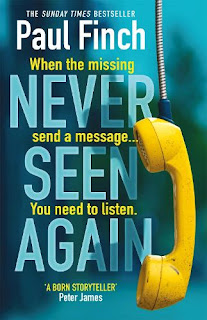
Never Seen Again by Paul Finch is published by Orion on 17 March in paperback, £7.99

A message no one was supposed to hear. Jodie Martindale's disappearance remains a mystery, unsolved to this day. A message that will change everything. David Kelman covered the story. But he made a huge mistake, which cost someone their life. A message from the missing. Now, he has evidence he shouldn't have. It's a message from Jodie - who has been missing for six years - but sent just two weeks ago...

More information about Paul Finch can be found on his website. You can also find him on Facebook and follow him on Twitter @paulfinchauthor