Showing posts with label Spy Thriller. Show all posts

Tuesday, 5 November 2024

The Power of The Outsider

I've always been fascinated by the out-of-place. The marginalised, the unsure, the people faking it 'til they make it, right down to the actual swindlers and imposters and con artists. If writing compelling narrative fiction is about tension, what's more tense than someone being where they believe (or someone else believes, if they knew the truth) that they don't deserve to be?

In my debut novel 'A Reluctant Spy', the protagonist Jamie Tulloch is a perennial fish out of water who turns his unease into a career. At the age of 23, a working class loner adrift at his Cambridge college, he agrees to become a Legend, part of a secret MI6 programme to recruit individuals willing to act as living cover stories. Sign up and you'll get a secret helping hand through life - access, job offers, nudges in the right direction. But at some point, you'll need to step out of your life for a few weeks while a lookalike agent uses your identity as bulletproof cover. Except, of course, something goes wrong and Jamie finds himself on a mission he's not trained, ready or even very willing to take on.

While I don't precisely share Jamie's life history (my upbringing was a whole lot less tough than his, and I very definitely didn't go to Cambridge), we do share a common experience of navigating social contexts, workplaces, relationships and friendships that crossed boundaries and left us feeling out of place. I was in my university's Officer Training Corps for three years and got partway through the process of applying to Sandhurst, which was my first serious brush with people from a dramatically different background. After that, I was lucky enough to get into a graduate scheme and move to London, where I brought a regional accent and a distinct feeling of imposter syndrome to the glossy world of IT consulting. I vividly remember ending up at parties with investment banking trainees and wondering how on earth I'd ended up there.

Unlike Jamie, though, I hadn't made a Faustian pact that dictated my future, so I was free to choose a different path. I returned to Scotland and developed parallel careers in digital design and writing. And as I did, an old fascination returned to me - the world of spies and spying.

When I was studying English Literature at the University of Aberdeen, I wrote my final dissertation on the topic of Paranoia in Modern Spy Fiction, focusing on Graham Greene and John Le Carré. I looked at the isolated, fearful lone spy, without gadgets or guns or even certainty about their mission, conducting morally compromised missions in dangerous, brutal and hostile territories.

That initial fascination with paranoia and fear in spy fiction then spent a couple of decades marinating in a whole slew of different takes on the world of espionage, from the betrayed and amnesiac human weapon of the Bourne books and films to the misfits and misanthropes of the glorious Slough House series by Mick Herron. So when I was in discussions with my agent and editor about my debut novel, I wanted to draw on that continually broadening spy fiction tradition. But what would I bring, personally? The answer seemed obvious - the feeling of being an ordinary person who is pretty sure they're not actually supposed to be where they are.

As I wrote the book, I realised that what I most wanted Jamie to experience was the same thing I had through various jobs, relationships and pursuits - the slowly dawning realisation that I was actually able to take on scary new roles, learn new skills, and that I did deserve to be there. And that far from being the deceitful and sinister infiltration of a Tom Ripley-esque character, the ability to adapt, to learn new social rules and to function in hierarchies and contexts you weren't born into is a serious life skill and advantage.

In the book, Jamie uses his chameleonic abilities to deal with rogue Russian mercenaries, CIA operatives, arms dealers and many more mysterious characters swirling around his target, Arkady Bocharov, while proving to himself that he might just have what it takes to be an effective covert agent. And in writing this book, I got to indulge that crucial question - what would would my price be to become a 'living cover story' like Jamie? And what would I do if I found myself in the same situation, thrown into the middle of an active mission?

My hope is readers will ask themselves the same questions. And I also hope they'll grow to love the often haplessly foolhardy Jamie Tulloch and the other members of the Legends Programme trying desperately to keep him alive.

A Reluctant Spy by David Goodman (Headline) Out Now

Jamie Tulloch is a successful exec at a top tech company, a long way from the tough upbringing that drove him to rise so far and so quickly.  But he has a secret...since the age of 23, he's had a helping hand from the Legend Programme, a secret intelligence effort to prepare impenetrable backstories for undercover agents. Real people, living real lives, willing to hand over their identities for a few weeks in return for a helping hand with plum jobs, influence and access. When his tap on the shoulder finally comes, it's swiftly followed by the thud of a body. Arriving at a French airport ready to hand over his identity, Jamie finds his primary contact dead, the agent who's supposed to step into his life AWOL and his options for escape non-existent. Pitched into a deadly mission on hostile territory, Jamie must contend with a rogue Russian general, arms dealers, elite hackers, CIA tac-ops and the discovery of a brewing plan for war. Dangerously out of his depth, he must convince his sceptical mission handler he can do the job of a trained field agent while using his own life story as convincing cover. Can Jamie play himself well enough to avoid being killed - and to avert a lethal global conflict?

More information about the author and his writing can be found on his website. You can also follow him on X @WordsByGoodman and on Instagram @davidgoodmanauthor

Thursday, 24 October 2024

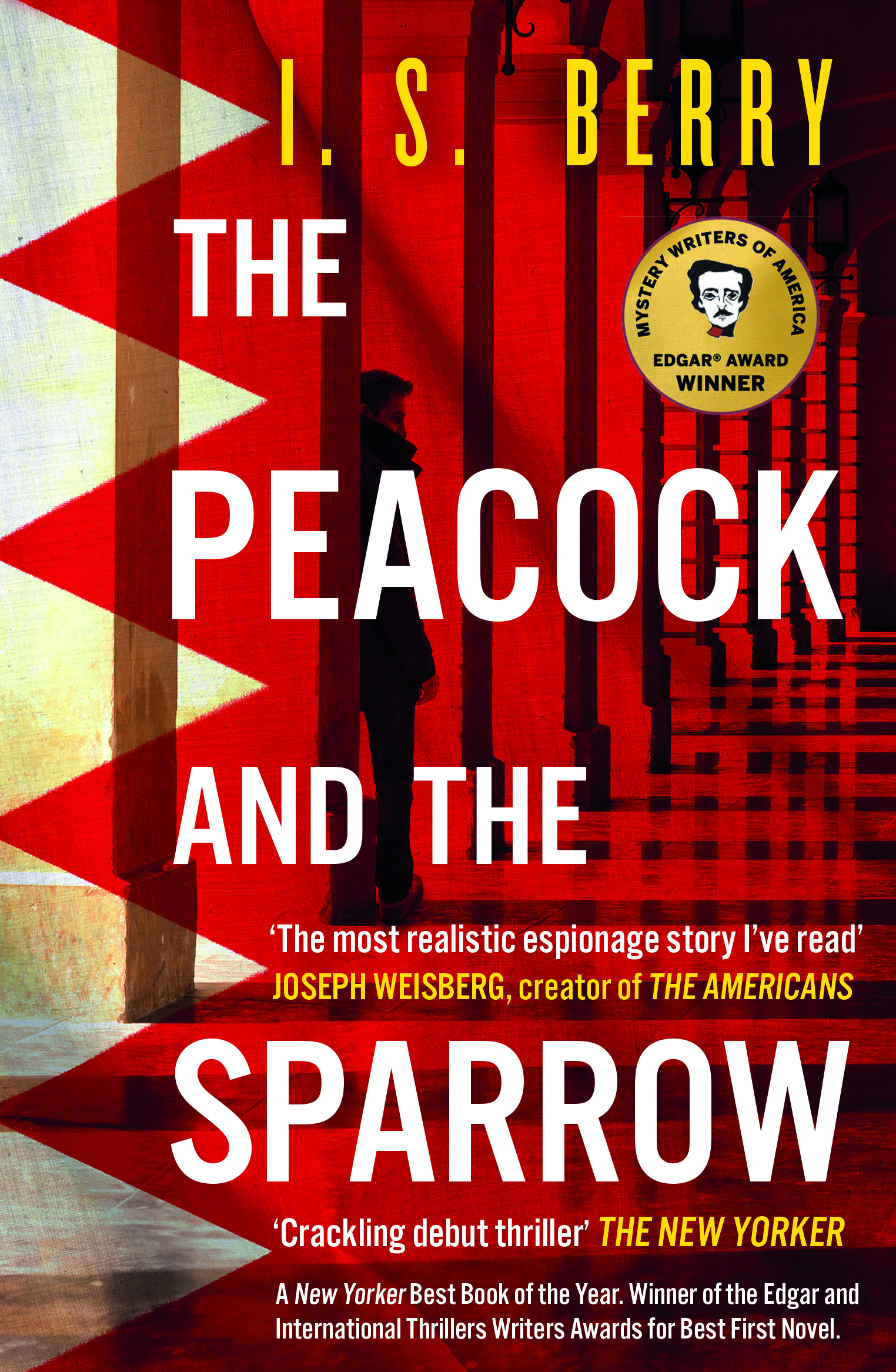
The Gray, dilemma-choked World in The Peacock and the Sparrow by I S Berry

When most people think of spies, they think of glamor, sex appeal, clear-cut good and bad guys. The reality is quite different. I served as a CIA case officer (fancy term for “spy”) for six years, including one year in wartime Baghdad, and found the profession to be murky, gruelling, at times debilitating. Many of the people—sources and case officers alike—were cut from a morally uneven cloth. Failures often outnumbered successes, and both were sometimes hard to define. We wrestled with questions—whether an informant was telling the truth, what kind of risks to take, whether ends justified means, what constituted “right”—and were frequently left without answers. These often-unpleasant truths form the basis of my debut novel, The Peacock and the Sparrow. One experience in particular informed my novel.

In autumn of 2004, I arrived as a first-tour case officer to Baghdad—at that time, the most dangerous place on earth. Over 800 American soldiers, and countless Iraqis, allies, and innocents of all nationalities, had been killed. Every hour, mortars and rockets pelted the Green Zone, military convoys were attacked, locals were terrorized. We had limited defences—body armour, weapons, the fleeting shelter of bunkers—which mostly just served to underscore the danger. My mission was to recruit sources who could identify and dismantle the network of Abu Musab al-Zarqawi, the leader of al-Qaeda in Iraq (AQIZ). But we were making little progress, and morale was low.

Amid what felt like a hopeless war, I discovered that one of my sources was distantly connected to an alleged AQIZ terrorist, “Qasim.” A top military target, Qasim was suspected of participating in the 2003 “Canal Hotel” bombing of the UN headquarters in Baghdad. Lo and behold, against all odds, my informant helped track Qasim down. Finally, I felt I’d achieved a small victory.

But when we questioned Qasim, he denied the allegations. Of course, we expected this: detainees often kept mum, knowing we couldn’t typically hold them more than 72 hours without sufficient evidence. At the end of the interview, no confession on the table, the military nevertheless cuffed Qasim, ushered him into a helicopter, flew him to a detention facility. Surely, we all thought, he’d eventually confess, or the necessary evidence would materialize. In some form, the truth would take shape.

When my tour ended, I returned to D.C. I learned that a colleague at Langley had questioned Qasim at a different detention facility. Qasim still hadn’t confessed. For the first time, I started to doubt his guilt.

My doubt only grew over the years. I wondered whether, amid the mess and chaos of war and espionage, we’d gotten it wrong. The uncertainty plagued me.

In 2012, I returned to the Middle East—Bahrain. Manama, its capital, was a sight to behold, full of vivid, profound contrasts: palaces and luxury hotels alongside slums; heavily armed riot police battling street urchins. The Arab Spring had been simmering for nearly a year. It was a proxy war: Bahrain’s Shiite majority, which reputedly received support from Iran, was revolting against the Saudi-backed Sunni monarchy. The U.S., whose Fifth Fleet is based in Bahrain, was caught in the middle of the conflict, torn between defending against Iran and supporting an often-repressive government. This murky landscape, where there was no clear “right” side or easy answer, brought to mind the conundrums I’d faced as a spy. It was a perfect prism for a tale about espionage. I began writing.

My novel, The Peacock and the Sparrow, is based on these gray, dilemma-choked worlds. When my protagonist, an aging spy named Shane Collins, is caught in the crosswinds of the Arab Spring, he becomes embroiled in murder, consuming love, and an unpredictable revolution. He’s forced to choose sides. Ultimately, he’s haunted by his decisions—“the tangle of mistakes, promises, and defeats that grips a man’s heels.” Spying is a “profession of ghosts,” Collins finds, “the culmination of actions taken or not taken, ends swallowed by means.

Since The Peacock and the Sparrow was first published in the U.S. in 2023, dozens of current and former intelligence officers have reached out to me. The dilemmas, knots, and question marks woven into the book resonate, they tell me. Wraiths of decisions, betrayals, mistakes, the toll of manipulation—these are the things that remain after coming in from the cold. I set out to write the most realistic spy novel I could, to convey a visceral sense of the profession, and I’m gratified that people have connected with my story, that it captures these quiet consequences of espionage.

This year, The Peacock and the Sparrow also received the Edgar, Barry, and International Thriller Writers awards for Best First Novel, which has been an unspeakable honour. Writing is my second profession, and second acts are always a gamble. But, as I’ve come to realize, I find writing about spying far more rewarding than doing it.

The Peacock and The Sparrow by I S |Berry (Bedford Square Publishers (Out Now)

Shane Collins, a world-weary CIA spy, is ready to come in from the cold. Stationed in Bahrain for his final tour, he's anxious to dispense with his mission — uncovering Iranian support for the insurgency. But then he meets Almaisa, an enigmatic artist, and his eyes are opened to a side of Bahrain most expats never experience, to questions he never thought to ask. When his trusted informant becomes embroiled in a murder, Collins finds himself drawn deep into the conflict, his romance and loyalties upended. In an instant, he's caught in the crosswinds of a revolution. He sets out to learn the truth behind the Arab Spring, win Almaisa's love, and uncover the murky border where Bahrain's secrets end and America's begin.

 I.S. Berry’s The Peacock and the Sparrow will be published in the UK for the first time on 24 October 2024 as £9.99 paperback original from No Exit Press, part of Bedford Square Publishers.

More information about I S berry can be found on her website.  You can also find her on Facebook. You can also follow her on X  and on Instagram @isberryauthor


Tuesday, 9 May 2023

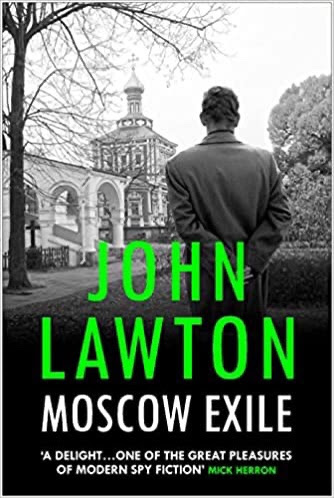
The making of Joe Wilderness IV : Moscow Exile


Photo ©Nick Lockett

How do you invent a character? I’ve no idea. Perhaps boredom plays its part. In 1983 I was tending orange groves in Spain, so far south that the Rock of Gibraltar loomed up outside my bedroom window like an unfinished skyscraper and Morocco’s Atlas Range looked like a wallpaper freeze.

Oranges do not ask a lot of you. Their small talk is microscopic. The highlight of the day would be when the locals, other farmers, passed by to marvel at the sheer whiteness of a kid from the north of England. The day might have livened up if they’d asked what I was doing there, but no one ever did. So … Troy was born out of boredom. I told myself stories to stave off the noonday devil and at dusk I wrote them in the sky on the tips of the Atlas mountains. 

Troy began as an honest copper, in the vein of Roderick Alleyn or Charlie Luke. Soon got fed up with that and over the course of my first novel he evolved into something far more complex — a lethal, deceitful philandering bastard. A few books into the series a CNN reviewer said to me, “I used to wonder why Troy got the shit kicked out of him in each book. It’s because he deserves it.” Correct. Then he said, “Wouldn’t you just love to write about someone who was … well … decent?”

Thus was Joe Wilderness born. He’s the hero of my latest novel —Moscow Exile — and of three earlier books. Unlike Troy he’s very English, working class (from Whitechapel in the East End of London) and he’s honest. He would never cheat on his wife or kick the cat. He believes in trust. Betrayal of trust would never occur to him. That said, he’s also a burglar, smuggler, MI6 agent and con-artist. Still … an honest man.

The centre of Wilderness’s world has never been London. Berlin, East and West, is his personal magnet. In part this location is down to my father’s all-too-brief narrative of his time in Germany in 1945 — his war ended in the British Sector of Berlin — and Joe’s good or bad fortune is down to two of my university tutors in the 1960s, Peter Frank and David Lane, both Russianists who’d been drafted just after WW2 and given a stark choice. Cue the voice of the late William Hartnell, “Right, you ’orrible lot. You can spend two years square-bashing or you can bugger off to Cambridge and learn Russian.”

They chose Cambridge, became fluent in Russian and in their modest way became spies. I gave Joe Wilderness the same choice. And after Cambridge, Hamburg and after Hamburg … Berlin. And after Berlin … Moscow.

I left Joe at the end of Hammer to Fall with a bullet in his back, flat on his face, on the Glienicker Brücke, where West Berlin met East Germany. The bridge was deeply fictionalised as The Bridge of Spies by Steven Spielberg … I say ‘fictionalised, as I’ve never seen a photograph in which the bridge resembled the one he filmed. As the book ends Joe is hauled away by the KGB to whatever fate awaits him. Finis … been there … done that … bought the T-shirt.

However … ya gets asked fer sequels.

And ya cain’t say … ‘Fuuuuuuuck off!’

So … Moscow Exile. The life and misadventures of Joe Wilderness in Moscow, exile … prisoner … defector? To say more would be a spoiler.

But … how to get there? That wasn’t obvious and the oddest idea occurred to me … a prequel-sequel, a book in which much of the outcome is already anticipated and the narrative task is to get back to that point. This might be called ‘backstory’ — a phrase I had never heard until the great Robert B. used it as a title — more properly termed prolepsis.

Risky … but from the standpoint of the writer … er … appropriately challenging. No risk, no fun. So once the prelims were over I rolled the plot back thirty years to London and then to Washington, aiming all the time for Moscow in 1969.

I based the prequel, very loosely, on the life of Pamela Harriman, daughter-in-law of Winston Churchill, who later married the former US ambassador to Moscow, Averell Harriman, and became, quite possibly, the queen of Washington society, renowned for her celebrity-packed dinner parties, and for the little Asprey’s silver notebook in which she recorded the gossip of the DC elite.

It’s a long time before ‘Coky’ (that’s what I named her) meets Joe Wilderness.

And before I could type the words ‘The End’ (so pleasing to the eye) Joe is back at the bridge in the heartland of the mid-century spy — Berlin — Moscow still a memory so fresh as to sting, still in pursuit of the pot of gold at the end of the spook’s rainbow.


Moscow Exile by John Lawton Published by Atlantic Grove (Out Now)

Charlotte is a British expatriate who has recently settled in Washington, D.C. with her second husband, but enviable dinner parties aren’t the only thing she is planning. Meanwhile, Charlie Leigh-Hunt has been posted to Washington as a replacement for Guy Burgess, last seen disappearing around the corner and into the Soviet Union. Charlie is surprised to cross paths with Charlotte, an old flame of his, who, thanks to her gossipy parties, has a packed pocketbook full of secrets she is eager to share. 

Two decades later, in 1969, Joe Wilderness is stuck on the wrong side of the Iron Curtain, held captive by the KGB, a chip in a game way above his pay grade – but his old friends Frank and Eddie are going to try to spring him out of the toughest prison in the world. All roads lead back to Berlin, and to the famous Bridge of Spies…

John Lawton has written three previous novels starring Joe Wilderness - Then We Take Berlin (2013)The Unfortunate Englishman (2016), and Hammer to Fall (2020). He has also written eight Inspector Troy thrillers -, Black Out (1995), Old Flames (1996), A Little White Death (1998), Riptide (aka Bluffing Mr Churchill) (2001), Flesh Wounds (aka Blue Rondo) (2005), Second Violin (2007), A Lily of the Field (2010), Friends and Traitors (2017). One standalone book – Sweet Sunday (2002) and a number of other books.  


Thursday, 8 July 2021

Q & A with Peter Hanington


Ayo:-
    Would you mind telling us a bit about yourself and how you got into journalism?

Peter:-    I followed quite a traditional path. A traineeship on a local newspaper and when I realised I wasn’t tough enough to be a tabloid hack I worked for free for my local BBC radio until they eventually gave in and offered me a job. After that 5 Live and eventually the Today Programme on BBC Radio 4 plus a range of other news and World Service radio programmes. 

Ayo:-    Did you originally intend to be a journalist and if not what other job would you have done?

Peter:-    I’m lucky in this respect. I never had any doubt that I wanted to be a journalist – writing for the school magazine from primary school onwards etc. I’m also lucky because when I was getting started there were more opportunities for proper paid work both on newspapers and with a range of broadcasters. One of the problems we have right now is that serious journalism is on the back foot (newspapers closing, broadcasters and print media shedding jobs). That’s a big problem for aspiring young journalists out there but also an issue for society as a whole. Who will keep asking the awkward questions? Afflicting the comfortable and comforting the afflicted as the legend has it? 

Ayo:-    A Cursed Place is your third novel with A Dying Breed and A Single Source being your first two books.  What prompted your storyline for A Cursed Place? 

Peter:-    I wanted to write about the dark side of Big Tech and the role it plays in the propagation of fake news and falsehood. The book also looks at issues around cyber-surveillance.

Ayo:-    This is your third book to feature William Carver what made you decide to have your main character be a BBC Reporter and what made you decide to write a series character?

Peter:-    I think ‘write what you know’ is pretty good advice. I’ve never been a foreign correspondent, let along a war corr but I’ve seen a fair few of them at close quarters and find them fascinating. These are the hacks who keep their passports with them at all times ‘just in case’, who know their blood group as well as how to transfuse a pint or two of their own blood if necessary. William Carver grew on me as a character - the more I wrote about him the more I liked him. Luckily he seems to have grown on other people too (despite or perhaps because of his many foibles and failings) 

Ayo:-    Willam Carver is quite an unloved, unlovable and unpredictable old hack.  Is he based on one person or is he a composite of a number of people?

Peter:-    He’s a composite. There’s a splash of DNA from everyone from James Naughtie and John Humphrys to Lyse Doucet and Dame Ann Leslie in there. Some of his less appealing habits are borrowed from real life and real people as well but I’ll keep those names to myself if that’s okay with you Ayo?

Ayo:-    The characterisations, the nuances of relationships and the sense of place all play an important part in A Cursed Place. How important is it to get these right?

Peter:-    I try really hard to get those things right. Lots of research when it comes to locations… I spent time in Silicon Valley pre- Covid 19 to get a sense of what that place is all about, hanging out in the hotels and clubs where the Venture Capitalists drink their 30 dollar cocktails and do the deals. I spoke to various people involved in that world in order try and get the language, look and atmosphere right. I also went to Chile where my son was working for a charity and that visit helped inform the sections set in the Chilean mining community I’ve called Brochu. As regards the characters I like to go back and re-read each of the main character’s contributions individually to check that it feels right. Would Carver, Viv, Patrick etc say that? Would they do that?

Ayo:-    What is the more important for you characterisation or plot or do you try and have a happy medium between the two?

Peter:-    I still find the plotting hard. I would love to get to the point where I can map the whole thing out beforehand or at least a large part of it. The story often runs away with itself and I have to rein it back in and edit like crazy. Characterisation I feel like I am getting better at – I’ve know quite a few of the characters for a while now and love inventing new ones for them to get along or not get along with.

Ayo:-    In A Cursed Place William Carver has to get to grips in a world where hyperbole is all the rage as opposed to the truth and it is difficult to to distinguish between fake news and real news. But not only that but the rippling effect of fake news. This is not so much a novel as contemporary history thinly disguised in literary form. Was this intentional?

Peter:-    Gosh that’s a great summary of what I was trying to do. I obviously try to write thrillers that thrill… but I also want the book to ask questions and worry about issues that are worth worrying about. Fake news and the relationship between this and a handful of big tech companies are things I think are absolutely worth worrying about. 

Ayo:-    How would you like your characters William Carver and Patrick to be remembered?

Peter:-    I hope that readers grow to like them (despite the previously mentioned faults and foibles) understand them and see them as representing (together with Viv and Jemima etc) the sort of journalism that a healthy, functioning democracy requires.

Ayo:-    How much has your job as a journalist helped you with your research?

Peter:-    Hugely. Its taken me to lots of fascinating places, travelling alongside and meeting interesting people at every turn. Its also provided me with an unending supply of weird and wonderful stories. Once colleagues know that you’re a keen collector of journalistic scandal and tall tales the good stuff just keeps coming.

Ayo:-    There are various nods to both John Le Carre and Graham Greene in all three of your books?  How much of an influence have these writers been on you?

Peter:-    Both extremely important. It was reading Greene that made me want to write. John le Carre similarly so and in fact I wrote to him a few times and received kind and encouraging letters back. I sent him the previous book - A Single Source - in the vain hope that he might have time to read it and he wrote a lovely letter back, mentioning in passing that he thought it was a good title. I tried to persuade the publisher that we should put that on the cover of the paperback: A Single Source. ‘A good title.’ - John le Carre. 

Ayo:-    Are you a fan of spy thrillers and if so do you have any favourites?

Peter:-    Mike Ripley introduced me to Eric Ambler (shamefully late in my reading but at least I got there) and I’ve grown to love him. Also Lionel Davidson and Anthony Price so quite old school stuff.

Ayo:-    What next for William Carver?

Peter:-    Ah that’s a hard one to answer without spoilers but I can say that book four will probably be more spy-centered than anything Carver has come up against before.


A Cursed Place by Peter Hanington (Hodder & Stoughton) Out Now

Knowledge is power. And they know everything.The tech company Public Square believes in 'doing well by doing good'. It's built a multi-billion dollar business on this philosophy and by getting to know what people want. They know a lot. But who else can access all that information and what are they planning to do with it? Reporter William Carver is an analogue man in a digital world. He isn't the most tech-savvy reporter, he's definitely old school, but he needs to learn fast - the people he cares most about are in harm's way. From the Chilean mines where they dig for raw materials that enable the tech revolution, to the streets of Hong Kong where anti-government protesters are fighting against the Chinese State, to the shiny research laboratories of Silicon Valley where personal data is being mined everyday.

You can follow Peter Hanington on Twitter @HaningtonPhan


Monday, 18 February 2019

Happy birthday Len Deighton

Happy birthday to Len Deighton who is celebrating his 90th birthday today! For many of us Len Deighton has provided readers with hours of enjoyment with his brilliantly written spy novels.

Who can forget his debut novel the Ipcress File which introduced readers to a nameless protagonist as far back as 1962.  The Ipcress File was followed by Horse Under Water (1963) Funeral in Berlin (1964), Billion Dollar Brain (1966), An Expensive Place to Die (1967), Spy Story (1972), Yesterday’s Spy (1975), and Twinkle, Twinkle, Little Spy (1976) all featuring his nameless protagonist.  Of course in the 1965 film the nameless protagonist is called Harry Palmer who is played with aplomb by Michael Caine.

Over on the Shots Ezine Mike Ripley Of GWAM (Getting Away with Murder) fame did an appreciation for the 50th anniversary of The Ipcress File which can be read here
Len Deighton & Mike Ripley
Whilst the Ipcress File is undoubtedly amongst his best known books, there are also a number of others for example SS-GB, the Bernard Samson series of novels which include Berlin Game (1983) Mexico Set (1984), London Match (1985), Spy Hook (1988), Spy Line (1989) and Spy Sinker (1990) to name a few and of course the Len Deighton Action Cookbookthat are certainly worth reading.  His last published book which was also an e-book was James Bond: My Long and Eventful Search for His Father (2012) 

A comprehensive place to find all things Len Deighton is on the Deighton Dossier Website which has all the information one could want on Len Deighton’s books.

Friday, 19 January 2018

An Evening with Mick Herron at Dulwich Books


Wednesday 7th March 2018: An Evening with Mick Herron at Dulwich Books


Bestselling spy novelist Mick Herron returns with London Rules, the fifth of his acclaimed Jackson Lamb novels. Mick will be at Dulwich Books on Wednesday 7th March to discuss his writing, read from his new book and sign your copies.

Mick’s Jackson Lamb novels started with the bestselling Slow Horses. It was described by the Mail on Sunday as ‘the most enjoyable British spy novel in years' and was picked by The Daily Telegraph as one of the best spy novels of all time. The following three novels went from strength to strength and have won bundles of prizes. He himself is as hilarious and captivating as his books. Do not miss this event!  

Event: An Evening with Mick Herron
Location: Dulwich Books, 6 Croxted Rd, London SE21 8SW
Date: 7th March 2018
Time: 19.00 – 20.30
Price: £10 (admission & a glass of wine)
           £20 (admission, book & glass of wine)


London Rules by Mick Herron (Published by Hodder & Stoughton)


London Rules might not be written down, but everyone knows rule one.  Cover your arse.  Regent's Park's First Desk, Claude Whelan, is learning this the hard way. Tasked with protecting a beleaguered prime minister, he's facing attack from all directions himself: from the showboating MP who orchestrated the Brexit vote, and now has his sights set on Number Ten; from the showboat's wife, a tabloid columnist, who's crucifying Whelan in print; and especially from his own deputy, Lady Di Taverner, who's alert for Claude's every stumble.  Meanwhile, the country's being rocked by an apparently random string of terror attacks, and someone's trying to kill Roddy Ho.  Over at Slough House, the crew are struggling with personal problems: repressed grief, various addictions, retail paralysis, and the nagging suspicion that their newest colleague is a psychopath. But collectively, they're about to rediscover their greatest strength - that of making a bad situation much, much worse.  It's a good job Jackson Lamb knows the rules. Because those things aren't going to break themselves.

Saturday, 17 December 2016

Books to look forward to John Murray

January 2017

Auntie Poldi can think of no finer place to wait for death than Sicily. All she asks is a sea view, fine wine (and plenty of it), and her family close around. When death instead takes her handsome young friend Valentino - and under mysterious circumstances at that - Poldi will not take it lying down. Perhaps it's in her blood (her father was a detective chief inspector); perhaps it's a diverting excuse to spend more time with men in uniform; or perhaps it's just the promise she makes to Valentino while holding his poor dead hand. But Auntie Poldi's hunting instincts have never felt more alive. Justice must be served - if it's the last thing she does ... Auntie Poldi and the Sicilian Lions is by Mario Giordano.

February 2017
 
Spook Street is by Mick Herron.  Never outlive your ability to survive a fight. Twenty years retired, David Cartwright can still spot when the stoats are on his trail. Radioactive secrets and unfinished business go with the territory on Spook Street: he's always known there would be an accounting. And he's not as defenceless as they might think. Jackson Lamb worked with Cartwright back in the day. He knows better than most that this is no vulnerable old man. 'Nasty old spook with blood on his hands' would be a more accurate description. 'The old bastard' has raised his grandson with a head full of guts and glory. But far from joining the myths and legends of Spook Street, River Cartwright is consigned to Lamb's team of pen-pushing no-hopers at Slough House. So it's Lamb they call to identify the body when Cartwright's panic button raises the alarm at Service HQ. And Lamb who will do whatever he thinks necessary, to protect an agent in peril ...

March 2017

William Hoffer - handsome, refined, a little cold perhaps - is an established figure in London society. But Hoffer has secrets. He is vague about his Midwestern origins. The counsel he offers a Russian billionaire may extend to murkier topics than art investments. Then there is his Kensington flat, which is only rented, and the broader question of his money, which is running out. When a ghost from his past in Mexico surfaces, Hoffer is forced to revive brutal instincts for self-preservation ...  Hoffer is by Tim Glencross
-->