Showing posts with label Point Blank. Show all posts

Wednesday, 19 January 2022

Former Police Chief Harold Breier’s Legacy on Policing in Milwaukee by Willa C. Richards


Much of the action in my novel, The Comfort of Monsters, takes place in the city of Milwaukee during the summer of 1991. For my protagonist, Peg McBride, this was the summer her beloved sister Dee disappeared under unnerving circumstances. But for the rest of the city, this was the summer Milwaukee police discovered serial killer Jeffrey Dahmer’s heinous crimes. I chose to set my novel against this grim backdrop because I was interested in exploring how cold cases go cold. Dee’s missing persons’ case is quickly subsumed by one of the largest criminal investigations in Milwaukee’s history: the arrest and prosecution of Jeffrey Dahmer. 

The discovery of Dahmer’s crimes cast Milwaukee, a relatively small, humble, working-class city into a harsh national spotlight. Between 1978-1991, the serial killer murdered seventeen men. Sixteen of these murders took place in the Milwaukee area. Dahmer preyed exclusively on young men, the vast majority of whom were men of colour. Questions swirled around the Milwaukee Police Department’s negligence. How could any respectable department have allowed such a violent killer to operate “undetected” in the city for a decade? And while these questions were certainly posed in 1991, the sensationalism of the crimes often prevented the kind of meaningful conversations required to answer them. 

As part of my research for the novel, I sought answers to some of these complicated questions. I began by diving into the history of the Milwaukee Police. It was during this process that one name popped up again and again: Milwaukee’s former police chief Harold Breier. Perhaps more than any other individual Breier’s legacy was a pivotal factor in how Milwaukee became home to the most infamous cannibal in American history. 

Harold Breier became Milwaukee’s Chief of Police in 1964. Milwaukee historian John Gurrda wrote of Breier, “as autocratic as he was incorruptible, [he] ruled...with an iron fist… and did not welcome input from community groups, politicians, or anyone else outside the force.” Longtime Milwaukee Journal Sentinel reporter Eugene Kane said of the former chief, “[he was] a racist administrator, a borderline fascist, and the man who contributed to the segregated reputation of Milwaukee more than any other.”

From a 2022 vantage point, it’s clear Breier was a racist, a sexist, and a homophobe and his personal biases directly impacted the composition of the department. Under his direction, women were not allowed to take promotional exams and were not allowed on street patrol until 1975. Breier also routinely passed up black patrolmen for promotion to detective, assigned black officers the most undesirable shifts, and forbade them from riding in all-black squad cars or “gathering in all-black groups”. 

This internal bigotry spilled out into the department’s relationship with the communities the police claimed to serve. In 1978 at the behest of Chief Breier, the MPD launched violent raids on gay bathhouses, which resulted in dozens of arrests and street protests. Reports of patrol officers heckling or harassing bar patrons, particularly in Walker’s Point, were common. 

Brier was adamantly against the civil rights movement and the self-determination of the black community in Milwaukee. He fancied himself a local J. Edgar Hoover, performing constant surveillance of the Milwaukee NAACP Youth Council’s members, and its advisor, the civil rights activist Father James Groppi. Patrol officers were directed to harass Youth Council members and to jail them for minor offenses like littering and jaywalking. 

Under Chief Breier, Milwaukee police officers, including those on Breier’s prized Tactical Unit, (an all-white squad of officers handpicked by the Chief), murdered black Milwaukeeans and faced zero consequences. According to a U.S. Department of Justice investigation, between 1975-79 at least 22 people died in MPD custody. 

Breier always defended his officers, earning him outsized loyalty from within the department and from the powerful police union. This fostered a culture of officer invincibility.

Further, Breier was opposed to community-based policing. After his tenure, he had this to say about efforts to reform the department towards community-based policies: “There’s no substitute for strong law enforcement. First, a police officer doesn’t have the training to take care of all the social ills of the city. And second, he should be so busy maintaining law and order that he doesn’t have time for all that crap. When I was Chief we were relating to the good people, and we were relating to the other people too: we were throwing those people in the can.” 

Today, Milwaukee officials might want to write-off this period of Milwaukee’s history as unfortunate, merely cringing at Breier’s policies and his remarks. There is no doubt, though, that we should situate his reign within Milwaukee’s reputation as one of the most segregated cities in America. And it isn’t just a reputation; it’s a fact. 

This is one of the most disturbing reasons Jeffrey Dahmer moved through the criminal justice system with such ease, despite being arrested, tried, and convicted for child molestation. The Milwaukee Police, because of historic, institutionally perpetuated biases, didn’t see him as a convicted sex offender accused of unimaginable crimes. Instead, they saw his victims, the majority of whom were black and brown men, as the criminals. 

Breier’s legacy certainly extends beyond the department’s negligence in the Dahmer case and his policies continue to have real impacts on the city of Milwaukee. Though not all of this research made its way into my book, the material was crucial in shaping my thinking about the history of Milwaukee. 

The impact of the Breier doctrine helps explain not only the specific horrors of the Dahmer crimes, but also the interrelatedness and continuity of these crimes with the city’s other, historic, institutional failures. It is my sincere hope that The Comfort of Monsters showcases these failures and their interconnectedness and demonstrates the urgency of transforming our local institutions.

The Comfort of Monsters by Willa C. Richards is out now from Point Blank, original paperback £8.99.

In the summer of 1991, teen Dee McBride vanished in the city of Milwaukee. It was the summer the Journal Sentinel dubbed 'the deadliest . . . in the history of Milwaukee.' Serial killer Jeffrey Dahmer's heinous crimes dominated the headlines and the disappearance of one girl was easily overlooked. 2019, nearly thirty years later, Dee's sister, Peg, is still haunted by her disappearance. Desperate to find out what happened to her, the family hire a psychic and Peg is plunged back into the past. But Peg's hazy recollections are far from easy to interpret and digging deep into her memory raises terrifying questions. How much trust can we place in our own recollections? How often are our memories altered by the very act of speaking them aloud? And what does it mean to bear witness in a world where even our own stories about what happened are inherently suspect?

More information about Willa C Richards can be found on her website. You can also find her on Instagram.


Friday, 2 April 2021

Saima Mir on writing The Khan

 The Khan is the book I wanted to read but couldn’t find on bookshelves anywhere. As a young British woman of Pakistani heritage I longed to read a crime novel with characters who looked like me, and about a woman who was strong enough to stand in a man’s world. It didn’t exist, so I wrote it myself.

I wanted to read about crime, about family, and about the lines we will cross for those we love. As a journalist and a consumer of news, I was often struck by the ingenuity of the criminal classes, the things that they would do to make money, and it made me wonder what they would have achieved if they’d been given different opportunities.

The representation of Muslim women I found in crime novels were as victims of circumstance, and oppression, with no agency of their own. Women who needed rescuing, or who were trying to escape their culture. But I was surrounded by clever, beautiful, and inspiring Muslim women, who fought hard for their freedoms and for their rights. I wanted to see them on the page and to introduce them to the world.

As a cub reporter at the Telegraph & Argus in Bradford I’d often cover late shifts. This was my job in journalism. The shift which ran from 3pm to 11pm, involved making regular calls to the police and fire lines, following up leads, and developing contacts who knew what was really going on in the region.

I used to finish up what needed to be done, and head towards a café at the edge of the city centre, close to The Alhambra theatre, called Café Lahore. It was filled with young British Asians, looking for a place to hang out, chat, and socialise. The walls were covered in images from classic cinema, both Hollywood, and vintage Bollywood. The menu was a mix of karahis, and grills, followed by school dinner puddings, a reflection of our second and third generation upbringing. I’d take my personal phone, my work mobile, and my notebook, which was covered in shorthand scrawl. I’d have dinner their and shoot the breeze with old friends, and contacts, and make new acquaintances. It was here that the seed of The Khan was planted. This world that was never written about, but where I spent so much of my time.

As a journalist I covered a variety of stories, and was given a glimpse into the lives of a cross section of people. I was often sent to the reception desk of the smoked glass building by the news editor, to meet someone who had walked in, and had asked to speak to a journalist. I remember one man who relayed a story to me, about a shady but powerful group of men who ran the city. Short, and smelling of booze, he had greying hair, and a face covered with lines and crevices. He was passionate about his tale, and convinced of its truth, but there was no evidence to back up his claims, and he was obviously inebriated. Urban myths like this came fast and frequently during my career, and they watered the story seeds in my head.

Court reporting, inquests, investigative pieces, were all good grounding for developing story ideas and characters.

The scent of various court houses, the sun shining on the street where a heinous crime has been committed, the broken look in the eyes of an accused, these things all stayed with me, like a box of textile cuttings, ready to be called up when I sat down to stitch The Khan together.

I met all kinds of characters, and my position allowed me to ask them questions I would not otherwise have been afforded. One of the best things about being a journalist is the privilege of mixing with people at all levels within society.

I loved the city where I grew up, but media seemed to concentrate on its racial divide, problems, and poverty. They couldn’t see the hope, the joy, and the real reasons for what was going on. The fact that these were real people with dreams and ambition was conveniently forgotten. I always felt the region was judged, maligned and undersold. Yes, there were problems, but there were reasons for them, and there were people who wanted things to change.

During the edit of The Khan, my editor at Oneworld, Jenny Parrott, gave me some of the best advice I’ve ever had. She suggested spending the weekend thinking about what my characters would do, in every circumstance. I spent the following few days living with Jia Khan do in my head. I thought about what she order in a restaurant, what she would say, how she would speak, or react to the various people I encountered. It transformed the way I thought of my characters, and from that day to this, I feel as if they are with me. Writing new scenes and ideas are much easier now, because they step forward as soon as I call upon them.

The Khan is a labour of love, and a love story to the region where I grew up. I am aware that it is a crime story, and that therefore is not a representation of all that is good in the world. But my aim was to write an entertaining book that surprised, and informed, and lived in the grey of life that we discover with age.

It is not a representation of all facets of every Muslim woman, or every British Pakistani family, but it is the story I wanted to tell at a particular moment in time, and I hope it will open doors into a world not always encountered by white society, and will allow other women to step through with their own tales.

The Khan by Saima Mir (Published by Point Bank) Out Now.

A successful lawyer, Jia Khan’s London life is a long way from the Northern streets she knew as a child, where her father, Akbar Khan, was head of the Pakistani community and ran the local organised crime syndicate. His Jirga rule – the old way – was violent and bloody, but it was also justice of a kind. When her father is murdered, Jia must return to his community. In the past, the police relied on Akbar Khan to maintain the fragile order of the streets. But a bloody power struggle has broken out among the various communities and now, nobody is safe. Justice needs to be restored, and Jia is about to discover that justice always comes at a price. 


Thursday, 14 January 2021

Time is Slippery by Tim Glister


The funny thing about decades is that they don’t really start when they say they do. I don’t mean this in the ‘actually the millennium was technically 2001’ sort of way. I mean that era-defining cultural and social shifts don’t happen suddenly whenever there’s a zero or a one at the end of a year.

 Everyone who lived through the 2010's will probably agree that they weren't exactly fantastic. But we’d probably also say that things didn’t really start to bite until 2013. And now, given how 2020 went, it’s pretty easy to imagine that we’ll still be dealing with the fall out of it beyond 2021.

The sixties were the same. When we collectively think back to them, we imagine they were swinging, economically resurgent, and increasingly liberal. And they were. But not in 1961. At least, not quite.

1961, like the start of every decade, was a transitional time. It had one foot stretching boldly out into the future and its other one still rooted firmly in the past. This was true across Europe, but particularly in the UK, and especially London, which is so iconically connected to the time.

Conservative Prime Minister Harold Macmillan had famously - and somewhat optimistically - said that Britons ‘have never had it so good’ in 1957. But even though the economy was on the up, the nation’s post-war recovery was taking a long time to trickle all the way down to every resident of the country, and its capital.

The city’s skyline was starting to change as new towers grew out of the gaps left by the Second World War. But not as many as you might think, and not as quickly either. Mid-century icons like the Southbank were in their infancy, with just the Royal Festival Hall left standing after the Festival of Britain. It would be another two years before the Centre Point office block started to be built on top of Tottenham Court Road Tube station. And another four before work began on the Barbican Estate in the vast Blitz crater that had destroyed almost the whole of the old Cripplegate area in the heart of the city.

Old barges still slowly made their way up and down the Thames. Men still pushed carts laden with fruit and veg through Soho. And, while miniskirts were getting shorter and flares were getting wider, you were more likely to see businessmen strolling around Bank in top hats and tails, Teddy Boys lingering on the corners that hadn’t yet been colonised by teenagers and hippies, and old war veterans in demob suits shuffling down Carnaby Street.

Yet, profound social and cultural change was on the horizon. Test tunnels for the Victoria Line had been completed, the Post Office Tower was beginning to rise above Fitzrovia, and in September police arrested 1,300 protestors in Trafalgar Square after a rally for the Campaign for Nuclear Disarmament.

Time is fluid. It slips over, round and past itself in interesting ways. Things don’t change at the same rate or in nice fixed blocks, no matter how we choose to measure them or cut them up into generalised, easy to digest chunks. There’s always a little bit of yesterday and tomorrow mixed in with today - whenever today happens to be.

This makes period writing really interesting for authors, because you can infuse your writing with unexpected details that don’t just help build your narrative world but also inform and surprise your readers.

And for espionage writers, it gives you fantastic real-world and literary source material to play with. 1961 was the year George Smiley was born in Call For The Dead, and the year SPECTRE stole two atomic bombs that James Bond had to get back in Thunderball. It also saw the Bay of Pigs crisis, the construction of the Berlin Wall, and the start of the Apollo space programme. The Cold War was spilling over from the 1950s, and morphing into something new.

But, writing about the past also comes with its own challenges. For one thing, it’s incredibly precious to the people who lived through it and remember it, so you must respect it while also moulding it around the story you want to tell. You have to make sure your research is as accurate as possible, create a world that feels authentic, and keep tight control on your artistic license. Because the absolute last thing you want is to have your characters driving cars that shouldn’t be on the road yet, or riding tube lines that haven’t been dug out of the ground yet…


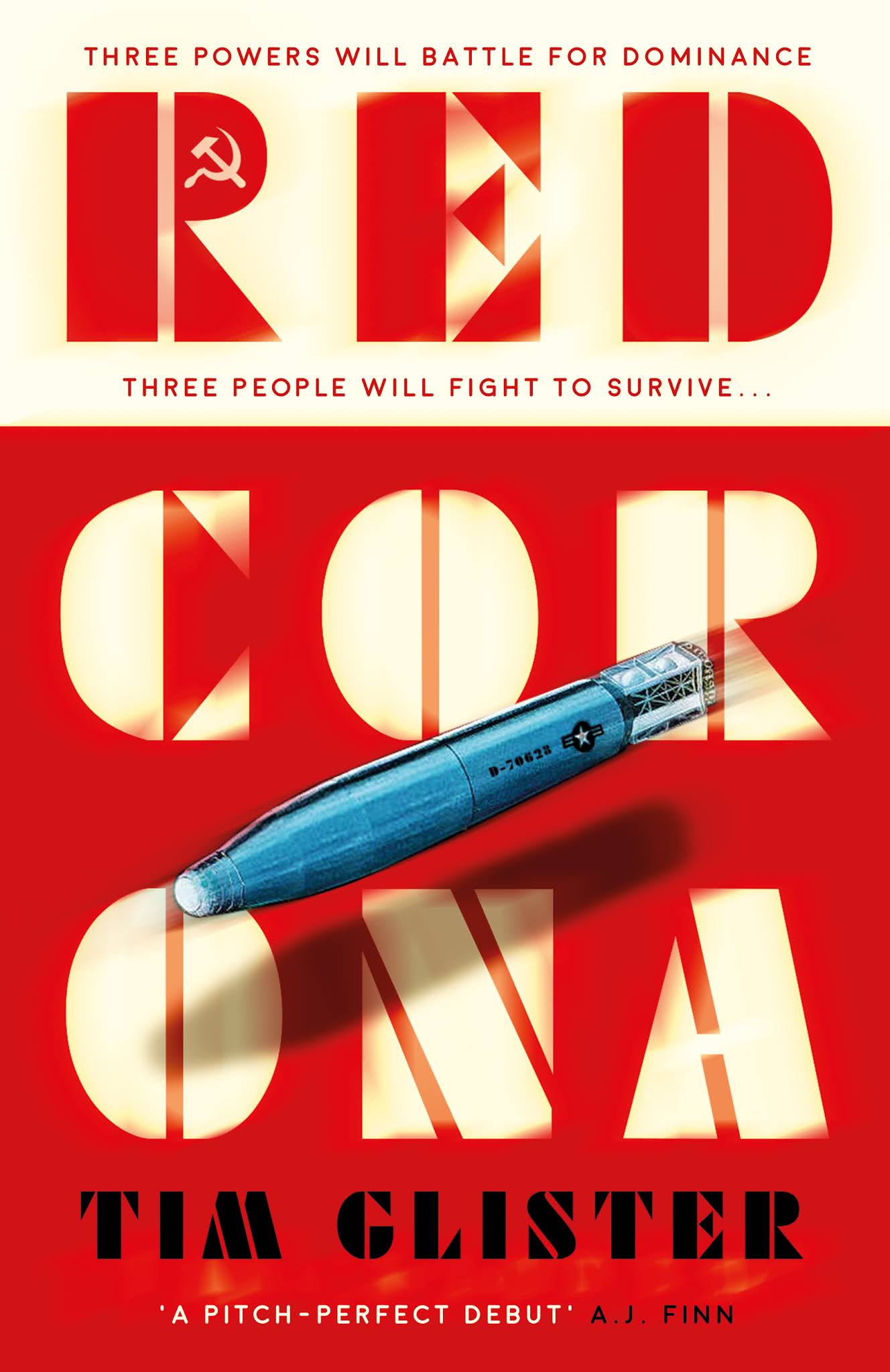
RED CORONA by Tim Glister is out on 14 January from Point Blank, hardback £14.99

It's 1961 and the white heat of the Space Race is making the Cold War even colder.  Richard Knox is a secret agent in big trouble. He's been hung out to dry by a traitor in MI5, and the only way to clear his name could destroy him. Meanwhile in a secret Russian city, brilliant  scientist Irina Valera makes a discovery that will change the world, and hand the KGB unimaginable power.  Desperate for a way back into MI5, Knox finds an unlikely ally in Abey Bennett, a CIA recruit who's determined to prove herself whatever the cost...  As the age of global surveillance dawns, three powers will battle for dominance, and three people will fight to survive...


Friday, 10 January 2020

When The Dead Comes Calling by Helen Sedgwick

I didn’t mean to write a Brexit novel. In fact, I really, really didn’t want to do that. I don’t even mention the word Brexit anywhere in When The Dead Come Calling.

What I wanted to do was write about a place and how it has been shaped by its past. More specifically, about how crimes of the past don’t just go away; how what we bury doesn’t just disappear. That is true in a literal sense for one of the characters when an unsolved decades-old crime against them becomes part of the present day police investigation into a brutal murder. It also happens in a more metaphorical sense for the village of Burrowhead – the fictional setting for my book on the Northwest coast of England – and to our society as a whole.

We have a past, here in the UK. It’s a deeply unpleasant one, and it is not done with us yet. What I was really writing about was a society on the verge of breaking, and societies don’t break overnight. To see the cause, to understand why a place becomes what it is, and fails the way it does, then we have to look back at what has happened there over generations, even over centuries.

In the present day, the villagers of Burrowhead are desperate. The village is isolated, miles from the nearest town, sitting on a wind-battered coast, and with very little left in the way of facilities. There is one shop, the Spar, run by Pamali Patel. There is a rusty playground – the site of the present-day murder that opens the book. Unemployment and poverty have led to hopelessness, which has brought with it resentment, blame, racism, and a deep-seated fear of otherness. 

The unemployment was caused, in part, by the closure of a nuclear site which, when it opened generations before, had brought jobs and hope – and incomers. Generations before that, the village had been more insular, people travelled less and lived where they grew up, and the smaller population felt safe. Except that, generations before that, the village was embroiled in the slave trade, suffered through crop failures and disease which led to hopelessness, which brought with it resentment, blame, racism, and a deep-seated fear of otherness. And before that…?
‘
The layers of it,’ says DI Georgie Strachan, the hero of my story. ‘The terrible layers of it.’

Of course, there are always different perspectives to consider. In the book I use multiple points of view to convey the experiences of people who have been shaped in very different ways. We see the kindness of one of the older villagers, his genuine desire to save the last remnants of his community and way of life. We see the village through the eyes of a visiting police officer, horrified by the levels of prejudice going seemingly unchecked. We see the perspective of a local woman who loves her home despite its failings, who is angry and frustrated by the lack of help and infrastructure. We see teenagers desperate to leave; we even see the beauty of the landscape, the wild coast, and the vast ever-changing sky.

But despite how much can change, there is something cyclical about how we seem to improve and then regress, as a society, and for this writer at least, we seem to be in a period of regression right now. I’m writing this blog from my home in the Scottish highlands (cue a chorus of ‘not us’) and I grew up in London (ditto) but if anything When The Dead Come Calling is about how we are all complicit, in a way. If our society is breaking, that means it has been breaking for a long time, and we have failed to intervene. 

Fergus Strachan, the husband of my DI, is a man who literally picks up other people’s rubbish. He’s also delving into the past while the present-day police investigation pushes forwards. Himself unemployed, he is becoming fascinated by the history of Burrowhead, by everything that the villagers have done and been through, and in that way we begin to see not only the guilt buried there, but some hope as well. I am, perhaps surprisingly, an optimist. What he will eventually find might turn things around again. Though, I must warn you, probably not until later in the series…

For now, the village of Burrowhead is desperate and, as has happened before, those who are seen as different are being blamed.

Look out of the window. It’s happening already.
-----
When The Dead Comes Calling by Helen Sedgwick. (Published by Point Blank) Out Now
In the first of the Burrowhead Mysteries, an atmospheric murder investigation unearths the brutal history of a village where no one is innocent.  When psychotherapist Alexis Cosse is found murdered in the playground of the sleepy northern village of Burrowhead, DI Strachan and her team of local police investigate, exposing a maelstrom of racism, misogyny and homophobia simmering beneath the surface of the village.  Shaken by the revelations and beginning to doubt her relationship with her husband, DI Strachan discovers something lurking in the history of Burrowhead, while someone (or something) equally threatening is hiding in the strange and haunted cave beneath the cliffs. 

Thursday, 20 April 2017

Guy Bolton on Hollywood Scandals

My first novel The Pictures centres on a studio fixer hired to cover-up the apparent suicide of one of the producers of The Wizard of Oz. So when people ask me about it usually they want to know if it’s based on a true story.

The answer is complex. Yes, and no, I say.

“Was the producer of The Wizard of Oz found dead at his home?” No. “Is Jonathan Craine a real Detective?” Afraid not.  “Was there a Hollywood star called Gale Goodwin?” Sorry, I made her up.

At this point my disappointed audience might make one last plea: “Were there even any scandals and cover-ups in Hollywood at the time?”

Oh yes, more than one. So many you wouldn’t even believe me if I told you.

Indeed, as I began researching my novel I quickly realised that the truth, as the adage goes, was stranger than fiction. Sure, there were rumours and gossip about movie stars then as there is now: Clark Gable had an illegitimate lovechild; Errol Flynn was accused of statutory rape; Spencer Tracy was an alcoholic; Judy Garland was addicted to prescription drugs. But the starting point for my plot was actually MGM megastar Jean Harlow and her producer husband Paul Bern, both of whom died under mysterious circumstances in the early thirties. 

On paper, theirs was an unlikely partnership. Harlow was a wild-child who happened to be one of the most successful movie stars of her generation. Bern was introverted writer-producer twenty years her senior. So when the newly married Paul Bern was discovered naked in his bedroom, shot in the head by a .38 calibre pistol besides a questionable suicide note, naturally the movie studio was desperate to protect their star.

Studio police were on the scene before even the LAPD. MGM’s Head of Publicity (the inspiration for my Russell Peterson) released press stories that painted Jean Harlow as a victim of a troubled marriage. Of course, the District Attorney chosen to handle the inquest happened to have close ties to MGM Chief Louis B. Mayer – he was an important donator to the DA’s re-election campaign. Not only did the District Attorney rule that Paul Bern’s death was suicide, he even went so far as stating that Paul Bern suffered from impotence, giving motive to him killing himself and helping to whitewash anything that might threaten Harlow’s image.

A few years later Jean Harlow herself was dead; gossip columnists speculated that Harlow had died of alcoholism, maybe even a botched abortion or venereal disease. In the end, the official line was that she died from kidney failure. She was 26 years old.

Rumours around Harlow and Bern’s premature deaths persist to this day. Delving deeper, I discovered that our studio-friendly District Attorney was later indicted for bribery and perjury and in a twist of fate took his own life with a pistol to the head. But what the case really highlighted to me was the obscene influence the studios at the time had on the press and judicial system. It was the first of many examples.

One of the saddest scandals I came across was the rape of a 20- year-old dancer by an MGM sales executive in 1937, a tragic tale detailed in Vanity Fair by David Stenn and later turned into a documentary Girl 27. Dancer and bit-part actress Patricia Douglas filed a landmark lawsuit against MGM when she claimed she was raped at an MGM sales convention. The tabloids soon discovered that the “sales convention” was actually a lavish Wild West themed party MGM put on for its national sales teams. After all, MGM was celebrating their success and survival in the depression, coming out as the only major studio to make profits year-on-year.

For the studio, an accusation of rape against its staff was bad enough. But as the story began to make headlines nationwide, the real fear lay in the public’s perception of MGM as a the home of wholesome family entertainment in the face of reports that it was throwing depraved parties filled with free liquor and underage girls.

The studio used its press influence to launch a smear campaign against Patricia Douglas, going as far as hiring private investigators to follow her and dig up dirt. Inevitably, the DA (still the same friend from the Paul Bern inquest), sympathetic to MGM’s situation, used his position to block action against the rapist. Douglas’ case fell apart.

In The Pictures, I have my own studio party and my own sad turn of events. But nothing would ever match up to what happened to Patricia Douglas. She soon fled  Hollywood and spent most of her life alone. In interviews shortly before she died she admitted she never truly recovered from the ordeal.

Drugs. Unruly stars. Debauched parties. The influence of studios on press and the justice system. The consistent and unashamed exploitation of women. I could go on. The Golden Age of Hollywood was founded on a bedrock of sin and corruption.

But perhaps what’s most interesting is that these key plot-points and themes are as relevant now as they have always been. In many ways, the scandals of 1930s Hollywood were no different to anything you might read in the paper today.

THE PICTURES by Guy Bolton is published by PointBlank, hardback £14.99
The Pictures a noir thriller, is set in Hollywood in 1939.  World-weary Jonathan Craine is a detective at the LAPD who has spent his entire career as a studio ‘fixer', covering up crimes of the studio players to protect the billion-dollar industry that built Los Angeles. When one of the producers of The Wizard of Oz is found dead under suspicious circumstances, Craine must make sure the incident passes without scandal and that the deceased's widow, the beautiful starlet Gale Goodwin, comes through the ordeal with her reputation unscathed.  But against his better instincts, Craine finds himself increasingly drawn to Gale. And when a series of unsavoury truths begin to surface, Craine finds himself at the centre of a conspiracy involving a Chicago crime syndicate, a prostitution racket and a set of stolen pictures that could hold the key to unravelling the mystery.

You can find him on Facebook and follow him on Twitter @gpbolton

Thursday, 6 April 2017

The Smell of Blue Light

Nighttime is the best time to write if you have a day job.

One of those nights I was sitting at the kitchen table with my laptop and a cup of strong black coffee looking for a way I could manipulate the brain of the agent in the story I was writing. I was roaming the home pages of neuroscience departments of universities until I found the jackpot: a study by Klemens F. Störtkuhl and André Fiala. Their study was named “The Smell of Blue Light - A New Approach toward Understanding an Olfactory Neuronal Network.”

Basically these scientists took a blind fly larvae, put a light sensitive material on its brain neurons in charge of smell and by doing so ‘cheated’ the brain to smell light. This manipulation made the neurons of the larvae’s brain interpret the light as smell and as a result the larvae crawled towards a light beam, even though it is blind. I took this study and stretched it a bit. In my book I am projecting the light through the eyes into a human brain, while simultaneously playing sound to create ‘brain programming’.

Writing about an agent who is a mix of a genius and a psychopath required a lot of research. I needed to check the science parts to make sure they made sense.  I spent a lot of time Googling and Wikipeding things like OCD symptoms, nightmares categorisation, psychometric tests, water pressure calculations and irrigation systems standards. Dealing with facts verification made me want to play a little and place in the story a couple of ‘facts’ that are completely false. For example - every time we sneeze we lose 14 minutes of our life span because of the pressure that causes corrosion to capillaries in our brain. After the book was published in Israel this false fact was one of the things that got most attention from readers who were asking where the hell I found this fact. They googled the hell out of “life span reduction when sneezing” and found nothing.

Science and technology in the book are used to change behaviour to a precise pattern dictated by an organisation. This fact alone raises a moral question – is this a legitimate manipulation if the cause is important enough?  In my story the organisation deliberately kills innocent people to save a much larger number of others. Does this make it right? What is the equation? What kind of manipulation is needed to make one execute the organisation’s missions?


Nir Hezroni’s thriller THREE ENVELOPES is published by Point Blank on 6 April, paperback original £12.99.

Agent 10483 carried out his missions perfectly. Too perfectly. When Avner, a top agent in The Organisation, receives a notebook written by the enigmatic 10483 – ten years after his supposed death - Avner realizes he might still be alive. The notebook not only reveals the truth about 10483’s missions, which include some of Israel’s most shockingly violent outrages, but also suggests that he is desperate to take revenge against The Organisation.  Was 10483 a psychopath who outwitted his handlers for years? Why was he the only agent to receive three envelopes with the names of targets on a special hit list? Was he responsible for locking up his victims and staging their deaths in a basement of horrors? Or was he merely the victim of a brilliant scientist who found a way to manipulate his brain?
-----
Author Nir Hezroni was born in Jerusalem. After several years of service in military intelligence, he retired to study economics and business management and to build a career in high tech. THREE ENVELOPES is his first novel. An Israeli bestseller, film rights have already been optioned. He lives near Tel Aviv. You can find more information on his website and you can follow him on Twitter @nirhezroni and also find him on Facebook.