Showing posts with label detective. Show all posts

Tuesday, 3 December 2024

The Island of Lies an apology


I have to make an apology.

It was only meant to be a small, private joke – a bit of fun – because there's precious little of that in most crime fiction pages.

I'd just spent four years on the Faroes trilogy, writing a story which didn't shy away from the bleaker side of multiple murders. So, having brought The Fire Pit to a rather graphic and dark conclusion, I was ready for a change of mood. 

The trouble is, I've always been rather pedantic about accuracy in police procedure. My personal (and slightly neurotic) worry is that someone will read one of my books and then point out that I've made a basic technical mistake. As a result, I tend to be rather obsessive about research and getting things right. If a plot calls for someone to discover a corpse, then – for reality's sake – I usually feel obliged not to shy away from the unavoidable consequences of that situation, whether I like it or not.

But after the Faroes books I was disinclined to leap straight back into writing more grim reality, so I started to wonder whether I could dispense with that for a while. In fact, what if there was a way to write a crime novel where I didn't feel constrained by accurate procedure and realism? What if, instead, I made the rules and perhaps set the story in a fictional time and location, so no one could tell me I'd got it wrong? 

I may have had a touch of cabin-fever at the time, I suppose, but it seemed like the perfect solution to lighten the mood. 

I'd like to say "and so, before long, Citizen Detective was born", but that wouldn't be true.

I could have guessed that creating an entire society from scratch – as well as the plot of a decent murder mystery – can't be done quickly. However, I also discovered that it's really quite liberating to dispense with gritty realism and simply let your imagination off the lead for a run.

So, the world I eventually came up with was that of Citizen Detective (Grade III) Arne Blöm. He is a very small cog in the machinery which regulates an oppressive authoritarian society, perhaps not dissimilar to East Germany in the fifties or Sweden under the Communists.

Most of Blöm's working day consists of filling out forms (some realism there), padding his timesheet, and trying to avoid saying anything contentious or unpatriotic which might be overheard by the State bugs in the light fitting. But then, of course, there are deaths, which seem unrelated until Blöm is summoned to the sinister Ministry of Governance and Homeland and discovers that things are not as they seem with the State apparatus.

Generally speaking, I was quietly pleased with the book and the small alternative world I'd created. It had been fun to write, which was all I intended, but when I showed it to "a friend in the industry" they were a little sceptical.

Yes, they agreed, it was a sort of crime novel, but was it hard-boiled or comfy crime; a mystery, a police procedural and/or Scandi-noir? How would I categorise it?

Well, I supposed it was a bit of all those, I said, but that didn't help. It turns out publishers don't have a category for something which is a "bit of all of those" (with a little sardonic humour thrown in), and if it can't be categorised it's a no-go. Apparently the marketing algorithms would have a melt-down.

So.

If you're a professional writer you have to accept that the requirements of publishers and TV companies are usually pretty inflexible. If they expected you to produce a gritty noir thriller and you give them something set in a country which doesn't exist and featuring a middle-aged detective who spends much of his time worrying about the repair of his brogues, well, they're not going to be terribly enthusiastic. 

All of which I knew, so I wasn't particularly surprised or disappointed. Citizen Detective was never supposed to be more than a break from realism for my own entertainment and it had served that purpose. 

Of course, being a writer it's always nice to be read, so I told my "friend in the industry" that I'd simply set the book free on Kindle. In these wonderful egalitarian times of independent publishing that's not hard to do, so why not?

"Bad idea," says my friend. "People will think it's one of your proper crime novels and then find out it isn't. They won't be happy."

Because my friend is a wise and serious person I thought about this. But I liked Blöm; I liked the story, even if it wasn't a "proper crime novel", and it seemed a shame just to put it away in a drawer. But then it occurred to me that this might actually be an opportunity to add another layer of intrigue and misdirection to the whole world of Blöm. 

What if I never claimed to have actually written the book? Then no one would expect my usual, realistic style. Instead I could say I'd simply "translated" it from a work by a dissident, underground author named O. Huldumann, writing at the time of the events he describes. I could even add a short afterword, describing how I first "discovered" a copy of the original book (a cult classic, of course) and how little is known about who Huldumann was. 

And so that's what I did. I thought it was fun to pile construct on construct, and so did some other people who not only figured out what had gone on, but actively joined in with the Great Huldumann Mystery. They know who they are. 

Trouble is, I might have been a little more convincing than I really intended to be, because I now discover there are some people who don't realise it was all make-believe. 

So, I'm coming clean here. I'd like to apologise if anyone misunderstood, and I now wish to categorically state that Citizen Detective and The Island Of Lies are not proper crime novels (even if there's a detective and multiple deaths to be solved). And, yes, O. Huldumann is as fictional as Arne Blöm and the world he inhabits. 

Sorry.

But I still had fun and I'm not sorry for that.


The Islands of Lies by O Huldumann (Translated by Chris Ould) Corylus Books

In the midst of Capital City's November crime wave Citizen Detective (Grade III) Arne Blöm finds himself appointed as a Konstable of the State Court and tasked with the arrest and detention of a man he's pretty sure is actually dead. However, being the Detective he is, Blöm quickly discovers that his assignment to the island of Huish has more sinister undertones. Faced with a series of strange and similar deaths, Blöm dispenses with traditional methods for solving the crimes and begins to suspect that certain sections of the island's population are not what they seem, nor as harmless as they might appear…


Thursday, 8 June 2023

Investigating Death of a Solicitor by Marion Todd

It seemed like a good idea at the time. Turning a detective novel on its head by having a solicitor as the victim. Yes, it did seem like a good idea.

Then I started to think about the likely evidence – statements from family members, from staff and colleagues, legal associates and of course the clients. And that’s when the good idea suddenly became a bit more complicated.

I mistakenly thought that in the case of a solicitor’s murder, the police would have immediate and unrestricted access to his client files. But, being cautious in nature, I decided to check and thank goodness I did. I could not have been more wrong. 

I had reckoned without what is known as client privilege and The Law Society of Scotland is quite clear on the point. A solicitor has a duty to maintain client confidentiality and that duty does not wane over time; nor, I was dismayed to learn, does it expire if the solicitor dies, even if his death is thought to be suspicious.

I took some time to reflect on how this would affect the plot of my book. Normally I put myself in the detective’s shoes and consider how she would proceed. If the victim had been, say, a recruitment consultant or a marketing specialist my detective would likely have been granted a warrant to search their home and business premises, seizing any documents which could be relevant. But for a solicitor’s murder, a rethink was required.

My initial thought was to have another solicitor working alongside my murder victim – a business partner, perhaps. He or she would be able to judge what information could be given to the police without prejudicing clients’ interests. And then I thought maybe not…

There is a quotation attributed to St Augustine which goes something like, ‘Oh Lord, make me chaste, but not yet.’ It comes into my mind every time I plot a crime novel. I want my detective to solve the mystery, but ‘not yet’. Keeping readers turning pages to find out the truth is, after all, the job of the crime novelist. And thus I realised I had stumbled upon a useful plot device. 

I made my solicitor a sole practitioner with the only staff a receptionist, a paralegal and a trainee who had recently left the firm. Then I introduced a complication in the life of the paralegal and made the trainee temporarily inaccessible (she was off grid, climbing cliffs in the north of Scotland with no mobile reception). Thus, I had created a few more obstacles, delaying the uncovering of evidence.

Then I stepped back and considered what might happen next. How would the police proceed with such a tricky investigation? 

I returned to the Law Society website and learned they would appoint another solicitor to manage the clients’ interests. It seemed reasonable for this to take a few days which would further frustrate my detective.

But, once that solicitor had been appointed, what then? What information would the police be given, and would a warrant be required? It was time for some legal advice.

A fellow author put me in touch with two solicitor friends, Euan and Katie, who kindly agreed to help. Over an exchange of emails they confirmed a warrant would be needed to access any information held about clients. But, they cautioned, if the scope of the warrant was too broad, any evidence found during a search might be challenged by the defence in court and declared inadmissible.

I was briefly tempted to have my detective pursue this course of action, snatching evidence away at the eleventh hour. But it seemed unlikely the police would draw up such a warrant in the circumstances and I do try to be as realistic as possible. So I weighed up how little information they might need. Euan and Katie suggested restricting the terms of the warrant to client contact details only. Keep it specific and narrow, they said, and it’s more likely to be granted.

And so I built my specific and narrow warrant into the plot. I took the paralegal and former trainee out of the picture for a few days, and I put my unfortunate solicitor to death. The book which resulted, A Blind Eye, was a challenge to write but it also gave me great heart, knowing the legal profession protects the interests of its clients with such vigour and integrity. I certainly won’t be murdering another solicitor any time soon!

A Blind Eye by Marion Todd (Published by Canelo) Out Now

Can DI Clare Mackay unravel a dead man's secrets? Harry Richards, a local solicitor, is found in his car, throat slit. DI Clare Mackay is on the case. She soon learns that Harry was not the upstanding man he seemed to be. Finding the killer should be easy. Then the wife of one of Harry's colleagues is discovered dead in her car, and Clare realises there is something more sinister at play... Can she find out who's behind the murders before they turn their attention to her?

More information about Marion Todd and her work can be found on her website. You can also follow her on Twitter @MarionETodd and find her on Facebook and on Instagram @mariontoddwriter.


Friday, 14 January 2022

A New Detective on the Block by Nadine Matheson


Last year I contributed to the growing list of crime thrillers when my debut novel ‘The Jigsaw Man was published. I’ve been a fan of crime fiction for as long as I can remember and there were many occasions when I would be nose deep in a copy of Patricia Highsmith’s ‘The Talented Mr. Ripley’ instead of studying the required Shakespearean text or Wuthering Heights for my English class. In fact, I may just be a fan of crime in general as in my non-writing life, I’m a lawyer specialising in Criminal Law. 

There are two reasons why I’m drawn to crime fiction. The first is that crime thrillers allow us to access to a slice of life that is out of bounds to morally and law complying people. For a brief period, we can indulge in the pages of a crime story and then safely, and maybe self-righteously, close the pages and get on with our lives. The second reason is that I have an innate desire to uncover what motivates people to commit crimes. One of the main reasons why I practice criminal law is that I want to understand what makes people tick and why, for example, someone would murder their next-door neighbour, bury their body in the garden and assume their identity. 

It seems almost inevitable that after working in criminal law, for nearly twenty years, and having a love affair with crime thrillers that I would write my own book. There was an expectation that because I work in criminal law that I would write a legal thriller but that wasn’t the specific sub-genre of crime that thrilled me. Police procedurals have always been my first port of call. A police procedural promises the thrill of the chase and pits good against bad. The best police procedurals makes the reader feel as though they’re part of the investigation and isn’t just a passive observer. 

My job as a criminal lawyer has never been to prosecute and to prove beyond reasonable doubt that the person standing in the dock is guilty or to put it more colloquially “Bang to Rights”. I’ve always represented those who have been accused of the crime. My job has been to put the prosecution to proof, to find holes in their case and to also defend my client to the best of my ability. Writing a police procedural was a complete adventure for me because I had to switch the gears in my head. I had to put myself in the mind of both a prosecutor and a detective and become the person who was building a case against a suspect, which brings me onto the first person that you meet in my book, The Jigsaw Man, Detective Inspector Anjelica Henley. 

Books are the best form of escapism in which we’re able to experience different lives and different worlds, but with certain genres of books i.e., crime thrillers we should be able to recognise our own worlds within the pages. Take a moment right now and think of four fictional detectives. I’m prepared to put money on it that the four detectives that you chose were white males. Like the popular fictional detectives that we know, and love (Holmes, Thorne, and Rebus) Henley is committed and complex, but she occupies a unique place in crime fiction because she is also a Black British woman. Henley takes the lead in her professional life, as a Detective leading an investigation and in her personal life as a wife and a mother. There are not many detectives in crime fiction that look like Henley. In my profession as a lawyer, I’ve lost count of the times that I have sat opposite a female detective of colour in a police interview room. It always seemed strange to me that the stories of these detectives of colour were not being in the books that I was buying. 

Too often characters of colour have been relegated to the cliched roles of criminal, victim or supporting role in a story. Fortunately, the last couple of years have noticeably seen a rise in the number crime thrillers books that are written by authors of colour and feature characters of colour in main roles. It’s an amazing feeling to be able to recommend books by Saima Mir, S.A. Cosby, Amer Anwar, Rachel Edwards, Femi Kayode, and myself to readers. My hope is that the name Detective Inspector Henley becomes iconic in crime fiction, and I cannot wait for you to read the next chapter in her story.

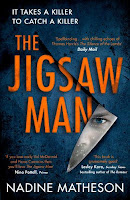
The Jigsaw Man by Nadine Matheson. (HarperCollins) Out Now

There's a serial killer on the loose. When bodies start washing up along the banks of the River Thames, DI Henley fears it is the work of Peter Olivier, the notorious Jigsaw Killer. But it can't be him; Olivier is already behind bars, and Henley was the one who put him there. The race is on before more bodies are found. She'd hoped she'd never have to see his face again, but Henley knows Olivier might be the best chance they have at stopping the copycat killer. But when Olivier learns of the new murders, helping Henley is the last thing on his mind . . . Will it take a killer to catch the killer? Now all bets are off, and the race is on to catch the killer before the body count rises. But who will get there first - Henley, or the Jigsaw Killer?

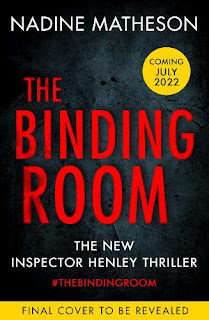
The Binding Room by Nadine Matheson (Published July 2022) HarperCollins.In this room, no one can hear you scream... The Serial Crimes Unit are called in to investigate when a local pastor is found stabbed to death. As DI Henley assesses the crime scene, she discovers a hidden door that conceals a room set up for torture - and bound to the bed in the middle of the room is the body of a man. When another body is found, also tied down, Henley realises there's someone out there torturing innocent people and leaving them for dead. But why? There's nothing that connects the victims. They didn't know each other. Their paths never crossed. But someone has targeted them, and it's up to Henley and the SCU to stop them before they find another binding room...

More information can be found on her website. You can follow her on Twitter @nadinematheson, on Instagram @queennads and on Facebook.


Friday, 30 April 2021

The Riverton Prize Winner


The Riverton Prize for Best Norwegian Crime story was awarded to Sven Petter Næss for his second book “Skjebnesteinen” (Fate of Stone/ Stone of Destiny)was chosen as the best detective novel of the last year and he received the generous Rivertonprisen crime prize in Slottsparken near Litteraturhuset in Oslo on Thursday 29 April 2021. 

The Fate of Stone/ Stone of Destiny’ is the second book in the Harinder Singh-series. 

According to the jury - ‘The Fate Stone/ Stone of Destiny’ is a crime novel of the best brand: well written, well structure, with intricate crimes and correspondingly difficult police work. They go on to say that the prize goes to a book that satisfies all the requirements of a crime novel with realistic and credible description of police work, while it also creates unrest, fear and excitement in the reader. Nothing is accidental or unclear in ‘The Fate Stone/ Stone of Destiny’'

The Riverton Prize (Norwegian: Rivertonprisen) is a literature award given annually to the best Norwegian crime story (novel, short story, play, original screenplay). The prize is named after the Norwegian journalist and author Sven Elvestad (1884-1934) who published detective stories under the pen name Stein Riverton.

Tuesday, 18 February 2020

Call For Abstracts: Through a Glass Darkly: European History and Politics in Contemporary Crime Narratives

Through a Glass Darkly:
European History and Politics in Contemporary Crime Narratives
Monica Dall’Asta, Jacques Migozzi, Federico Pagello, Andrew Pepper eds.
To talk about the crime genre—as opposed to detective or spy or noir fiction—is to recognise the comprehensiveness of a category that speaks to and contains multiple sub-genres and forms (Ascari, 2007). In this volume, we want to uncover the ways in which the crime genre, in all of its multiple guises, forms and media/transmedia developments, has investigated and interrogated the concealed histories and political underpinnings of national and supranational societies and institutions in Europe, particularly after the fall of the Berlin Wall in 1989. 
Two most popular expression of the crime genre, the detective novel and the spy novel, have long been identified as ‘sociological’ in their orientation (Boltanski, 2012). These forms often tackle enigmas or uncover conspiracies that are concealed by and within states, asking searching questions about the failures of democracy and the national and international criminal justice systems to deliver just societies. Similarly, following the example of U.S. hard-boiled fiction, the ‘noir’ variant of the genre has also established itself as a ‘literature of crisis’ (according to Jean-Patrick Manchette’s formula), where the shredding of official truths and of ‘reality’ itself ends up revealing dark political motives that elicit an even starker set of ethical and affective interrogations (Neveu, 2004). While the obvious links between the ‘noir’ and the ‘hard-boiled’ traditions of crime fiction (e.g. between Manchette and Hammett) suggest an American-French or trans-Atlantic connection, we are keen to stress that the sociological and political orientation of the European crime genre—especially since 1989 and the corresponding opening up of national borders and markets—requires examining both global/glocal and multi-national (and state-bound) issues and challenges. It is here that the European dimension of the proposed volume is best articulated because, to do justice to this context, we need to pay attention not just to discreet national traditions, but the ways in which contemporary iterations of the genre interrogate the workings of policing, law, criminality and justice across borders and nations (Pepper and Schmid, 2016).
The transnational framework of the DETECt project (Detecting Transcultural Identities in Popular European Crime Narratives) is necessarily and acutely concerned with civic and ethical issues linked to the construction of new European new identities. The proposed volume aims to explore the ways in which these new identities are formulated and thematised in European crime novels, films or TV series, particularly in relation to the interrogations raised by the uncovering of hidden aspects of both the historical past and the contemporary political landscapes. Contributions are encouraged which look at particular case studies or identify larger national and/or transnational trends or synthesise the relationship between individual texts and these larger trends. It is envisaged that the volume will be organised into the three sections outlined below. Prospective contributors are invited to identify where their articles might sit within this structure as well as to outline the particular focus adopted by their essay in relation to the general topic. The list of topics in each section is to be regarded as indicative rather than exhaustive. 
Crime Narratives and the History of Europe
European crime narratives from the last thirty years have frequently referred to collective traumas and conflicts that have torn European societies apart throughout the 20th century. Contributions are invited that look at the ways in which these fictional works have restaged and critically reinterpreted some of the most tragic pages in European recent history, including (but not limited to) the following iterations of violent rupture and social breakdown:
The Civil War and Francoist dictatorship in Spanish crime narratives (e.g. Montalbán, La isla minima);
Fascism, surveillance and the police-state (e.g. Lucarelli, Gori, De Giovanni) and the role of oppositional memory (e.g. Morchio, Dazieri) in Italian detective fiction;
Fascistic/right-wing nationalist movements in interwar Scandinavia (e.g. Larsson, Mankell);
The Third Reich as the historical biotope of crime fiction (e.g. Kerr, Gilbers);
The constant presence of wars as a breeding ground for crime in French crime novels: World War I and II, collaboration, the Algerian War, colonisation, post-colonisation (e.g. Daeninckx, Férey);
The heavy presence of Cold War images and axiology in spy novels and films, including those appeared after the fall of the Berlin Wall, both in Western and Eastern Europe (e.g. Kondor, Furst);
The ‘Troubles’ in Irish and British crime fiction (e.g. Peace, McNamee).
Crime Narratives and the Present of Europe
Our present time is characterized by a number of social, political, financial/economic crises that threaten the construction of a cosmopolitan pan-European identity in line with the EU’s founding ideals. Crime narratives attempt to offer realistic representations of such contemporary crises by putting in place a number of ‘chronotopes’ that symbolise social divisions and peripheral and marginalized identities. We encourage essays that examine the ways in which post-1989 European crime narratives have represented the emergence of nationalisms, xenophobia, racism and other threats to the social cohesiveness of European democracies. We also invite contributions that use the trope of the crisis to explore how the links between crime, business and politics have polluted or corrupted the democratic imperatives of European social democracies and institutions from the outset. Topics might include:  
The Kosovo War, and more broadly the Balkan conflicts of the 1990s, as the first signs of a generalised geopolitical chaos (e.g. in French noir novels);
The financial crisis of 2008 and its devastating consequences for individuals, communities and whole societies (e.g. Bruen and French in Ireland; Markaris in Greece; Dahl in Sweden; Lemaître in France);
The migrant crisis (within and outside the EU) and the emergence of new anxieties about belonging and/or otherness (e.g. Mankell, Dolan, Rankin);
Climate change, pollution, and environmental destruction (e.g. Tuomainen, Pulixi);
The blurring of crime and capitalism and the depiction of crime as a form of social protest vis-à-vis the effects of global capitalism and neoliberal deregulation and privatisation (e.g. Manotti, Carlotto, Heinichen, the TV series Bron);
Inquiries into the effects of contemporary forms of patriarchy, gendered violence and misogyny and their links to other forms of oppression and domination (e.g. Lemaître, Slimani, Macintosh, Gimenez-Bartlett Larsson, McDermid).
Crime Narratives and the Future of Europe 
European crime narratives explore a broad range of social and cultural identities across different scales: from the more stable identities attached to local contexts through the new mobile, precarious and mutating identities fostered by the dynamics of globalization. This section will look into how these different identities and their complex interplay can suggest ways to frame the future of Europe. Contributions could address how crime narratives try to make sense of the complex, if yet perhaps contradictory, set of representations circulating across different European public spaces and collective imaginaries. On the one hand, we might ask whether something like a European crime genre even actually exists, given that these works typically demonstrate suspicions about ‘outsiders’ and only rarely offer positive representations of post-national transcultural identities. On the other hand, however, the genre does give us glimpses into what might be achieved through cross-border policing initiatives, organised under or by Interpol and Europol, in the face of organised crime gangs involved in transnational smuggling and trafficking networking. Contributions to this final section are encouraged to reflect upon how crime narratives produced by and in between the discreet nation-states frame the hopes and limits of European cohesiveness and the continent’s future or futures. Essays could focus on one or more of the following topics:
The interplay between local, regional, national and transnational identities as represented through specific narrative tropes, such as in particular the local police station, the interrogation room, the frontier or border, and so on;
The connection between social deprivation at the local end of the geopolitical scale and different global systems and networks at the other end;
The role of borders, cities, violence, rebellion, policing and surveillance in producing new identities and subjectivities not wholly anchored in discreet nation-states. Attention could also be given to formal innovations insofar as these allow or enable the expression of new identities;
The hope and consolation offered by the resilient community or village (Broadchurch, Shetland) or the extended family (Markaris’s Kostas Charistos series) in the face of the messy, brutal contingencies of a world ruled by criminal and business elites; 
Social banditry as a form of contestation directed against social inequalities produced by capitalism (Carlotto’s Alligator series; La casa de papel). 
If you are interested in submitting a proposal to be considered for inclusion in this volume, please send an abstract of no more than 300 words and a short biography to info@detect-project.eu by May 31, 2020. We would encourage you to identify the section of the proposed volume where your essay would be best situated. We are looking to commission up to 14 essays in total of 7000 words each including footnotes and bibliographic references.

Sunday, 24 February 2019

Ms Tree - A New Collected Edition For Max Allan Collins' Classic Private Detective

Titan Comics‘ Hard Case Crime imprint continues to release sharp, stylish crime thrillers, and 2019 is no exception. The legendary detective Ms Tree – created by Mystery Writers of America 2017 Grand Master ‘Edgar’ winner Max Allan Collins, and inker of the Eisner Award-winning Batman and Robin Adventures series and the World’s Finest graphic novel Terry Beatty – will soon be available in a collection which reprints her classic adventures.

Inspired by Mike Hammer’s assistant Velda – as written by Max’s friend and mentor Mickey Spillane – Michael Tree (don’t call her Michelle) is a six-foot-tall, gun-toting, take-no-prisoners private eye determined to bring her husband’s killers to justice. Along the way, she deals with organised crime, double-dealing and deadly violence, while wrestling with her own personal demons.

This series has been notable for its focus on real-life issues – homophobia, abortion, mental health – and Hard Case Crime is delighted to introduce her story to new readers.

 “I am thrilled and proud that Titan is bringing out the complete collected Ms. Tree,” said author Max Allan Collins. “Terry Beatty and I created a strong female protagonist and re-established noir-ish crime fiction as a comics genre, pre-dating Frank Miller’s Sin City and everything that followed.  Ms. Tree remains the longest running private eye comic book to date, and jump-started the trend toward female private eyes, appearing before both Sara Paretsky’s V.I. Warshawski and Sue Grafton’s Kinsey Millhone”.

Terry Beatty said, “In the 1950s, the Comics Code Authority, acting under pressure from a panicked (and misinformed) public, put an end to crime comics. In the 1980s, with Ms. Tree, Max Allan Collins and I brought crime comics back. For over a decade, and under several imprints, we continued our crusade to revive the crime and detective genres in the comic book format.   We seem to have started something”.

Max Allan Collins is also the author of the graphic novel, Road to Perdition, which led to the Academy Award-winning film starring Tom Hanks. 

His Quarry series, featuring the eponymous Vietnam-vet-turned-hitman was recently adapted into a Cinemax TV series, and he is the author of new novels in the Mickey Spillane’s Mike Hammer series.

Ms. Tree joins Titan’s Hard Case Crime Comicsimprint, which has seen recent publications including Max's Mike Hammer: The Night I Died and Quarry’s War; Triggerman by visionary director Walter Hill (The Warriors); Peeplandby crime authors Christa Faust and Gary Phillips; a new adaptation of Stieg Larsson’s The Girl With The Dragon Tattoo – Millennium;Normandy Gold by crime authors Megan Abbott and Alison Gaylin; and Babylon Berlin, a graphic novel adaptation of the book that inspired the new TV show currently showing on Netflix.

Friday, 25 January 2019

2019 St Hilda's College Crime Fiction Weekend

We are pleased to announce that the 2019 St Hilda's College Crime Fiction Weekend 16/17/18 August is now open for booking.

Our theme this year is 'Gamechangers: writers who have transformed the genre' and our already splendid line-up of authors and their subjects includes:
Graeme Macrae Burnet (Georges Simenon)
Prof Niamh Nic Daeid (Forensics)
Will Dean (Scandi Noir)
Mary Paulson-Ellis (Kate Atkinson)
Nicci French (Suspense Thrillers)
Mick Herron (Reginald Hill)
Sarah Hilary (Patricia Highsmith)
Val McDermid (New Wave Feminists)
Andrew Taylor (Josephine Tey)

We are delighted to confirm that Natasha Cooper will chair and that our Guest of Honour will be Denise Mina.

More authors and programme details to come!

Booking details can be found here.

As regular supporters of the Conference we warmly invite you to take advantage of the early booking offer, otherwise confined to Alumnae

You will see that, as last year, accommodation is separately, and directly, bookable through the Conference Office. This means that the most efficient booking method will be online. If, however, you require a hard copy booking form please contact Triona Adams at triona.adams@st-hildas.ox.ac.uk

Saturday, 14 October 2017

Barry Award Winners 2017

Deadly Pleasures Mystery Magazine announced the winners of the 2017 Barry Awards last night at the opening session at Bouchercon. Congratulations to all!

Best Novel:
A Great Reckoning, by Louise Penny (Minotaur)

Best First Novel:
The Drifter, by Nicholas Petrie (Putnam)

Best Paperback Original:
Rain Dogs, by Adrian McKinty (Seventh Street)

Best Thriller:
Guilty Minds, by Joseph Finder (Dutton)


Hat Tip Mystery Fanfare

Friday, 13 October 2017

The Macavity Award Winners 2017

The Macavity Awards are nominated by members of Mystery Readers International, subscribers to Mystery Readers Journal and friends of MRI. The winners were announced at the opening ceremonies at Bouchercon in Toronto. Congratulations to all.

Best Novel
A Great Reckoning, by Louise Penny (Minotaur)

Best First Novel
IQ, by Joe Ide (Mulholland Books)

Best Short Story
 “Parallel Play,” by Art Taylor (Chesapeake Crimes: Storm Warning, Wildside Press)

Sue Feder Memorial Award for Best Historical Novel
Heart of Stone, by James W. Ziskin (Seventh Street Books)

Best Nonfiction
Sara Paretsky: A Companion to the Mystery Fiction, Margaret Kinsman (McFarland)

Hat tip to Mystery Fanfare

Thursday, 20 April 2017

Guy Bolton on Hollywood Scandals

My first novel The Pictures centres on a studio fixer hired to cover-up the apparent suicide of one of the producers of The Wizard of Oz. So when people ask me about it usually they want to know if it’s based on a true story.

The answer is complex. Yes, and no, I say.

“Was the producer of The Wizard of Oz found dead at his home?” No. “Is Jonathan Craine a real Detective?” Afraid not.  “Was there a Hollywood star called Gale Goodwin?” Sorry, I made her up.

At this point my disappointed audience might make one last plea: “Were there even any scandals and cover-ups in Hollywood at the time?”

Oh yes, more than one. So many you wouldn’t even believe me if I told you.

Indeed, as I began researching my novel I quickly realised that the truth, as the adage goes, was stranger than fiction. Sure, there were rumours and gossip about movie stars then as there is now: Clark Gable had an illegitimate lovechild; Errol Flynn was accused of statutory rape; Spencer Tracy was an alcoholic; Judy Garland was addicted to prescription drugs. But the starting point for my plot was actually MGM megastar Jean Harlow and her producer husband Paul Bern, both of whom died under mysterious circumstances in the early thirties. 

On paper, theirs was an unlikely partnership. Harlow was a wild-child who happened to be one of the most successful movie stars of her generation. Bern was introverted writer-producer twenty years her senior. So when the newly married Paul Bern was discovered naked in his bedroom, shot in the head by a .38 calibre pistol besides a questionable suicide note, naturally the movie studio was desperate to protect their star.

Studio police were on the scene before even the LAPD. MGM’s Head of Publicity (the inspiration for my Russell Peterson) released press stories that painted Jean Harlow as a victim of a troubled marriage. Of course, the District Attorney chosen to handle the inquest happened to have close ties to MGM Chief Louis B. Mayer – he was an important donator to the DA’s re-election campaign. Not only did the District Attorney rule that Paul Bern’s death was suicide, he even went so far as stating that Paul Bern suffered from impotence, giving motive to him killing himself and helping to whitewash anything that might threaten Harlow’s image.

A few years later Jean Harlow herself was dead; gossip columnists speculated that Harlow had died of alcoholism, maybe even a botched abortion or venereal disease. In the end, the official line was that she died from kidney failure. She was 26 years old.

Rumours around Harlow and Bern’s premature deaths persist to this day. Delving deeper, I discovered that our studio-friendly District Attorney was later indicted for bribery and perjury and in a twist of fate took his own life with a pistol to the head. But what the case really highlighted to me was the obscene influence the studios at the time had on the press and judicial system. It was the first of many examples.

One of the saddest scandals I came across was the rape of a 20- year-old dancer by an MGM sales executive in 1937, a tragic tale detailed in Vanity Fair by David Stenn and later turned into a documentary Girl 27. Dancer and bit-part actress Patricia Douglas filed a landmark lawsuit against MGM when she claimed she was raped at an MGM sales convention. The tabloids soon discovered that the “sales convention” was actually a lavish Wild West themed party MGM put on for its national sales teams. After all, MGM was celebrating their success and survival in the depression, coming out as the only major studio to make profits year-on-year.

For the studio, an accusation of rape against its staff was bad enough. But as the story began to make headlines nationwide, the real fear lay in the public’s perception of MGM as a the home of wholesome family entertainment in the face of reports that it was throwing depraved parties filled with free liquor and underage girls.

The studio used its press influence to launch a smear campaign against Patricia Douglas, going as far as hiring private investigators to follow her and dig up dirt. Inevitably, the DA (still the same friend from the Paul Bern inquest), sympathetic to MGM’s situation, used his position to block action against the rapist. Douglas’ case fell apart.

In The Pictures, I have my own studio party and my own sad turn of events. But nothing would ever match up to what happened to Patricia Douglas. She soon fled  Hollywood and spent most of her life alone. In interviews shortly before she died she admitted she never truly recovered from the ordeal.

Drugs. Unruly stars. Debauched parties. The influence of studios on press and the justice system. The consistent and unashamed exploitation of women. I could go on. The Golden Age of Hollywood was founded on a bedrock of sin and corruption.

But perhaps what’s most interesting is that these key plot-points and themes are as relevant now as they have always been. In many ways, the scandals of 1930s Hollywood were no different to anything you might read in the paper today.

THE PICTURES by Guy Bolton is published by PointBlank, hardback £14.99
The Pictures a noir thriller, is set in Hollywood in 1939.  World-weary Jonathan Craine is a detective at the LAPD who has spent his entire career as a studio ‘fixer', covering up crimes of the studio players to protect the billion-dollar industry that built Los Angeles. When one of the producers of The Wizard of Oz is found dead under suspicious circumstances, Craine must make sure the incident passes without scandal and that the deceased's widow, the beautiful starlet Gale Goodwin, comes through the ordeal with her reputation unscathed.  But against his better instincts, Craine finds himself increasingly drawn to Gale. And when a series of unsavoury truths begin to surface, Craine finds himself at the centre of a conspiracy involving a Chicago crime syndicate, a prostitution racket and a set of stolen pictures that could hold the key to unravelling the mystery.

You can find him on Facebook and follow him on Twitter @gpbolton