Showing posts with label mystery. Show all posts

Friday, 25 September 2026

How the real smugglers of the Ray inspired my novel ‘The Riptide’

The Ray is real.

It is a small, low-lying islet in the Blackwater Estuary, just off Mersea Island in Essex, surrounded by salt marsh, mudflats and tidal channels. Today it is a quiet, remote place, but Ray and the surrounding country have a remarkably dark past.

This was smuggling country.

The geography explains much of it. The Essex coast is a maze of creeks, marshes, islands and channels, and the landscape changes dramatically with the tide. The Ray itself can feel almost detached from the mainland. To someone who knew the waterways, it offered innumerable opportunities to land a cargo, conceal it and move it inland. To a Revenue officer arriving from elsewhere, it must have been bewildering.

From the sixteenth century through into the nineteenth, Mersea and the surrounding villages became associated with the smuggling of tea, tobacco, spirits and other heavily taxed goods. The trade was sufficiently profitable to become part of the local economy. Fishermen, farmers, publicans and others could all benefit from contraband arriving through the creeks.

And there were some ingenious places to hide it.

One of my favourite stories concerns the Peldon Rose, the ancient inn just across the Strood from Mersea Island. The pond beside the inn was supposedly used as a hiding place for smuggled goods. According to the local tradition, barrels of spirits could be weighted down and lowered into the pond on ropes while the excise men searched the premises. There was said to be a concealed shaft or false bottom beneath the water, allowing the barrels to be hidden from anyone examining the pond. 

I first visited the Peldon Rose during lockdown – which made things tricky because it was all shut up and abandoned, a ghost of an inn. But, perhaps, that fitted with the themes of my novel, which is about how the hungry ghosts of the past can devour the present. Set in France during the French Revolution and Britain 20 years later, the currents of time are forever dragging people under.

The Peldon Rose wasn't an isolated case. Local accounts describe inns and houses throughout the area being used to store illicit goods. The people involved weren't necessarily hardened criminals. Smuggling could involve an entire network of otherwise respectable local people: someone who knew when a boat was coming in, someone who provided a cart, someone who hid a barrel in a cellar, someone who sold the goods on.

But the trade could also be brutally violent.

There is a notorious local story about a group of excise men who came to the Mersea area in search of smugglers. The smugglers, according to the story, deliberately allowed word to spread that a large landing of contraband was about to take place. The Revenue men took the bait. They gathered together and went out in a longboat, expecting to catch the smugglers in the act.

Instead, they were ambushed.

The traditional account says that the smugglers attacked the boat and murdered the excise men, cutting their throats and leaving their bodies. One version says that as many as twenty-four men were killed. The bodies were subsequently said to have been buried beneath an upturned boat in the churchyard at Virley.

Whether every detail has been embroidered by generations of retelling is less interesting than the fact that the story survived at all. It tells you something about the reputation the smugglers acquired – and about how dangerous the battle between the Revenue men and the smugglers could become.

The more I discovered, the more I realised that the landscape around the Ray was almost a ready-made thriller.

And I wasn't the first writer to notice.

Sabine Baring-Gould was rector of East Mersea from 1871 to 1881. He is probably best known today as the author of Onward, Christian Soldiers, but he was an extraordinary polymath: clergyman, folklorist, antiquarian and novelist. During his decade on Mersea he became fascinated by the stories and traditions of the place. His great fictional response was ‘Mehalah: A Story of the Salt Marshes’, published in 1880.

Like my novel, his is a dark, Gothic tale of violence, passion, revenge and smuggling, set around the real landscape of Mersea and the Ray during the period of the Napoleonic Wars. Baring-Gould knew the country intimately and used real places and local traditions in the book.

And then there was Margery Allingham.

Long before she became famous for Albert Campion, Allingham was fascinated by Mersea. Her first novel, ‘Blackkerchief Dick’, was published in 1923, when she was only nineteen, and is a historical adventure involving the smugglers of Mersea Island.

I loved discovering this literary succession. The smugglers create the stories; local people preserve them; Baring-Gould, the rector, turns them into Gothic fiction; Allingham turns them into an early crime novel; and eventually I came along and found that the landscape still contained the ingredients I needed.

I wasn't looking for a fictional landscape and then trying to make it seem real. I had the opposite problem. Reality had already done most of the work.

The Riptide by Gareth Rubin is published by Simon & Schuster (Out Now)

A dazzling, puzzle-box mystery of secrets, power and hidden truths. 1804, Isle of Ray, Essex. Lysander Rose has spent his life searching for the truth about his mother, abducted when he was just a baby. When the men who took her return for him, Lysander is forced to flee – leaving behind everything he knows. But in his escape, he uncovers a clue that draws him into the orbit of a secretive organisation known only as the Circle. As Lysander follows the trail from the Essex coast to the shadowed streets of Edinburgh, he finds himself entangled in a world of murder, blackmail and political intrigue. At its centre: an exiled king, and a conspiracy that could shape the fate of nations. And stranger still, the secrets of Lysander’s own past seem to be hidden in the pages of a lurid penny-blood chapbook – a story that may hold the key to who he really is. But as the truth of his origins begins to emerge, Lysander must decide whether he can escape the fate others have written for him.

More information about the author can be found on his website. He can also be found on Facebook and on X@GarethRubin


Monday, 26 January 2026

Agatha Award Nominees announced


The Agatha Award nominees: Malice Domestic. Awards will be announced at Malice Domestic 38, April 24-26, 2026 in Bethesda, MD. 


Congratulations to all the nominated authors.

Sunday, 28 April 2024

Malice Domestic Agatha Award Winners 2024

 Best Contemporary Novel

The Weekend Rereat by Tara Laskowski

Best Historical Novel

The Mistress of Bhatia House by Sujata Massey

Best First Novel

Crime and Parchment by Daphne Silver

Best Short Story

"Ticket to Ride' by Dru Ann Love and Kristopher Zgorski, Happiness is a Warm Gun

Best Non-Fiction

Finders: Justice, Faith and Idenity in Irish Crime Fiction by Anjili Babbar

Best Children's/YA Mystery

The Sasquatch Hawthourne Elementary by K B Jackson

Congratulations to all the winners.


Sunday, 14 April 2024

2024 Lefty Award Winners


Left Coast Crime 2024 presented the four Lefty Awards at the 34th annual convention in Bellevue, Washington: Humorous, Historical, Debut, and Best. The awards were voted on at the convention and presented at the banquet on Saturday, 13th April at the Hyatt Regency in Bellevue. 

The Lefty nominees have been selected by convention registrants, and LCC is delighted to announce the 2024 Lefty Award winners for books published in 2023:

Lefty for Best Humorous Mystery Novel: 

Cheap Trills by Wendall Thomas (‎Beyond the Page Books)

Lefty for Best Historical Mystery Novel for books set before 1970 (Bill Gottfried Memorial):

Evergreen by Naomi Hirahara (Soho Crime)

Lefty for Best Debut Mystery Novel:

Mother-Daughter Murder Night by Nina Simon (William Morrow)

Lefty for Best Mystery Novel:  

Hide by Tracy Clark (Thomas & Mercer)

The Left Coast Crime Convention is an annual event sponsored by mystery fans, both readers and authors. Held in the western half of North America, LCC’s intent is to host an event where readers, authors, critics, librarians, publishers, and other fans can gather in convivial surroundings to pursue their mutual interests. Lefty Awards have been given since 1996. 


Friday, 23 February 2024

LA TIMES BOOK PRIZE: MYSTERY/THRILLER FINALISTS

 The LA Times Festival of Books have announced the Mystery and Thriller finalists


Dark Ride by Lou Berney

All The Sinners Bleed by S A Cosby

Everybody Knows by Jordan Harper

Time's Undoing by Cheryl A. Head

Sing Her Down by Ivy Pochoda

 Congratulations to all the nominated authors! Winner will be announced at the LA Times Festival of Books on Friday 19th April 2024 at 7:00pm.

Saturday, 11 November 2023

The Unexpected Star of the Show by Sharon Bolton

In July 2015, a car veered off the road near Stirling in Scotland. The driver was killed on impact; his passenger, a young woman, was trapped in the car, badly injured, for three days. She died in hospital shortly after police, finally, found the vehicle. It’s a dreadful story, one that remained with me for a long time. We expect, on our relatively small island, that when we need them, emergency services will be there. On this occasion, something went badly wrong.

Books often begin with a simple, if disturbing, idea and trying to imagine what the poor woman went through as she waited for help to arrive was the start of The Fake Wife. In my story, Olive Anderson, dining alone in a north-eastern hotel shortly before Christmas, is surprised by the arrival of a glamorous stranger who joins her, pretending to be her wife. What starts as an alluring game quickly turns dangerous and Olive is forced to leave the hotel with the stranger, driving into a heavy snowstorm. A split-second’s loss of concentration and the car leaves the road; both women are hurt and snow quickly covers their tracks. 

I like to think of The Fake Wife as my Russian Dolls book: each mystery unfolds to reveal another, deeper puzzle and only as we learn more about the characters at its heart – Olive, her MP husband Michael, the Stranger, Michael’s first wife Eloise, and the elusive and mysterious Maddy, do we start to glimpse the deadly game these people are playing. 

Well, that’s how the book should have panned out. Pretty soon, though, something else kicked in…

The Fake Wife was conceived as a thriller packed full of puzzles, psychological, but with plenty of pacy action along the way. What it wasn’t supposed to be was a police procedural. And yet, as all writers will know, sometimes characters grab a hold of a story and make it their own. As The Fake Wife took shape, gaining flesh on its bones, it became apparent that a character I hadn’t intended to play any sort of leading role was finding himself, increasingly, in the limelight. 

Garry Mizon, a nondescript traffic cop in his mid-thirties, who hates his job and is bored with his life, was supposed to be nothing more than a factotum: a means of getting my narrative from a to b. Garry was there to fill in the gaps, to let my real main characters – Olive, Michael, Eloise and Maddy – shine through. 

And yet, almost from the first chapter, Garry took charge. His personality – awkward, painfully shy but, ultimately, true as steel – shone through. In his clumsy, unassuming, anxious way, he began to dominate the page. He became the character I felt most invested in, the one I loved above all others. Full disclosure now: the team at Orion weren’t sure at first; wasn’t he a bit too – incompetent? Too much of a bozo? I toned him down a bit but clung on to what made this man essentially Garry and as the first proofs went out, I was vindicated. The most frequent feedback comment we got back was, “I love Garry!” Far from merely serving the narrative’s purpose, Garry became the book’s star. (As I write this, proofs are going out to key influencers along with a Garry Mizon winter survival pack and his ‘driving in winter conditions’ Spotify playlist.) 

Frankly, I should have known this would happen. After all, The Fake Wife is not my first rodeo. I should have remembered that when you pack a book with twisty, unsavoury characters, the readers need someone firmly in their corner. Garry is the story’s Everyman, the character with no interesting secrets, shady past or burning ambition. He isn’t particularly good at anything, especially not being a police officer. He has no superpower, no great skill (actually, he has a couple, but being Garry, he discounts both.) In Garry, I guess, we see ourselves, the ordinary man or woman caught up in something extraordinary. Garry’s doubts are our doubts, his insecurities and lack of confidence reflect our own. 

I lost track of this as I set out on the story that became The Fake Wife, concentrating far too much on the ‘glamourous’, much less likeable characters. Had I succeeded, the story would probably have failed. But the muse took charge and the book sorted itself out. 

How does this happen? The truth is, I don’t know. I’m just glad it does. 


The Fake Wife by Sharon Bolton is published by Orion on 9th November 2023. 

You're not who you say you are. But neither is she. Olive Anderson has accepted that tonight she'll be dining alone, without her husband. So when a beautiful stranger appears at Olive's dinner table, telling the waiter she's her wife, Olive is immediately unsettled.  But the stranger wants to talk, and isn't this what Olive wants on this lonely winter night? To vent to a perfect stranger? She's too ashamed to tell her real friends the truth - six months into the marriage they all warned her against, her life is a living nightmare. Perhaps Olive should have asked the fake wife who she's really married to. Perhaps she should have known this chance encounter had something to do with her secretive husband. Because there is a string of missing women connected to Mr Anderson, and by the morning, Olive will be the latest...

More information about the author and her books can be found on her website. You can also find her on X @AuthorSJBolton and on Facebook.


. 

Sunday, 21 May 2023

Murdle: 100 Solve 100 Devilishly Devious Murder Mystery Logic Puzzles


Every Murdle includes a list of suspects, murder locations and murder weapons. There is also a list of clues. All suspects were only in one location with one murder weapon, but only one of them committed the murder.

Use the clues to fill in the deduction grid. When, for example, you work out what weapon a suspect had, put atick in the box. At the same time, put a cross against the other weapons for that suspect because you now know they did not have those. When you have enough information in the grid - who had what, and where - use the clue in red to work out whodunit. 

Good luck, gumshoe!

Murdle: 100 Solve 100 Devilishly Devious Murder Mystery Logic Puzzles by G.T. Karber (Souvenir Press) Out 6 July 2023, creator of Murdle.com.

From G. T. Karber, the creator of the popular online daily mystery game at www.Murdle.com, comes this fiendishly compulsive and absolutely killer collection of 100 original murder mystery logic puzzles. Join Deductive Logico and pit your wits against a slew of dastardly villains in order to discover: - Who committed the ghastly deed? - What weapon was used to dispatch the victim? - Where did the dreadful demise occur? These humorous mini-mystery puzzles challenge you to find whodunit, how, where, and why. Examine the clues, interview the witnesses, and use the power of deduction to complete the grid and catch the culprit. Packed with illustrations, codes, and maps, this is the must-have detective casebook for the secret sleuth in everyone. Are you the next Miss Marple or Hercule Poirot? You'll soon find out, if you dare to Murdle! Perfect for fans of Sudoku, Wordle, and other logic games, Karber’s Murdle is a brand new utterly addictive new puzzle for armchair detectives.


Sunday, 19 March 2023

Left Coast Crime 2023 Left Award Winners


The Lefty Awards were announced on Saturday night at the Left Coast Crime Convention in Tucson, Arizona. 

Lefty Nominees for Best Humorous Mystery Novel

    Bayou Book Thief  by Ellen Byron (Berkley Prime Crime)

Lefty Nominees for Best Historical Mystery Novel (The Bill Gottfried Memorial) for books set before 1970

    Anywhere You Run by Wanda M. Morris (William Morrow)

Lefty Nominees for Best Debut Mystery Novel

    Shutter by Ramona Emerson (Soho Crime)

Lefty Nominees for Best Mystery Novel (not in other categories)

    Like a Sister by Kellye Garrett (Mulholland Books)

Congratulations to all the winners and the nominated authors.

Sunday, 26 February 2023

Call for Papers:- The Mysterious Mrs Christie: Evidence, Elusion, Afterlives


The Mysterious Mrs Christie: 

Evidence, Elusion, Afterlives 

A 1.5-day international conference at the University of Exeter and Exeter Library 12-13 September 2023 

Keynote Speakers: Dr Mark Aldridge, Solent University and Prof. Michelle M. Kazmer, Florida State University 

2023 marks fifty years since the last novel Agatha Christie wrote, Postern of Fate, was published. By 1973, Christie was already established as the world’s bestselling novelist, and her popularity has only risen in subsequent years. In addition, a flame of scholarly interest has ignited and grown. The quintessential mystery writer, creator of Hercule Poirot and Miss Marple, is now also a legitimate figure in academic research. 

It is tempting to think that the there are no Agatha Christie mysteries left. Few writers have received such levels of popular scrutiny and her life and work have been approached from a range of angles. Millions of words have been written about this significant body of work. Recent or anticipated works such as Lucy Worsley’s Agatha Christie, Nina de Gramot’s The Christie Affair, and Mark Aldridge’s Agatha Christie’s Marple attest to the mainstream dissemination of detailed archival research and unconventional approaches. However, mysteries remain. As Worsley notes in her recent biography of Christie, she is ‘a very elusive woman’. 

For the seventh international Agatha Christie conference, we are seeking research and/or creative papers that consider underexplored aspects of Christie’s work, life, and legacies. These could be neglected topics/areas or reflections on critical conversations which could use a new perspective. 

Potential topics may include but are certainly not limited to: 

  • Across and beyond genre 

  • Afterlives and adaptations 

  • Character studies 

  • Christie and creative writing 

  • Christie in an international context 

  • Colonialism and racism 

  • Continuations and tributes 

  • Creative legacies 

  • Ecology and the environment 

  • Ethical considerations 

  • Gender, sex, and sexuality 

  • Gothic and the supernatural 

  • Life writing and autobiography 

  • Mary Westmacott 

  • New theoretical frameworks 

  • Place, space, and time 

  • Plays and dramatisations 

  • Religion and theology 

  • Radio and the BBC 

  • Short stories 

  • Teaching and pedagogy 

    Please submit a short (up to 200 words) abstract for a 20-minute presentation and a brief biographical note to agathachristieconference@gmail.com no later than 1 May 2023. You may direct queries to the same address. 

    Please note that speakers will be expected to register for the conference at the 1.5-day rate of £115. 

    Conference organisers: Dr Mia Dormer, Dr J.C. Bernthal, Sarah Martin, and Dr Stefano Serafini. 


Sunday, 24 April 2022

Los Angeles Times Book Prize Mystery and Thriller Category


The winners of the 2022 Los Angeles Times Book Prizes were announced at the start of the Los Angeles Times Festival of Books.


The winner in the Mystery/Thriller Category

The Turnout by Megan Abbott (G.P. Putnam's Sons)

Nominees:

The Dark Hours, by Michael Connelly (Little, Brown)

Razorblade Tears, by S.A. Cosby (Flatiron)

The Collective, by Alison Gaylin (Morrow)

Velvet Was the Night, by Silvia Moreno-Garcia (Del Rey)


Saturday, 23 April 2022

Saturday, 9 April 2022

2022 Left Coast Crime “Lefty” Award Winners Announced


Left Coast Crime have presented the Lefty Awards at the 32nd annual convention. 

The awards were voted on at the convention and presented at the banquet. LCC is delighted to announce the 2022 Lefty winners for books published in 2021:

Lefty for Best Humorous Mystery Novel.

Mango, Mambo, and Murder by Raquel V. Reyes (Crooked Lane Books)

Bill Gottfried Memorial Lefty for Best Historical Mystery Novel for books set before 1970.

Clark and Division by Naomi Hirahara, (Soho Crime)

Lefty for Best Debut Mystery Novel.

All Her Little Secrets by Wanda M. Morris (William Morrow)

Lefty for Best Mystery Novel (not in other categories).

Lightning Strike by William Kent Krueger (Atria Books)

Congratulations to all the winners and the nominated authors.


-------------------------
The Left Coast Crime Convention is an annual event sponsored by mystery fans, both readers and authors. Usually held in the western half of North America, LCC’s intent is to host an event where readers, authors, critics, librarians, publishers, and other fans can gather in convivial surroundings to pursue their mutual interests. Lefty Awards have been given since 1996.

Left Coast Crime is a 501(c)(3) nonprofit corporation holding annual mystery conventions in the West. Each LCC convention raises money to support a local literary organization and is staffed entirely by volunteers.


Monday, 17 January 2022

2022 Left Coast Crime “Lefty” Award Nominations Announced

Left Coast Crime 2022 will be presenting four Lefty Awards at our 32nd annual convention, to be held in Albuquerque in April: humorous, historical, debut, and best. The awards will be voted on at the convention and presented at a banquet on Saturday 9 April at the Hyatt Regency in downtown Albuquerque. The award nominees have been selected the convention registrants. LCC is delighted to announce the 2022 Lefty nominees for books published in 2021:

Lefty for Best Humorous Mystery Novel. 

The nominees are:

Cajun Kiss of Death by Ellen Byron (Crooked Lane Books)

Mimi Lee Cracks the Code by Jennifer Chow(Berkley Prime Crime)

Finlay Donovan Is Killing It by Elle Cosimano (Minotaur Books)

How To Book a Murder by Cynthia Kuhn (Crooked Lane Books)

Mango, Mambo, and Murder by Raquel V. Reyes (Crooked Lane Books)

Fogged Off by Wendall Thomas (Beyond the Page Books)


Lefty for Best Historical Mystery Novel for books set before 1970.

The nominees are:

The Cry of the Hangman by Susanna Calkins (Severn House)

The Savage Kind by John Copenhaver (Pegasus Crime)

Clark and Division by Naomi Hirahara (Soho Crime)

The Bombay Prince by Sujata Massey (Soho Crime)

The Mirror Dance by Catriona McPherson (Hodder & Stoughton)

Death at Greenway by Lori Rader-Day (William Morrow)

Lefty for Best Debut Mystery Novel. 

The nominees are:

Who Is Maud Dixon by Alexandra Andrews (Little, Brown and Company)

Blackout by Marco Carocari (Level Best Books)

The Other Black Girl by Zakiya Dalila Harris (Atria Books)

Arsenic and Adobo by Mia P. Manansala (Berkley Prime Crime)

All Her Little Secrets by Wanda M. Morris (William Morrow)


Lefty for Best Mystery Novel (not in other categories). 

The nominees are:

Runner by Tracy Clark (Kensington Books)

Razorblade Tears by S.A. Cosby (Flatiron Press)

Last Redemption by Matt Coyle (Oceanview Publishing)

Lightning Strike by William Kent Krueger (Atria Books)

Bath Haus by P.J. Vernon (Doubleday)

The Left Coast Crime Convention is an annual event sponsored by mystery fans, both readers and authors. Usually held in the western half of North America, LCC’s intent is to host an event where readers, authors, critics, librarians, publishers, and other fans can gather in convivial surroundings to pursue their mutual interests. Lefty Awards have been given since 1996.


Monday, 12 April 2021

Conan Doyle and Storytelling - Call For Papers


Edinburgh Conan Doyle Network Conference 

‘Conan Doyle and Storytelling’ 

10–11 December 2021 

Birkbeck, University of London


Keynote speakers: 

Professor Christine Ferguson, University of Stirling 

Professor Robert Hampson, Royal Holloway, University of London 

“‘Pray compose yourself, sir,’ said Holmes, ‘and let me have a clear account of who you are, and what it is that has befallen you.’” (‘The Beryl Coronet’) 

Arthur Conan Doyle was one of the greatest of all storytellers. He is best known and most enjoyed not for the subtlety of his characterisation or the profundity of his ideas, but as a master of narrative, in many different forms. It is because of his powers as a storyteller that his work not only endures in book form, but continues to captivate television and cinema audiences internationally. The conditions of his own time were propitious for an author with his gift for narrative. He was writing in a period described as ‘the Age of Storytellers’, which was also an age of literature in transition, and of emergent Modernism. We would welcome proposals for 20-minute papers, which consider Conan Doyle’s writing in all these wider contexts, and which might explore:

  • Conan Doyle and genre: romance literature, detective fiction, historical fiction, the Gothic, sport, travel, and life-writing etc 

  • Narrative and the market: Conan Doyle and publishing history and practice 

  • Late-Victorian and early 20th-century shorter fiction 

  • Neo-Victorian adaptation: Conan Doyle’s stories in the 20th and 21st centuries 

  • Conan Doyle and narratology 

  • Character and action 

  • Narrating the Empire: Conan Doyle and colonialism 

  • Storytelling and Modernism 

  • Conan Doyle’s narrators 

  • Stories of Spiritualism and the supernatural 

    Please send abstracts of 200–300 words together with a brief biography to:- james.machin@birkbeck.ac.uk

    Deadline for proposals: - 31 July 2021 

    ‘Conan Doyle and Storytelling’ is hosted in partnership with the Birkbeck Centre for Nineteenth Century Studies, and will be the third event associated with a new scholarly enterprise,The Edinburgh Edition of the Works of Arthur Conan Doyle, sponsored by the Royal Society of Edinburgh and the Conan Doyle Estate. 

    Further information can be found here.


Friday, 19 March 2021

Having Your Crime and Solving it Too: Writing a Thriller and a Mystery in One.


People tend to use the labels “mystery” and “thriller” interchangeably, but they’re actually mirror images of each other. A mystery starts with violence, and the story is about figuring out who committed it. A thriller is the story that leads to that violence, building slowly to a bloody climax. In fact, many books that get lumped into the mystery/thriller genre are really just one or the other. Karin Slaughter’s The Good Daughter is billed as a thriller, but in its bones it’s a mystery. Lou Berney’s November Road won the Anthony Award, but it’s not a mystery. It’s a thriller.

There is a way to combine the genres, though, and books that are truly both mystery and thriller – like Tana French’s The Secret Place and Kate Morton’s The Lake House – are among my favorites. These authors use a dual narrative structure, with alternating chapters set before the murder (the thriller part) and after (the mystery part). I used this in my latest book, The Distant Dead, and while I’m not about to compare myself to either of those literary giants, I found it very rewarding. Here are some of my favorite things about it:

(1) I can show the murder on the page, like a thriller does. In a mystery, the sleuth finds out who killed the victim and why, but the very nature of a mystery requires the murder itself to happen off the page. Killer and motive are revealed through characters’ recollections and the parsing of clues. But in a dual narrative, I can interrupt the sleuthing with chapters set in the past, which let me show the slowly building events and complicated relationships that will make a seemingly ordinary person commit murder. I can also show the crime itself, in all its gory glory, something traditional mysteries typically don’t do.

(2) I can show the aftermath of the murder, like a mystery does. A thriller often leaves its surviving characters reeling from the climactic violence, without saying much about how they’re going to pick up the pieces. But to me, one of the most satisfying elements of a mystery is seeing how a crime sends shock waves through the community of people connected to the victim. The dual narrative structure lets me delve deeply into that in the crime-solving chapters.

(3) I can double down on my themes. In The Distant Dead I played with themes of guilt and atonement, so I had one character in each of my interwoven stories commit a similar sin, but choose dramatically different (and in one case fatal) ways to make amends. This made my theme stronger because I could show that atonement is deeply personal, and isn’t always a right-versus-wrong proposition.

(4) I have more options for planting clues and red herrings. There’s a terrific tension in a dual narrative: the purpose of the “thriller” chapters is to gradually reveal what happened, while the “mystery” chapters try to hide the solution for as long as possible. I can play with this by having a chapter set in the past, then follow it with one where a witness lies about it, so the reader knows something the sleuth does not. Or I can drop a red herring in the sleuthing story and then, when I’m ready to show my hand, reveal the truth in a scene from before the crime. The whole thing becomes a delightful jigsaw puzzle for me and, hopefully, the reader.

(5) I have twice as many opportunities to build suspense. There are two kinds of suspense: the kind where you don’t know what’s going to happen, and another kind, rooted in dread, where you know exactly what’s going to happen. Writing a story where I reveal who the victim is right away, then show the events leading up to the murder while also putting potential future victims at risk in the aftermath, lets me lean heavily on both kinds of suspense.

Dual narratives are challenging to write, I have to admit. There were lots of index cards and late-night angst involved in crafting mine, and many times when I thought I should just toss the whole thing and write a traditional mystery or thriller. But in the end I found it a creatively stimulating way to write, one that gives me a chance to lean into different aspects of storytelling than if I were writing a classic mystery or thriller alone.

The Distant Dead by Heather Young (Oldcastle Books) Out Now

A body burns in the high desert hills. A boy walks into a fire station, pale with the shock of a grisly discovery. A middle school teacher worries when her colleague is late for work. When the body is identified as local math teacher Adam Merkel, a small Nevada town is rocked to its core by a brutal and calculated murder.  In the seven months he worked at Lovelock’s middle school, the quiet and seemingly unremarkable Adam Merkel had formed a bond with just one of his students: Sal Prentiss, a lonely sixth grader who lives with his uncles on a desolate ranch in the hills. It is Sal who finds Adam’s body, charred almost beyond recognition, half a mile from his uncles’ compound.  Nora Wheaton, the school’s social studies teacher, sensed a kindred spirit in Adam – another soul bound to Lovelock by guilt and duty. After his death, she delves into his past for clues to who killed him. Yet, the truth about Adam’s murder may lie closer to home. For Sal’s grief seems shaded with fear, and Nora suspects he knows more than he’s telling about his favourite teacher’s death.


Thursday, 16 July 2020

The Macavity Award Nominees 2020 


The Macavity Award Nominees 2020 
(for works published in 2019)
The Macavity Awards are nominated by members of Mystery Readers International, subscribers to Mystery Readers Journal, and friends of MRI. The winners will be announced at opening ceremonies at the Virtual Sacramento Bouchercon. Congratulations to all.

If you're a member of MRI, a subscriber to MRJ, or a friend of MRI, you will receive a ballot by August 1.

Best Mystery Novel 
Your House Will Pay by Steph Cha (Ecco)
This Tender Land by William Kent Krueger (Atria)
Lady in the Lake by Laura Lippman (Wm. Morrow)
The Chain by Adrian McKinty (Mulholland)
The Murder List by Hank Philippi Ryan (Forge)
Sarah Jane by James Sallis (Soho Crime)

Best First Mystery 
The Ninja Daughter by Tori Eldridge (Agora Books)
My Lovely Wife by Samantha Downing (Penguin)
Miracle Creek by Angie Kim (Sarah Crichton Books)
One Night Gone by Tara Laskowski (Graydon House)
Call Me Evie by J.P. Pomare (G.P. Putnam's Sons)
American Spy by Lauren Wilkinson (Random House)

Best Mystery Short Story 
“West Texas Barbecue” by Michael Chandos (The Eyes of Texas, edited by Michael Bracken—Down & Out Books)
“Alex's Choice” by Barb Goffman (Crime Travel, edited by Barb Goffman—Wildside Press)
“The Cardboard Box” by Terence Faherty (Ellery Queen’s Mystery Magazine, Jan/Feb 2019)
"Whiteout” by G.M. Malliet (EQMM, Jan/Feb 2019)
“Brother’s Keeper” by Dave Zeltserman (EQMM, May/June 2019)
“Better Days,” by Art Taylor (EQMM, May/June 2019)

Best Mystery Nonfiction/Critical 
Hitchcock and the Censors by John Billheimer (University Press of Kentucky)
Frederic Dannay, Ellery Queen’s Mystery Magazine and the Art of the Detective Short Story by Laird R. Blackwell (McFarland)
Beyond the Thirty-Nine Steps: A Life of John Buchan by Ursula Buchan (Bloomsbury)
Norco '80: The True Story of the Most Spectacular Bank Robbery in American History by Peter Houlahan (Counterpoint)
The Mutual Admiration Society: How Dorothy L. Sayers and Her Oxford Circle Remade the World for Women, by Mo Moulton (Basic Books)
Indecent Advances: A Hidden History of True Crime and Prejudice Before Stonewall by James Polchin (Counterpoint Press)

Sue Feder Memorial Award for Best Historical Mystery 
Murder Knocks Twice by Susanna Calkins (Minotaur)
The Pearl Dagger by L.A. Chandlar (Kensington)
A Lady’s Guide to Gossip and Murder by Dianne Freeman (Kensington)
Satapur Moonstone by Sujata Massey (Soho Crime)
Charity’s Burden by Edith Maxwell (Midnight Ink)
The Secrets We Kept by Lara Prescott (Vintage)

Monday, 13 July 2020

Welcome to G's Bar

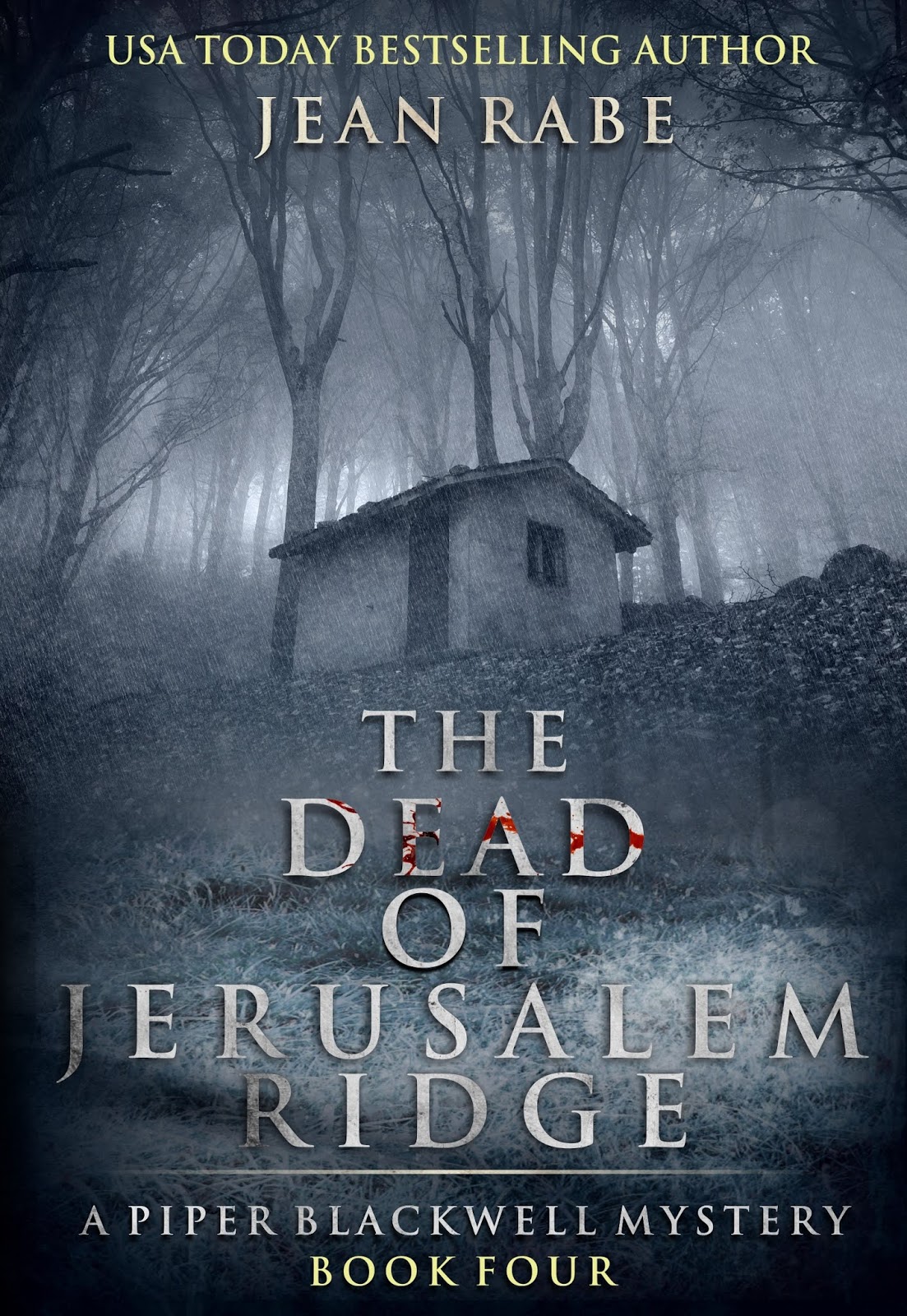
From The Dead of Jerusalem Ridge:
G’s was an old building that a few decades past had been a flower shop—when Fulda had a business district. Rundown on the outside, because maybe Gretta hadn’t gotten to exterior remodeling yet, it was shiny and new on the inside with a hint of rustic style. The bar was dark polished wood with brass trim, and the stools looked to be leather-covered. There was a jukebox, the old-fashioned kind with real 45s in it, but it wasn’t playing anything; maybe it was just for show. Two pool tables in the front had Coca Cola lights hanging over them, and several round dining tables spread out over a pitted, impressive hardwood floor were filled with customers—who had paused their conversations to regard Millie.
Millie was twenty-four and in her full deputy regalia, including her hat. The rest of the occupants—all men, save a bartender—were in jeans and t-shirts and in their forties to seventies, looking rough around all the edges and relaxed.

I read a random article on the MSN page one morning: “Obscure Laws in Every State.” I figured there might be something interesting I could use in a book. I tabbed over to Indiana and discovered that it is illegal for a bartender to give a buddy a free drink if he is charging everyone else. Handing over a complimentary beer could land you in jail with a hefty fine … if you’re reported, if a cop bothers to show up, and if the DA is willing to prosecute.
I wanted to use that outdated law somehow in one of my mystery novels. I just had to create the vehicle for it. So I built a tavern in rural Spencer County, Indiana, in Sheriff Piper Blackwell’s jurisdiction. I made it rundown on the outside, slick and shiny on the inside—as the owner had paid for a serious remodel, sprinkled in some customers, and created the bartender, a retired school teacher in need of something to do with her free time. I put records in the old-time jukebox and plopped the whole of it on a county road.
Then I set a chapter of The Dead of Jerusalem Ridge in this bar, put that obscure law into play, and it grew into a subplot that wrapped itself into the novel. There’s a murder in the book, else it wouldn’t be a murder mystery, and that crime is elsewhere and serves as the main action of the novel. G’s Bar is just for a little color, to let me have fun with an obscure law, and to show that a rural sheriff’s department never has only one crime to handle.
The action in Jerusalem Ridge switches between rural Spencer County, IN, and across the river in the woods in Kentucky, a spot where cell phones don’t work. I consulted various experts in those Kentucky backwoods, and my law enforcement and DA buddies to make sure I got all the details right. I detest mysteries that don’t follow real-world practices and places. Sure, I’m a writer, I make stuff up. But the laws of geography and courts … I make sure I keep it factual.
I had fun surfing and ogling tavern online menus so I could establish the offerings at G’s Bar. And I conducted a quick poll on the price of “beer night specials” so I knew what to charge at my fictional establishment.
G’s Bar is a place I might like to visit. The music on the jukebox is good, aged and rhythmic, the tunes I like to hear. The pool tables are up at the front, and I enjoy playing pool, even though I am not good at it. I don’t care for beer, but once a year I order a strawberry daiquiri for my birthday … except this year, Covid closings, you know.

The Dead of Jerusalem Ridge by Jean Rabe
Sheriff Piper Blackwell’s three-day vacation with old Army buddies ends in tragedy. At the same time, a vile hate crime along a county road enrages her department. Their forces divided, Piper and her deputies must solve both cases before tensions boil and threaten the rural fabric of Spencer County, Indiana. Only eight months on the job, the young sheriff must weave together clues to uncover both a killer and a secret that could scar her soul.

Jean Rabe has written 40 novels and more than 100 short stories, has made the USA Today Bestseller list a few times, and lives in Central Illinois surrounded by cornfields and railroad tracks. When not writing, she games and spends time with her cadre of dogs. She’s good at tossing tennis balls. A former newspaper reporter and bureau chief, she penned a true crime novel with F. Lee Bailey: When the Husband is the Suspect.

The link to The Dead of Jerusalem Ridge can be found here.
Jean Rabe’s Amazon author page can be found here.
My personal webpage is at www.jeanrabe.com 

Sunday, 3 May 2020

2019 Agatha Award Winners


Malice Domestic have announced the 2019 Agatha Award winners. 

The full list of nominated authors can be found here.

They are as follows -

Best Contemporary Novel
The Long Call by Ann Cleeves (Minotaur)

Best First Mystery Novel
One Night Gone by Tara Laskowski (Graydon House, a division of Harlequin)

Best Historical Mystery
Charity’s Burden by Edith Maxwell (Midnight Ink)

Best Nonfiction
The Mutual Admiration Society: How Dorothy L. Sayers and her Oxford Circle Remade the World for Women by Mo Moulton (Basic Books)

Best Children/Young Adult
The Last Crystal by Frances Schoonmaker (Auctus Press)

Best Short Story
"The Last Word" by Shawn Reilly Simmons, Malice Domestic 14: Mystery Most Edible (Wildside Press)

The Zoom Award ceremony can be watched here.

Congratulations to all the winners and nominated authors.