Wednesday, 13 September 2023

Researching History by Mark Wightman

I was thinking the other day about how, when writing historical fiction, getting things right matters so much. And not only because there will always be a keen-eyed reader waiting to pounce and let you know when you don’t! No, there’s more to it than simple compliance with the recorded facts.

When researching my new book Chasing the Dragon – the second in the Betancourt Mysteries series about a Eurasian detective battling injustice in colonial-era Singapore, I did a couple of months of research before I even attempted to write the first words. I recall speaking to a Very Well-Known Author about my method, and she questioned whether all this research was nothing more than dressed-up procrastination. Wouldn’t I be better, she asked, just getting a draft of the story down and working on polishing the details later? Perhaps. But I explained that isn’t why I do the research; it isn’t simply researching facts. At the earliest stage of the writing process I’m less interested in exactly how deep the Singapore harbour was in 1940, or how high Bukit Chandu is, or exactly how many miles it is from the Marine Police station at Empress Place to the opium processing plant at Pasir Panjang. I agree that all that can come later. The type of research that I have to do before I can start writing is researching the lives and times of the people – what would life have been like for the characters that populate my books? This is particularly true for the lives of the Asian characters. When I started researching my series, one of the most difficult challenges was finding source material that related the social history of the people I wanted to write about. There was plenty of material about the lives of the expatriate colonial community – memoirs, biographies, travelogues, etc, but next to nothing about the lives of the hundreds of thousands of Chinese, Indian, and Malay immigrants who had flooded into Singapore over the preceding hundred years or so. Often, the only time that the lives of the workers were recorded was in the coroner’s reports of their deaths and such reports make fascinating, if sometimes harrowing social histories.

Another challenge when researching and writing historical novels is to remember that I’m writing fiction and not a historical treatise. If the reader learns something about the subject I write about (and I hope they do) then fine and well. But it’s important to tell the story through the sensibilities of the characters as they would have perceived things at the time, and not merely retell the received wisdom of later historical studies. In Chasing the Dragon, the story pivots around two apparently unrelated things: an ancient relic known as the Singapore Stone, and the government-run opium trade. Researching these two subjects presented unique but different challenges.

The Singapore Stone is a fragment of a much larger edifice (one of a pair, in fact) that someone, at some point in the pre-colonial past, erected as a monument – to what we don’t know – at the entrance to the Singapore River. The original stones were estimated to be about 3m high and between 60 and 120 cm thick. The stones happened to be in the way of a British engineer, so, rather than work around them, he blew them up, and all we have of them now is a single fragment which resides in the National Museum of Singapore. What made these stones fascinating is that they had engraved upon them about fifty or so lines of cuneiform writing which, when translated, or so it was hoped, might shed some light on who had left them and why. Several people tried, including Sir Stamford Raffles, the ‘founder’ of Singapore himself, but no one was successful. From my story’s perspective, an archaeologist is close to unravelling the secret of the stone. My challenge as a writer was to be careful about what could be reasonably inferred, given that much of the knowledge gleaned about Singapore’s real history (which, it is now believed, may date back to the 10th century CE) wasn’t uncovered until the numerous archaeological digs began in the 1980s. The temporal distance between the author and their subject matters.

The only remaining fragment of the Singapore Stone, courtesy of the National Museum of Singapore


An artist’s rendition of the markings on the Singapore Stone


In the course of his investigations my detective, Inspector Maximo Betancourt, is led into the murky world of the government-run opium trade. My challenge here was not so much finding about how the colonial government actually ran the importation, processing, and distribution of opium – all that is well-documented, starting with the activities of the British East India Company in India in the 18th C, right through to the start of the Second World War. My challenge again was finding out what life was like for working class opium addicts in the colony. In this case, newspapers were less helpful, as they gave only bald matter-of-fact reports of opium-related crime. More valuable were coroner’s reports which, depending on the number of witnesses who knew the deceased and how voluble they were about telling their stories, could show a lot more about how the person had come to be enslaved by the drug, and the effect it had had on their life. But the thing I found that shone the most light on the lives of opium users was a series of photographs taken by an American photographer named Carl Mydans in 1941/42 which captured every aspect of the trade, from the squalor and depravity of the government-licensed dens to the production line at the packaging plant – an engineering marvel known as the ‘House of the Tiny Tin Tubes’.


The interior of an opium den. © Carl Mydans/LIFE Magazine, Time Inc

Inside the opium packaging plant at Bukit Chandu, Singapore. © Carl Mydans/LIFE Magazine, Time Inc.

I hope that in my novel Chasing the Dragon and its predecessor Waking the Tiger I manage to give a flavour of Singapore and the lives of its denizens as they actually were in 1940. I know I had, and continue to have, a fascinating time learning and retelling the history.


Chasing The Dragon by Mark Wightman (Hobeck Books) Out Now. 

Singapore, 1940 A local fisherman finds the body of a missing American archaeologist. Detective Inspector Betancourt of the Singapore Marine Police is first on the scene. Something doesn't quite add up. He finds out that the archaeologist, Richard Fulbright, was close to deciphering the previously-untranslatable script on a pre-colonial relic known as the Singapore Stone. This was no accidental drowning. Is there more to this case than archaeological rivalries? Betancourt also discovers that Fulbright had been having an affair. He is sure he is onto something bigger than just academic infighting. A government opium factory draws criminal interest. In his investigations into the death, Betancourt finds his own life in danger, and now he has also put himself on the wrong side of British Military Intelligence, and he is unsure which set of opponents he fears the most...

More information about Mark Wightman and his books can be found on his websiteYou can also follow him on X @mark_wightman and on Facebook. He can also be found on Instagram @mark_wightman.


Tuesday, 12 September 2023

The Traitor by Ava Glass - Extract

I am pleased to host an extract from The Traitor by Ava Glass as part of The Traitor Blog Tour.

He was exhausted. He wanted to keep working but the numbers had begun to swim across the lighted screen, refusing to line up in neat, military rows so he could find the pattern he knew must be hidden among them somewhere.

It was just that he was so close. If he could only stay awake he was certain he’d find what he needed. But it was after two in the morning, and when he closed his eyes and rubbed his knuckles against his forehead he still saw the numbers, burned on his retinas.

He would sleep for a few hours and then start again.

His hands went through the nightly rituals. Turning off the laptop. Flipping it over to remove the battery. Unplugging the Wi-Fi box and router, wrapping each cable neatly behind every device.

It seemed pointless. To be hacked you had to be discovered, and being discovered would mean . . .

He stood abruptly, pushing the chair back so hard it squawked a protest against the wooden floor, and walked away from the things that frightened him. When he crossed the living room, he didn’t have to make a single turn – the apartment held almost no furniture. A sofa, a bed, a chair – that was all he needed. More would be superfluous.

He checked the three locks on the front door and punched the eight-digit code into the alarm. Then he flipped the light switch and the room plunged into darkness. Instantly, he wanted to turn the lights back on again. It took effort to stay in the dark.

The work was making him paranoid. Everywhere he went, he saw shadows following him. All day long he’d felt watched.

Now, the sensation that he was not alone was almost overwhelming.

As he walked the straight line to the bedroom, he reminded himself that nobody could possibly know who he was or where he lived. He’d been careful. By the time he climbed into bed, he almost believed it. When he closed his eyes, he saw the numbers again, floating behind his eyelids like tropical fish.

He had to finish this work before it finished him.

‘Tomorrow. It ends tomorrow.’ He murmured the word aloud, like a promise. 

He could not have been asleep long when a sound shook him awake, and he sat up with a start. In the pitch black, he strained his ears, but all he could hear was his own panicked breathing, quick and harsh.

He thought perhaps he’d dreamed the sound. But then it came again. A soft breath – like a sigh.

The lights came on, blinding him. He flung up a hand to shield his eyes.

There were two of them. One stood by the door next to a large black suitcase. The other leaned over the bed, grinning.

That was when he knew he’d been wrong about everything.

They did know who he was. And what he’d been doing.

And they had come to make him stop.He was exhausted. He wanted to keep working but the numbers had begun to swim across the lighted screen, refusing to line up in neat, military rows so he could find the pattern he knew must be hidden among them somewhere.

It was just that he was so close. If he could only stay awake he was certain he’d find what he needed. But it was after two in the morning, and when he closed his eyes and rubbed his knuckles against his forehead he still saw the numbers, burned on his retinas.

He would sleep for a few hours and then start again.

His hands went through the nightly rituals. Turning off the laptop. Flipping it over to remove the battery. Unplugging the Wi-Fi box and router, wrapping each cable neatly behind every device.

It seemed pointless. To be hacked you had to be discovered, and being discovered would mean . . .

He stood abruptly, pushing the chair back so hard it squawked a protest against the wooden floor, and walked away from the things that frightened him. When he crossed the living room, he didn’t have to make a single turn – the apartment held almost no furniture. A sofa, a bed, a chair – that was all he needed. More would be superfluous.

He checked the three locks on the front door and punched the eight-digit code into the alarm. Then he flipped the light switch and the room plunged into darkness. Instantly, he wanted to turn the lights back on again. It took effort to stay in the dark.

The work was making him paranoid. Everywhere he went, he saw shadows following him. All day long he’d felt watched.

Now, the sensation that he was not alone was almost overwhelming.

As he walked the straight line to the bedroom, he reminded himself that nobody could possibly know who he was or where he lived. He’d been careful. By the time he climbed into bed, he almost believed it. When he closed his eyes, he saw the numbers again, floating behind his eyelids like tropical fish.

He had to finish this work before it finished him.

‘Tomorrow. It ends tomorrow.’ He murmured the word aloud, like a promise. 

He could not have been asleep long when a sound shook him awake, and he sat up with a start. In the pitch black, he strained his ears, but all he could hear was his own panicked breathing, quick and harsh.

He thought perhaps he’d dreamed the sound. But then it came again. A soft breath – like a sigh.

The lights came on, blinding him. He flung up a hand to shield his eyes.

There were two of them. One stood by the door next to a large black suitcase. The other leaned over the bed, grinning.

That was when he knew he’d been wrong about everything.

They did know who he was. And what he’d been doing.

And they had come to make him stop.


The Traitor by Ava Glass (Penguin Random House) Out 14 September 2023

London. Early morning. A body is found in a padlocked suitcase. Investigator Emma Makepeace knows it's murder. And it's personal. She quickly establishes that the dead man had been shadowing two oligarchs suspected of procuring illegal weapons in the UK. And it seems likely that an insider working deep within the British government is helping them. To find out who the traitor is, Emma goes deep undercover on a superyacht owned by one of the oligarchs. But the glamorous veneer of the rich hides dark secrets. Out at sea, Emma is both hunter and prey, and no one can protect her. Never has the turquoise sea and golden sands of the Rivera seemed so dangerous. As the hunt intensifies, Emma knows that she is in mortal danger. And that she needs to find the traitor before they find her . . .

More information about Ava Glass and her work can be found on her website. You can also find her on X @AvaGlassBooks and on Instagram @avaglassbooks.More information about Ava Glass and her work can be found on her website. You can also find her on X @AvaGlassBooks and on Instagram @avaglassbooks.


Monday, 11 September 2023

Lee Child to judge Black Spring Press Crime Book Prize


The Black Spring Crime Series is delighted to announce that the inaugural judge for its new crime-mystery prize will be Lee Child, world-famous, best-selling author of the Jack Reacher series, whose books have sold over 100 million copies.

Lee Child says, ‘Long ago people would say, “This is a great book, but you need to give it fifty pages.” That's crazy now, in our hyper-fast world. Now readers give you fifty words. Your first paragraph, basically. That's where you win or lose. It doesn't always need to be slam-bam, but it does always need to give the reader absolutely no choice but to race ahead. Send your entry in to Black Spring's contest, I’ll judge the best... and if you win, I'll be first in line to buy your book.’ 

The competition –

The Big Bang: Black Spring's Best Opening to a Crime/Thriller Prize - is open to anyone over the age of 18 who wants to write in the English-language and has an interest in crime, thriller or mystery novels.

We are looking for the best 50-200 words of an ‘opening’ for a crime-mystery-thriller novel/story. The work must be never-before-published (including online), original to the author, and ideally written for this prize. It need not be connected to a completed book. Indeed, we very much hope the prize encourages people to start a novel, with this first page – and maybe go on to complete it. Writers can enter as many times as they want.

The contest opened on September 7th and will close on December 7th. All submission info can be found at the blackspringcrimeseries.com website.


Friday, 8 September 2023

Call For Papers: Environments of Global Crime Fiction


Call For Papers:

 Environments of Global Crime Fiction

Papers to be given at the American Comparative Literature Associaton (ACLA) annual meeting. The meeting will take place will take place at the Palais des congrès de Montréal in Montreal, March 14-17, 2024.

You will need to submit your individual paper abstract by 30 September. All the details here: https://www.acla.org/node/add/paper

Organizer: Patrick Deer

Co-Organizer: Andrew Pepper

Contact the Seminar Organisers

This seminar takes the global environmental crisis – the spectre of ecological and even planetary collapse due to anthropogenic climate change – as a starting point to consider the ways that global crime fiction has sought to expose, mitigate, reflect and reconfigure impending catastrophe. Contributions are invited that consider how or how well ‘the (crime) genre’s central ideological concerns with culpability and criminality’ align to the climate crisis (King 2021). Participants are invited to explore the implications for our understanding of genre; whether crime fiction that addresses climate change and environmental catastrophe continues to function as crime fiction or whether the resulting mutations require new descriptive categories (e.g. King’s "crimate" fiction). Other approaches might be to think about crime fiction’s capacities for addressing the uneven effects of environmental crises and the implications for vulnerable transnational populations especially in the Global South. We are also keen to extend our understanding of crime fiction’s long history of engaging with toxic settings and environmental crises to include other extinction threats (e.g. planetary disasters, nuclear devastation, pandemics and other dystopian imaginaries). This seminar is part of an ongoing enquiry into the complex relations between the situatedness and specificities of crime fiction as genre (and of individual crime stories) and the wider frames of comparative analysis and global politics (see ACLA 2023, 2022, 2021, 2019, 2018, 2017, 2016, 2015).

Organizers: Andrew Pepper, Nicole Kenley and Patrick Deer

https://www.acla.org/environments-global-crime-fiction

Thursday, 7 September 2023

Petrona Award Shortlist 2023


Outstanding crime fiction from Denmark, Finland, Iceland, Norway, Sweden and Switzerland shortlisted for the 2023 Petrona Award 

Seven impressive crime novels from Denmark, Finland, Iceland, Norway, Sweden and Switzerland have been shortlisted for the 2023 Petrona Award for the Best Scandinavian Crime Novel of the Year. The shortlist is announced today, Thursday 7 September and is as follows:

Femicide by Pascal Engman tr. Michael Gallagher (Sweden, Legend Press)

The Corpse Flower by Anne Mette Hancock tr. Tara F Chace (Denmark, Swift Press)

The Axe Woman by Håkan Nesser tr. Sarah Death (Sweden, Mantle)

Land of Snow and Ashes by Petra Rautiainen tr. David Hackston (Finland, Pushkin Press)

Kalmann by Joachim B Schmidt tr. Jamie Lee Searle (Switzerland, Bitter Lemon Press)

Red as Blood by Lilja Sigurðardóttir tr. Quentin Bates (Iceland, Orenda Books)

Bitter Flowers by Gunnar Staalesen tr. Don Bartlett (Norway, Orenda Books)

The winning title will be announced on 5th October 2023.

The Petrona Award is open to crime fiction in translation, either written by a Scandinavian author or set in Scandinavia, and published in the UK in the previous calendar year.

The Petrona team would like to thank our sponsor, David Hicks, for his continued generous support of the Petrona Award. 


The judges’ comments on the shortlist:

There were 43 entries for the 2023 Petrona Award from six countries (Denmark, Finland, Iceland, Norway, Sweden and Switzerland). There were twenty-one female, nineteen male, two female/male pairs and one male/male pair of authors. The novels were translated by 22 translators and submitted by 22 publishers/imprints. 

This year’s Petrona Award shortlist sees Sweden represented with two novels and Denmark, Finland, Iceland, Norway and Switzerland with one novel each. The judges selected the shortlist from a particularly strong pool of candidates with the shortlisted titles ranging from police procedural and private investigator to historical. 

As ever, we are extremely grateful to the seven translators whose expertise and skill have allowed readers to access these outstanding examples of Scandinavian crime fiction, and to the publishers who continue to champion and support translated fiction. 

The judges’ comments on each of the shortlisted titles:

Pascal Engman - FEMICIDE tr. Michael Gallagher (Sweden, Legend Press)

FEMICIDE is a page turning, absorbing, thriller featuring Detective Vanessa Frank. A young woman is found murdered in her apartment in the same week her violent ex-boyfriend is released from prison. Meanwhile, we hear the story of Jasmina, a survivor of a recent severe sexual assault. Engman dives into the world of incels through Tom, a very believable character who is part of a weaponised gender war. 

As expected this is not a comfortable read, addressing the whole incel phenomenon which is of growing concern. The well written characters and increasingly tense plot strands keep the reader absorbed as the story comes to a pinnacle as the attacks against women escalate.

Anne Mette Hancock - THE CORPSE FLOWER tr. Tara F Chace (Denmark, Swift Press)

Journalist Heloise Kaldan is trapped in a nightmare. One of her sources has been caught lying. Then she receives a cryptic letter from Anna Kiel, wanted for murder, but not seen by anyone in three years. When the reporter who first wrote about the case is found murdered, detective Erik Schafer comes up with the first lead. Has Kiel struck again? As Kaldan starts digging deeper she realises that to tell Kiel’s story she will have to revisit her own dark past.

A dark and compelling story with echoes of Stieg Larsson's THE GIRL WITH THE DRAGON TATTOO, this is an exceptionally strong start to the series, with a balanced blend of journalistic detection, psychological thriller and police procedural.

Håkan Nesser - THE AXE WOMAN tr. Sarah Death (Sweden, Mantle)

The fifth and final Inspector Gunnar Barbarotti novel from Håkan Nesser, sees Barbarotti returning to work after a personal tragedy and tasked with the investigation of a cold case, based on the unexplained disappearance of Arnold Morinder five years previously. Morinder's former partner Ellen Bjarnebo, who had been previously convicted of the brutal murder of her first husband, is sought by Barbarotti for more information, but she too has disappeared.

Håkan Nesser's credentials as a superior storyteller are once more in evidence in THE AXE WOMAN, with its impressive narrative arc and peerless characterisation, coupled with a perceptive translation by Sarah Death.

Petra Rautiainen - LAND OF SNOW AND ASHES tr. David Hackston (Finland, Pushkin Press)

LAND OF SNOW AND ASHES is set at a prison camp in Finnish Lapland in 1944 during the occupation by Nazi Germany, and in 1947 when journalist Inkeri arrives in remote Enontekiö on an assignment to chart the area’s social development. Inkeri gets to know the small community, discovers disturbing silenced crimes, and tries to find out what happened to her missing husband. Rautiainen weaves in the elements of Finland’s recent hidden history in the European context, and gives voice to the Sámi people, while Inkeri’s personal investigation shows the painful truths of human brutality and the cost of survival in extreme conditions. 

A harsh yet beautiful landscape adds to the mystery and allows for reflection and thought in this striking historical but contemporary novel. 

Joachim B Schmidt - KALMANN tr. Jamie Lee Searle (Switzerland, Bitter Lemon Press)

A local hotel owner and entrepreneur has gone missing, then Kalmann Odinsson discovers a pool of blood in the snow in the quiet village of Raufarhofn. Kalmann is an engaging, highly observant, neurodiverse character who sees the world his own way and who can easily become overwhelmed. He hunts and makes fermented shark and his usually quiet life in the small community falls into turmoil as the police arrive to investigate formally. 

This quirky Icelandic story quickly draws the reader in, and information is revealed slowly as the mystery is solved. KALMANN is a beautifully written, absorbing, character-driven tale set in a rich Icelandic landscape.

Lilja Sigurðardóttir - RED AS BLOOD tr. Quentin Bates (Iceland, Orenda Books)

Following the events in COLD AS HELL, the UK-based financial investigator Áróra Jónsdóttir still searches for her sister Ísafold in Iceland, now convinced she will only find her sister’s body. Teaming again with Daníel, an old family friend and a detective, she becomes involved in the murky, violent, criminal underworld when the entrepreneur Flosi’s wife gets kidnapped. 

The chilling scenery and tight plotting with unexpected twists propel the novel into the uncommon sphere of financial crime mixed with a strong sense of unease and danger. The writing is sharp, intelligent and witty, and the characters authentic. Sigurðardóttir surprises at every step with her exciting style, faultlessly brought into English by Quentin Bates. 

Gunnar Staalesen - BITTER FLOWERS tr. Don Bartlett (Norway, Orenda Books)

BITTER FLOWERS is set in Norway in the 1980s during the heated atmosphere of toxic waste environmental protests. Private investigator Varg Veum is just out of rehab for his alcoholism. The story starts with a body found under suspicious circumstances in a swimming pool. The lifestyle of the rich, their power and the privilege their money affords them comes into question.

Staalesen is an expert at making his characters just complex enough that the reader can empathise with the human condition in the majority of them. BITTER FLOWERS is finely crafted and translated giving the reader a clear sense of location and an array of vivid characters to spend their time with.

The judges

Jackie Farrant - creator of RAVEN CRIME READS and a bookseller/Area Commercial Support for a major book chain in the UK.

Miriam Owen - founder of the NORDIC NOIR blog, passionate about the arts, she moderates author panels and provides support at crime fiction festivals.

Ewa Sherman - translator and writer, and blogger at NORDIC LIGHTHOUSE

Award administrator

Karen Meek – owner of the EURO CRIME blog and website.

Further information can be found on the Petrona Award website: http://www.petronaaward.co.uk.

Wednesday, 6 September 2023

Penguin Classic Crime & Espionage -- 2nd tranche coming soon!

Reviving the iconic green Penguin Crime paperbacks, first published 75 years ago, this new series celebrates the endless variety and unique appeal of one of fiction’s great genres. The series, which continues to grow, is a careful selection of the very best from Penguin Classics’ extensive archives, combined with new discoveries unearthed from the golden age of crime and well overdue a new readership. The first tranche of titles, released in Summer 2023, took us from a sunshine soaked, yet bullet ridden California to a macabre Tokyo flat. Now the second tranche is here to take us through to Autumn with the best fireside reading for armchair detectives.

The series is carefully curated by author and Penguin Press publishing director Simon Winder, who is available for publicity: “These books are united by atmosphere, anxiety, a strong sense of time and place, and an often-appalling ingenuity, both on behalf of the authors and their characters. They have also all aged very well, gaining an additional pleasure from shifts in manners, clothes, wisecracks, politics, murder weapons and potential alibis.”

‘I needed a drink, I needed a lot of life insurance, I needed a vacation, I needed a home in the country. What I had was a coat, a hat and a gun. I put them on and went out of the room’

Farewell, My Lovely by Raymond Chandler

The Big Sleep & Farewell, My Lovely | Raymond Chandler | 1939 & 1940

There are no streets meaner than those of L.A.'s underworld - but luckily one detective has more than his fair share of street smarts. Here, in the first two novels featuring the immortal creation Philip Marlowe, we see the cynical sleuth taking on a nasty case of blackmail involving a Californian millionaire and his two devil-may-care daughters; then dealing with a missing nightclub crooner (plus several gangsters with a habit of shooting first and talking later).

Raymond Chandler was born in Chicago in 1888 but moved to England with his family when he was twelve. During the Depression era, he seriously turned his hand to writing, and his first published story appeared in the pulp magazine Black Mask in 1933, followed six years later by his first novel, The Big Sleep

Game Without Rules | Michael Gilbert | 1967

In a peaceful Kent village, Mr Behrens lives with his aunt at the Old Rectory, where he plays chess and keeps bees. His friend Mr Calder lives nearby with Rasselas, a golden deerhound of unnatural intelligence. No one would suspect that they are in fact working for British Intelligence, carrying out the jobs that are too dangerous for anyone else to handle - whether it's wiping out traitors, Soviet spies or old Nazis - in these gloriously entertaining stories.

Michael Gilbert was born in Lincolnshire in 1912. He worked as a lawyer and wrote his novels exclusively when commuting by train, 500 words a day in 50-minute stints. He was made a CBE in 1980, awarded a Diamond Dagger for the Crime Writers Association for lifetime achievement, and named a 'grandmaster' by the Mystery Writers of America in 1988. 

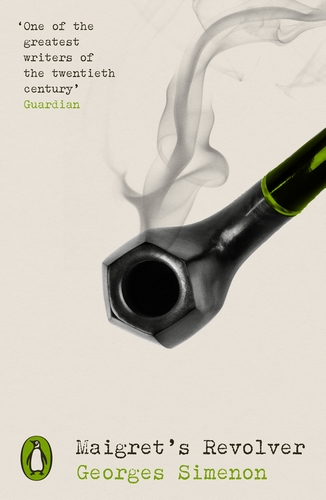
Maigret’s Revolver | Georges Simenon | 1952

Inspector Maigret receives a call from his wife to say he has a visitor at their apartment. But when he gets home, the young man has already gone, along with Maigret's prized Smith and Wesson .45. The trail to find the culprit - and the woman who may become his victim - takes Maigret across Paris and all the way to the Savoy Hotel in London. But getting to the truth may be even more complicated than he had first imagined.

Georges Simenon was born in Liège, Belgium, in 1903. He is best known in Britain as the author of the Maigret novels and his prolific output of over 400 novels and short stories have made him a household name in continental Europe. He died in 1989 in Lausanne, Switzerland, where he had lived for the latter part of his life.

Sleeping Dog | Dick Lochte | 1985

Leo Bloodworth, 'the Bloodhound', is a world-weary L.A. gumshoe with a reputation for finding anything - and a low tolerance of precocious teenagers. Serendipity Dahlquist is a precocious teenager. When the headstrong, roller-skating fourteen-year-old asks Bloodworth to help track down her lost dog Groucho, it leads this oddest of odd couples into the dark criminal underworld of the Mexican mafia, and into more trouble than they'd bargained for.

Dick Lochte's first novel, Sleeping Dog was published to enormous acclaim. He was a columnist for the Los Angeles Times for several decades, and formerly president of both the American Crime Writers League and the Private Eye Writers of America. Born in New Orleans, Lochte now lives on the West Coast.

Brat Farrar | Josephine Tey | 1949

Twenty-one-year-old Brat Farrar is an orphan, alone in the world without friends or family. So when he is offered the unexpected chance to impersonate Patrick Ashby, the long-lost heir to a vast fortune on a country estate, he agrees. Brat is the spitting image of Patrick, who disappeared years ago. At first it seems Brat can pull off this incredible deception, until he starts to realise that he is in far greater peril than he ever imagined.

Josephine Tey began to write full-time after the successful publication of her first novel, The Man in the Queue (1929), which introduced Inspector Grant of Scotland Yard. It wasn't until after the Second World War that the majority of her crime novels were published. Born in Inverness, Tey died in 1952, leaving her entire estate to the National Trust.

Tinker Tailor Soldier Spy | John le Carré | 1974

George Smiley, formerly of the Secret Intelligence Service, is contemplating his new life in retirement when he is called back on an unexpected mission. His task is to hunt down an agent implanted by Moscow Central at the very heart of the Circus - one who has been buried deep there for years. The dogged, troubled Smiley can discount nobody from being the traitor, even if it is one of those closest to him.

John le Carré was born in 1931. For six decades, he wrote novels that came to define our age. After a peripatetic childhood, a spell of teaching at Eton led him to a short career in British Intelligence (MI5&6), during which he published his first novel. He gained a worldwide reputation for his subsequent books. Le Carré died in December 2020. 

The Black Lizard | Edogawa Rampo | 1934

They call her the 'Dark Angel'. Queen of Tokyo's underworld, Mme Midorikawa is famed for her beauty, her jewels and the tattoo of a black lizard on her arm. Crime is so easy for her that she warns her victims in advance. When a wealthy jewel merchant receives letters saying his precious daughter Sanae is about to be kidnapped, he entrusts the renowned detective Akechi Kogoro to protect her. But he may have met his deadliest adversary yet...

Edogawa Rampo was the pseudonym of Taro Hirai, generally viewed as the greatest of all Japanese suspense and mystery authors. He was a prolific novelist and short story writer. Much influenced by writers such as Conan Doyle, Chesterton and Wells, his pseudonym is a Japanese transliteration of Edgar Allen Poe's name. Many of his works have been made into films. 

Payment Deferred | C.S. Forester | 1940

Bank clerk William Marble is facing financial ruin - until a visit from a wealthy young relative, a bottle of Cyanide and a shovel offer him an unexpected solution. But there is no such thing as the perfect murder. Gradually Marble becomes poisoned by guilt and fear, and his entire family corrupted. Sooner or later his deed will catch up with him, as events spiral out of control in the most unpredictable of ways...

C. S. Forester was born in 1899 in Cairo, where his father was a government official. On the outbreak of the Second World War, he entered the Ministry of Information. As well as the famous Horatio Hornblower series, his novels include The African Queen, adapted into the famous film, and crime novels Plain Murder and The Pursued.

The Mask of Dimitrios | Eric Ambler | 1939

English writer Charles Latimer is travelling in Istanbul when a police inspector tells him about the infamous master criminal Dimitrios, long wanted by the law, whose body has just been fished out of the Bosphorus. Immediately fascinated, Latimer decides to retrace Dimitrios' steps across Europe to gather material for a new book, but instead finds himself descending into a terrifying underworld of international espionage, Balkan drug dealers, unscrupulous businessmen and fatal treachery - one he may not be able to escape.

Eric Ambler was born in London. He studied engineering but left college and became a copywriter in the advertising industry, before publishing his great spy thrillers and working as a screenwriter. His profound influence on the espionage genre has been acknowledged by writers including Ian Fleming and John le Carré.

Other Paths to Glory | Anthony Price | 1974

Paul Mitchell is a young military historian whose life is changed forever when two men, Dr Audley and Colonel Butler of the MOD, visit him with a fragment of a German trench map - and a lot of questions. Then somebody tries to kill him. Paul, his life now in danger, agrees to go underground on a mission to solve a dangerous mystery: what really happened during the battle of the Somme in 1916? And why does somebody want to keep it secret?

Anthony Price was born in Hertfordshire. He began as a crime reviewer on the Oxford Mail and ending as editor of the Oxford Times. He won the Crime Writers' Association Silver Dagger for his first novel The Labyrinth Makers, and the Gold Dagger for Other Paths to Glory, which was later shortlisted for the Dagger of Daggers Award for the best crime novel of the last 50 years.


Tuesday, 5 September 2023

More Killer Puzzles - The return of Murdle!

For all you puzzle enthusiasts that fell in love with the first volume of Murdle you will be pleased to know that there will be a second volume of these fiendish puzzles being released in October 2023.


There will also be another X competition taking place to celebrate the launch so do look out for it nearer publication date.

The Cost of Silence: Nondisclosure Agreements in the #MeToo Era

Consider a typical scenario: a young woman is sexually harassed or assaulted by a powerful man at work. She musters the courage to lodge a complaint with the company, and it offers her a financial settlement. But there’s a string attached: she has to sign a nondisclosure agreement that bars her from ever telling anyone about the incident. For any of a host of reasons––she’s traumatized, feels humiliated, wants to forget it ever happened, fears she won’t be believed, worries about her career, needs the money––she agrees.

Meanwhile the company may privately censure her attacker. Perhaps it even terminates his employment. But it’s all done on the Q.T., so that the company’s reputation remains intact. But so does the attacker’s. While the next young woman remains clueless about what he’s done––until he does it again. 

The pattern is the same whether the victims are young or old or in-between. Male, female or binary. The NDA is a shield turned into a sword.

In my new novel, Her, Too, Kelly McCann is the one who wields that sword. She’s a lawyer who’s built her career representing men accused of sexual assault. She defends them at trial when it goes that far, but in most cases she makes sure it will never go that far. When she gets that late-night call from her client––“Um, there’s been an incident”––she swoops in on the victim with a cheque in one hand and a nondisclosure agreement in the other. The NDA women, as she calls them, are silenced forever.

Her world is upended when she herself is raped––by her own client. She finds herself silenced, too, by the certainty that her brilliant career will be destroyed if she reveals that the man whose innocence she so vigorously proclaimed is in fact a serial rapist. Convinced that she can’t seek justice, she decides instead to seeks revenge, and she enlists the NDA women to help her.

Kelly has been silenced by her own life choices. The NDA women felt they had no choice, and that’s the danger Her, Too strives to expose. At a time when victims are at their most vulnerable, they’re persuaded––sometimes coerced—to maintain silence. For some of them, it may actually be a good deal. But for their attackers’ next victim, it never is.

Some small strides have been made to prevent institutions and corporations from imposing NDAs in these circumstances. Late last year, the United States enacted the Speak Out Act to limit the enforceability of NDAs––but only when the NDA is signed before any incident has occurred, e.g., in an employment contract. Earlier this year, Parliament passed a law that bans NDAs in relation to complaints of sexual misconduct, but the law applies only to higher education providers. This means that on both sides of the ocean, a business corporation is free to insist upon an NDA as an after-the-fact condition to settling a claim for sexual assault. 

And in the case of private settlements between a victim and her wealthy assailant? Nothing prevents the enforceability of that NDA. 

In Her, Too. Kelly’s client and soon-to-be attacker is a renowned scientist and owner of giant pharmaceutical company. He has money to spare, and thanks to Kelly, that money has silenced at least three of his previous victims. The police, the public, even his own company’s board, never learn anything of his crimes, leaving him free to attack again. The next time it’s Kelly. 

Her NDA sword has boomeranged and stabbed her. She finally realizes the cost of silence when she herself must pay it. 


Her, Too by Bonnie Kistler from Bedford Square and No Exit Press. On sale August 17, 2023.

Lawyer Kelly McCann, defends men accused of rape. She's fought to build a successful career as a criminal defence attorney, with a speciality in defending men accused of sex crimes - falsely accused, she always maintains. Her detractors call her a traitor to her gender, but she doesn't care: she loves to win. Kelly's most recent victory is securing an acquittal for a world-renowned scientist accused of sexually assaulting his female employees. But the thrill of her victory is short-lived. That very night she, too, becomes the victim of a brutal sexual assault. And almost as horrific as the attack is the fact that she can't tell anyone who the perpetrator is - not without destroying her career in the process. Kelly has never backed down from a fight and she's not about to start pulling her punches now. As she joins forces with her rapist's victims, for the first time it's not about winning these wronged women are out for justice and for revenge.

More information about Bonnie Kistler and her books can be found on her website. She can also be found on X @BonMot101 and on Instagram @bonmot101 and on Facebook.

2023 McIlvanney Prize Shortlist: Bloody Scotland


The Shortlist for the 2023 McIlvanney Prize for Scotland's prestigious annual crime writing award, was announced. The Prize is named in memory of the 'Godfather of Tartan Noir', the great William McIlvanney: 

Squeaky Clean by Callum McSorley (Pushkin): the judges said: "A wonderfully rich and funny new voice in Scottish crime. McSorley has created characters you invest in and plot that keeps you hooked right from the start."

The Second Murderer by Denise Mina (Vintage): the judges said: "Seriously stylish and oozing with attitude, this Philip Marlowe mystery is an exquisite read."

Cast a Cold Eye by Robbie Morrison (Macmillan): the judges said: "A story inhabited by brilliantly drawn characters. Not just a crime novel but a vivid and immersive account of life in Glasgow in the 1930s."

The Devil's Playground by Craig Russell (Little, Brown): the judges said: "Mesmerising from the start. Devilishly dark and dripping with menace. A breath-taking masterclass in twisty crime writing."

These events are part of a three-day annual showcase of crime writing at Bloody Scotland, which is Scotland's international crime writing festival. Both prizes are again sponsored by The Glencairn Glass, Kirsty Nicholson, Design and Marketing Manager at Glencairn Crystal, said: 

"Now in our third year of sponsoring these prestigious awards with the Glencairn Glass, we’re very proud to be a part of this amazing Scottish annual event in the world of crime fiction. We continue to be impressed and enthralled by the talented authors who enter and we wish everyone the very best of luck."

The 2023 Bloody Scotland festival begins at 1: 30pm on Friday, September 15 , with the final event concluding at 2pm on Sunday September 17. It takes place at various venues in the historic centre of Stirling, including the Albert Halls, Trinity Church, and the Golden Lion Hotel. 


Sunday, 3 September 2023

Anthony Award Winners

 The Anthony Award Winners were announced on Saturday night at Bouchercon, the World Mystery Convention. 


Non-Fiction: 

The Life of Crime by Martin Edwards

Short Story: 

Beauty and the Beyotch” by Barb Goffman

Best Short Story Anthology: 

Crime Hits Home, edited by SJ Rozan

Best YA/Childrens: 

Enola Holmes by Nancy Springer 

Best Debut: 

The Maid by Nita Prose

Best Historical: 

Anywhere You Run by Wanda Morris

Best Humorous: 

Scot in a Trap by Catriona McPherson

Best Paperback, E-book, Audiobook Origional: 

The Quarry Girls by Jess Lourey

Best Hardcover: 

Like a Sister by Kellye Garrett

Congratulations to all the winners and nominated authors.

The Anthony® Award is named for the late Anthony Boucher (rhymes with “voucher”), a well-known California writer and critic who wrote for the San Francisco Chronicle and the New York Times Book Review, and also helped found Mystery Writers of America. First presented in 1986, the Anthony Awards are among the most prestigious and coveted literary awards. Bouchercon®, the World Mystery Convention founded in 1970, is a non-profit, all-volunteer organization celebrating the mystery genre. It is the largest annual meeting in the world for readers, writers, fans, publishers, editors, agents, booksellers, and other lovers of crime fiction.


Saturday, 2 September 2023

Barry Award Winners Announced


George Easter, Editor of Deadly Pleasures Mystery Magazine, announced the winners of the Barry Awards 2023 during Opening Ceremonies at Bouchercon San Diego. Congratulations to all! 

Best Mystery or Crime Novel

Desert Star by Michael Connelly (Little,Brown)

Best Debut Mystery or Crime Novel

The Maid by Nita Prose (Ballantine)

Best Thriller

Killer of a Certain Age by Deanna Raybourn (Berkley)


***

Don Sandstrom Award for Lifetime Achievement in Mystery Fandom

"Mystery" Mike Bursaw


Friday, 1 September 2023

2023 Ned Kelly Award Winners


Best Crime Fiction 

Exiles by Jane Harper (Pan Macmillan Australia).

The panel of judges praised Harper’s depth of characters and setting - a hallmark of her compelling and intricate style of storytelling. The best crime category continues to astound with the depth of talent from Australian authors, many of which are now well established as international authors.

The variety and diversity of Australian crime novels blew us all away. Outback noir, suburban Aussie crime, city streets, cliff edges, small towns, domestic settings, historical, misaligned justice, revenge, parenthood, almost every setting and sub-genre was covered this year,” judge David Collins said.

Best Debut Crime Fiction 

Wake by Shelley Burr (Hachette Australia).

The panel of judges said it was heartening to see such strong talent coming through in this next wave of Australian crime writers. There were 34 entries in this year’s Best Debut Crime Fiction category.

Judge RWR McDonald said the judging panel described Wake as an astounding achievement for a first time author.

Best True Crime

Betrayed, by Sandi Logan (Hachette Australia).

The judges said the entries in the true crime category continue to showcase the very best in Australian investigative non-fiction writing.

True crime authors not only have to impeccably research and retell these very personal stories but they have to tread carefully and respectfully,” judge Emily Webb said.

Best International Crime Fiction

The Lemon Man by Keith Bruton (Brash Books).

The Lemon Man is a warm funny and compassionate story written in a wonderfully original voice. A truly great read,” judge Ron Blaber said.


ABOUT THE NED KELLY AWARDS

The Ned Kelly Awards are Australia’s oldest and most prestigious acknowledgements for crime fiction and true crime writing. Established in 1996, previous winners include: Peter Temple, Shane Maloney, Helen Garner, Gabrielle Lord, Garry Disher, Candice Fox, John Silvester and Duncan McNab