Showing posts with label Trilogy. Show all posts

Tuesday, 12 May 2026

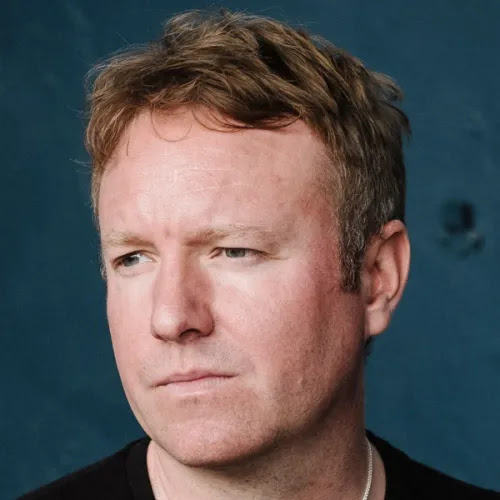
Callum McSorley on Lockdown and leg work – finishing the trilogy

In 2020 I was living in Inverurie in Aberdeenshire, in lockdown with my wife – who as a paediatrician continued to work through the pandemic – and my then one-year-old son. To get him to nap I would roll him about in his pram in the garden then get a little writing done while he was parked up snoozing.

On our one allowed trip outside, I would take him around the neighbourhood, often down to the flood plain – an expanse of untamed grass and wildflowers by the River Urie – where there was a nice walk.

This part of the Urie isn’t particularly wide or deep, more a burn than a river, so it was a laugh to spot a group of young lads trying to row down it in a dinghy one day. Lockdown was getting to us all by then, I guess.

Not the only mad thing people were getting up to. I read a story online about drug dealers using their allotted exercise hour to meet customers in parks, dressed in jogging gear as cover. With plenty of people on furlough, business was good.

This stuck in my head. I even pitched a story to my agent inspired by it, but this was in 2021 and she rightly pointed out how uncertain the future still was. It would be hard to see the end of the book when we didn’t really know what was coming just weeks and months ahead of us. So it went into the kitchen drawer in my brain like the one where you keep all the random cables, bits of twine, corn on the cob holders, (flat?) batteries, tea towels printed with pictures of Cliff Richard… The usual shite.

And as with the ideas which became my previous two books – Squeaky Clean (2023), about a car wash worker who ends up cleaning more than just cars when gangsters take over the business, and Paperboy (2025), about a confidential waste technician selling secrets to cover his gambling debts – it took a few years for me to get back to it.

Jump forward to 2024. My debut Squeaky Clean had come out the year before and won the McIlvanney Prize for Scottish Crime Book of the Year and so I’d begun working on a trilogy starring Squeaky’s star copper, Alison ‘Ally’ McCoist (“Glasgow’s least popular detective”), who bungles and scraps her way through investigations causing plenty of mess and mayhem along the way. The middle part, Paperboy, was finished and with my publisher, coming out in March the next year, and it was time to bring the whole thing home.

But what to write about? Squeaky Clean was inspired by things I’d squirrelled away from the years I worked in a car wash as a student, Paperboy by nuggets of information smuggled from my pal who worked in confidential waste disposal. And this was when the idea churned back up to the top of my head: lockdown, parks, drug dealers.

Stars aligned – I was awarded the Loch Long Crime Writing Residency at the incredible artists’ retreat Cove Park in Argyll, so in the autumn of 2024 I drove to its idyllic surrounds, put myself in lockdown again and began writing what became Rat Race, my third book and the final part of the McCoist trilogy:

Fran Forbes is sixteen and leaving school. He’s a quick lad, a sharp-minded entrepreneur. Some people might call him a drug dealer. Whatever, he’s just secured a couple of kilos of top-quality nose hair dandruff and is about to take a big step up the career ladder. BUT (there’s always a but) it’s March 2020. Lockdown. He’s holding jailtime amounts, he owes big returns.

Not stymied for long, he reasons “the market’s still there – it’s distribution that’s the problem” and has a good idea: he’ll use his government sanctioned outdoors time to meet customers in parks. Fran runs all over Glasgow, covering miles and miles. He gets a taste for it, the running. More than that, he’s good at it. Competitive good. Before long he’s doing marathons, winning sponsorships and leaves the crooks of Glasgow behind.

BUT (see?), the dream doesn’t last for long. Where chapter one picks up, it’s 2026 and Fran’s knees are, according to the doctor, “fukt”. He wants to travel to the US for an operation by a specialist and that is going to cost a whole lot of readies.

Again, Fran won’t be stymied for long and he has another good idea: he goes back to his former boss and agrees to one last job in exchange for enough money to sort out his injured gams.

If you want to find out how that works out for him (probably well, you might guess), Rat Race is out now.

Rat Race by Callum McSorley (Pushkin Press) Out Now

DCI Alison McCoist is up to the oxters in Glasgow's shadiest police unit, with a list of guilty secrets growing longer by the day. Fran Forbes has just bolted from the scene of a gangland massacre with only a shite-stained tracksuit and a memory stick full of cryptocurrency to his name. Ally is tasked with looking into this latest underworld rammy and ends up working with some bampots even dodgier than her polis pals. Can she keep Fran from being turned into mince by a Russian OCG and finally free herself from the fankle of police corruption she's caught in? An enemy from Ally's past is determined her story won't have such a happy ending...

More information about Callum McSorley can be found on his website. Callum McSorley can also be found on Instagram at @callumrmcsorely on Facebook @callummcsorleyauthor


Monday, 5 August 2024

In The St Hilda's Spotlight - Saima Mir

 Name:- Saima Mir

Job:- Author and Journalist

Website:- www. saimamir.com

X - @SaimaMir

Instagram - @saimamor_author

Introduction:-

Saima Mir is an award-winning journalist and author. Her novel The Khan is a Times and Guardian Bestseller and was shortlisted for the Specsavers Crime Fiction Debut Award.  It was also longlisted for the Jhalak Prize and the Portico Prize. Her current book Vengeance is the second in The Khan trilogy.

Current book? (This can either be the current book that you are reading or writing or both)

All The Colours of The Dark by Chris Whitaker

I’m writing the third in The Khan trilogy.

Favourite book:

The Autobiography of Malcolm X

Which two musicians would you invite to dinner and why?

Kishore Kumar and Stevie Nicks, because their sound takes me away to other times and places.

How do you relax?

I’m still figuring that out!

Which book do you wish you had written and why?

We Begin at The End – I love the character of Duchess and she lives in my head.

What would you say to your younger self if you were just starting out as a writer.

Keep writing but do it for the love of the story and the craft. No one else gets to decide if your story is worth telling. It is your job to tell it.

How would you describe your latest published book?

Vengeance is about the power that women could wield if we found each other and came together.

With  A Dance to the Music of Crime: the artful crime to murder being the theme at St Hilda's this year, which are you three favourite albums?

Grace by Jeff Buckley

Sholay soundtrack

Ghalib by Jagjit Singh

If you were given the ability to join a band which would it be and why?

Fleetwood Mac for the talent and the drama.

If you were to re-attend a concert which would it be and why?

I saw Franz Ferdinand when I was in my 20s. I was with friends I loved, we were a bunch of bright young journalists and life was better than I knew.

What are you looking forward to at St Hilda's?

Hanging out with all the talented authors and hearing them speak in beautiful surroundings where the arts are celebrated.

Vengeance by Saima Mir (One world Publications)

Two years into running her organised crime syndicate in the north of England, Jia Khan stumbles on a notebook her father - the previous Khan - kept on arrival from Pakistan in the 1970s. And what Jia finds in the journal sends her deep into the family's past. But once the sleeping dogs from those years are woken, they are set for attack. Meanwhile, Jia struggles to control unrest amongst those that oppose her. Worst of all, Jia must unravel a puzzling but terrible warning - one of her staff lies brutally slain, his corpse displayed in her garden despite her sophisticated security... Could a traitor be part of her inner sanctum.


Information on how to buy online tickets can be found here. #HCFW24

Thursday, 1 February 2024

Joe Thomas on writing about one's past within Red Menace

I was born in Hackney in 1977 and for 25 years I wanted to leave. Now, it’s an aspirational address, gentrified and expensive. I was born in Hackney Mothers’ Hospital on Lower Clapton Road which was later to become known as ‘Murder Mile’. I lived on Mildenhall Road, just down from Clapton Pond. I wrote White Riot to try and better understand the Hackney I grew up in, the time and place, and how the borough, it seems to me, is something of a lightning rod for the political and social currents of the country. I wrote Red Menace to extend the geographical focus, to widen it to other areas of east and north London.

Red Menace is a historical, social crime novel about police corruption, institutional racism, the devastating effects of Thatcherism, and the counter-cultural movement of the ‘80’s. The novel takes in Live Aid, the Broadwater Farm uprising, the Wapping Dispute and, like White Riot, is rooted in the Hackney experience of the 1980s. Mark Sanderson, writing in the Times, called White Riot, ‘a love letter to London, seething with outrage’. In Red Menace, the love is still there, but I think the outrage is intensified.

I remember the Hackney Show on Hackney Downs, the Labour Club in Dalston, steel bands and heavy reggae, kids in I Love ILEA and GLC t-shirts, Granny’s takeaway and Chimes nightclub, where, for a period, serious violence was a regular occurrence. 

In the novel, I write about the Hackney Show of 1986, one I went to, and the fictionalising of it is an insight into how I accessed sensual memories, sights and sounds, smells and tastes to try to recreate – and reimagine, resurrect – Hackney in the 1980s.

Here’s an edited extract from the novel that I think is instructive:

Over the weekend, the football season safely finished for another year, there’d been the festival up on Hackney Downs, the Hackney Show. Fairground games and food, Jean Breeze and Dennis Bovell, the London All Stars Steels and the Perpetual Beauty Carnival Club, stunts, stalls and side shows –

Across the park, on the north side, a little bit away from the festivities, a tent emitting pounding reggae, pulsating dub.

He and the boy had wandered over towards it, the towers of the Nightingale Estate to their right, Hackney Downs School to their left –

The tent shook with the soundsystem, the sides flapping, the roof lifting and falling, one or two men dancing on their own just outside it, shirts off and bare feet, eyes red, eyes wild –

Jon felt the bass tearing through him. The boy slowed down a touch as they approached.

Jon shook his head and put a hand on his shoulder. The boy close, like when he was a shy toddler, wrapping himself around Jon’s leg, pouting.

The volume and depth of the music made the lights shake and flash.

Air thick with smoke –

Jon seeing the boy’s eyes start to water, not a great deal else.

They stayed about fifteen minutes, Jon recognising a Steel Pulse track that had been stripped right down and then powered right up, an MC over the top of it, that was enough.

On the way out, one of the Rastas winked at the boy, grinned.

‘Welcome to Jamaica,’ he said.

All of this is true, all of this happened, but how much more is there that I can’t remember? 

Writing about your own past in the context of a transparently political novel, a novel unashamedly interrogating society, does something to your own history; if you can get that right, then it’s a good start.

Red Menace by Joe Thomas (Quercus) Out Now

Live Aid, July 1985. The great and the good of the music scene converge to save the world. But the TV glitz cannot disguise ugly truths about Thatcher's Britain. Jon Davies and Suzi Scialfa have moved on since the inquest into the death of Colin Roach, but they're about to be drawn back into the struggle - Jon by his restless curiosity and Suzi by the reappearance of DC Patrick Noble. Noble's other asset, the salaried spycop Parker, is a pawn in a game he only dimly comprehends. First, he's ordered to infiltrate the Broadwater Farm Estate in Tottenham; next will come Wapping, ground zero of a plot to smash the print unions. But who is Noble working for, and how far can he be trusted? The Iron Lady is reforging the nation, and London with it. Right to Buy may secure her votes, but who really stands to benefit? Corruption is endemic and the gap between rich and poor grows wider by the day. Insurrection seems imminent - all that's needed is a spark.


Thursday, 19 January 2023

Why Hackney? By Joe Thomas


When I was a boy, an Irish woman called Lil would clean our house from time to time. Her son, Tony, was older than me, Hackney-born. He became a builder, started off working with our next-door neighbour, Harry, which meant a fair few lunchtimes in the public bar of the Prince of Wales trying to keep up with the older labourers. He’d do odd bits and pieces at ours, too. I was fourteen, I think, when he suggested we go for lunch at a caff on Chatsworth Road. I got in his car – I remember it was very low to the ground – and we drove off. Just past Rushmore, my old school, there were a couple of blokes about Tony’s age waving at him and he pulled over. There was also a young lad with them, younger than me. Wait here, Tony told me, and he got out. I watched the three older blokes in animated conference. When they were finished, Tony and another fella climbed back in, and the other one and the young one got into another car. I remember we drove around for about five minutes before coming to a sudden stop, a teenage boy panicking on the pavement. Engine running, Tony and the bloke jumped out, grabbed the kid, and then pinned him against the wall. The other one and the young one got out of the other car and went over. They were carrying a baseball bat. I could see the young one answering questions, nodding. The teenager handed over a watch, crying. Nothing happened for a moment, and I waited, nervous. What would be the punishment? Clearly this bigger kid had nicked this younger kid’s watch, and the younger kid had got his big brother to sort it out, which he had. Let’s have lunch, then, I was thinking. Then I watched as the teenager was force-fed the watch. He was eating the watch, I realised, eating it. Punishment fitting the crime and all that. In the caff, over bacon, egg, chips, and beans, no one really talked about it, and I certainly never told anyone.

I wanted to write about where I grew up, Hackney, in the late-seventies and eighties. Although White Riot is very much a political novel, it is also hugely personal: I accessed the sights, sounds, and smells of my childhood to try and recreate the sensual experience of it. I thought about how the place changed, who moved away, who stayed, why, who had power, who was disenfranchised, and why.

I’ve never wanted to write a whodunnit; I’ve always wanted to write about place, about fiction based on fact. My fiction addresses the discourses of power and the specificity of crime, why something happened precisely where it did, and is an attempt to illuminate the reasons why. You can strip away the layers of city in a crime narrative.

In the author’s note to her epic French Revolution novel, A Place of Greater Safety, Hilary Mantel writes: ‘The reader may ask how to tell fact from fiction. A rough guide: anything that seems particularly unlikely is probably true.’ 

In White Riot, the more outlandish political events, the most shocking violence, the most brazen corruption scams are all real, or based very closely on real-life incidents. It has always seemed to me that real life offers the best structural and societal models around which to thread a fictional narrative. Crime is political, I think, and more politics is criminal than we’d care to admit. 

There’s that old adage: ‘You couldn’t make it up.’ 

More and more, I’m beginning to think that you shouldn’t.

White Riot by Joe Thomas (Quercus Books) Out Now

1978:The National Front is gaining ground in Hackney. To counter their influence, anti-fascist groups launch the Carnival Against Racism in Victoria Park. Observing the event is Detective Constable Patrick Noble, charged with investigating racist attacks in the area and running Spycops in both far-right and left wing groups. As Noble's superiors are drawn further into political meddling, he's inveigled into a plot against the embattled Labour government. 1983: Under a disciplinary cloud after a Spycops op ended in tragedy, Noble is offered a reprieve by an old mentor. He is dispatched in the early hours to Stoke Newington police station, where a young black man has died in suspicious circumstances. This is Thatcher's Britain now, a new world that Noble unwittingly helped to usher in, where racial tensions are weaponised by those in power.

Photo credit: Oliver Holms

Sunday, 31 July 2022

Q& A with Charlotte Carter

©Charlotte Carter

Introduction

Charlotte Carter is the author of the jazz based trilogy novels featuring Nanette Hayes a young Black American jazz musician street busker. A former editor and teacher. The series was originally published in the 1990s and has recently been republished by Baskerville Publishing.

Ayo:- When I first read your Nanette Hayes series one of the things that drew me to the series aside from the fact that your love of jazz comes through on every single page is how spunky and sassy and sexually liberated Nanette is. Is there any part of you in Nanette and if so was this intentional?

Charlotte:- Spunk, sass, sexually liberated. I wish. Maybe the best answer is that my innate shrinking violet was always dueling with a bolder, more courageous persona, and to my surprise, sometimes the bold one won out over Miss Timid. Kind of depends on what’s at stake, I guess.

Of course there’s a bit of yourself in nearly every character. It occurs to me that one of the plusses of a first person narrative is that if you so choose, you can present yourself as a better you. Smarter, funnier, prettier, cooler, whatever. 

Ayo:- When the series was first published it was like a fresh of breath air and Nanette was a very unusual character. A strong black female. This impression has continued with how she has been received since the books have been re-issued. Were you surprised about this especially since she appears to be the head of the curve when it comes to dealing with social issues?

Charlotte:- It’s interesting how many times this thing about Nanette being “ahead of the curve” in dealing with social/racial issues has come up. “Strong black female” on the dust jacket is almost a yawn these days. I had no agenda, certainly I had no intention to use Nan as a way to preach or teach. In fact, perhaps people looked at her as a breath of fresh air because she isn’t out to sway opinion or shout the house down about this or that issue--but her take on race, colour, power dynamics, sexism, and so on, is still clear. 

Ayo:- It is evident that you have a great love of jazz, jazz history and film noir. Where did this come from?

Charlotte:- You know how you hear music that’s strange to your ears, you don’t know who’s playing or singing but you know you need to hear/learn more about it. A lot of the music I love came at me when I was young, and there were endless opportunities to learn more. I was living in a black community, and in a large multigenerational household, where some kind of music was playing all the time. So, one of my relatives was friendly with a guy who worked at a blues club, my mother and her girlhood friend were semiprofessional performers when they were young, my uncle with the drug problem was a Charlie Parker fanatic, an eighth grade teacher would try to instill black pride in us by playing Leontyne Price or some indigenous Ghanaian music, and so on. I guess once in a while I’d hear something and think, Nah, not feeling that, tune it out--but most of the time I could just go with it.

As for the film stuff, having a mother who didn’t make me go to bed at any particular time had a lot to do with how my interest in movies developed. It is amazing how many films you could see after prime time—and the variety was amazing. I’m talking about the early 60s. I’d see foreign movies dubbed into English, talk shows that originated in New York [guests from Richard Pryor to Oscar Levant to Lenny Bruce to Gwen Verdon; I even saw Jack Kerouac on tv], and an endless parade of noir films—a treasure trove. Before long I was taking note of the cinematographers and who wrote the scores and what novel the movie was taken from. The world view that life could be dark and short and often brutal was not a hard sell for me. There was a hell of a lot of grim stuff going on around me. To be honest, I’ve gotten way more out of living than I ever thought I would.

Ayo:- Is there anything you would have changed if you could since you initially wrote the books?

Charlotte:- Yeah. They’d be better. And I wouldn’t have stayed so silent. I more or less turned away from trying to write, which meant I blew the chance to be better.

©Charlotte Carter

Ayo:- Have you still got a love of jazz and for someone who wanted to read the books with music playing in the background which jazz artists or songs would you recommend? 

Charlotte:- Better for people to listen to anything they really like. I played Talking Heads the other day, to get myself up and moving. I play Coltrane a lot. But I haven’t been diligent about keeping up with newer artists. I’m pledging that when Covid is behind us [ha ha], I will start going out again [if there are any venues left] to hear some of the good musicians around today. There are probably a hundred of them just on this side of town.

Ayo:- How pleased were you when Baskerville decided to re-issue the Nanette Hayes trilogy?

Charlotte:- Very pleased. That came out of the blue. Can’t rewrite them at this stage, but I took the opportunity to do some minor surgery on the books, taking out stuff that was a bit over the top, adding a scene or two to each of the books. I haven’t done much writing the last ten years. Collaborated with my husband in the early 2000s on a film treatment, but we weren’t successful. Wow, was he prescient—he tried like hell for a good 15 years to sell this dystopic novel we were writing together, about the overturning of Roe v Wade and the criminalization of abortion in the States. They all laughed ….


Ayo:- Rhode Island Red is my favourite of the trilogy partly because it sems to be an ode to Dashiell Hammett and The Maltese Falcon which is one of my all time favourite crime novels and also because it is was my introduction to such a wonderful series. Was this intentional as there is a missing saxophone at the heart of the story?

Charlotte:- Yes. That, and many other crime things where the cast of characters are on a kind of quest for something elusive, something or someone. It’s enough of a recognized trope that it didn’t feel like stealing. The search almost never ends well.

Ayo:- Have we seen the end of this series? 

Charlotte:- To be brief, I don’t know. A couple of plots are bubbling, but I genuinely don’t know if anything will come of them.

Ayo:- What are you working on at the moment?

Charlotte:- A novel, due out next year. It’s not a Nanette, it’s full of grief and death but it’s not a murder mystery, and it is set in both the past and the present, often at the same time; it has a paranormal edge; almost a druggy edge; it’s… what?... inescapably erotic; and in this case, those racial and societal issues indeed are like a cloud overlaying the entire book.

My post about the series can be read here. There is also a Q & A with Charlotte Carter at Crime Time which can be read here.


Thursday, 18 April 2019

Alafair Burke: Behind The Better Sister

Here’s the quick summary of The Better Sister: Chloe Taylor thinks she has it all—a handsome husband (Adam), thoughtful stepson (Ethan), and thriving career (author, editor, budding cultural icon)—until she finds Adam murdered at their East Hampton beach house. Things manage to get even more complicated when police focus their suspicions on Ethan and his biological mother comes to town to try to help.

An added wrinkle? Ethan's mother (and Adam's ex-wife) is Chloe's estranged older sister, Nicky. 

Even that brief synopsis makes it clear that the book will delve into the fine line between sisterly loyalty and rivalry.  But I view The Better Sister as the third book in a thematic trilogy, following The Ex and The Wife, that explores the complexity of female relationships and the diverse roles that women play in contemporary society. As we juggle busy lives, we often show different faces to our spouses, exes, children, parents, siblings, and co-workers, all while trying to know and be true to ourselves.  

 Chloe and Nicky know each other only as siblings.  Adam knew them both as wives.  To teenaged Ethan, Chloe and Nicky are each a different type of mother to him.  And both women have independent existences where they can live without familial obligation.  It’s in that independent realm where the women of this trilogy of books have, I hope, provoked some thoughts about the often gendered nature of threats, abuse, and violence in our culture.

In The Ex, an accomplished criminal defense lawyer steps in to defend her ex after he’s accused of a mass shooting. The Wife is about Angela Powell, who’s dragged into the spotlight after her high-profile husband is accused of sexual assault, but has a survival story of her own. In The Better Sister, Chloe Taylor is a target for online threats and harassment because of her journalistic work related to the #MeToo movement. 

Each book in the trilogy shows smart, capable women searching for every ounce of fortitude to make their own mark on the world while also living up to obligations that fall to them in their status roles—as an ex, a wife, a mother, or a sister. Sometimes that work requires redefining what it means to be “better.

The Better Sister by Alafair Burke is published by Faber & Faber in April (£12.99)

Saturday, 1 December 2018

Adam Hamdy on How far would you be prepared to go ..... ??


I’m 16-years old, sitting on the top deck of the 140 travelling from Northolt to Hayes with my two friends Gan and Kegg (their names have been changed to protect the guilty). It’s a little after 7.00pm on a Saturday night in October and we’re on our way to a house party we’re hosting. Except not one of us lives in Hayes.
Three weeks earlier, Gan had been at a party where he’d met a 33-year-old man called Yohan. A proper London wide boy, Yohan had been very interested in the fact Gan had recently started sixth form. He was particularly keen on the idea Gan might be able to introduce him to sixth form girls. Looking back, alarm bells should have been ringing from the very first encounter. No decent 33-year-old man is on the prowl for teenage girls.
But when you’re 16 and keen to make friends at your new sixth form college, you’ll do all sorts of stupid things. The stupid thing in this case was agreeing a too-good-to-be-true deal with Yohan. He’d let Gan use his house for a party, provided he got to hang around and meet the guests. So Gan asked me and Kegg to help host and we printed flyers and invited our fellow newbie sixth formers to the first party of their ‘adult’ lives.
Any limit on numbers? No, invite as many as you want, but make sure there are plenty of girls. What about music? Well, I shouldn’t tell you this, but I’m really Paul Trouble Anderson, the Kiss DJ, and I’ve got a full sound system at home. I live incognito so I won’t be mobbed by fans all the time.  And drink? No worries. I’ve got a full bar.
The day of the party arrives and Gan phones Yohan to check we’re still on. Yeah, yeah, yeah. It’s gonna be banging. How many people are coming? Gan tells him we’re expecting about a hundred. Quality, mate. It’s gonna be mental.
That night, we get off the bus and walk up Yohan’s quiet suburban street. Spooky horror movie quiet. Half expecting zombies to lurch from the porches of the post-war semis, we had no idea that the real horror was going to be something far more mundane.
Yohan was out. His house was deserted.
If any of his neighbours had peered from their windows at that moment, they’d have seen three shifty teenagers shuffling on the spot, trying to keep warm in the autumn chill, talking nervously and starting to sweat as they figured out what to do about the 100-plus guests due to arrive at 8.00pm.
We were consumed by thoughts of humiliation, two years spent at sixth-form being known as the guys who’d failed, the idiots who’d dragged tons of people out to a party that didn’t exist. This was pre-mobile phones and there was no way of getting hold of Yohan to find out why he’d put us in this tight spot. Our futures as social pariahs seemed certain.
Until Kegg noticed the living room letter box window was open. Any curtain-twitching neighbours would have then seen three teenagers arguing over who was going through the window. As the smallest, Kegg was ‘volunteered’, and Gan and I gave him a shove inside. Moments later, we were in the house, and what a strange abode it was.
There was hardly any furniture. A three-piece suite in the living room, but little else. No photos or pictures. One of the upstairs rooms had a heavy padlock on the outside. We joked that someone was probably being held prisoner, but when we knocked, there was no response. The place was empty.
It was also devoid of any food or drink and there was no stereo. So Gan and I caught the bus back. Him to raid his parents’ drinks cabinet, and me to pick up my record collection and the snazzy stereo I’d had for my birthday. Some creative liberties with the truth meant I was able to persuade my mum to give me a lift back to Yohan’s, and by the time we arrived there must have been at least eighty people congregating in the street, wondering when the music and booze were coming.
I thanked my mum, who went home oblivious, and rushed in to set up the stereo. Within minutes, the best of late disco and early house music was filling the quiet little street and the party was indeed ‘banging’.
Gan, Kegg and I had never realised we had so many friends. Well over the hundred we’d been expecting. The house was heaving with the wild excesses of youth. An ambulance came shortly before midnight, summoned to deal with a guy who’d passed out on the kerb. The police came three times, and each time Gan and I calmly listened to the constables telling us about the neighbours’ complaints about the noise. We promised to keep the music down.
But somehow the volume kept creeping up, until, a little before 2.00am, Yohan came home. 

With his girlfriend. Gan, Kegg and I had forewarned a few key people about our questionable legal status, and when Yohan entered, the three of us yelled RUN!
A perplexed Yohan was overwhelmed by dozens of drunk teenagers fleeing into the night, but he wasn’t on the back foot for long. He locked the front and back doors, and approximately 25 of us were trapped in the house, those who were either too drunk to walk, or who had been engaged in bedroom activities. Gan, Kegg and I made the honourable decision to go down with the ship and fronted up to Yohan, explaining that we’d thought he’d simply popped out to get some booze for the party. You wouldn’t skank us would you, mate? It’d be a dark thing to arrange a party at your own place and then not show up for it.
A howl of anguish came when he went upstairs. Someone had smashed the padlock and broken into the secret room, which it turned out was his bedroom. His TV, clothes, cash and a quantity of cocaine had been stolen. Or so he said. The house, it turns out, wasn’t his, but his uncle’s and he was just a lodger. And no, he wasn’t Paul Trouble Anderson. It turned out he wasn’t even Yohan. His real name was Selwyn.
What followed was four hours of negotiation. Gan, Kegg and I had to buy our guests’ release, and finally, when we’d agreed a price for the damage and inconvenience, Selwyn set us free and we staggered into the October dawn carrying my record collection and stereo. Older but almost certainly none the wiser.
We were teenage fools, willing to risk criminal prosecution, imprisonment and potential violence from Selwyn simply to avoid the ridicule of our peers. It’s always made me wonder what others might be prepared to risk if they had a genuine reason? How far would they be prepared to go for the sake of their mission?
It’s a theme I explore in Aftershock, the final book of the Pendulum trilogy, when the Foundation, a subversive organisation set on reshaping the world, turns to a malign figure who promises he can deliver what they want. And no, it’s not a house party.